
How to pump up a flat tyre with a bicycle pump in 8 steps
By Rive News / Research desk | Rive News / Published October 24, 2026 at 9:00 AM PKT
Key takeaways
- A bicycle pump works on car tyres because most cars use Schrader valves, the same type many bike pumps accept.
- Most car tyres need 30-35 PSI; expect 10-15 minutes of steady pumping to reach it from flat.
- This is an emergency fix only, get the tyre checked or repaired properly as soon as you can.
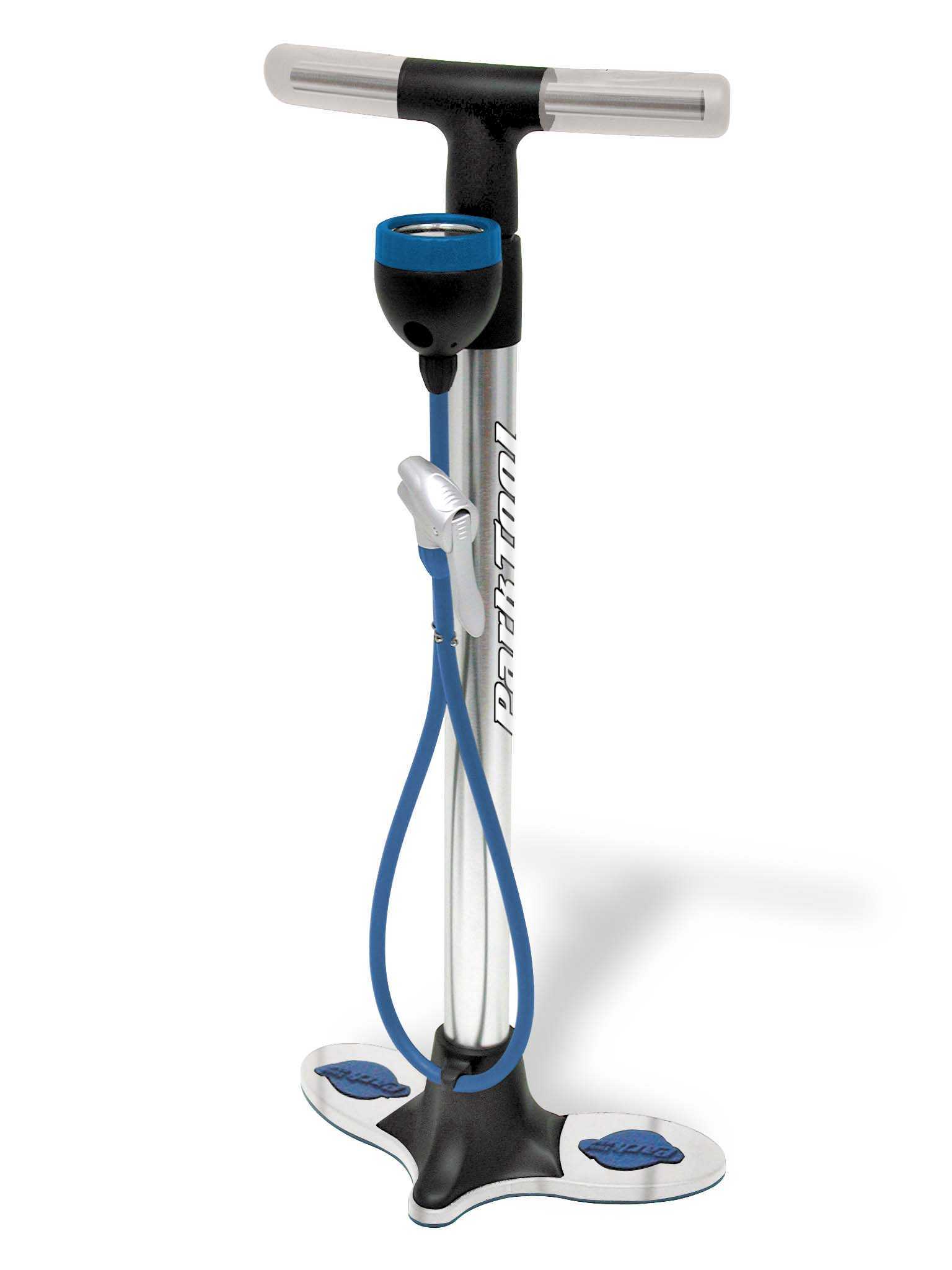
[A standard bike pump, the emergency tool that can inflate a car tyre in a pinch.] Photograph: a bike pump
Image Credits: Wikimedia Commons
A bicycle pump can inflate a flat car tyre because the valve types match. Most car tyres use Schrader valves, and most full-size bicycle pumps accept Schrader valves, so the pump seals onto the tyre's valve stem and pushes air in.
It is slow work, a bike pump moves far less air per stroke than a compressor, but it can get you rolling again in an emergency. Expect a real workout.
This guide walks through pumping up a flat car tyre with a bicycle pump, including whether it will work, what you need, the valve types, the step-by-step method, and the limits.
Will it actually work on your car?
Almost certainly yes, if you have a floor pump or track pump rather than a mini pump.
A track pump with a large cylinder can generate more than enough pressure. Most car tyres need 30-35 PSI, while bicycle tyres commonly run 30-80 PSI depending on the bike, so pressure is not the problem. Volume is: a car tyre holds vastly more air, which is why it takes 10-15 minutes of steady pumping for a typical family car, according to a Gumtree motoring Q&A updated in January 2026.
Mini frame pumps are barely adequate for bicycles and should be a last resort for cars. They can add enough air to limp to a garage, but never fully inflate a car tyre.
What you will need
Gather three things before you start.
First, the pump itself, a floor pump with a Schrader-compatible head and, ideally, a built-in pressure gauge. Second, a separate tyre pressure gauge if your pump lacks one, because pump gauges are not always accurate. Third, your car's recommended tyre pressure, found on the driver's door jamb placard, the fuel filler flap, or the owner's manual.
Clean the valve area before attaching anything. Dirt around the valve can ruin the seal or get pushed inside.
Valve types: Schrader vs Presta
There are two common valve types, and only one fits your car.
The Schrader valve is the wide, spring-loaded type with a small pin in the middle, the same valve used on virtually all car tyres. The Presta valve is thin and threaded, common on higher-end road bikes.
Most bicycle pumps ship with a dual head that accepts both. If your pump is Presta-only, it will not fit a car tyre without an adapter. Check the pump head before you start, not after ten minutes of struggling.
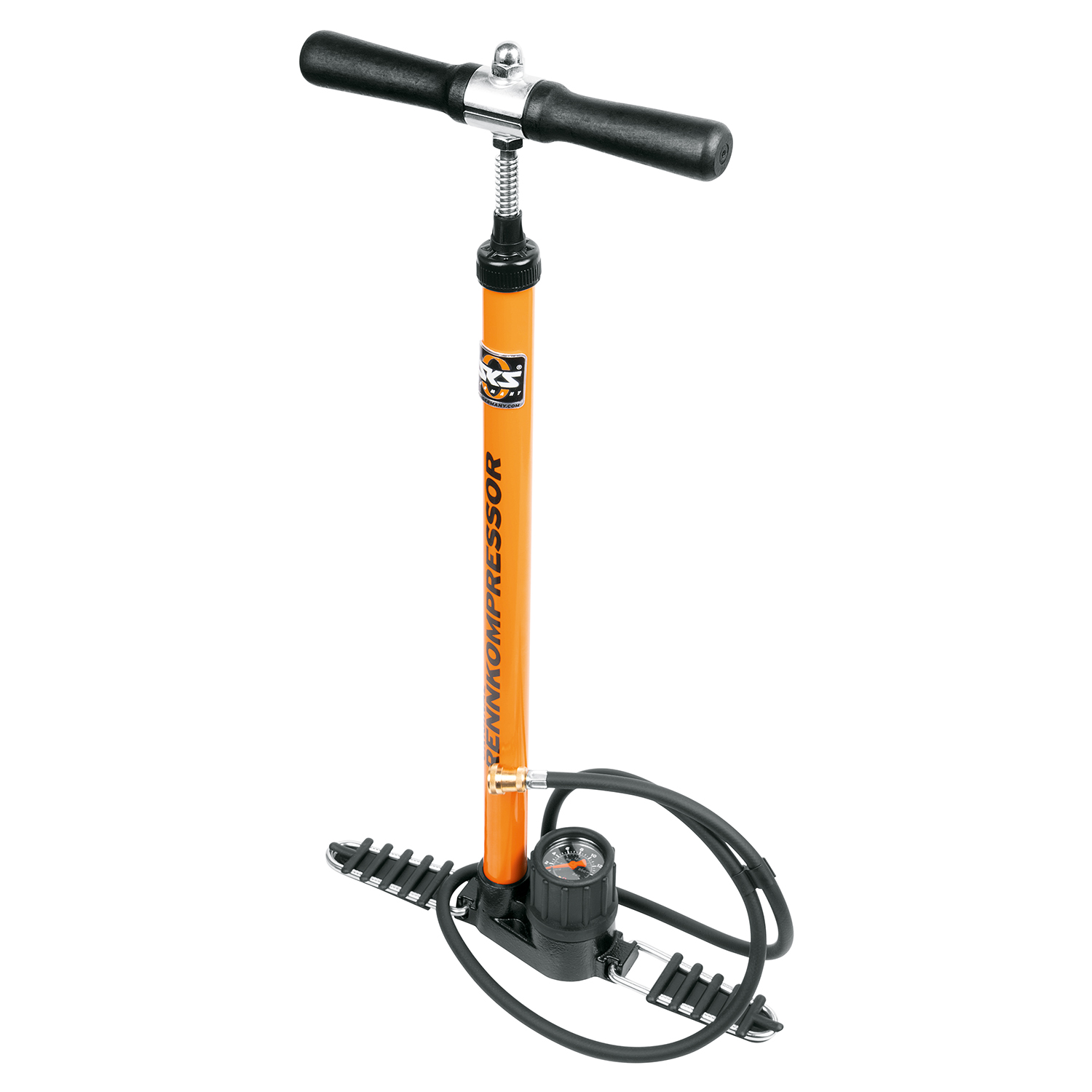
[An SKS Rennkompressor track pump, the large-cylinder floor pump best suited to car tyres.] Photograph: a track pump
Image Credits: Wikimedia Commons
The 8 steps
1. Park safely and find the pressure. Stop on flat ground away from traffic, engage the handbrake, and read the recommended pressure from the door jamb placard.
2. Check the tyre for damage. Look for nails, cuts, or a bead that has slipped off the rim. A pump cannot fix a torn sidewall or a fully unseated tyre.
3. Remove the valve cap. Unscrew the dust cap from the valve stem and keep it somewhere safe, like a pocket or the cup holder.
4. Attach the pump. Press the pump nozzle straight onto the valve stem and engage the locking lever. A brief hiss as it seals is normal; continuous hissing means a bad seal, so reposition it.
5. Pump with steady strokes. Use smooth, full strokes rather than short frantic ones. Keep a rhythm you can sustain, because you will be at this for a while.
6. Stop and check pressure often. Every couple of minutes, detach and read the pressure with your gauge. Stay within 5 PSI of the recommended figure, and never exceed the maximum pressure printed on the tyre sidewall.
7. Listen for leaks. If pressure will not hold, mix soap and water and dab it around the valve stem and tread. Bubbles mark the leak point, which tells the repair shop exactly what to fix.
8. Replace the valve cap and drive gently. Screw the cap back on, drive to the nearest garage or tyre shop, and recheck the pressure there. A tyre pumped up this way is a temporary solution.
When to stop and call for help instead
Do not pump a tyre that has a visible sidewall bulge, a deep cut, or a rim you can see through a gap. Those are structural failures, and no amount of air makes them safe.
If the tyre was driven on while completely flat for any distance, the sidewall may be internally damaged even if it holds air. A repair shop can inspect it; the roadside cannot.
Also stop if pumping for 15 minutes produces barely any pressure gain. That usually means the leak is faster than your strokes, and you need a spare wheel or a tow.
Frequently asked questions
How long does it take to inflate a car tyre with a bike pump?
For a typical family car tyre from flat to 30-35 PSI, expect 10-15 minutes of steady pumping with a floor pump. A mini pump can take much longer.
What pressure should a car tyre be?
Most cars need 30-35 PSI, but always use the figure on your door jamb placard rather than the maximum printed on the sidewall. Check pressure when the tyres are cold, after the car has been stationary for at least three hours.
Can overinflating damage the tyre?
Yes. Too much pressure strains the tyre, reduces grip, and makes the ride harsh. Stop at the recommended pressure and bleed off any excess by pressing the pin inside the valve stem briefly.
Is a bike pump a permanent fix?
No. It buys you the drive to a garage. Get the tyre inspected and repaired or replaced as soon as possible, because the original puncture is still there.
The bottom line
A bicycle pump inflates a flat car tyre because the Schrader valve matches and the pump can reach the required 30-35 PSI. It takes patience and 10-15 minutes of work, but it turns a stranded afternoon into a short drive to the repair shop.
Topics: tyre pressure, car maintenance, emergency repair, Schrader valve
Rive News / Research desk covers automotive how-tos, writing from motoring guides and named sources.
Related
- Why does your car make a grinding noise when braking?
- Why Do Brakes Squeak in the Morning? The Overnight Rust Story
- How to stop your car windows from fogging up
Subscribe for one practical car-care guide every morning.
Rive News standards: every claim traced to a named source; no invented statistics; corrections on request.
Related stories
Why does your car make a squealing noise when starting
A squeal at startup usually means a slipping serpentine belt. Learn the causes, the checks you can do, and when to get a mechanic involved
Why Does Your Car Smell Like Petrol After Starting
A brief petrol smell at startup can be normal cold-start enrichment, but a strong or lingering smell can mean a fuel leak. Learn the causes

What is the difference between petrol, diesel and hybrid cars?
Petrol, diesel and hybrid cars differ in fuel use, torque and running costs. Diesel uses 15-20% less fuel, hybrids win in town, and rules