
Why Do Practice Problems Beat Watching Solution Videos? The Science
Key takeaways
- Self-generated answers are remembered far better than watched or read ones, a finding called the generation effect.
- Learners who generated their own examples retained 30 to 50 percent more than those who only reviewed material.
- Solution videos still help, but only when used as worked examples after you attempt the problem first.
Watching a solution video feels productive. The answer unfolds neatly, everything makes sense, and you close the tab feeling ready. Then the exam arrives and the same problem stares back like a stranger.
That gap has a name in learning science: the generation effect. Information you produce yourself gets remembered far better than information handed to you. This article explains the research behind it, why watching feels like learning when it is not, and how to combine practice problems with solution videos for the best of both.
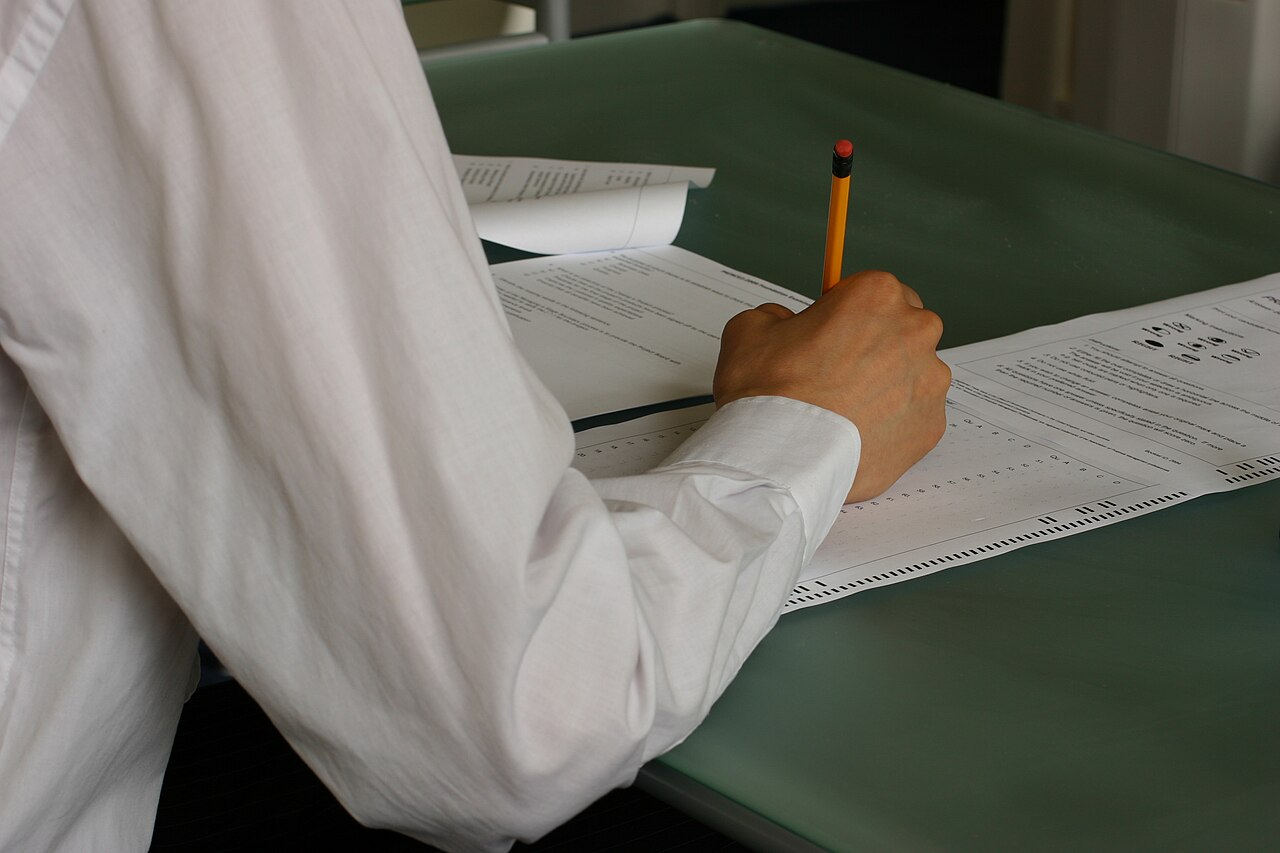
Image Credits: Wikimedia Commons / Alison wood
The generation effect: why making beats watching
The generation effect was first documented systematically by Norman Slamecka and Peter Graf in 1978. Their finding was simple: words that participants generated from cues, like completing hot-c_ld, were remembered better than words they simply read, like hot-cold. The small effort of filling in the blank created a real memory advantage.
That advantage comes from three things happening at once.
First, generation forces semantic elaboration: to produce an answer, you must access meaning, not just recognize a shape on screen. Second, it creates more distinctive memory traces.
When you solve something yourself, you encode not just the answer but the path you took to reach it, which gives your brain more routes back to the fact later. Third, generation involves retrieval practice: pulling information from memory strengthens the connections between new material and what you already know.
The effect has been replicated across hundreds of studies.
A study from Washington University in St. Louis found that learners who generated their own examples or explanations retained 30 to 50 percent more than those who simply reviewed the material. A Harvard University study found that learners who prepared to teach a topic performed 30 percent better on comprehension tests than those who studied to be tested.
The pattern is consistent: producing beats consuming.
Think of it as the difference between watching someone do push-ups and doing them yourself. Watching builds no muscle. Your brain works the same way with knowledge: the construction effort is the workout.
Why watching solution videos feels like learning
Solution videos exploit a quirk of human memory called fluency: the ease with which something is processed gets mistaken for how well it is learned. When an expert walks through a solution smoothly, your brain processes it fluently, and that fluency feels like understanding.
It is not. Recognition is not recall.
A Purdue University study found that students who tested themselves, a generative task, remembered far more than those who reread notes or textbooks. Rewatching a solution is a form of rereading: it re-exposes you to the material without asking you to rebuild it.
This creates the illusion of competence.
You recognize every step the presenter takes, so you conclude you could take those steps yourself. But recognition only proves you can follow along, not that you can generate the sequence from a blank page.
That is why students overestimate how ready they are, a pattern covered in why students overestimate how ready they are for exams, and why cramming fails for long-term learning.

The honest use of solution videos is as worked examples, not as study sessions.
Research on worked examples shows they help beginners who lack the prior knowledge to attempt problems productively. The key is sequence: attempt first, then watch.
The attempt primes your brain to notice exactly where your understanding broke down, and the video then repairs the right gap instead of washing over you.
How to make practice problems actually work
Doing problems is not automatically effective either. Staring at a problem, peeking at the answer, and nodding along is just a solution video with extra steps. The research points to specific ways to get the generation effect working.
Attempt before you look. Cover the solution completely and work from a blank page. Even a failed attempt helps: trying to retrieve information, even unsuccessfully, makes the correct answer stickier when you finally see it. If you get stuck after a genuine effort, that is the moment a solution video earns its place.
Retrieve, don't reread. After studying a topic, close the book and write down everything you can recall. Use blank sheets to reconstruct definitions, derivations, and solution steps. This is active recall in practice, and it is the single most efficient study technique in the literature.
Space the practice. A problem solved today and again in three days builds more durable memory than the same problem solved ten times today. Spacing works because each retrieval happens after some forgetting, which makes the retrieval effortful again. See how spaced repetition intervals work for the timing.
Why fast feedback makes or breaks the method
Get feedback fast. The generation effect has a sharp edge: confidently generating a wrong answer can reinforce the error. The Bias Codex review of the effect warns that generation helps most when the learner produces a correct or corrected answer, and that unguided generation without timely feedback can waste time or strengthen misconceptions. Check your work against solutions immediately, and correct errors on the spot.
Explain out loud. Teaching forces generation at a deeper level. Try explaining a solution as if to a friend, and notice where your explanation wobbles. Those wobbles are the exact gaps to fix, and explaining out loud beats silent review for exactly this reason.
One more honest note: generation is not universally superior to clear instruction, especially for unfamiliar complex material.
A beginner who has never seen a concept cannot generate a solution from nothing. Worked examples and good explanations build the foundation; practice problems build the structure on top.
Use both, in that order.
What is the generation effect?
It is the finding that information you generate yourself is remembered better than information you read or hear. First documented by Slamecka and Graf in 1978, it has been replicated across hundreds of studies and underlies techniques like retrieval practice and self-testing.
Why do solution videos feel so helpful if they are not?
Because fluent processing feels like learning. An expert's smooth explanation is easy to follow, and your brain mistakes that ease for mastery. Recognition feels like recall, but only recall transfers to the exam.
Should I stop watching solution videos entirely?
No. Use them as worked examples after attempting the problem yourself.
Attempt first to find your gaps, then watch to repair exactly those gaps. Watching before attempting is the sequence that wastes time.
How many practice problems should I do?
Fewer than you think, if each one is done properly. One problem attempted from a blank page, checked immediately, and revisited after a few days beats ten problems skimmed in a row. Quality of retrieval beats quantity of exposure.
What if I cannot solve the problem at all?
That is fine, and it is still useful. A genuine attempt followed by immediate corrective feedback produces better retention than passive review. The attempt primes your attention so the solution lands where it is needed.
The bottom line
Practice problems beat solution videos because your brain remembers what it builds, not what it watches. Attempt first, retrieve often, space your practice, and check your work fast. Then let solution videos do what they do best: show you the clean version of a path you already started walking.
Latest in Education & Study
- What is active recall and how to use it
- How spaced repetition intervals actually work
- Why cramming is ineffective for long-term learning
- How to take notes you actually remember
One evidence-based study technique each week. Subscribe to the Rive News newsletter.
Related stories
Why Do I Blank Out During Tests Despite Studying: Test Anxiety and Retrieval Failure
Blanking out in exams is retrieval failure, not missing knowledge. Anxiety drains working memory; rereading builds false confidence. Here

How to Study for Exams Without Burning Out
Sleep 7-8 hours, study in 25-50 minute blocks, and exercise daily. The science-backed way to study for exams without burning out, and what
Why Do I Forget What I Just Read? Science Has an Answer
You forget what you just read because of the forgetting curve, mapped by Ebbinghaus in 1885. Science explains why memory fades fast and how