
How baking powder lifts cake without yeast
By Rive News / Research desk | Rive News / Published October 28, 2026 at 9:00 AM PKT
Key takeaways
- Baking powder is bicarbonate plus dry acids, kept apart by cornstarch until liquid arrives.
- Liquid starts the first gas release, and oven heat triggers a second, larger release.
- The batter must set around those bubbles before they escape, or the cake falls flat.
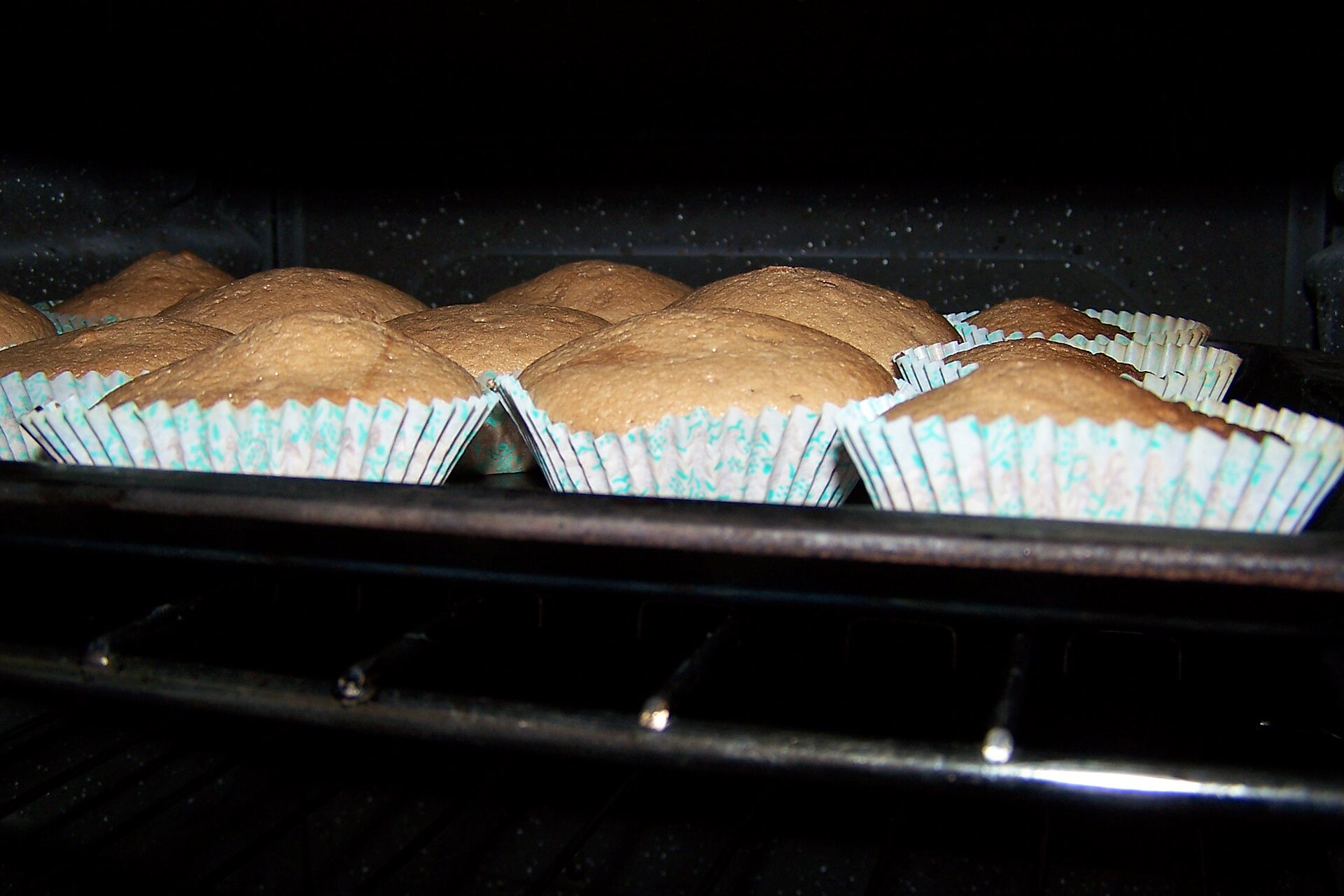
[Fairy cakes baking in an oven.] Photograph: Wikimedia Commons contributor
Image Credits: Wikimedia Commons
Yeast lifts bread by fermenting slowly over hours, but a cake cannot wait that long. Cake batter is soft, rich, and baked within minutes of mixing, so it needs a faster way to fill with gas. Baking powder supplies that speed in a small white tin.
The powder works through chemistry, not biology. It carries both halves of an acid-base reaction in dry form, and water plus heat set them off. This article explains that reaction, including the ingredients, the two release stages, why timing matters, and how baking powder differs from yeast and baking soda.
What is actually inside baking powder
Baking powder has three parts. The base is sodium bicarbonate, better known as baking soda.
The acids are dry food acids such as cream of tartar or sodium aluminium phosphate. The third part is a buffer, usually cornstarch, which keeps the acid and base apart while the powder sits in the tin.
ThoughtCo explains the pairing simply: baking powder contains baking soda and a dry acid, and when liquid is added, the two react to form bubbles of carbon dioxide gas. Without liquid, the dry mixture stays quiet on the shelf.
That self-contained design is the whole point. Baking soda alone needs an acid from the recipe, such as buttermilk or lemon juice, to release gas. Baking powder brings its own acid, so it works in plain milk batters with no sour ingredient in sight.
The first release happens as soon as batter gets wet
Mixing starts the clock. As soon as water, milk, or eggs wet the powder, the acid dissolves and meets the bicarbonate. The reaction produces carbon dioxide, water, and a salt, and the gas forms tiny bubbles throughout the batter.
Those bubbles do not appear from nothing. Creaming butter with sugar and beating eggs already fold small air pockets into the batter. The carbon dioxide fills and expands those pockets, turning microscopic air cells into a rising foam.
ThoughtCo warns that this reaction starts immediately, so recipes should be baked right away before bubbles disappear. Over-mixing also hurts, since stirring knocks gas out of the batter faster than the reaction can replace it.
The second release waits for oven heat
Most modern baking powder is double-acting, meaning it releases gas in two stages. The first stage runs at room temperature when liquid arrives. The second stage waits for heat and releases the bulk of the gas in the oven.
LibreTexts puts numbers on that split: before baking, about 15 percent of the carbon dioxide is released in the cold stage, while 85 percent is released in the oven starting at about 105 degrees Fahrenheit. The cold stage primes the batter, and the oven stage does the heavy lifting.
That staging is a practical gift. A batter that only released gas at mixing would deflate while the baker greased the tin and preheated the oven. Double-acting powder holds most of its power in reserve until the batter is safely in the heat.
How bubbles become cake structure
Gas alone does not make cake. The batter must trap the bubbles and then set around them before they escape.
As the oven warms the batter, starch granules absorb water and swell, while egg proteins firm up. LibreTexts notes that this setting starts at about 140 degrees Fahrenheit and is mostly complete around 167 degrees Fahrenheit.
Before that window, the batter is fluid enough for bubbles to grow. During it, the walls around each bubble stiffen into crumb. After it, extra gas simply escapes through the porous structure instead of lifting the cake further.
That sequence explains several common failures. An oven that runs cool lets bubbles escape before the crumb sets, giving a flat cake.
Opening the oven door early can collapse a half-set crumb. Too much baking powder makes bubbles faster than the batter can hold, so the cake rises high and then sinks in the middle.
[Apple cake served with vanilla ice cream.] Photograph: Wikimedia Commons contributor
Image Credits: Wikimedia Commons
Why yeast cannot do this job for cake
Yeast and baking powder both make carbon dioxide, but on very different clocks. Yeast ferments sugars slowly, needing time, warmth, and a strong gluten network to hold gas for hours. Bread dough supplies all three, while cake batter supplies none of them.
Cake batter is weak by design. It has little gluten development, since heavy kneading would make it tough, and it is baked within minutes. Yeast gas would arrive too late and escape through the soft batter before the crumb set.
Flavour matters too. Yeast fermentation adds yeasty, bread-like notes that suit a loaf but clash with a vanilla sponge. Baking powder leaves a neutral crumb, letting butter, vanilla, and fruit carry the flavour.
Baking powder versus baking soda
The two powders are related but not interchangeable. Baking soda is pure bicarbonate and needs an acid in the recipe to work. Baking powder is bicarbonate plus its own acid, so it works in neutral batters.
Using baking soda where baking powder belongs leaves unreacted base behind, which tastes soapy and can yellow the crumb. Using baking powder where baking soda belongs can leave excess acid and a sour or metallic note. Recipes choose one for a reason, and swapping them changes both rise and flavour.
Quantity matters as much as choice. More powder does not mean more rise beyond a point, since excess gas overwhelms the batter structure. A cake that rises fast and sinks in the middle often has too much leavener, not too little.
Practical rules for reliable rise
Sift baking powder with the dry ingredients before adding liquid. LibreTexts recommends this for even distribution, since a clump of powder releases all its gas in one spot and leaves a hole beside flat crumb.
Preheat the oven fully before mixing wet and dry parts. The second gas release starts near 105 degrees Fahrenheit, so batter sitting on the counter wastes its cold-stage gas while the oven catches up. Have the tin greased and ready.
Work quickly but gently once liquid is in. Fold until just combined, pour into the tin, and bake at once. Vigorous beating after the powder is wet knocks out the bubbles the reaction just made.
Check freshness before an important bake. Old baking powder loses strength as moisture creeps into the tin. A spoonful fizzing vigorously in hot water shows it is still active, while a weak fizz means a flat cake is likely.
Frequently asked questions
Can I make baking powder from baking soda at home?
Yes, in a pinch. A common home mix combines baking soda with cream of tartar in a ratio of about one part soda to two parts acid. It works for a single bake, but it lacks the cornstarch buffer and the second heat-activated acid, so it acts faster and stores poorly.
Why does my cake sink in the middle?
Sinking usually means the crumb set before the gas finished expanding, or excess gas overwhelmed a weak batter. Common causes are too much baking powder, an oven running cool, or opening the door before the structure set. Measure carefully and keep the door closed until the cake looks firm.
Does baking powder expire?
Yes, it weakens over months as moisture reaches it, especially in humid kitchens. Store it sealed and dry, and test it in hot water before baking if the tin has been open a long time. A lively fizz means it still has power.
Can baking powder replace yeast in bread?
No, not well. Bread needs hours of slow gas production and a strong gluten network, while baking powder releases its gas in minutes. A baking-powder loaf, sometimes called a quick bread, has a cake-like crumb rather than a chewy bread texture.
The bottom line
Baking powder lifts cake without yeast by carrying its own chemistry to the batter. Liquid wakes the acid and bicarbonate, oven heat releases the larger second wave of gas, and the batter sets around the bubbles into crumb. Respect the timing, sift it evenly, and bake at once, and the small white powder does in minutes what yeast needs hours to achieve.
Tags: baking powder, cake, leavening, baking
Rive News's research desk covers food science and everyday cooking questions, checking each claim against published sources before writing.
Related
- Baking soda and baking powder: what is the difference
- Why some cakes sink in the middle
- Why pancakes get fluffy from baking powder
- Why cake sinks in the middle after baking
Subscribe for one food science explainer each week.
Rive News publishes researched explainers with named sources and a corrections note on every article.
Related stories
Why Does Bread Go Stale Faster in the Refrigerator?
Bread goes stale faster in the fridge because starch recrystallizes fastest near 4°C. Here is the retrogradation science and the right way
Baking soda and baking powder: what's the difference?
Baking soda is pure sodium bicarbonate; baking powder adds two dry acids for double-acting lift. Learn when to use each, plus exact
What Is the Maillard Reaction in Simple Terms?
The Maillard reaction is the browning chemistry between amino acids and sugars above 140 C that creates the crust, color, and rich flavor