
Why do pancakes get fluffy? The baking powder timing that matters
By Rive News / Research desk | Rive News / Published October 24, 2026 at 9:00 AM PKT
Key takeaways
- Baking powder releases carbon dioxide twice: once when the batter gets wet, and again when heat hits the griddle.
- The gas bubbles get trapped in a protein mesh built by flour and eggs, which is what gives a pancake its risen, spongy crumb.
- The powder starts reacting the moment it touches liquid, so batter that sits too long bakes up flat.
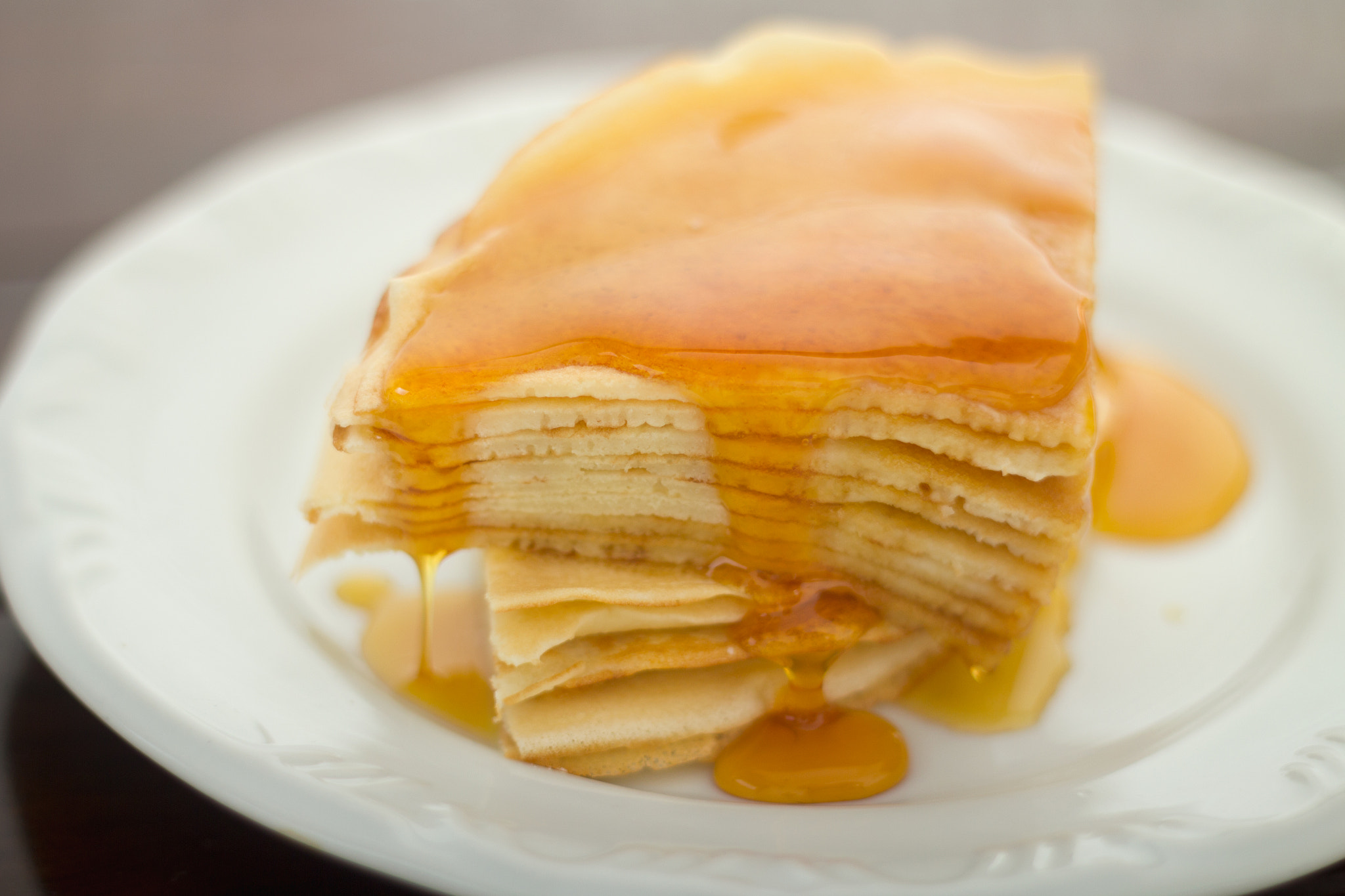
[A stack of golden-brown pancakes, their risen layers showing the air pockets that carbon dioxide built.] Photograph: Ian Cv
Image Credits: Wikimedia Commons
A fluffy pancake is not puffed up by air you whisked in. It is lifted by carbon dioxide gas, made inside the batter by baking powder, a dry leavening mix that turns moisture and heat into tiny bubbles.
Those bubbles arrive in two waves. The first starts the second liquid touches the powder.
The second fires when the batter hits the hot griddle. Get the timing right and the pancake rises; get it wrong and it stays flat.
This article explains what baking powder actually is, how its two-stage gas release works, why timing decides whether pancakes turn fluffy or flat, and what can still go wrong.
What baking powder actually is
Baking powder looks like a single ingredient, but it is a team of three. According to the food science project "Chemistry of Baking Ingredients 1" from Science Buddies, written by Andrew Olson, PhD, and Teisha Rowland, PhD, a typical baking powder contains corn starch, sodium bicarbonate (baking soda, the base), and two acids: sodium aluminum sulfate and monocalcium phosphate.
Each part has a job. The corn starch is a filler that keeps the powder dry on the shelf. The baking soda and the acids stay inert while dry, and nothing happens until liquid arrives.
That dry stability matters. A leavening agent that reacted in the can would be useless by the time you opened it. The starch buys the product its long shelf life.
Baking powder also differs from baking soda in one practical way. Baking soda needs an acid in the recipe, such as buttermilk or yogurt, to do anything at all. Baking powder carries its own acids, so it works in any batter, as the baking reference site Baking Bites explains.
How the two-stage gas release works
When liquid hits baking powder, the base and the acids dissolve and react. One product of that reaction is carbon dioxide gas, and that gas is the entire reason the powder exists.
Almost every baking powder sold in grocery stores is "double-acting," according to Baking Bites, and the name describes two timed bursts of gas. The fast-acting acid, monocalcium phosphate, reacts with the baking soda as soon as the batter gets wet. The slow-acting acid, sodium aluminum sulfate, waits for heat and reacts once the batter warms on the griddle.
Science Buddies describes the logic behind the design: "the idea behind double-acting baking powder is that a greater proportion of the baking powder reaction (and hence carbon dioxide production) will happen during baking in the oven, rather than while you are still stirring the batter." In theory, that shift means more air spaces in the finished product, and fluffier results, than a single-acting powder would give.
The bubbles do not rise the pancake by floating away. They get trapped.
The air spaces in a muffin, biscuit, or pancake are surrounded by a meshwork of proteins from the flour and eggs, as Science Buddies notes, and that mesh holds the gas in place while heat sets the structure around it. A similar trapped-gas structure is why some cakes sink in the middle when the gas escapes before the crumb sets.
Amount matters as much as timing. Baking guides commonly suggest about one teaspoon of baking powder per cup of flour, according to the Oreate AI baking guide. Too little and the batter never lifts; too much and the pancake can taste bitter or soapy, and may rise fast and then collapse.
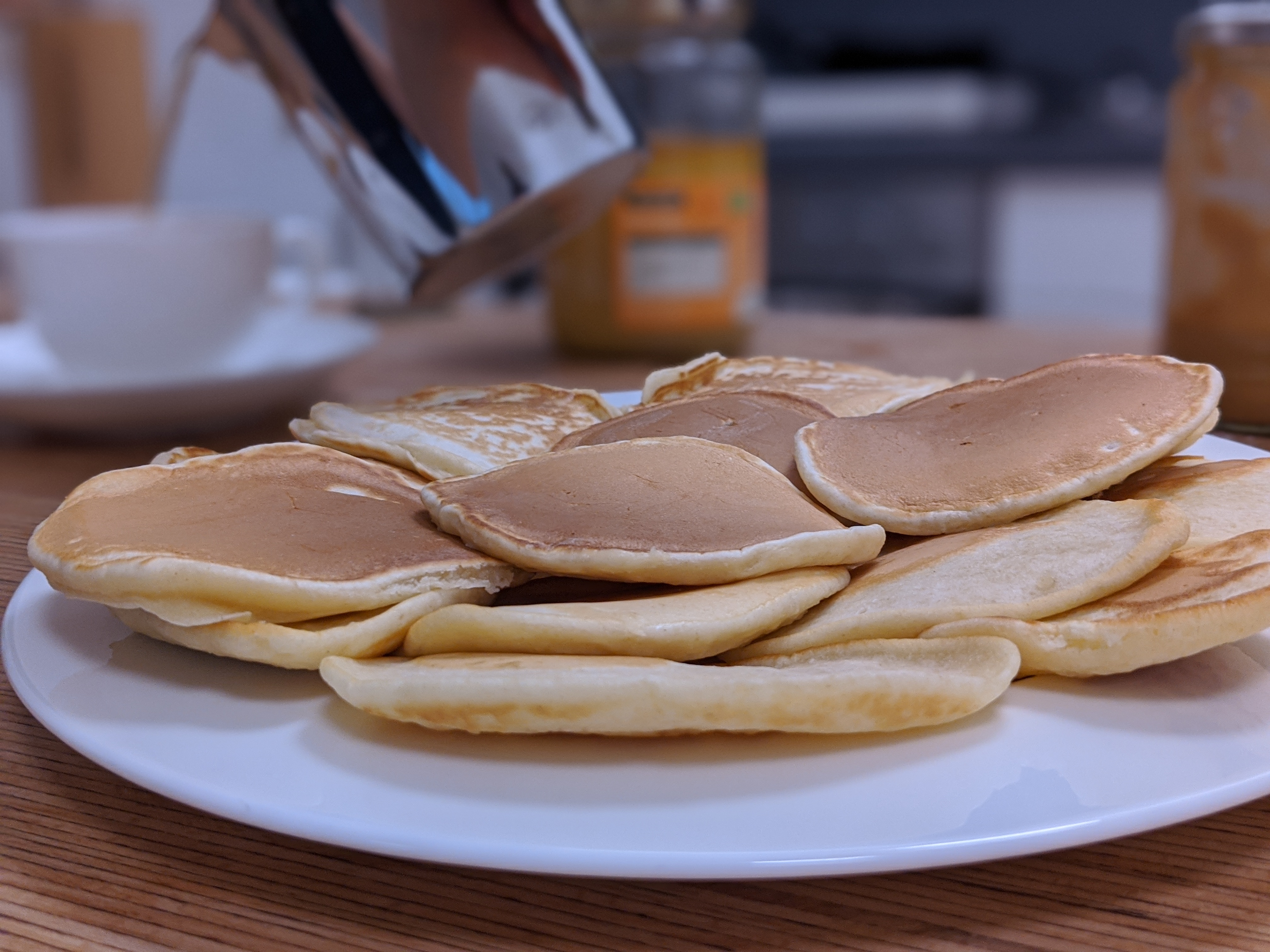
[Pancakes cooking on a hot griddle, where the slow-acting acid reacts with heat and releases the second wave of carbon dioxide.] Photograph: Shisma
Image Credits: Wikimedia Commons
Why timing decides fluffy or flat
The first gas release starts the instant the powder gets wet. That puts a clock on your batter. Stir the wet and dry ingredients, and you have already spent part of the leavening budget.
Science Buddies makes the point bluntly in its muffin procedure: when portioning batter into cups, "do your best to start each muffin off with the same amount of batter," but "do not want spend too much time on this, because the baking powder starts working as soon as it touches liquid." The same warning applies to pancakes. A batter that rests on the counter for twenty minutes has already given up its first burst of bubbles.
The double-acting design buys you forgiveness, not unlimited time. The second, heat-triggered reaction still fires on the griddle, which is why double-acting powder is the standard. But a batter that sat long enough to lose its early bubbles will never be as tall as one cooked promptly.
Lumps are another timing trap. Overmixing to smooth every lump develops gluten, which makes pancakes tough instead of tender.
A few small lumps are fine, and gentle stirring protects both the texture and the gas you just created. If you enjoy the chemistry of the kitchen beyond baking, the way onions make you cry is another case of compounds released the moment cells are disturbed.
Heat level plays a supporting role. A griddle that is too cool sets the pancake slowly, giving bubbles time to escape before the structure firms. A properly hot griddle sets the bottom fast, trapping the expanding gas where it belongs.
What can still go wrong
Expired baking powder is the quietest cause of flat pancakes. The powder loses strength as it absorbs moisture from the air, and an old can simply makes less gas.
You can test it before you cook. Drop half a teaspoon into hot water; vigorous fizzing means it is still active. Weak fizz or none means it is time for a fresh can.
Wrong ratios cause their own trouble. Doubling the powder does not double the fluff. Excess leavening makes big, fragile bubbles that collapse, and can leave a metallic or bitter taste, especially with regular (non-aluminum-free) powders, according to Baking Bites.
Buttermilk complicates the picture in a good way. Its acidity reacts with baking soda directly, adding an extra early lift, which is why many classic pancake recipes pair the two. Acid plus dairy can also curdle milk, though, a separate piece of kitchen chemistry worth knowing when you swap ingredients.
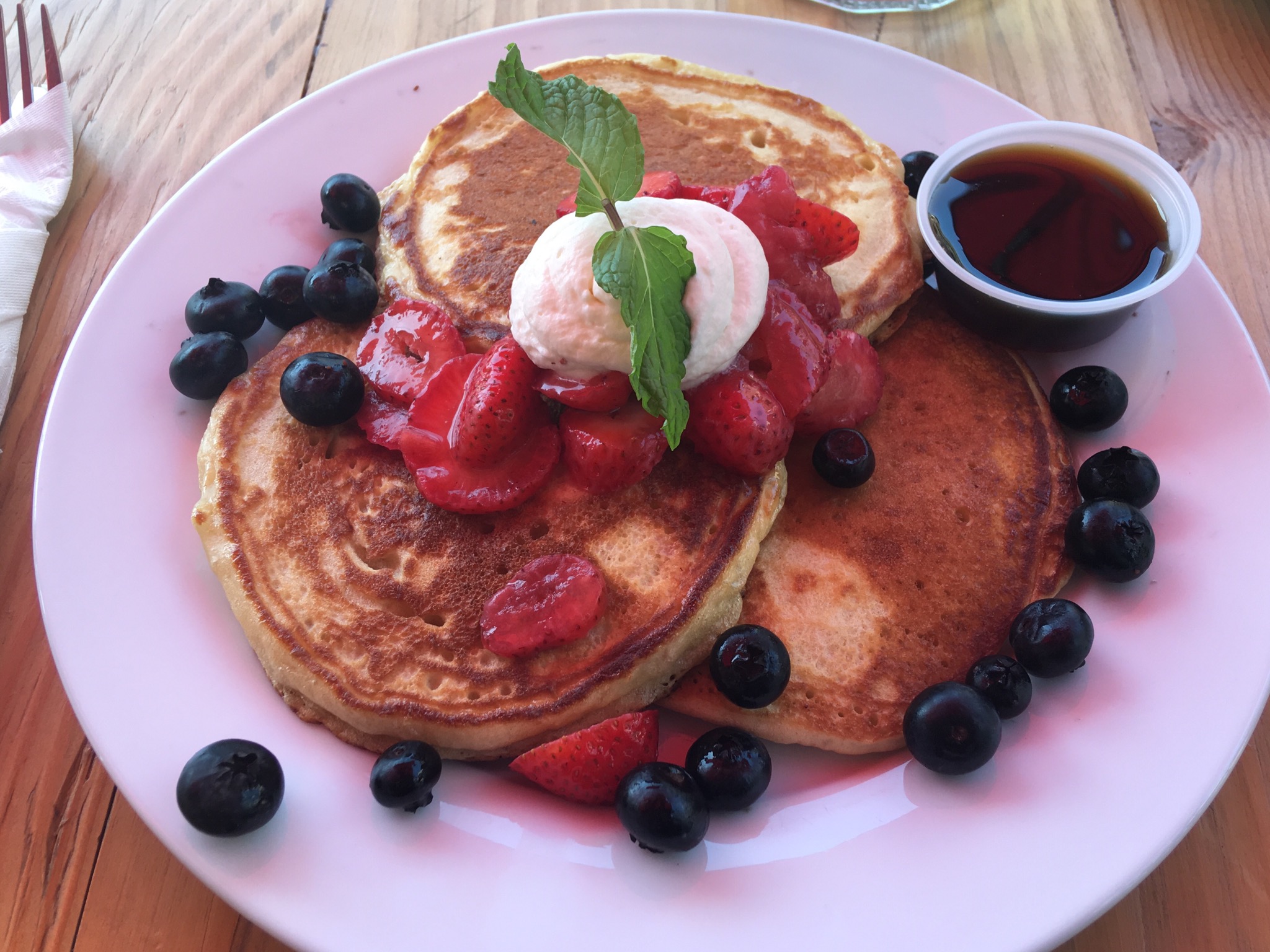
[A short stack of pancakes topped with fruit, showing the tall, even rise that comes from well-timed leavening.] Photograph: Nightcrafter
Image Credits: Wikimedia Commons
Can I use baking soda instead of baking powder in pancakes?
Only if the recipe has enough acid, such as buttermilk, yogurt, or lemon juice. Baking soda has no acid of its own, so in a plain milk batter it barely reacts and can leave a soapy taste. As a rough substitute, use about one-quarter teaspoon of baking soda per teaspoon of baking powder, and only in an acidic batter.
Does old baking powder still work?
Not reliably. Moisture from the air slowly triggers the reaction inside the can, so a powder that is years past its date makes far less carbon dioxide. Test it with hot water first; if it barely fizzes, replace it before you blame the recipe.
Why did my pancakes rise and then fall flat?
The most common cause is too much leavening or an overmixed batter. Big, weak bubbles expand fast and collapse before the crumb sets.
Overmixing also builds tough gluten that cannot hold gas well. Measure the powder carefully and stir just until the dry ingredients disappear.
Should pancake batter rest before cooking?
A short rest of five to ten minutes is fine and can hydrate the flour, but a long rest spends the first wave of gas. With double-acting powder you still get the heat-triggered second wave, so a brief rest will not ruin the batch. Resting for half an hour or more is what turns pancakes flat.
The bottom line
Pancakes get fluffy because baking powder makes carbon dioxide in two timed waves: one when the batter gets wet, and one when heat hits it. Those bubbles get trapped in a protein mesh from flour and eggs, and that trapped gas is the fluff. Mix gently, cook promptly, keep your powder fresh, and the timing works in your favor.
Tags: baking powder, pancakes, kitchen science
Written by the Rive News research desk, which covers everyday science with sourced explainers and no filler.
Related
- Why Do Onions Make You Cry? The Kitchen Chemistry Explained
- Why does milk curdle when heated or mixed with acid: the science
- Why do some cakes sink in the middle?
- What Is the Difference Between Granulated and Caster Sugar?
Get one practical explainer like this in your inbox each morning.
Rive News publishes sourced explainers. Facts are checked against public sources listed above; corrections are noted with an update timestamp.
Related stories
Why Does Bread Go Stale Faster in the Refrigerator?
Bread goes stale faster in the fridge because starch recrystallizes fastest near 4°C. Here is the retrogradation science and the right way
Baking soda and baking powder: what's the difference?
Baking soda is pure sodium bicarbonate; baking powder adds two dry acids for double-acting lift. Learn when to use each, plus exact
What Is the Maillard Reaction in Simple Terms?
The Maillard reaction is the browning chemistry between amino acids and sugars above 140 C that creates the crust, color, and rich flavor