
Why do some cakes sink in the middle?
By Rive News / Research desk | Rive News / Published October 20, 2026 at 9:00 AM PKT
Key takeaways
- Underbaking is the top reason a cake sinks in the middle, because the center never sets and collapses while cooling.
- Overmixed batter, a too-hot or too-cool oven, early door-opening, and wrong leavening amounts can also sink a cake.
- Test the very center with a skewer, bake for the full time, and measure leaveners precisely to prevent it.
A cake that sinks in the middle is one whose center collapses after baking, leaving a dip or crater while the edges stay tall. It often looks perfect through the oven window, then falls on the counter within minutes. The result tastes fine, but the texture turns dense and wet in the middle.
The collapse happens because the cake's inner structure was never strong enough to hold its own weight. During baking, proteins and starches form a network that traps air and steam. When that network is unfinished, overstretched, or weakened by bad ratios, the center falls as the steam condenses and the air contracts.
This article explains why some cakes sink in the middle, including underbaking, overmixing the batter, oven temperature mistakes, and ingredient ratio problems.
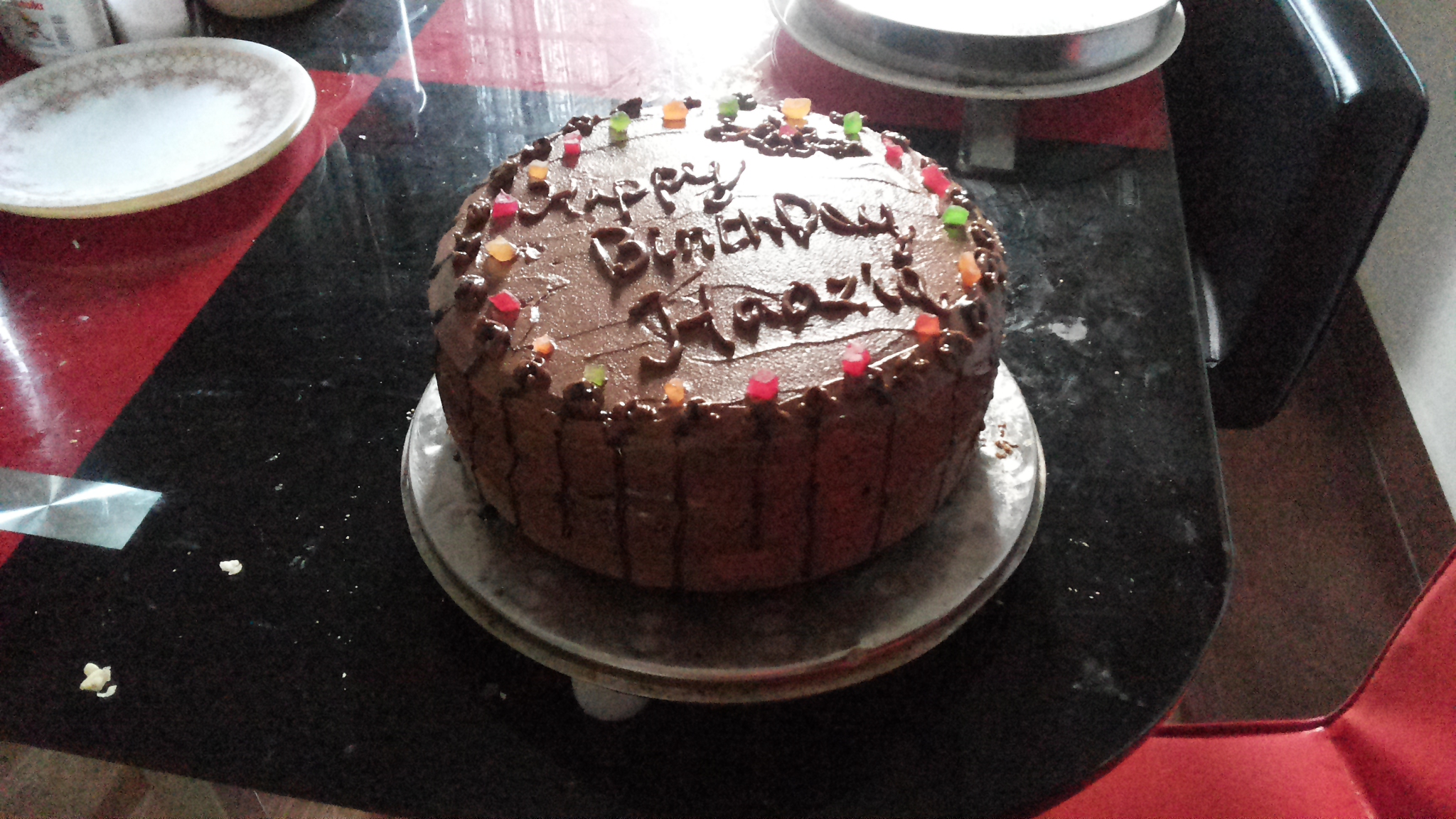
A homemade chocolate cake with frosting and candy decorations, served whole and even. Photograph: Wikimedia Commons contributor.
Image Credits: Wikimedia Commons
Underbaking: the most common cause
Underbaking is the most direct cause of a sunken center. A cake can look browned on top while the middle stays fluid or only partly set, according to A Grateful Kitchen. Once out of the oven, steam condenses and the air inside the crumb contracts.
If the proteins and starches have not formed a strong network, they cannot support the weight above them. The center drops while the firmer edges hold their height. Even a minute or two of underbaking can make the difference, as Holl at the Hob notes.
Shortening the bake after changing ingredients or pans can cause the same failure. A thicker batter or a cooler starting pan may need extra time, A Grateful Kitchen points out. The safe move is to follow the recipe's time range as a starting guide, then test the center near the later end.
The classic test is a skewer pushed into the very center of the cake. It should come out with a few moist crumbs, not wet batter and not bone dry, according to I Scream for Buttercream. Also look for edges that pull slightly away from the pan and a top that springs back when pressed lightly.
If the cake is still in the oven or goes back promptly while moist, it may finish setting. But a fully cooled collapse cannot usually be reversed, A Grateful Kitchen warns. Prevention, not repair, is the real fix here.
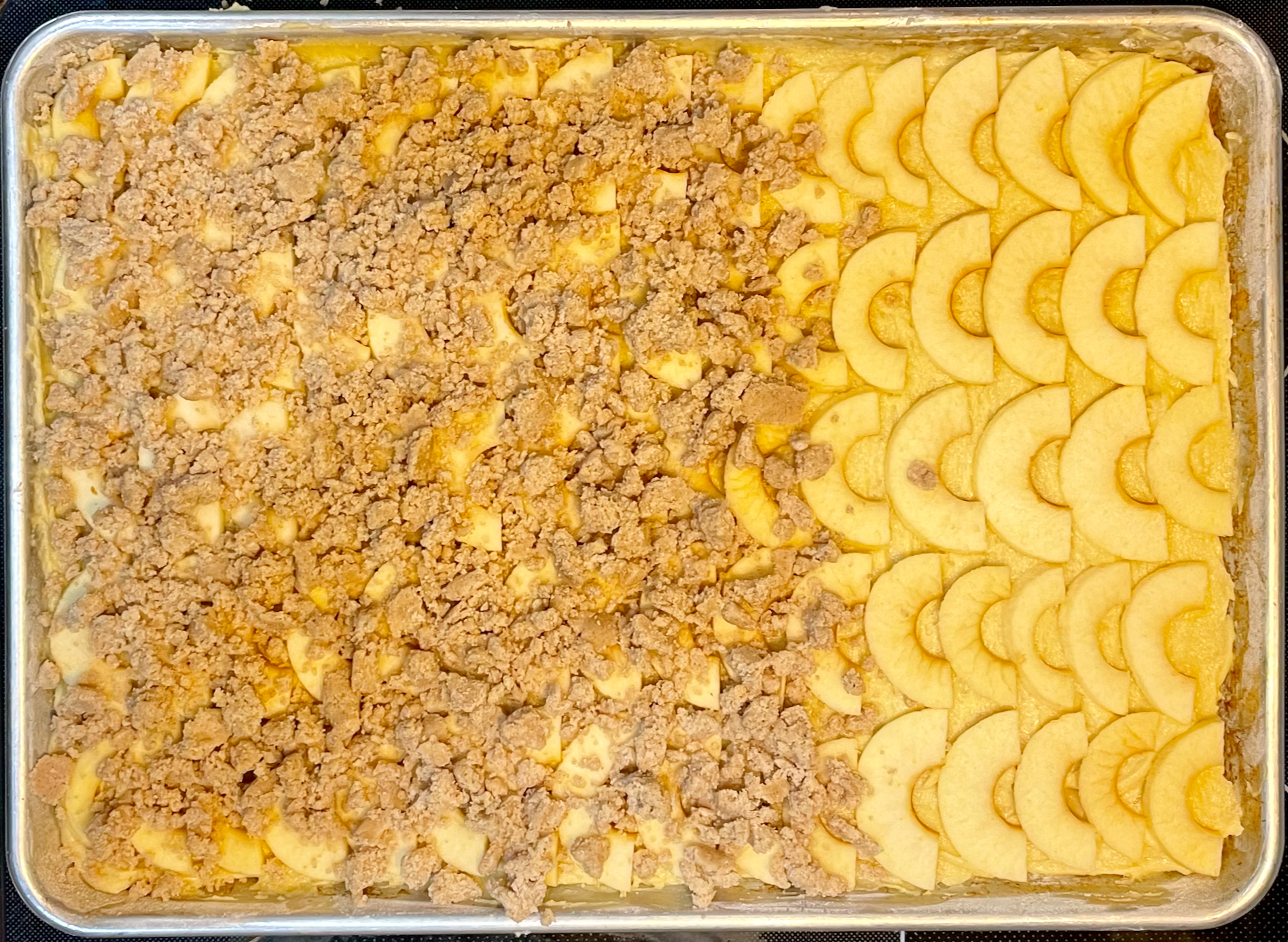
Raw batter being spread evenly in the pan, the stage where structure-building begins. Photograph: Wikimedia Commons contributor.
Image Credits: Wikimedia Commons
Overmixing the batter
Mixing develops gluten in the flour, and a little gluten gives a cake its structure. Too much mixing develops too much of it. The batter turns elastic instead of tender.
An overworked batter also traps excess air early on. Those oversized air pockets expand fast in the oven's heat, then burst or contract when cooling drags the center down. Holl at the Hob lists overmixing as one of the standard causes, and the Joy of Baking troubleshooting chart names an over-mixed batter as a reason cakes sink in the center.
The fix is restraint after the flour goes in. Mix only until the flour disappears and no dry streaks remain. A few final folds with a spatula beat another round with the mixer.
Tender cakes like vanilla or yellow cake are the most sensitive to this. Their crumb depends on minimal gluten, so a heavy hand shows up fast.
Oven temperature and opening the door
An oven that runs too cool delays the setting of the cake's structure. The center rises slowly on weak walls, then falls before the proteins ever firm up. Joy of Baking lists oven temperature that is too low among the causes of a cake sinking in the center.
An oven that runs too hot causes the opposite problem. The outside sets and browns while the inside stays raw, so the center has nothing solid to lean on. Either way, the middle loses.
Many home ovens run hotter or cooler than their dials claim. A basic oven thermometer, set on the middle rack, tells you what is really happening. Checking it once can explain repeat failures across many recipes.
Opening the door too early is a separate mistake with the same ending. Heat escapes before the batter sets, and most ovens can lose up to 50°F in just a few seconds with the door open, according to Holl at the Hob. The rush of cold air shocks the fragile air cells, and the rise deflates.
Wait until at least two-thirds of the bake time has passed before checking, and use the oven light and window instead of peeking.
Ingredient ratios and leavening mistakes
Baking is chemistry, and small measurement errors tip the balance. Too much sugar or fat interferes with protein setting, weakening the structure. Too little flour means there is not enough scaffolding to hold the rise, as Joy of Baking's troubleshooting chart notes.
Leavening deserves special attention. Extra baking powder or soda does not make a taller cake.
It makes the cake rise too fast, building walls too weak to stand, then crash. A 2022 King Arthur Baking survey found that over-measuring leaveners ranks among the top three causes of home baker failures, Holl at the Hob reports.
Measure leavening agents with proper measuring spoons, never by eye. Old leaveners are a quieter version of the same problem.
Baking powder loses its lift over time. Drop a spoonful into hot water. If it does not fizz vigorously, replace it.
Extra-moist cakes carry more risk. Banana bread, carrot cake, and gluten-free recipes have delicate structures, Holl at the Hob notes, so their ratios need to be especially accurate.
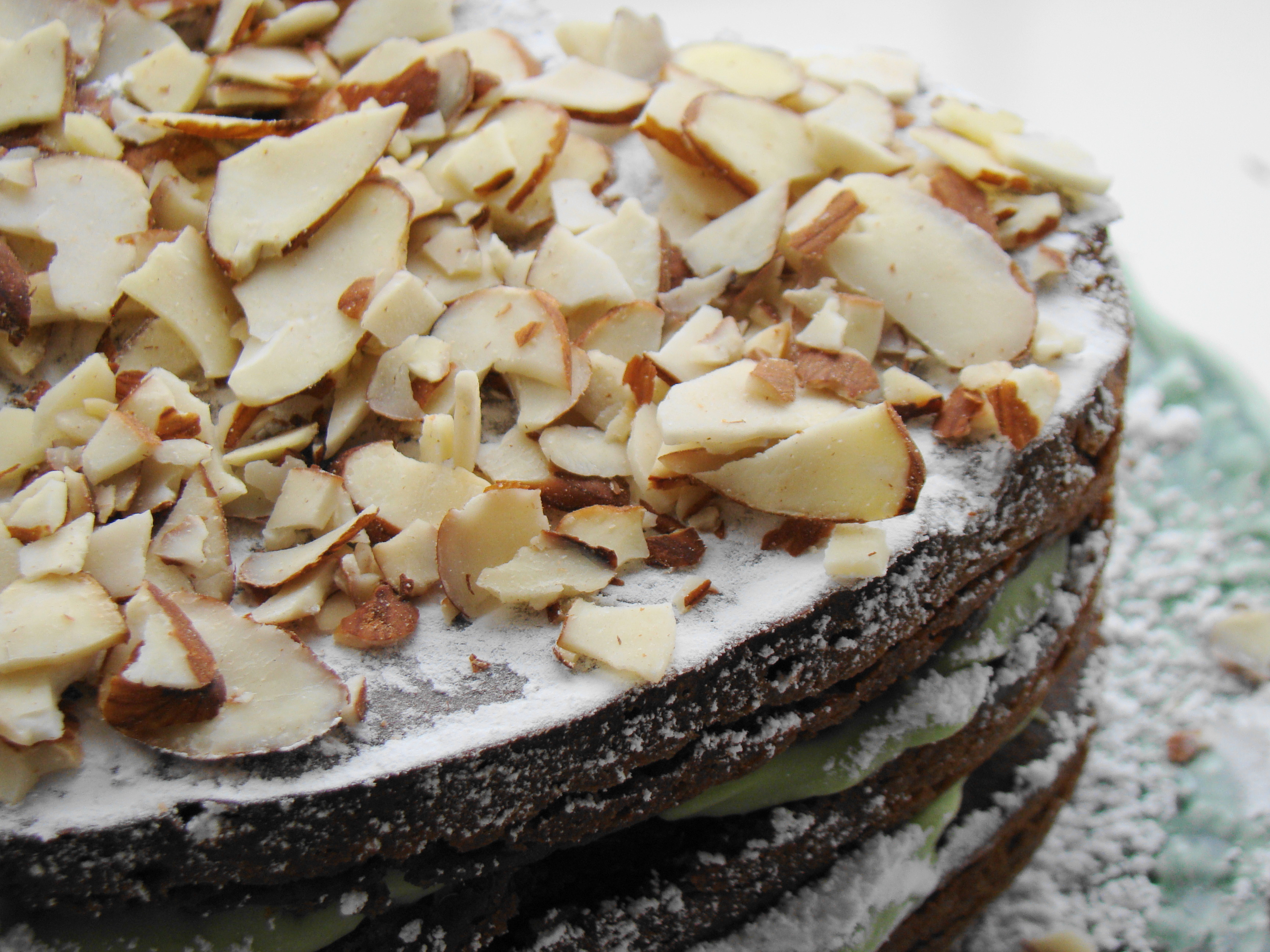
A finished frosted layer cake, the result when the center sets fully before cooling. Photograph: Wikimedia Commons contributor.
Image Credits: Wikimedia Commons
Frequently asked questions
Can I fix a cake that has already sunk in the middle?
Not fully, once it has cooled. You can level the top with a serrated knife, fill the dip with frosting or fresh fruit, and serve it anyway. A sunken cake also makes an excellent trifle base, layered with cream in a glass bowl.
How do I know when my cake is done without cutting it?
Push a skewer into the exact center and check for a few moist crumbs, with no wet batter clinging to it. The edges should pull slightly away from the pan, and the top should spring back under a light finger press. These three signs together are more reliable than the timer alone.
Why does my cake sink only sometimes, with the same recipe?
Ovens cycle heat unevenly, ingredients start at different temperatures, and batter depth changes bake time. A thicker batter in the same pan needs longer, even with the same ingredient list. Keeping notes on what changed each bake helps you spot the pattern.
Does pan color or size matter for sinking?
Batter depth matters more than anything. Pouring the same batter into a smaller pan makes a deeper layer that needs extra time in the center. Dark pans also brown the outside faster, which can fool you into pulling the cake before the middle is done.
The bottom line
Most sunken cakes trace back to an unfinished center, a batter mixed too hard, an oven running off its dial, or leavening measured carelessly. Each cause has a simple counter: test the center, mix gently, verify the oven, and measure precisely.
For your next bake, buy an oven thermometer and start checking doneness with a skewer instead of the clock alone. Those two habits fix the majority of sunken cakes. Leftover slices keep well covered in the fridge for a few days, and if you are unsure how long refrigerated food stays safe, our guide on how to tell if yoghurt has gone off covers the general rules for chilled leftovers.
Rive News is a research desk that tests kitchen advice against published food science and professional test-kitchen sources before writing about it.
Latest in Food & Cooking
- How to stop onions from burning when frying
- Why does pasta stick together after draining?
- What is the best way to reheat pizza?
- How to keep lettuce crisp for a whole week
Subscribe to the Rive News newsletter for one practical kitchen fix every week.
Published by Rive News. Information is for general purposes only.
Related stories
Why Does Bread Go Stale Faster in the Refrigerator?
Bread goes stale faster in the fridge because starch recrystallizes fastest near 4°C. Here is the retrogradation science and the right way
Baking soda and baking powder: what's the difference?
Baking soda is pure sodium bicarbonate; baking powder adds two dry acids for double-acting lift. Learn when to use each, plus exact
What Is the Maillard Reaction in Simple Terms?
The Maillard reaction is the browning chemistry between amino acids and sugars above 140 C that creates the crust, color, and rich flavor