
How to stop onions from burning when frying
By Rive News / Research desk | Rive News / Published October 20, 2026 at 9:00 AM PKT
Key takeaways
- Onions burn because their natural sugars scorch on high heat, so medium to low heat with regular stirring is the fix.
- A crowded pan steams onions instead of frying them, which leads to uneven cooking and burnt spots.
- A splash of water or stock and an immediate heat reduction can rescue onions that are catching.
Burnt onions taste bitter and ruin a dish before it even starts. The problem is common because onions contain a lot of natural sugar. Sugar caramelizes into sweetness at moderate heat, then tips into bitter char very fast once the heat climbs too high.
The good news is that burning onions is almost always a heat problem, not a skill problem. Small adjustments to temperature, pan size, and stirring keep the sugars in the sweet zone instead of the bitter one.
This article explains how to stop onions from burning when frying, including heat control, stirring and pan space, choosing the right fat, and a rescue plan for a pan that is catching.
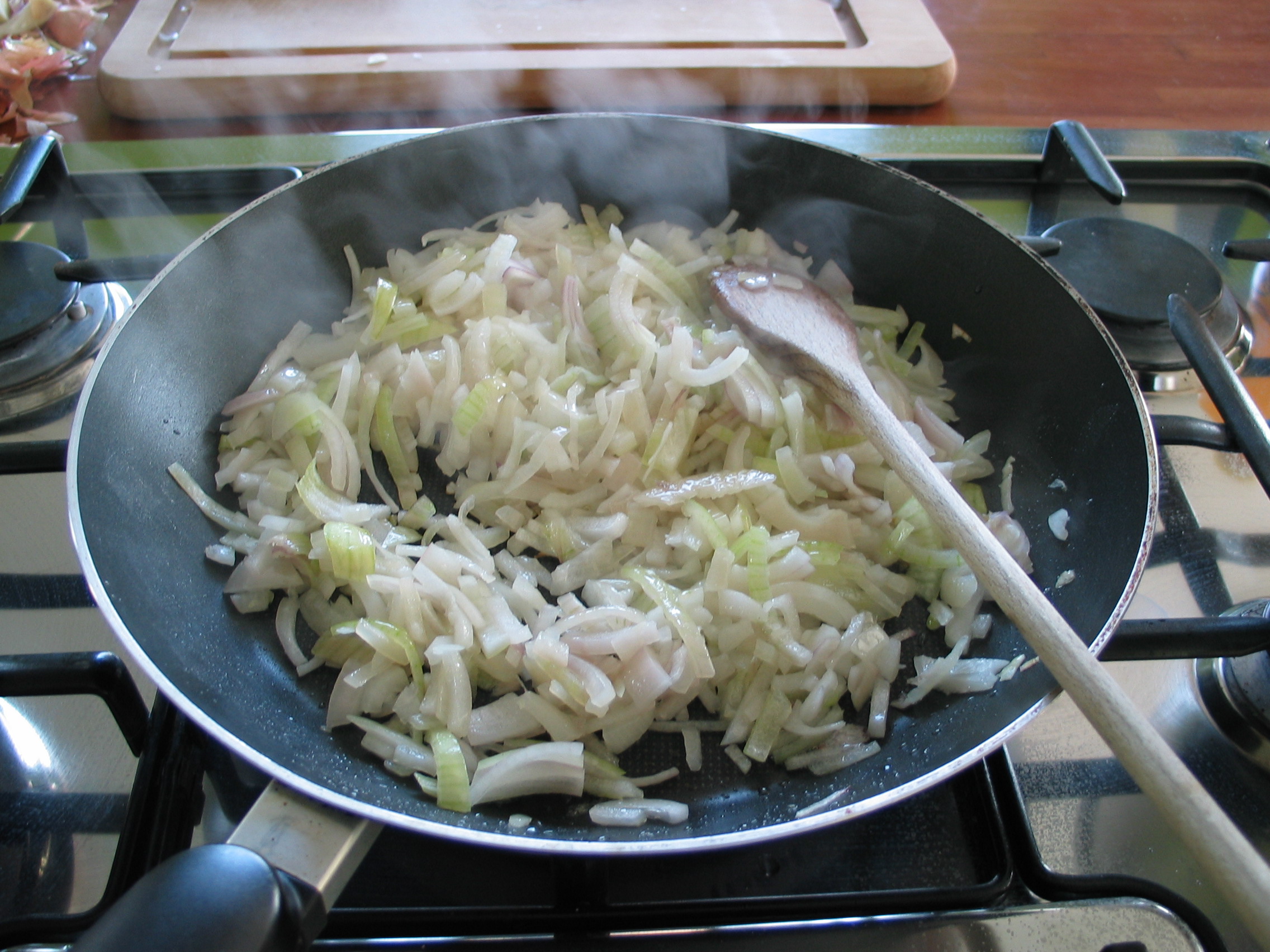
Sliced onions cooking in a frying pan, at the stage where heat control matters most. Photograph: Wikimedia Commons contributor.
Image Credits: Wikimedia Commons
Heat control: the main lever
Managing heat is the single most important factor. Use medium to low heat so the onions cook evenly, Voyo Eats advises. High heat makes the sugars in the onions burn before the insides have softened, and the result tastes bitter.
Start on medium heat and adjust down as the onions color. The slow approach lets caramelization happen gradually instead of scorching. Patience is doing most of the work here.
For deep-fried onion pieces, Voyo Eats gives an oil temperature window of 350 to 375°F (175 to 190°C). A thermometer takes the guessing out of it.
Below that range, onions soak up oil and turn greasy. Above it, they darken too fast.
Kitchen Wisdom describes a useful two-stage rhythm for soft onions. Cook sliced onions over medium heat for 15 to 20 minutes, stirring now and then, until they turn translucent and start browning. Then drop to low and continue for another 15 to 20 minutes, stirring more often, until they reach the color you want.
Stirring and pan space
Constant stirring keeps onion pieces from sitting in one hot spot. Voyo Eats recommends stirring right after the onions hit the pan and continuing regularly through the whole cook. A piece left still for too long browns fast on one side while the rest stays raw.
Do not overcrowd the pan. Too many onions release moisture all at once, so they steam instead of fry, Voyo Eats notes. Steaming sounds gentler, but it actually causes uneven cooking: some pieces sit in liquid while others catch on the hot pan bottom.
Use a wide pan or cook in batches. Every slice should touch the cooking surface in roughly a single layer. If you need a large quantity, two smaller batches beat one crowded pan every time.
Uniform cuts help too. Slices of similar thickness cook at the same rate, so none race ahead toward burning while others lag. Thinner slices need closer watching because they brown faster.
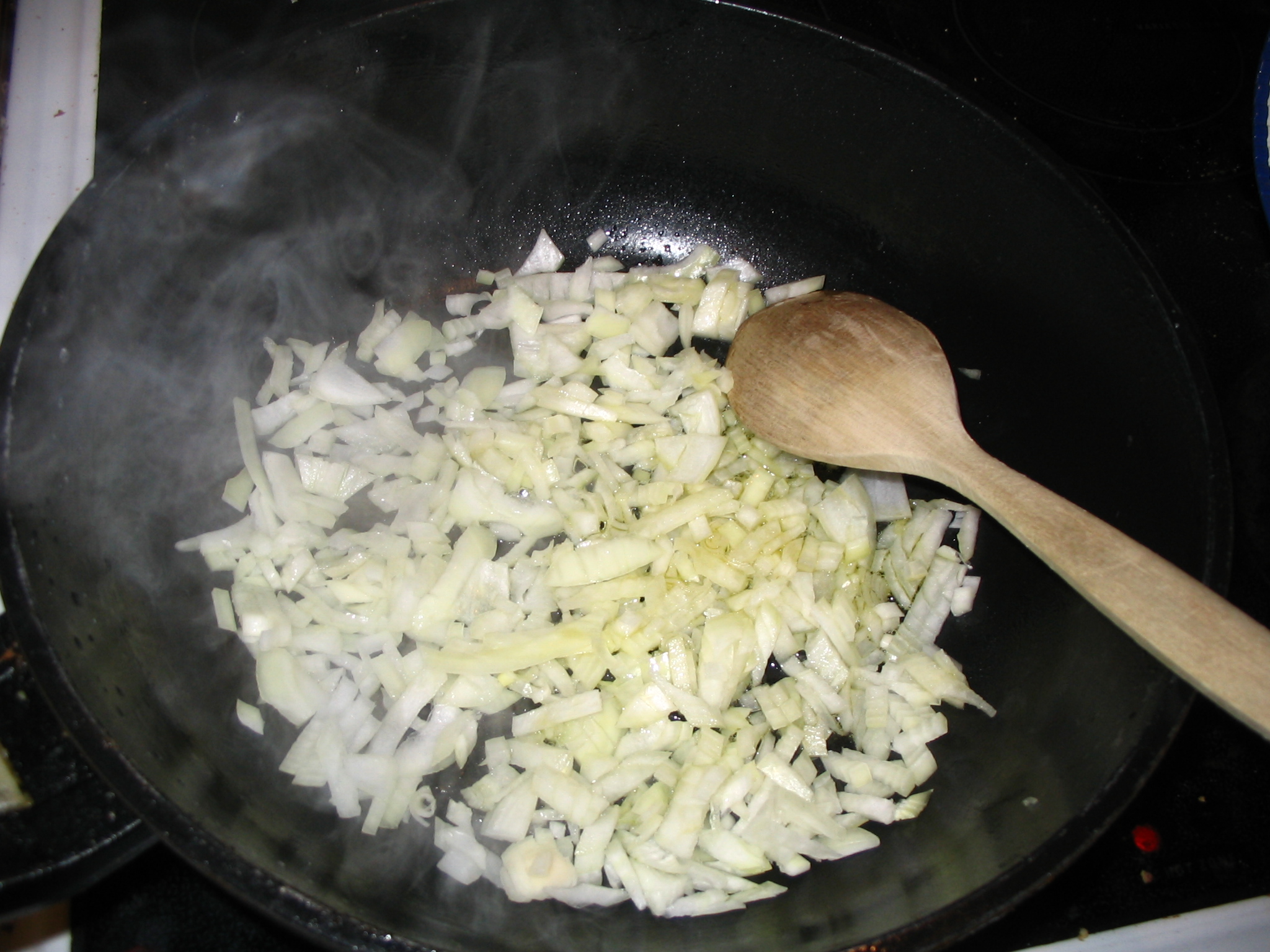
Onions frying in oil, starting to color at the edges where stirring keeps them even. Photograph: Wikimedia Commons contributor.
Image Credits: Wikimedia Commons
Choosing the right fat
The fat you fry in sets the ceiling for your heat. Every oil has a smoke point, the temperature where it starts breaking down and turning bitter. Frying past it burns the oil itself, not just the onions.
Olive oil has a lower smoke point than most frying oils, so it suits gentle, low-heat cooking but not hard searing, Voyo Eats points out. For hotter frying, neutral oils with higher smoke points, like vegetable or canola oil, are the safer choice.
Make sure the oil is properly hot before the onions go in. The fat should shimmer in the pan. If cold onions hit lukewarm oil, they sit and steam, then catch unevenly when the heat finally arrives.
One older technique adds salt early. A pinch of salt at the start draws the onion's juices out faster, so the slices soften evenly instead of scorching on the surface, according to a traditional-cooking write-up on LNG in Northern BC. It also brings out their natural sweetness.
The flour-coating trick and the water rescue
An old cookbook trick gives onions a thin protective coat. Toss the chopped onion in a bowl with a light dusting of flour and shake off the excess, working quickly so the flour stays dry, LNG in Northern BC explains. The flour forms a thin shell that insulates the onion from direct contact with the hot fat.
That shell does two things. It slows the frying so caramelization happens gradually, and it binds the moisture that would otherwise evaporate and let the surface burn. The result is soft, sweet, golden onions with less need for constant stirring.
If things are already going wrong, rescue is simple. Lower the heat immediately and add a splash of water or stock to the pan, Voyo Eats recommends. The liquid loosens anything starting to stick and drops the temperature before the sugars char.
Remove any pieces that have fully blackened. Burnt bits left in the pan keep the bitterness spreading to the rest. Once the pan is back under control, keep stirring and give the onions the time they need.
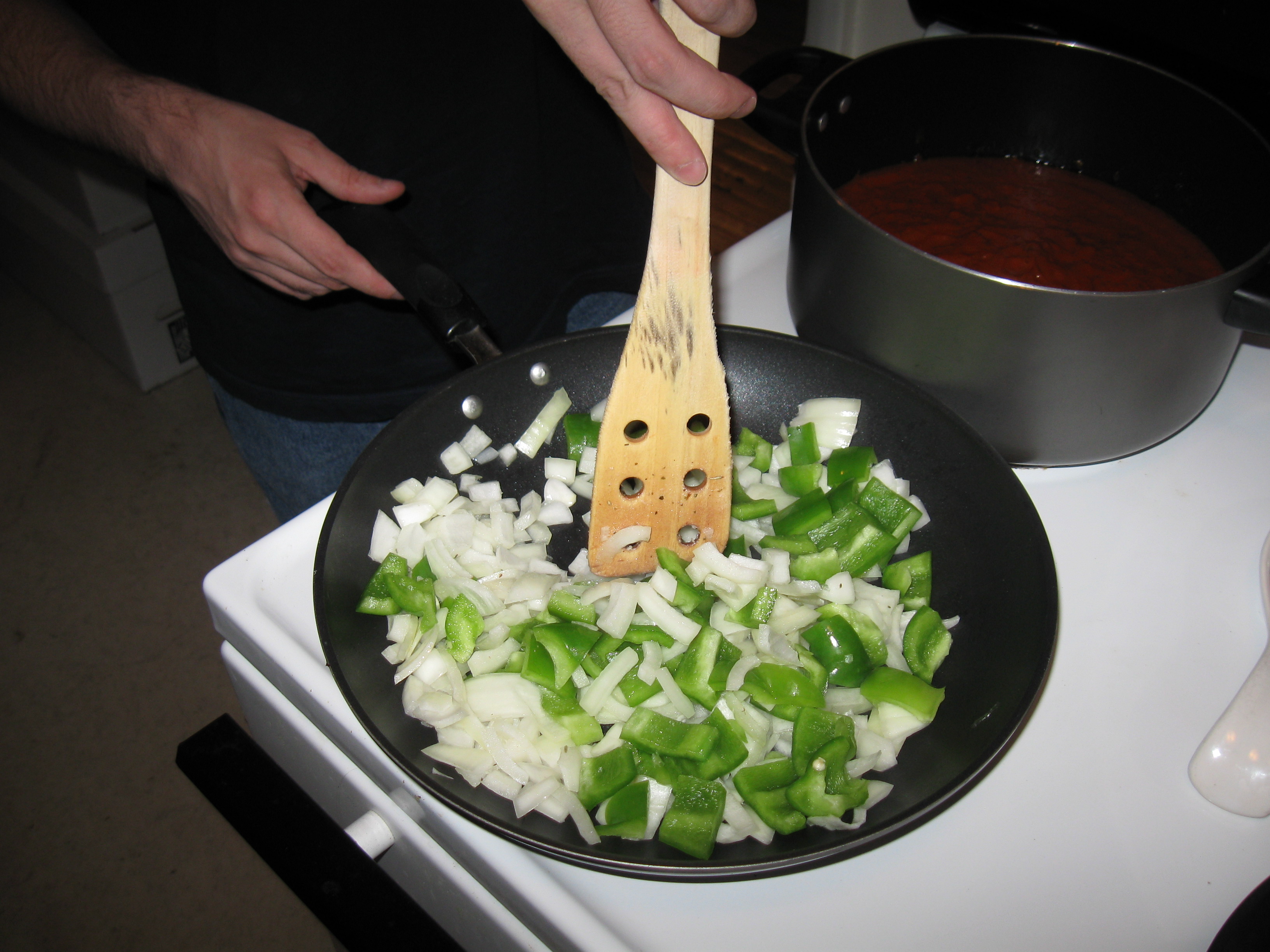
Sautéed onions and peppers sharing a pan, a common mix that rewards the same patient heat. Photograph: Wikimedia Commons contributor.
Image Credits: Wikimedia Commons
Frequently asked questions
Why do my onions always burn on the outside but stay raw inside?
The heat is too high for the thickness of your slices. The outside sugars scorch before the inside softens. Cut thinner, drop the heat to medium, and stir more often.
Can I fry onions in butter without burning them?
Butter adds great flavor but burns at a lower temperature than most oils. Use it on low heat only, or mix it with a neutral oil to raise the working temperature. Watch the milk solids, which brown first.
How long should frying onions take?
Soft, golden onions need about 30 to 40 minutes over low to medium heat, per Kitchen Wisdom's two-stage method. Deep, jammy caramelized onions can take up to an hour. If yours are done in five minutes, the heat was too high.
Should I cover the pan with a lid?
A lid traps steam and softens onions faster, which suits low-heat cooking, Voyo Eats notes. But trapped condensation can dilute the oil and turn frying into steaming. Lid on for softening, lid off for browning.
Do red, white, or yellow onions burn differently?
Yellow onions are the standard frying onion with balanced sugar. Sweet varieties like Vidalia carry more sugar and brown faster, so they need lower heat and closer watching. The technique stays the same; only the timing shifts.
The bottom line
Burning onions comes down to heat that is too high, a pan that is too crowded, or stirring that is too rare. Medium heat, space in the pan, and a splash of water when things catch will keep the sugars sweet instead of bitter.
Next time you fry onions, start on medium heat with a wide pan and set a timer for the first stir. That one habit prevents most burnt batches. And if you are building the onion base for a bigger meal, our guide on why pasta sticks together after draining keeps the other half of dinner trouble-free.
Rive News is a research desk that tests kitchen advice against published food science and professional test-kitchen sources before writing about it.
Latest in Food & Cooking
- Why do some cakes sink in the middle?
- Why does pasta stick together after draining?
- What is the best way to reheat pizza?
- How to keep lettuce crisp for a whole week
Subscribe to the Rive News newsletter for one practical kitchen fix every week.
Published by Rive News. Information is for general purposes only.
Related stories
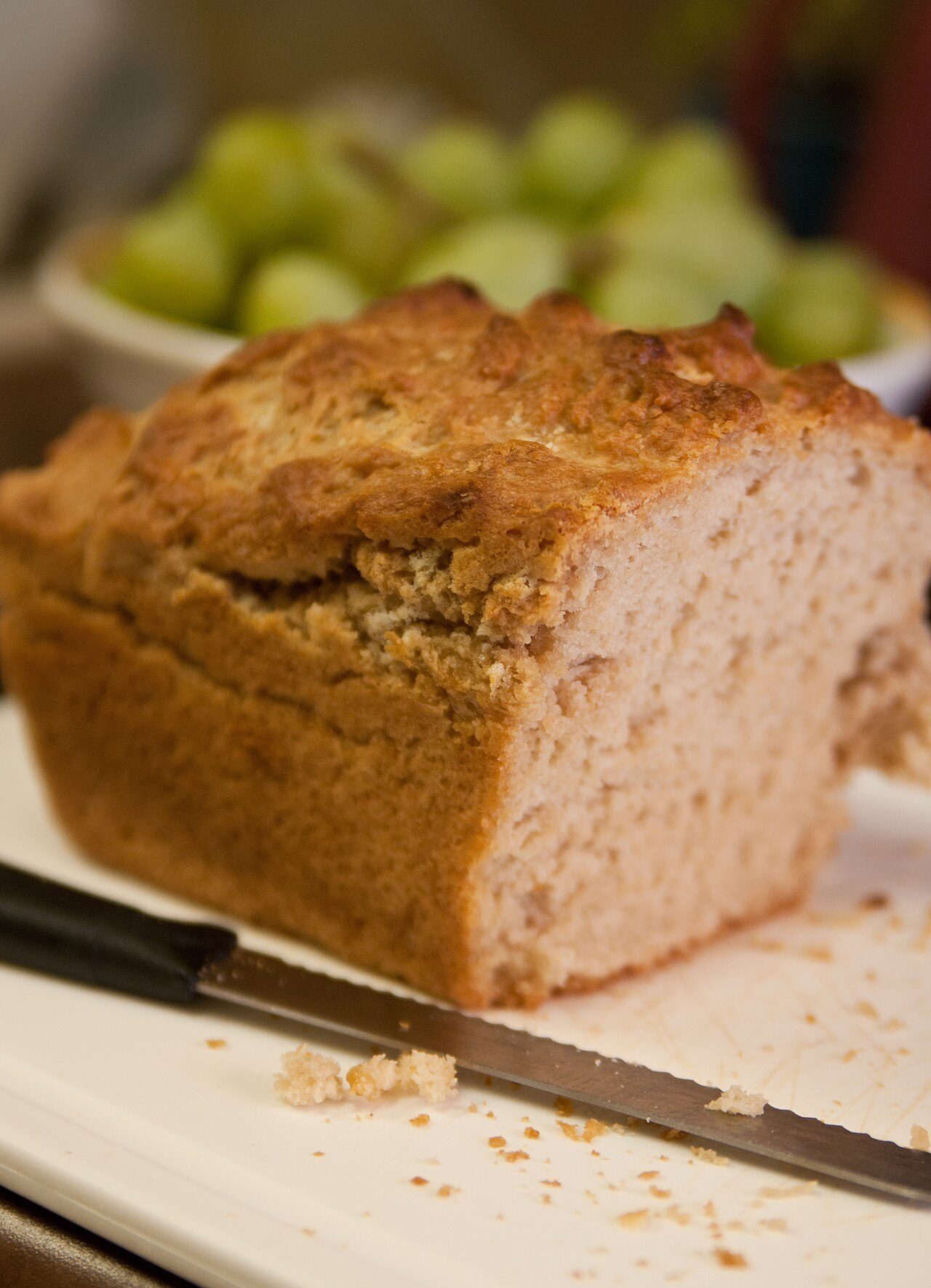
Why Does Bread Go Stale Faster in the Refrigerator?
Bread goes stale faster in the fridge because starch recrystallizes fastest near 4°C. Here is the retrogradation science and the right way
Baking soda and baking powder: what's the difference?
Baking soda is pure sodium bicarbonate; baking powder adds two dry acids for double-acting lift. Learn when to use each, plus exact
What Is the Maillard Reaction in Simple Terms?
The Maillard reaction is the browning chemistry between amino acids and sugars above 140 C that creates the crust, color, and rich flavor