
What is the best way to reheat pizza?
By Rive News / Research desk | Rive News / Published October 20, 2026 at 9:00 AM PKT
Key takeaways
- A preheated oven at 450°F with a steel or stone gives the crispiest result, searing the crust a second time.
- A lidded skillet on medium-low heat crisps the bottom while steam melts the cheese, with no preheating needed.
- The microwave is the worst option for texture, turning the crust soft and chewy instead of crisp.
Leftover pizza fails when the crust goes soft and the cheese turns rubbery. That is exactly what most reheating methods do. The fix is simple once you understand the physics: anything that puts direct heat into the bottom of the crust works, and anything that only heats the air around the pizza does not.
Baking Steel tested five common methods head to head and ranked them by what each one actually does to the crust. The pattern was clear. A baking steel or cast iron skillet restores crunch, while a sheet pan and the microwave leave the bottom soft.
This article explains the best way to reheat pizza, including the oven method, the skillet method, the air fryer method, and the microwave as a last resort.
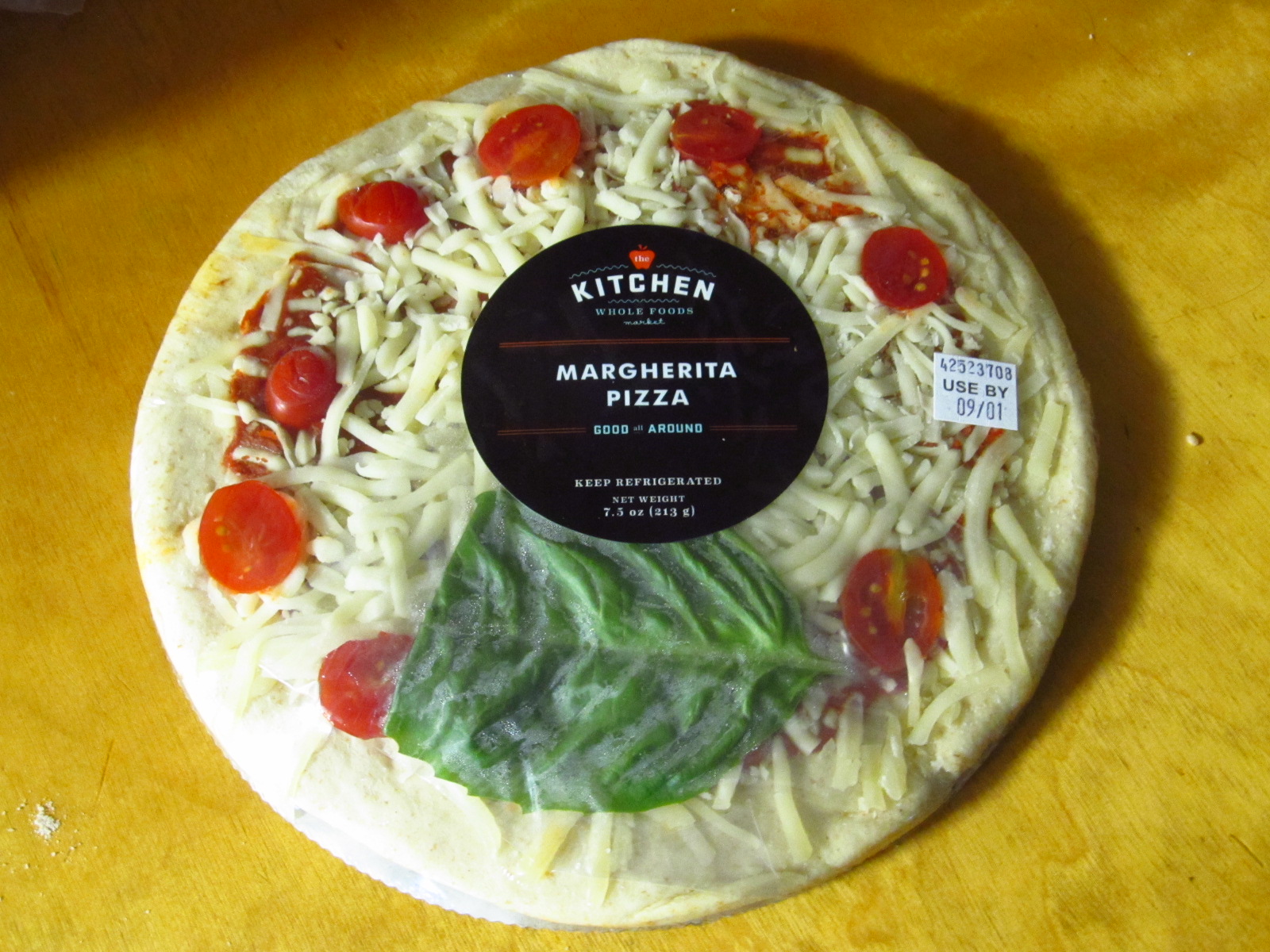
A whole margherita pizza, best reheated with direct heat into the crust. Photograph: Wikimedia Commons contributor.
Image Credits: Wikimedia Commons
The oven method: best overall
The oven gives the best all-around result, especially for several slices at once. Preheat the oven to 450°F with a baking steel or pizza stone on the middle rack for at least 30 minutes, Baking Steel recommends. Place the slices directly on the hot steel, with no tray and no foil.
Heat for 4 to 6 minutes until the cheese bubbles and the bottom crisps. The stored thermal energy in the steel sears the crust a second time, driving off moisture and restoring crunch. Baking Steel notes it can come out better than it went in.
If you do not own a steel or stone, a sheet pan still works, with lower expectations. Heat the pan in a 450°F oven and warm the slices on it for 10 to 12 minutes. The bottom stays softer than on steel, but the cheese melts properly and the slice heats through.
No steel, no pan? Place slices directly on the oven rack at 375°F for 8 to 10 minutes, spacing them so they do not touch. Let's Foodie reports this as the box-recommended method for chain pizzas.
Check at the 8-minute mark by pressing the center of a slice: it should feel hot, not just warm.
The skillet method: crispiest for one or two slices
The skillet is the fastest path to a crispy bottom, and it needs no preheating. Heat a dry cast iron or heavy nonstick skillet over medium-low heat for 2 to 3 minutes. Place one or two slices in the hot pan, crust side down.
Cover with a lid and cook for 2 to 3 minutes. The pan sears the bottom while the trapped heat melts the cheese on top. Baking Steel ranks this method second only to the steel, at 4 to 5 minutes total, noting the lid is what makes the cheese work.
There is a well-known upgrade to this trick. Add about half a teaspoon of water to the pan, away from the pizza, then cover.
Spend with Pennies credits this technique to Roberta's Pizza in Brooklyn: the water turns to steam under the lid and melts the cheese gently without drying the slice out. Cook covered for 6 to 8 minutes total, checking that the cheese has fully melted.
Keep the heat at medium or lower. High heat burns the bottom before the cheese melts, which is the one way to ruin this method. Stripes and Willows puts it plainly: low and slow beats fast and burnt every time.
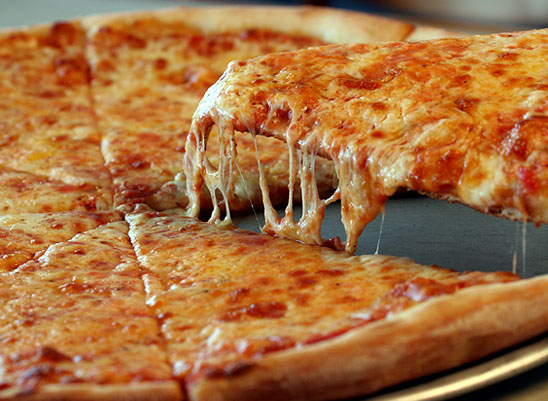
A cheese pizza with fully melted cheese, the target texture for any reheating method. Photograph: Wikimedia Commons contributor.
Image Credits: Wikimedia Commons
The air fryer method: fastest
For pure speed, the air fryer wins. Set it to 350°F and cook slices in a single layer for 3 to 4 minutes, Baking Steel advises. The rapid circulating air crisps the bottom nicely.
The tradeoff is the edges. The same hot airflow that crisps the base can dry out thin crust edges, so check at the 3-minute mark.
One or two slices is the sweet spot. Cramming in more blocks the airflow and the crust stays soft.
No preheating is needed, which makes this the lowest-effort good option. Spend with Pennies calls the air fryer its favorite method and notes it works for frozen slices too, with an extra minute or two. Just avoid overcooking, since the circulating heat dries the slice out fast past the 5-minute mark.
A toaster oven on its toast setting works on the same principle. Direct heat from the element crisps the bottom while the small chamber melts the top, in about 8 to 10 minutes.
The microwave: only if you must
The microwave is the last resort for texture. It heats by exciting water molecules, which steams the crust instead of crisping it. Baking Steel gives it 45 to 60 seconds and describes the result honestly: soft and chewy, for when you genuinely do not care.
If the microwave is all you have, one trick helps. Place a small cup of water on the plate next to the pizza and heat in 30-second bursts, Spend with Pennies suggests. The cup absorbs some of the microwave energy so the crust does not turn quite as rubbery.
Never reheat the same slice twice. Each round drives out more moisture and wrecks the texture further, Stripes and Willows warns. Only reheat what you plan to eat right away.
Food safety matters whatever method you choose. Refrigerate leftovers within 2 hours of delivery, and reheat slices until steaming hot. Let's Foodie advises checking meat-topped slices with a food thermometer: reheated chicken should reach 165°F internally before eating.
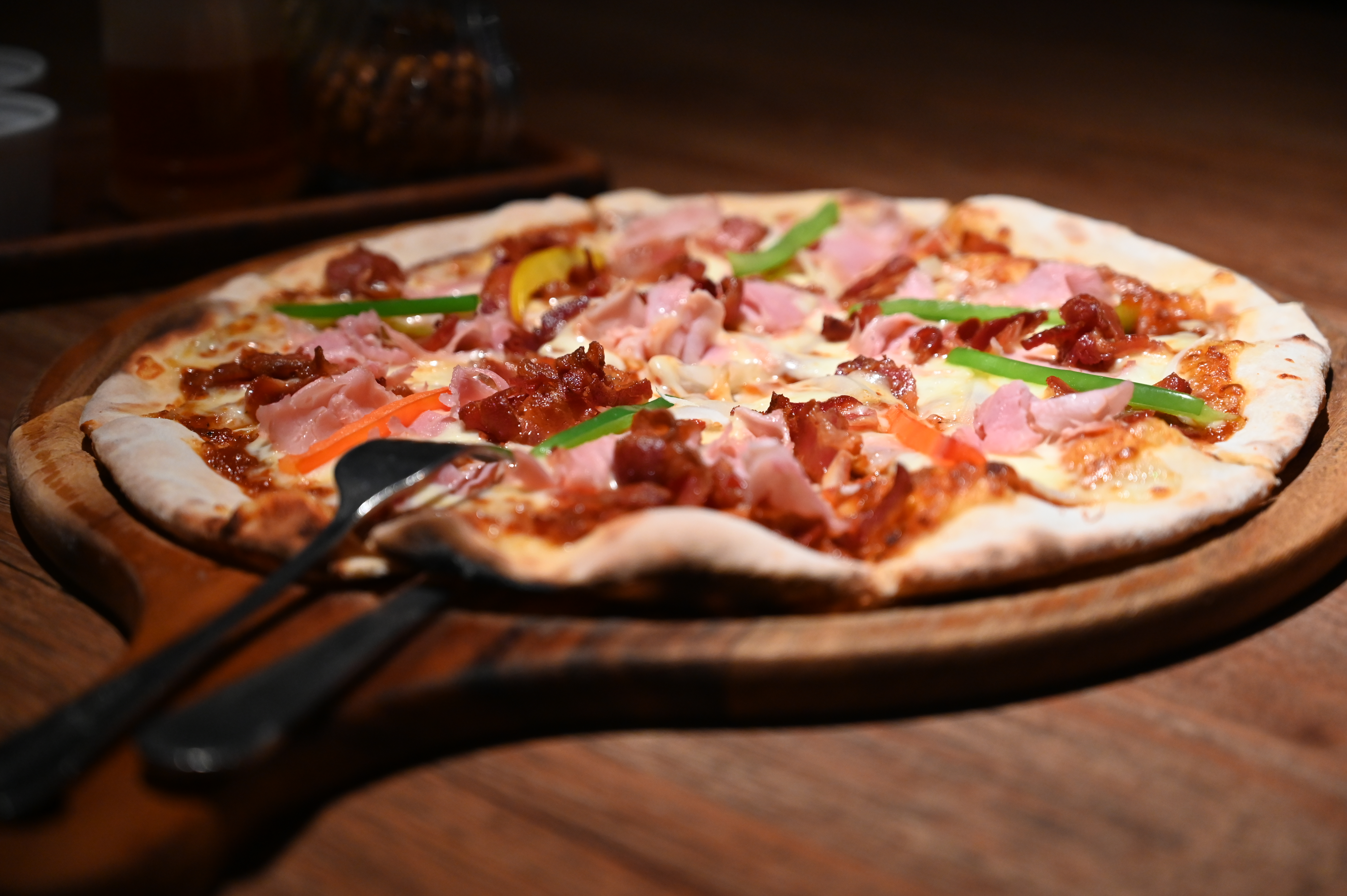
A wood-fired pizza ready to slice, a style that reheats especially well on a hot steel or stone. Photograph: Wikimedia Commons contributor.
Image Credits: Wikimedia Commons
Frequently asked questions
Should pizza be at room temperature before reheating?
It helps. Letting slices sit out for 10 to 15 minutes before reheating gives more even results, according to Stripes and Willows. Cold-from-the-fridge pizza can end with a hot top and a lukewarm center.
What temperature reheats pizza without drying it out?
For thicker or pan-style slices, Let's Foodie's Domino's guide suggests a gentler 300°F for 10 to 12 minutes, tented in foil. The lower heat warms the thick crust through without turning the cheese leathery.
Can I reheat pizza directly on the oven rack?
Yes, but the cheese can drip and make a mess, and the bottom does not crisp as well as on a hot steel or pan. A sheet of foil or a baking sheet under the slices keeps cleanup easy.
How long does reheated pizza keep?
Treat it like any cooked leftover. Once reheated, eat it promptly and do not refrigerate and reheat it again. The texture degrades with every cycle, and food safety rules favor a single reheat.
The bottom line
Direct heat into the bottom of the crust is what separates great reheated pizza from sad reheated pizza. Use a preheated steel or stone at 450°F for the best result, a lidded skillet for one or two slices, or the air fryer when speed matters. Leave the microwave for emergencies.
Before your next pizza night, figure out which method fits your kitchen and stick with it. Consistency beats experimenting on hungry people. And if the meal started with a proper bake of your own, our guide on why some cakes sink in the middle troubleshoots the other classic oven disappointment.
Rive News is a research desk that tests kitchen advice against published food science and professional test-kitchen sources before writing about it.
Latest in Food & Cooking
- Why do some cakes sink in the middle?
- How to stop onions from burning when frying
- Why does pasta stick together after draining?
- How to keep lettuce crisp for a whole week
Subscribe to the Rive News newsletter for one practical kitchen fix every week.
Published by Rive News. Information is for general purposes only.
Related stories
Why Does Bread Go Stale Faster in the Refrigerator?
Bread goes stale faster in the fridge because starch recrystallizes fastest near 4°C. Here is the retrogradation science and the right way
Baking soda and baking powder: what's the difference?
Baking soda is pure sodium bicarbonate; baking powder adds two dry acids for double-acting lift. Learn when to use each, plus exact
What Is the Maillard Reaction in Simple Terms?
The Maillard reaction is the browning chemistry between amino acids and sugars above 140 C that creates the crust, color, and rich flavor