
Why does pasta stick together right after draining?
By Rive News / Research desk | Rive News / Published October 20, 2026 at 9:00 AM PKT
Key takeaways
- Cooked pasta is coated in surface starch that acts like glue once it cools and dries, fusing strands together.
- Plenty of boiling water, frequent stirring, and al dente timing keep excess starch off the surface.
- Sauce the pasta immediately after draining, or toss it with a little oil if the sauce is not ready yet.
Pasta sticks together after draining because of starch. While the pasta boils, starch granules absorb water, swell, and leak a thin starchy film onto every strand. That film feels slippery while everything is hot and moving, but the moment the pasta sits, it starts acting like glue.
Drain the pasta and answer one text message, and you come back to a single solid mass. This is not bad pasta or bad luck. It is starch chemistry doing exactly what starch chemistry does.
This article explains why pasta sticks together after draining, including the starch science, the cooking habits that make it worse, what to do the second it leaves the colander, and how sauce solves the problem.
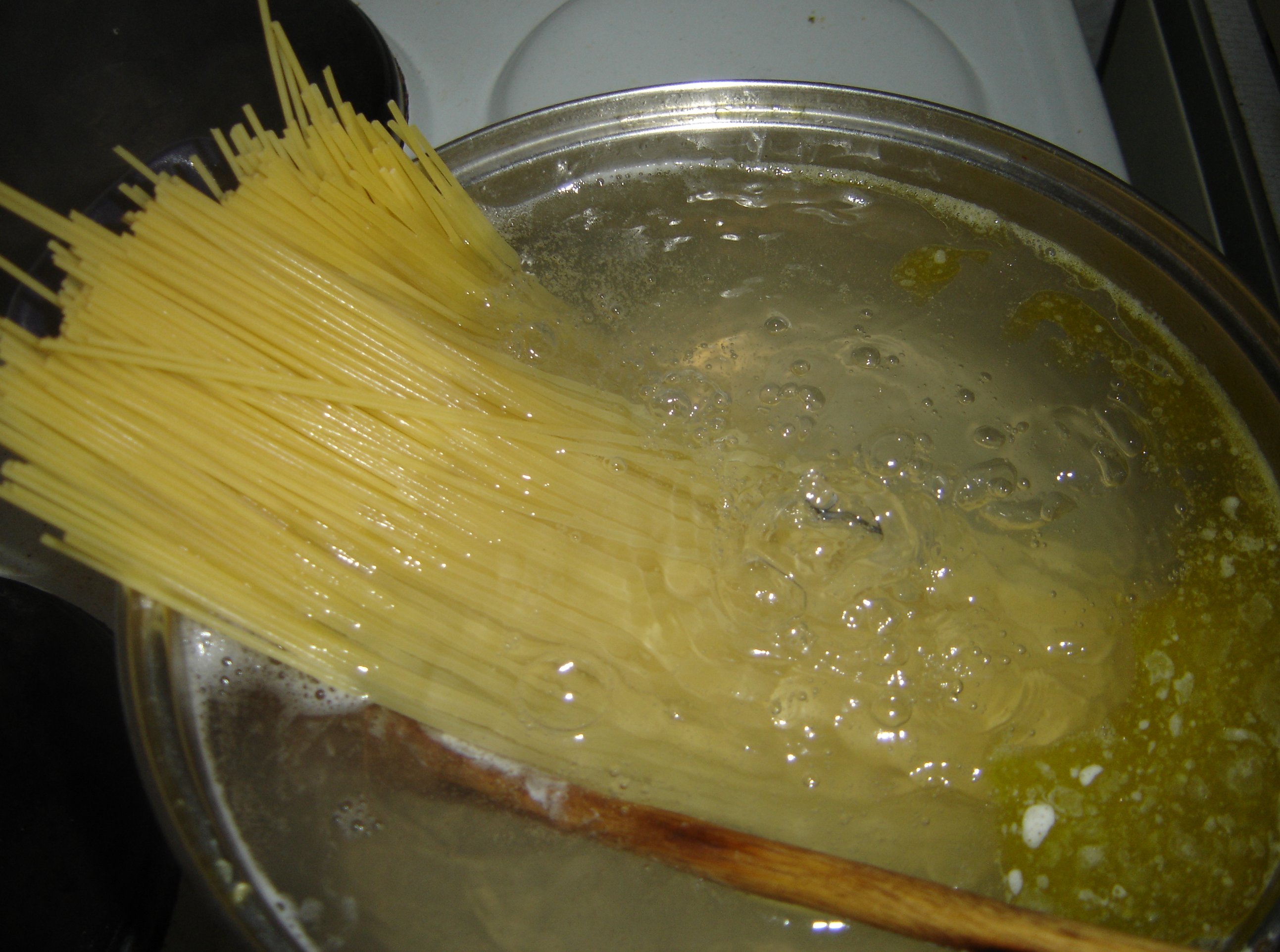
Spaghetti cooking in a full pot of boiling water, where plenty of water and stirring prevent sticking. Photograph: Wikimedia Commons contributor.
Image Credits: Wikimedia Commons
The starch science behind the clump
Starch is the whole story. As pasta boils, starch granules on its surface absorb water and swell in a process called gelatinization. Some of that swollen starch leaches into the cooking water, and a viscous layer of it coats the strands.
That coating is harmless while the pasta stays hot and in motion. The trouble starts the moment it sits still.
As the temperature drops, starch molecules re-associate in a process called retrogradation, forming a weak, sticky matrix. In plain terms, the glue sets.
A packed colander makes everything worse. Strands pressed tightly together have more contact points, so the starch welds them into one lump instead of a few small clumps. It's Not About Nutrition describes the result as edible cement, warm edible cement, and anyone who has left pasta sitting knows the description is fair.
Long shapes like spaghetti and linguine suffer most. Their greater surface area gives them more contact with neighboring strands, so they weld together faster than short shapes like penne.
Cooking habits that cause sticking
Overcooking is the biggest habit to fix. Pasta cooked past al dente releases more starch and turns soft, which makes the surface stickier. Cooking to al dente, with a slight bite in the center, keeps starch release under control and the strands firm.
Too little water is the second culprit. Crowded pasta sits in a thick starchy bath instead of dilute water, and more of that starch ends up glued to the surface. Practical Cooks recommends four quarts of water per pound of pasta, a ratio that keeps the starch diluted.
Stirring matters most in the first two minutes. Fresh pasta dropped into the pot releases surface starch immediately, and the strands are at their stickiest before the water returns to a full boil. Practical Cooks advises stirring every one to two minutes through the cook.
Salt the water generously. It seasons the pasta from the inside, which no amount of sauce later can fully replace.
And skip the oil in the cooking water. Oil floats on top and barely touches the submerged pasta, so it does almost nothing for sticking.
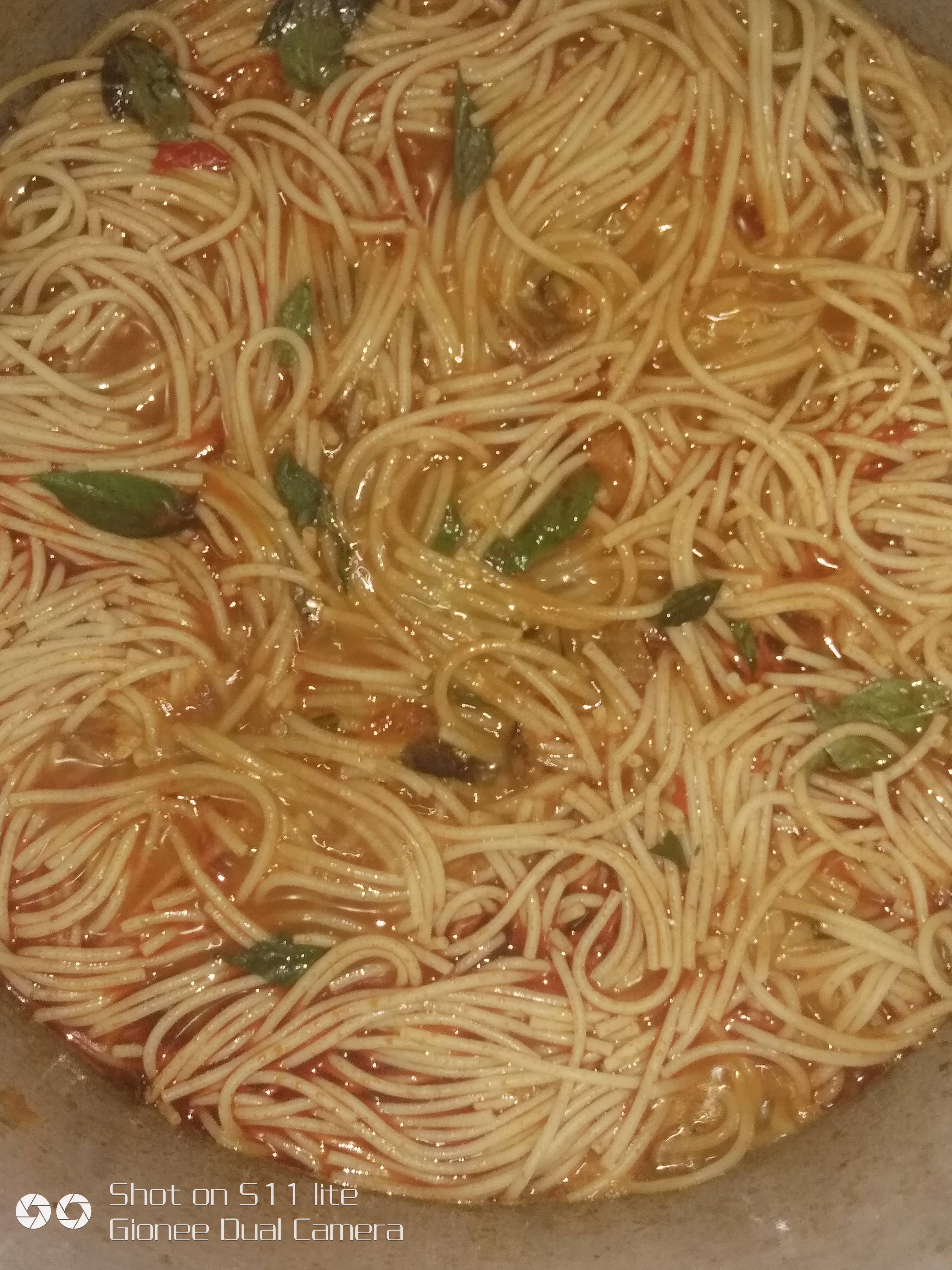
Spaghetti being lifted from the pot, showing the strands at their least sticky moment while hot and moving. Photograph: Wikimedia Commons contributor.
Image Credits: Wikimedia Commons
What to do the moment it drains
Speed is the fix. The starch glue only sets once the pasta sits and cools, so the window between draining and serving is where sticking is won or lost. Never let drained pasta sit untouched in the colander.
Before draining, reserve a cup of the cooking water. That starchy liquid is liquid gold for the sauce step, and grabbing it before the colander drains it away is a habit worth building.
Do not rinse pasta meant for a hot dish. Rinsing washes away the starch that helps sauce cling, so hot pasta should go straight from colander to sauce. A Grateful Kitchen is blunt on this point: the starchy coating is exactly what you want grabbing onto the sauce.
If the sauce is not ready yet, toss the drained pasta with a teaspoon of olive oil and keep turning it with tongs. The oil coats the strands and buys you a few minutes before they weld. Practical Cooks recommends exactly this, mixing with tongs while the pasta drains to spread the oil around.
For cold pasta salads, the rules flip. A quick rinse with cool water stops the cooking and chills the noodles so they do not turn gluey under the dressing, A Grateful Kitchen notes. Rinse only for cold dishes.
How sauce solves the problem
Sauce is the real anti-stick solution, and starch is why. That starchy film coating the noodles works like a natural adhesive, and sauce is what it is meant to grab.
Chef Ivan Beacco, owner of the Red Inside restaurant, puts it this way: "When you rinse pasta, you're basically washing away its superpower: the starch." He explains that the film helps sauce stick to the noodles, and rinsing leaves slippery noodles that repel sauce instead of embracing it.
The professional method skips the colander entirely. Chefs scoop cooked pasta with a mesh spider straight from the pot into a waiting skillet of sauce, preserving every bit of starchy goodness. Add a splash of the reserved cooking water and toss over heat, and the starch emulsifies the sauce into something glossy that coats every piece.
This is why the order of operations matters. Sauce should be hot and waiting before the pasta drains.
Pasta waits for nothing. It goes from the water into the sauce in seconds, gets tossed, and hits the table before the starch has a chance to set in.
Leftover pasta stores best tossed with a little oil in an airtight container. Reheat it gently with a splash of water or extra sauce to loosen the strands. The same starch that caused the clump melts back into the sauce on reheating.
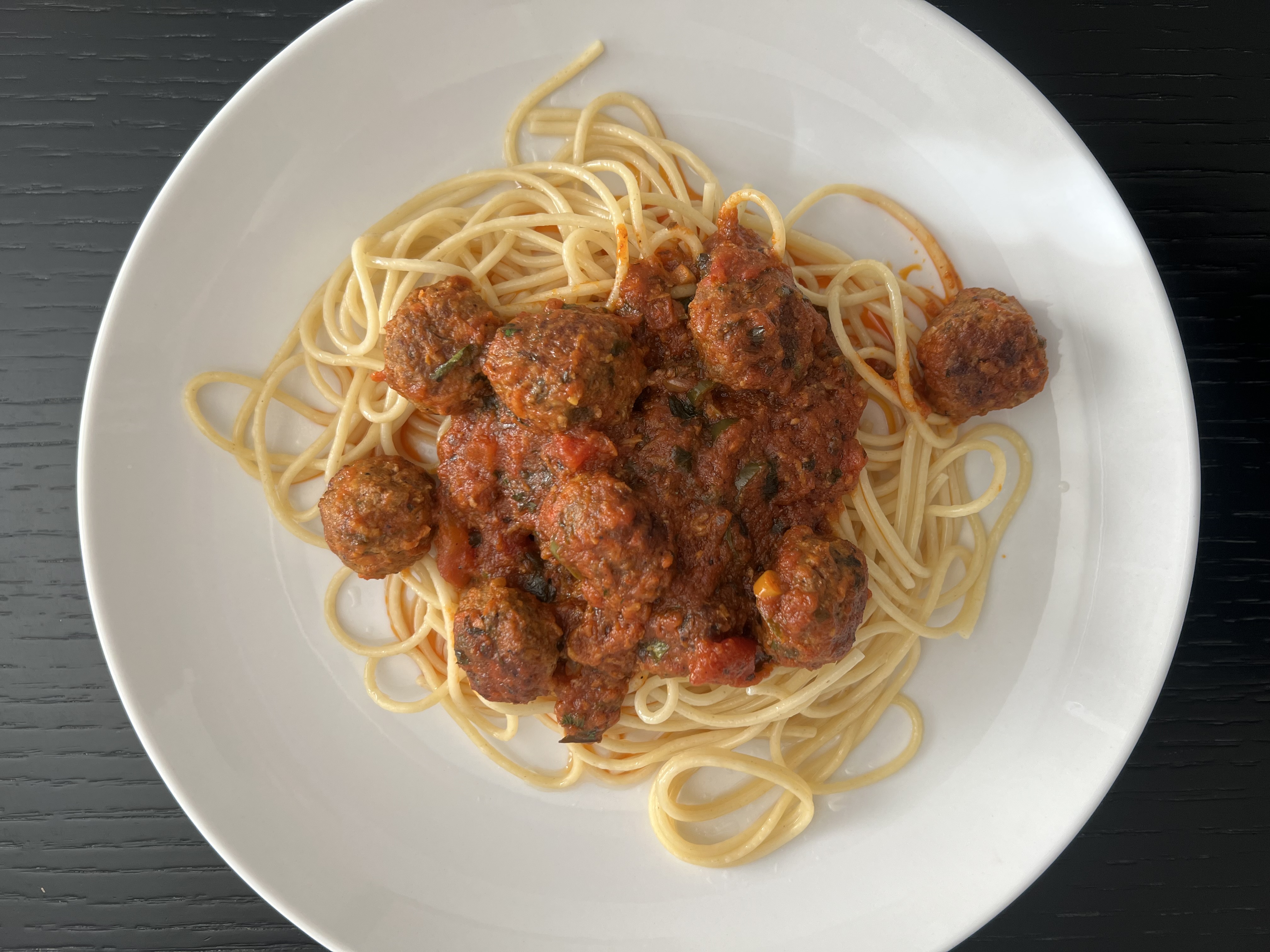
Spaghetti with meatballs, where sauce and the pasta's own starch keep the strands separate. Photograph: Wikimedia Commons contributor.
Image Credits: Wikimedia Commons
Frequently asked questions
Should I add oil to the pasta cooking water?
No, it does not help. Oil floats on the surface while the pasta cooks below it, so it never coats the strands. Save the oil for tossing the drained pasta if the sauce is not ready yet.
Why does restaurant pasta never stick together?
Restaurants sauce pasta within seconds of draining, often moving it straight from pot to pan. The starch never gets a chance to cool and set. Timing, not a secret ingredient, is the difference.
Can I fix pasta that has already clumped into a lump?
Sometimes. Drop the clump back into boiling water for 20 to 30 seconds and stir gently to separate the strands. It works best on mildly stuck pasta, not on a lump that has fully cooled and set.
Does fresh pasta stick more than dried pasta?
Fresh pasta releases more surface starch and is softer, so it clumps faster. Cook it in very generous water, stir from the moment it hits the pot, and sauce it immediately. Dried pasta is more forgiving of a short wait.
Is rinsing pasta ever the right move?
Yes, for cold preparations. Pasta salad, sesame noodle dishes, and anything served chilled benefit from a cool rinse that stops the cooking. For any hot dish with sauce, never rinse.
The bottom line
Pasta sticks because surface starch sets into glue as it cools, and every fix targets that chemistry. Cook al dente in plenty of salted water, stir early and often, and move the pasta into hot sauce the moment it drains.
For your next pasta night, get the sauce simmering before the water even boils, and reserve a cup of cooking water before draining. That sequence alone ends most pasta clumps. If dinner includes a fried starter too, our guide on how to stop onions from burning when frying keeps the whole meal on track.
Rive News is a research desk that tests kitchen advice against published food science and professional test-kitchen sources before writing about it.
Latest in Food & Cooking
- Why do some cakes sink in the middle?
- How to stop onions from burning when frying
- What is the best way to reheat pizza?
- How to keep lettuce crisp for a whole week
Subscribe to the Rive News newsletter for one practical kitchen fix every week.
Published by Rive News. Information is for general purposes only.
Related stories
Why Does Bread Go Stale Faster in the Refrigerator?
Bread goes stale faster in the fridge because starch recrystallizes fastest near 4°C. Here is the retrogradation science and the right way
Baking soda and baking powder: what's the difference?
Baking soda is pure sodium bicarbonate; baking powder adds two dry acids for double-acting lift. Learn when to use each, plus exact
What Is the Maillard Reaction in Simple Terms?
The Maillard reaction is the browning chemistry between amino acids and sugars above 140 C that creates the crust, color, and rich flavor