
How to tell if yoghurt has gone off without tasting it
By Rive News / Research desk | Rive News / Published October 20, 2026 at 9:00 AM PKT
Key takeaways
- Check the container first: a bloated lid or leaking tub means spoilage gas inside, so discard it unopened.
- Any mold, odd colors, or a slimy texture that will not stir smooth means the whole tub goes in the bin.
- A thin layer of whey on top is normal, but a large pool of liquid or a foul smell is not.
Yoghurt is already sour by design, which makes judging it tricky. A little tang is normal. A lot of tang, or the wrong kind of smell, is not.
The good news is that you never need to taste it to decide. Your eyes and nose give you everything you need.
Food safety guidance warns against tasting food that already looks spoiled, so the spoon test should be your last resort, not your first. Work through the checks in order: container, sight, smell.
One strong warning sign is enough to throw the tub away. The same look-and-smell habit helps with keeping lettuce crisp and other fresh foods.
This article explains how to tell if yoghurt has gone off without tasting it, including checking the container, visual warning signs, the smell test, and how long yoghurt actually lasts.
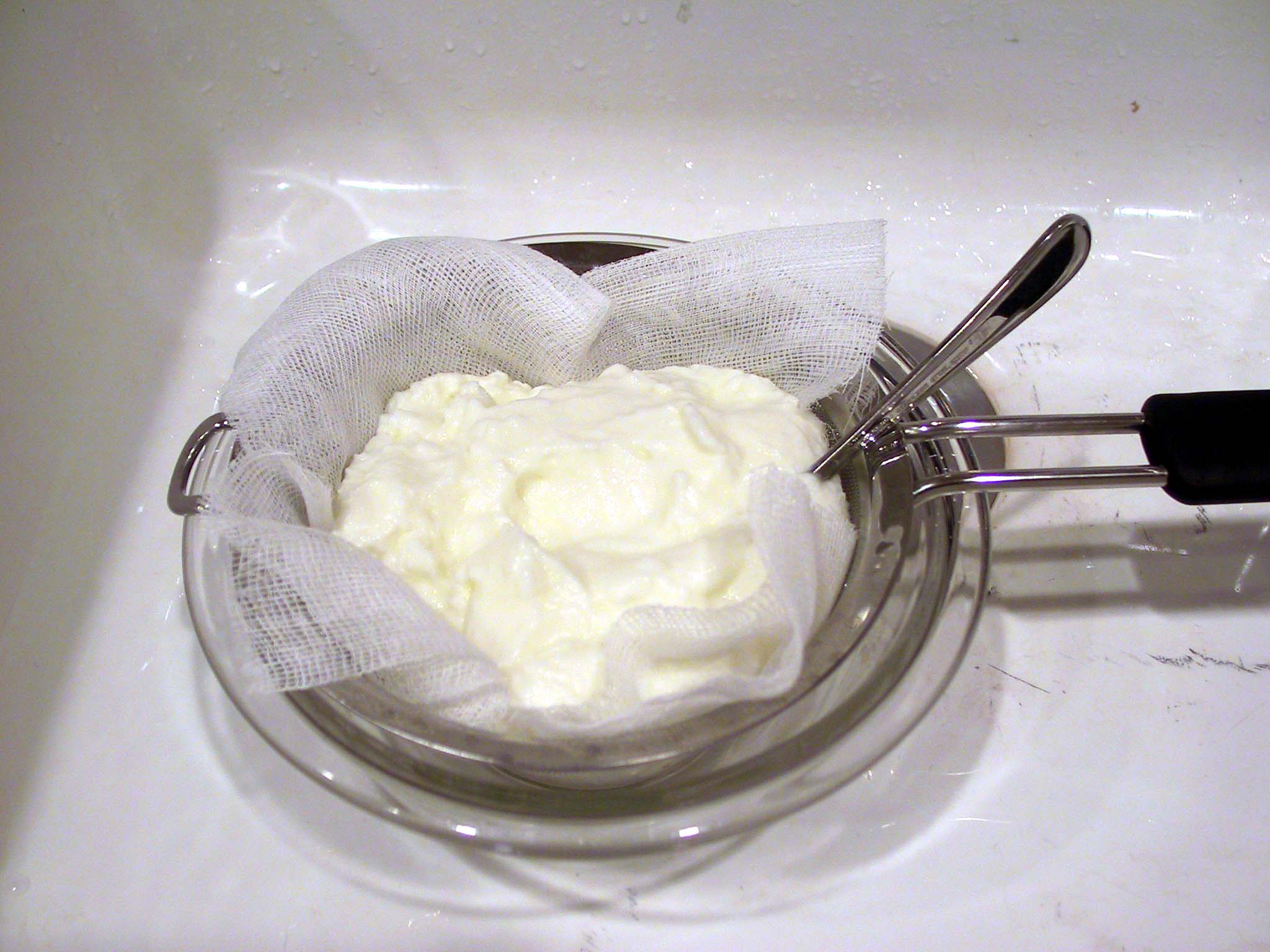
Fresh yoghurt should look smooth and uniform, with a clean, mildly tangy smell.
Image Credits: Wikimedia Commons
Start with the container, not the yoghurt
Before you peel anything back, look at the packaging. If the lid is bulging, domed, or puffed up, gas-producing bacteria have been fermenting inside the tub.
Discard it without opening. A lid that pops loudly or a container that leaks when touched points to the same problem.
One caveat: containers can bulge at high altitude from air pressure differences rather than spoilage. If you bought the yoghurt at altitude, use the other checks below instead of the lid alone. Everywhere else, a swollen tub is a clear spoilage sign.
Check the seal too. If the foil is broken or the tub was already open in the fridge, treat it as opened yoghurt and judge it by the shorter timeline. An unsealed container picks up odors and bacteria from everything around it.
Look for visual warning signs
Open the tub and scan the surface. Any visible mold means the entire container goes in the bin immediately.
Look for fuzzy spots or patches in green, blue, gray, white, or black, on the surface, the sides, or under the lid. Do not scoop around the mold. Yoghurt is a soft, high-moisture food, and mold threads spread invisibly through it.
Watch for color changes as well. Yoghurt should be uniformly white or off-white, or the color of its fruit flavoring.
Pink, green, or gray discoloration that does not come from added fruit is a spoilage sign. Yellow streaks or dark patches that were not there when you opened it deserve the same verdict.
Texture tells the next part of the story. A thin layer of clear liquid on top is simply whey, and it is completely normal, especially in natural and Greek styles. Stir it back in or pour it off.
What is not normal is a large pool of watery liquid that refuses to blend back in, or a texture that has broken into grainy curds floating in liquid. A slimy coating on the surface or a stringy, slippery feel means bacterial overgrowth.
When the structure has collapsed past stirring, skip the taste test and bin it.
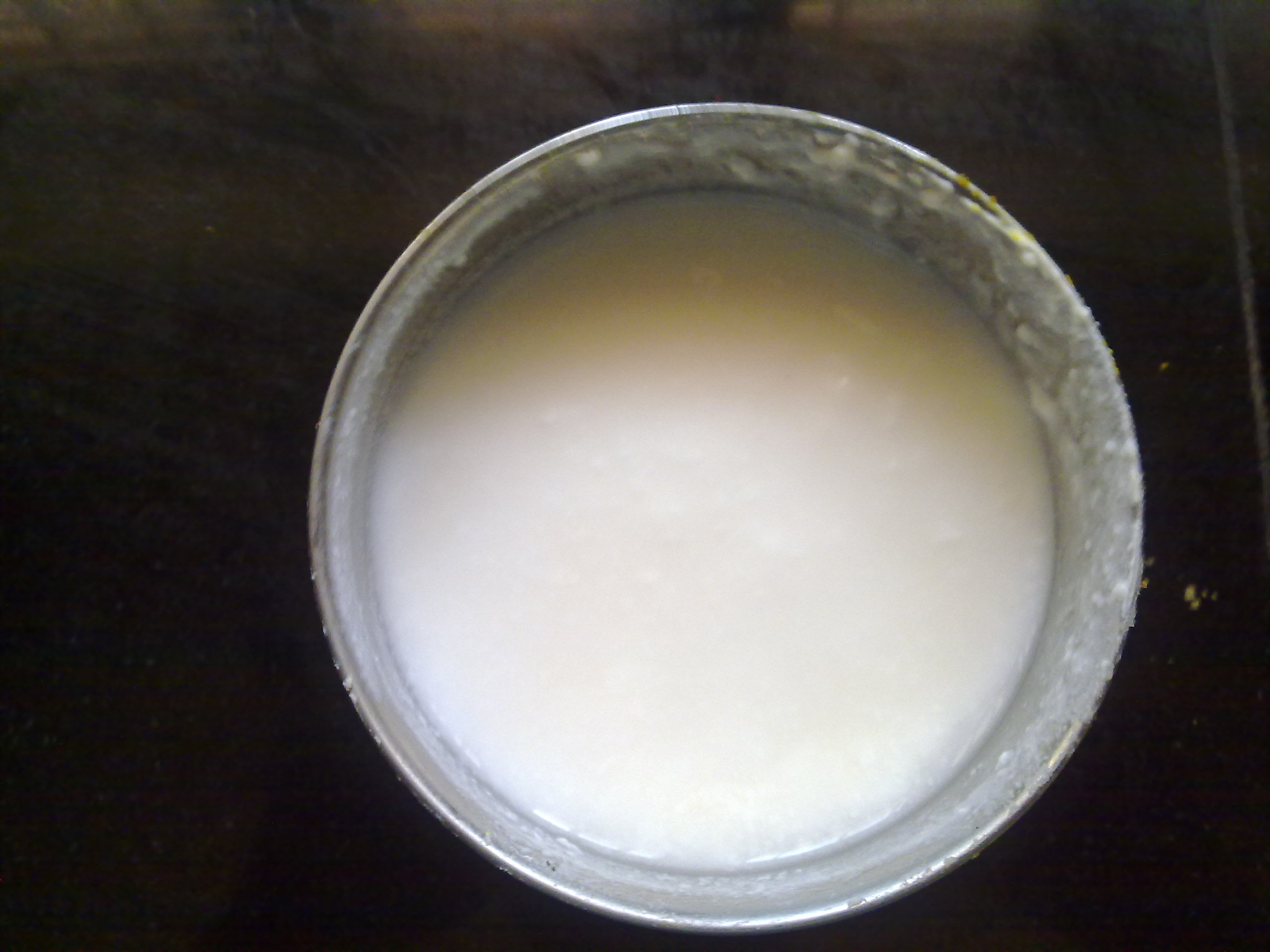
Yoghurt draining through cheesecloth looks thick and uniform, the way fresh yoghurt should.
Image Credits: Wikimedia Commons
Trust your nose before your tongue
If the yoghurt passes the visual checks, the smell test comes next. Fresh yoghurt smells clean with a gentle sour edge.
Spoiled yoghurt smells aggressively sour, yeasty like old bread or beer, or foul in a way that is distinctly different from normal tang. US Dairy describes spoiled Greek yoghurt as having an "unusually sharp or bitter sourness."
Hold the tub near your nose and take a short sniff. If the smell makes you pull your head back, trust that reaction. An off odor points to spoilage even when the date stamp still looks fine, because naturally present bacteria break down the product as it ages.
Be extra careful with flavored yoghurt. Fruit and sugar can mask an early sour edge, so a sweetened tub may smell acceptable while already turning. For flavored varieties, lean harder on the visual checks and the storage timeline below.
Know how long yoghurt actually lasts
The date on the tub causes most of the confusion. Those stamps usually reflect peak quality, not a hard safety cutoff.
According to the USDA FoodKeeper app, yoghurt should be consumed within 1 to 2 weeks of purchase. Unopened yoghurt kept continuously refrigerated can often stay safe 1 to 3 weeks past the printed date, as long as it shows no spoilage signs.
Once opened, the clock speeds up. Use opened yoghurt within 5 to 7 days, keep it tightly sealed, and always dip in with a clean spoon. Past that window, flavor dulls, separation grows, and spoilage risk climbs even when it still looks fine.
Temperature abuse overrides every date. Food safety agencies use a simple rule for perishable foods: discard anything left at room temperature for more than 2 hours, or more than 1 hour if the room is hotter than 90°F (32°C).
Bacteria multiply fast in that window even when the yoghurt looks normal. A tub left on the counter all afternoon belongs in the trash, not back in the fridge. Store yoghurt at 40°F (4°C) or below, and keep it sealed to stop it absorbing fridge odors.

Serve yoghurt promptly and return the tub to the fridge; time at room temperature is what spoils it fastest.
Image Credits: Wikimedia Commons
Is the liquid on top of yoghurt a sign it has gone off?
A thin layer of clear whey is normal and safe. Stir it back in or pour it off. A large amount of watery or milky liquid that will not reincorporate when stirred, especially combined with an off smell, signals deterioration.
Can I just scoop the mold off yoghurt?
No. Any visible mold means discarding the entire container, since the soft, moist texture lets mold spread invisibly below the surface. Removing the visible spot does not make the rest safe.
Does yoghurt go bad before its expiry date?
It can. The printed date reflects peak quality, not a safety guarantee, and yoghurt left warm too long or stored above 40°F can spoil early. Always trust the container, sight, and smell checks over the date.
What happens if I eat yoghurt that has gone off?
A small accidental spoonful is unlikely to cause serious harm, but spoiled yoghurt can bring stomach cramps, nausea, or diarrhea, especially for children, pregnant people, and anyone with a weakened immune system. If you feel unwell after eating suspect dairy, see guidance for eating with an upset stomach and seek medical advice if symptoms persist.
The bottom line
You can judge yoghurt without ever tasting it: check the container for bloating, scan for mold and odd colors, and trust your nose on the smell. Keep unopened tubs refrigerated and use opened ones within a week. When in doubt, throw it out.
Tags: food safety, dairy, kitchen tips, food storage
Rive News is the research desk behind Rive News's evergreen library, covering practical travel, food, and everyday topics with sourced, checkable facts.
Latest in Food & Cooking
- How to keep lettuce crisp for a whole week
- The best way to reheat pizza
- How to stop pasta sticking together after draining
- Why cakes sink in the middle
Subscribe to the Rive News newsletter for one practical guide like this every morning.
Published by Rive News. Information is for general purposes only.
Related stories

Why Does Bread Go Stale Faster in the Refrigerator?
Bread goes stale faster in the fridge because starch recrystallizes fastest near 4°C. Here is the retrogradation science and the right way
Baking soda and baking powder: what's the difference?
Baking soda is pure sodium bicarbonate; baking powder adds two dry acids for double-acting lift. Learn when to use each, plus exact

What Is the Maillard Reaction in Simple Terms?
The Maillard reaction is the browning chemistry between amino acids and sugars above 140 C that creates the crust, color, and rich flavor