
Why does milk curdle when heated or mixed with acid: the science
Key takeaways
- Milk's main protein is casein. It floats in stable clusters called micelles. These are tiny spheres. They push each other away at milk's normal pH of 6.7.
- When the pH drops to 4.6, casein's electric charge cancels out. The clusters collapse. The proteins clump into curds.
- Heat alone does not curdle fresh milk. But it speeds the reaction up. It pushes milk that is already turning toward the edge.
Milk looks like a simple white liquid. But it is really a fragile mix of water, fat, and protein. Disturb the mix with acid, heat, or time, and the proteins fall out in visible lumps.
That is curdling. The same reaction that ruins your coffee makes cheese possible.
This article explains why milk curdles. It covers what casein is, what heat does, what acid does, and how to keep milk smooth.
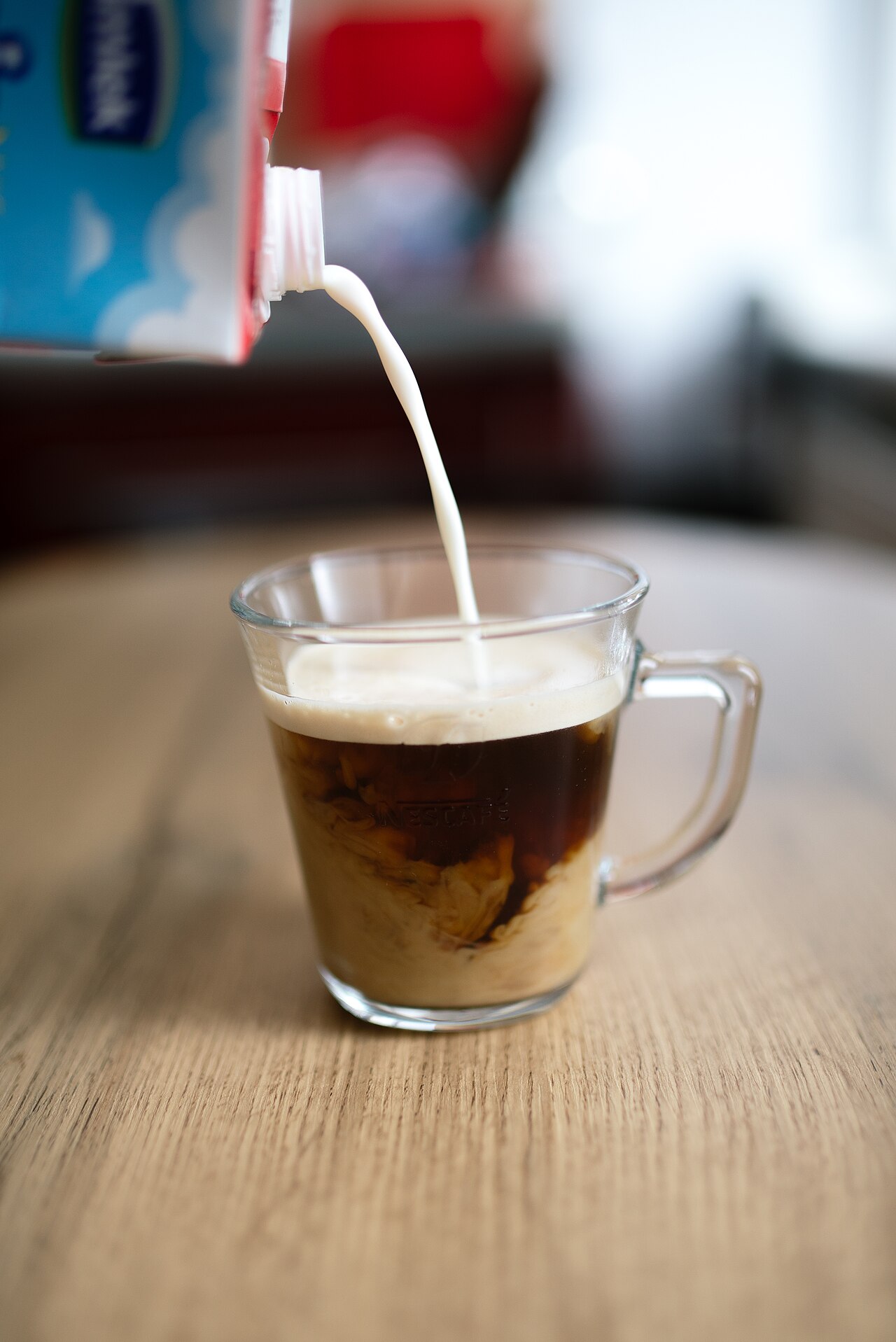
Fresh milk is a stable suspension of fat and protein, but the truce is fragile. Photograph: Shixart1985/Wikimedia Commons
Image Credits: Wikimedia Commons (CC BY 2.0)
What milk actually is: a fragile suspension
Milk is a colloid. A colloid is a liquid with tiny particles floating evenly in it. Here the particles are fat droplets and protein.
The white color comes from light bouncing off those particles. Science Notes explains this. The protein particles carry matching electric charges.
So they push each other away and stay evenly spread.
The key protein is casein. It makes up about 80 percent of milk's protein. Whey proteins make up the other 20 percent.
Food scientist FT Prabodh S. Halde gives these numbers. Casein does not float as single molecules.
It bundles into tiny spheres called micelles. A protective outer layer keeps the bundles stable and separate.
Fresh milk sits at a pH of about 6.7. That is slightly acidic but well above the danger zone. As long as the pH stays there and the temperature is reasonable, the micelles hold their shape. Milk stays smooth.
The whole system depends on conditions staying close to those defaults. That is why milk is one of the more temperamental ingredients in the kitchen. Even browning meat is more forgiving than a pan of milk.
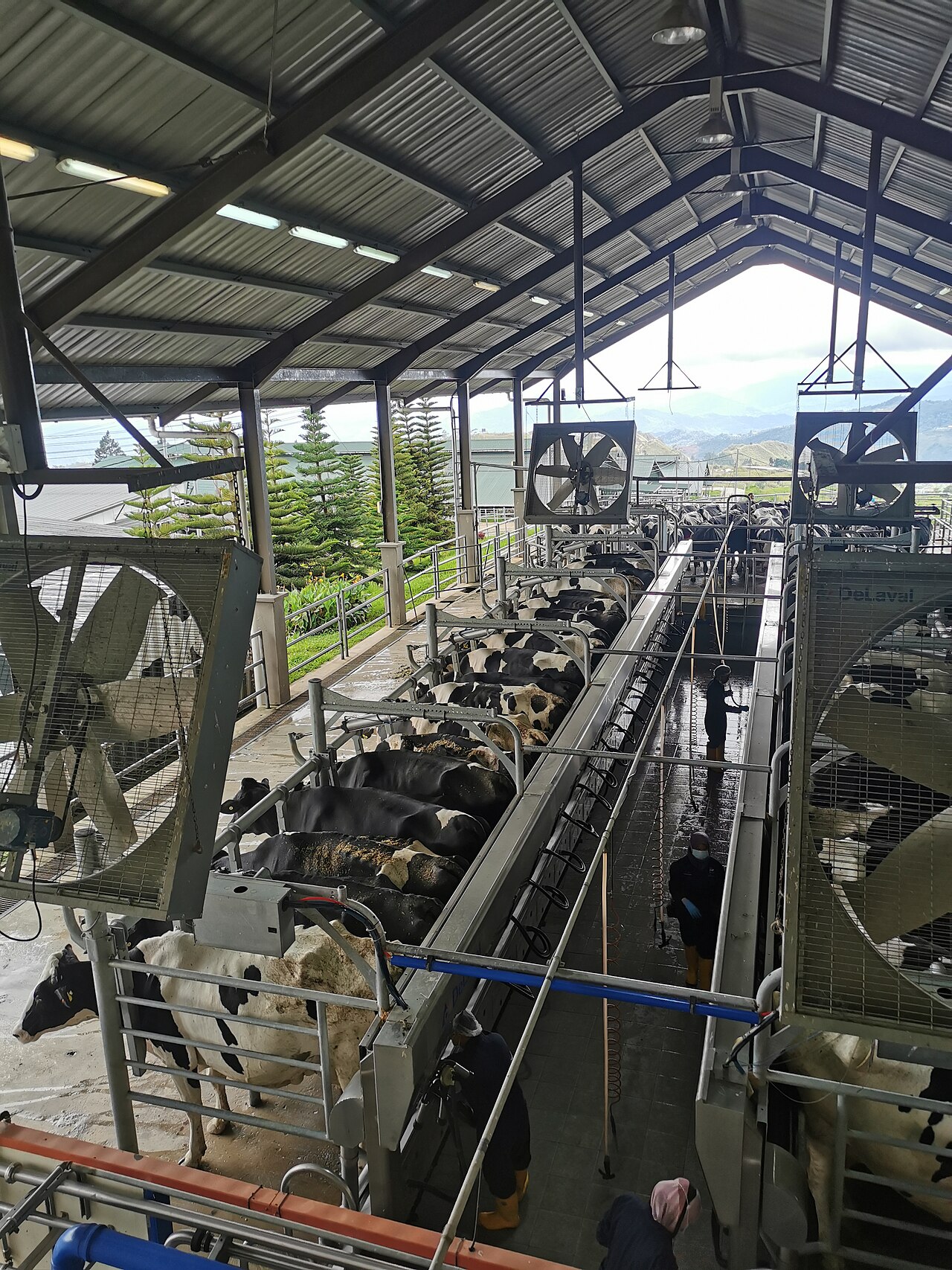
Milk leaves the farm at a pH of about 6.7; everything that happens afterward pushes that number around. Photograph: Bfyhdch/Wikimedia Commons
Image Credits: Wikimedia Commons (CC BY-SA 4.0)
What acid does to milk proteins
Acid is the most direct trigger. Adding lemon juice or vinegar lowers the pH of milk. As the pH falls, the charge on the casein micelles falls with it.
At pH 4.6, casein reaches its isoelectric point. That is the point where its positive and negative charges exactly cancel. The net charge is zero.
With no charge left to push each other away, the proteins stop avoiding one another. They start sticking together. The micelles break apart.
The freed proteins clump into the lumps we call curds. They leave behind the watery liquid called whey. The Kitchn describes this as protein denaturing.
The acid makes the proteins unfold. The unfolded proteins can then clump in ways they could not while properly folded.
You have probably done this on purpose. The classic homemade buttermilk substitute is a tablespoon of vinegar or lemon juice per cup of milk. Leave it to sit for a few minutes.
The slight curdling is the whole point. The same chemistry produces yogurt, sour cream, and cultured cheeses. There, bacteria instead of vinegar drive it.
Bacteria that digest lactose convert milk sugar into lactic acid. The pH falls, and casein sets into a gel.
Scientific American's kitchen experiment adds a twist. Pineapple juice also curdles milk, but not through acidity. It contains bromelain.
Bromelain is an enzyme, a natural substance that breaks things down. It chops up casein proteins and destroys the micelles directly.
The curdling takes about five minutes rather than seconds. Heating the pineapple juice first stops the reaction because heat deactivates the enzyme.
What heat does to milk proteins
Heat alone rarely curdles fresh milk. But it changes the odds in two ways. First, heat denatures the whey proteins.
That means heat makes them unfold and become more reactive. Second, heat speeds up every chemical reaction. That includes the clumping of casein once conditions start turning against it.
That is why milk that is perfectly fine cold can curdle the moment it hits hot coffee or a simmering pan. If the milk is a few days old, bacteria have already made some lactic acid. The pH has dropped partway toward 4.6.
Cold, it still looks fine. Heated, the extra energy pushes the weakened proteins over the edge. They clump.
Science Notes puts it plainly. Warm milk helps bacteria thrive. It also increases the rate of the clumping reaction.
So age and heat work as a team. Either one alone might be harmless. Together they finish the job.
Why old milk curdles when heated
Spoiled milk is the slow version of the same reaction. Bacteria naturally present in milk digest lactose. They release lactic acid.
This steadily drags the pH down.
Refrigeration slows the bacteria. That is why cold milk lasts. At room temperature, the slide toward pH 4.6 runs much faster.
You will not taste the sourness until enough acid has built up. But the proteins are already losing their charge.
The first sign is often not flavor but behavior. The milk looks normal in the glass. It falls apart in the pan.
Once the pH crosses the isoelectric point, there is no going back. Curdling is a chemical change. No amount of stirring or cooling will rebuild the micelles.
This is also why ultra-pasteurized and UHT milk can behave differently from fresh milk in hot drinks. The intense heat treatment has already unfolded more of the whey proteins. That can make the milk slightly more prone to clumping when it meets acid or extra heat.
How to keep milk from curdling
Use fresh milk for hot dishes. The less bacterial acid it carries, the more heat it can take. Warm the milk gently rather than boiling it.
And temper it. That means adding a little of the hot liquid to the milk first. Then pour the warmed milk back in.
The temperature change stays gradual.
When acid is part of the recipe, stabilize the mixture. A starch such as flour or cornstarch coats the proteins. It physically blocks them from clumping.
That is why cream sauces thickened with a roux rarely split.
Adding salt before the acid can also help. Salt interferes with protein bonding. And if you are making the deliberate version, as with paneer or ricotta, embrace it.
Heat the milk, add the acid, and let the curds form. Then drain them.
Fresh cheese curds are the same reaction, steered on purpose.
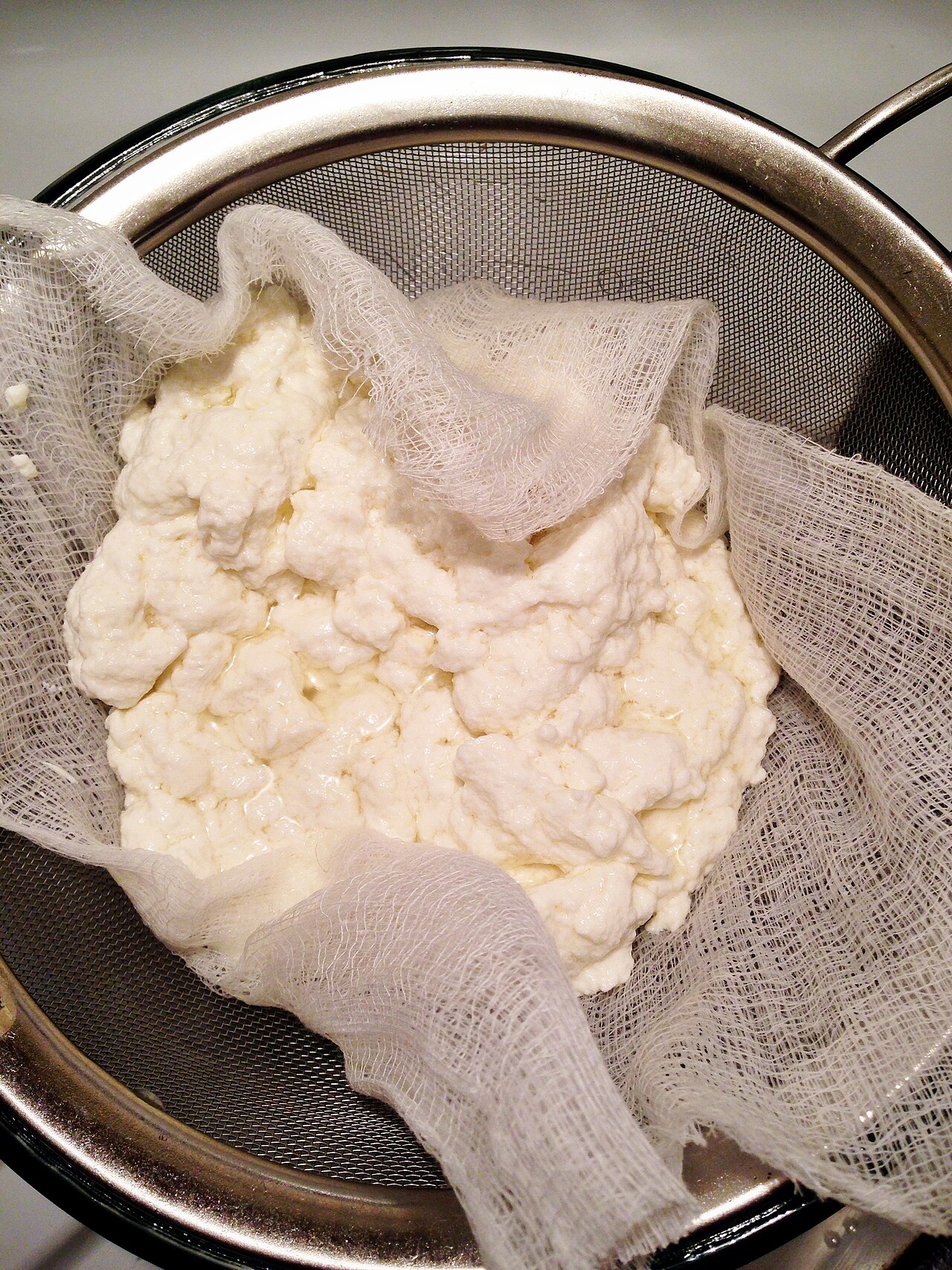
Cheese curds are milk proteins deliberately pushed past the point of no return. Photograph: littlerayovsun/Wikimedia Commons
Image Credits: Wikimedia Commons (CC BY-SA 3.0)
Does boiling milk make it curdle?
Not by itself. Fresh milk can be boiled without curdling. Boiling becomes a problem when the milk is already acidic from age.
It is also a problem when it meets an acid ingredient. Heat speeds up the clumping reaction.
Is curdled milk safe to drink?
Milk that curdled from age and tastes sour has high bacterial acid levels. Throw it away. Milk that curdled from heat or from an added acid like lemon juice is a texture problem.
It is not a safety problem, as long as the milk was fresh.
What is the pH at which milk curdles?
Casein clumps at its isoelectric point of pH 4.6. Fresh milk sits around pH 6.7. So it takes a big drop to get there. The drop comes from added acid, bacterial lactic acid, or both.
Why does milk curdle in coffee but not in tea?
Coffee is more acidic than most teas. So it pushes milk closer to the danger zone. Milk that is a few days old may survive tea but clump in coffee.
This is especially true with hot, dark roasts.
Can you fix curdled milk?
No. Curdling is a one-way chemical change. The casein micelles have broken apart.
The proteins have bonded to each other. Straining out the lumps leaves thin whey, not milk.
The bottom line
Milk curdles when casein proteins lose the electric charge that keeps them apart. This happens at pH 4.6. Acid drives the pH down directly. Bacteria do it slowly through lactic acid.
Heat speeds the collapse up.
Use fresh milk, heat it gently, and temper it into hot or acidic mixtures. Remember that the same reaction, controlled instead of accidental, gives us yogurt, paneer, and cheese. The science of how gluten develops in dough shows a similar theme.
Proteins behave according to their environment. Small changes in that environment change everything.
---
Rive News is the research desk of this publication, covering the science behind everyday questions with sourced, verifiable reporting.
Latest in food
- Why pancakes come out flat instead of fluffy
- Why cookies spread thin or stay thick
- How gluten develops when you knead dough
Subscribe for one research-backed explainer every morning.
Corrections: if you spot an error, contact the research desk and we will correct it promptly. Published October 12, 2026. Copyright Rive News 2026.
Related stories

Why Does Bread Go Stale Faster in the Refrigerator?
Bread goes stale faster in the fridge because starch recrystallizes fastest near 4°C. Here is the retrogradation science and the right way

Baking soda and baking powder: what's the difference?
Baking soda is pure sodium bicarbonate; baking powder adds two dry acids for double-acting lift. Learn when to use each, plus exact

What Is the Maillard Reaction in Simple Terms?
The Maillard reaction is the browning chemistry between amino acids and sugars above 140 C that creates the crust, color, and rich flavor