
Why Does Meat Turn Brown in the Fridge, and Is It Safe?
By Rive News
Research desk | Rive News
Key takeaways
- Meat turns brown in the fridge when a protein called myoglobin reacts with air. This is normal chemistry, not rot.
- The USDA says a beef roast that darkened in the fridge is safe. The change comes from oxidation, which means the meat's protein reacting with oxygen.
- Color alone cannot tell you meat is spoiled. Smell, slime, and storage time are the real tests.
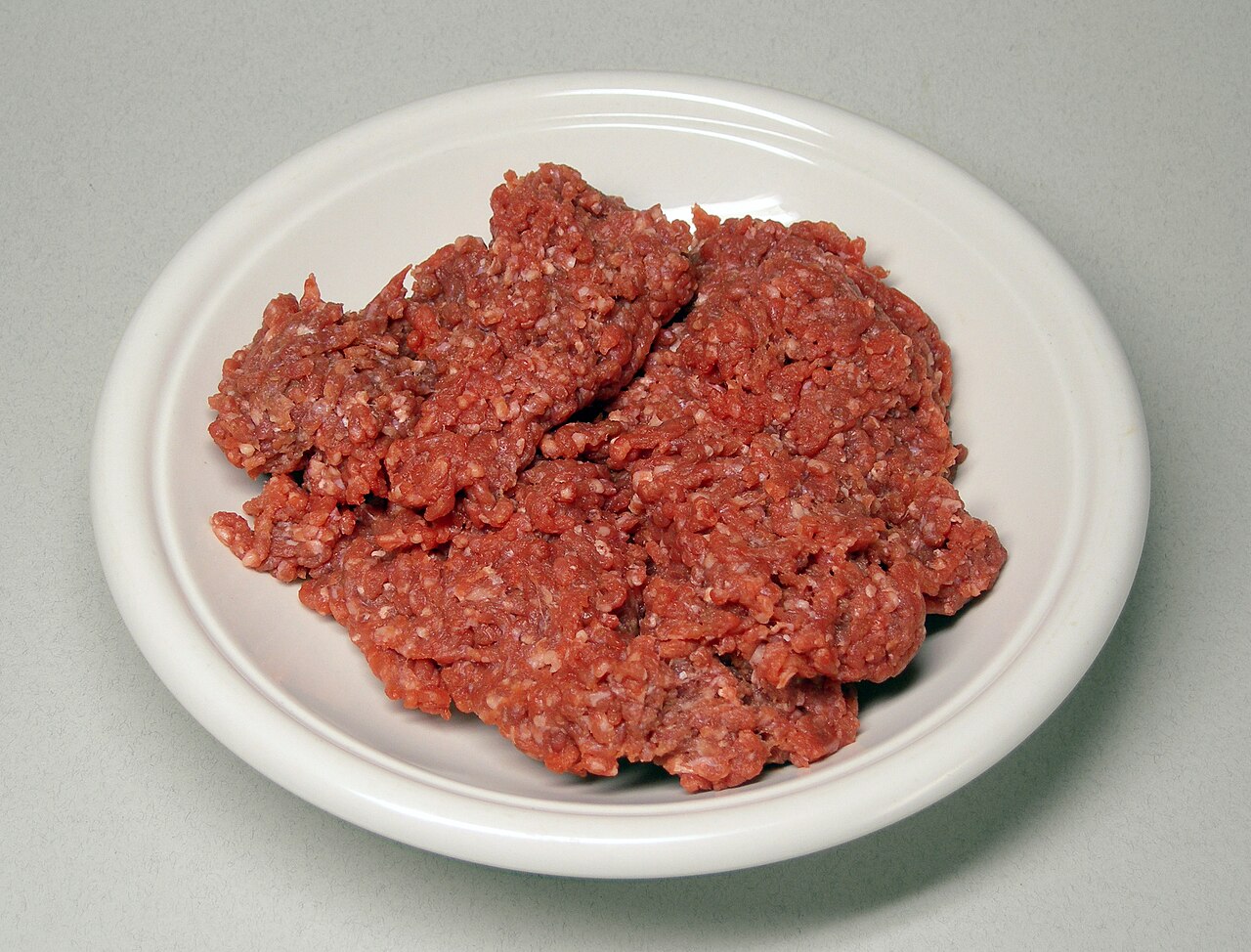
Raw ground beef, red on the outside where oxygen reaches it. Photograph: Wikimedia Commons
Image Credits: Wikimedia Commons (CC BY-SA 3.0)
You buy ground beef on Saturday. It looks bright red and fresh. By Tuesday it has turned a dull brown. Your first thought is to throw it out.
That thought makes sense. But it is usually wrong. The color of raw meat comes from one protein and how it reacts with air. Browning is most often just normal chemistry at work.
This article explains what makes meat red. It explains why the fridge turns it brown. It shares what the U.S. Department of Agriculture says about safety. And it shows how to tell harmless browning from meat that is truly bad.
What makes raw meat red?
Red meat gets its color from myoglobin. Myoglobin is a protein in muscle. A protein is a natural substance found in living things. This one stores oxygen.
Myoglobin has three main states. Each state has its own color. The USDA's fact sheet "The Color of Meat and Poultry" lists all three.
Freshly cut meat kept away from air holds deoxymyoglobin. That is myoglobin without oxygen attached. It looks purplish-red. That is the color of vacuum-sealed beef when you first open it.
Let air touch the surface. Oxygen then sticks to the iron at the center of the myoglobin. This forms oxymyoglobin. It gives meat the cherry-red color shoppers link to freshness.
This is why stores often use plastic wrap that lets some oxygen in. The wrap keeps the surface bright red. The USDA fact sheet notes this.
Keep the meat exposed for days in the fridge and under store lights. The iron then loses a tiny particle called an electron. The myoglobin becomes metmyoglobin. The color turns brownish-red.
Science Notes sums up the same chemistry. Purplish deoxymyoglobin has no oxygen. Red oxymyoglobin has oxygen attached. Brown metmyoglobin has iron changed by oxygen.
Bacteria cause none of these changes. The pigment is simply reacting to its surroundings.
Why does meat turn brown in the fridge?
Fridge browning is slow oxidation. Oxidation means the meat's protein reacting with oxygen in the air. Every hour the meat sits wrapped in the cold, oxygen keeps working on the surface. It turns red oxymyoglobin into brown metmyoglobin.
Light speeds the process up. That is why meat near the front of a display case dulls faster. The USDA fact sheet notes this for stores, and it applies at home too.
Ground beef browns fastest of all. The reason is surface area. Grinding exposes far more of the meat to air than a whole steak does. So oxidation has more pigment to work on. IFL Science reports that the New South Wales Food Authority makes this point. Minced meat turns gray sooner than whole cuts because so much more of it meets oxygen.
The classic confusing case is a package that is red outside and grayish-brown inside. The USDA fact sheet addresses it directly. Oxygen only reaches the surface. So the inside never turns red. It stays grayish-brown from lack of air.
The fact sheet says these color differences do not mean the meat is spoiled or old. It is simply uneven oxygen reaching the meat. Tasting Table's explainer on ground beef browning notes this too.
Freezing adds its own color shifts. The USDA notes that frozen meat can fade or darken. Freezer-burned areas turn pale and dry. The meat stays safe. But the dried patches lose texture and flavor, so trim them away.
Is brown meat safe to eat?
This is the question the USDA answers most bluntly. In its fact sheet's question-and-answer section: "A beef roast has darkened in the refrigerator, is it safe? Yes, it is safe.
The darkening is due to oxidation, the chemical changes in myoglobin due to the oxygen content. This is a normal change during refrigerator storage."
So brown alone is not a verdict. The USDA's rule, echoed by The Kitchn's food-safety coverage, is to judge spoilage by more than color.
Meat that has gone bad usually announces itself. It has a sour or off smell. It has a sticky or slimy surface. Or the packaging has puffed up from gases released by decay. Science Notes lists these signs. If the meat smells normal and feels normal to the touch, browning alone is no reason to bin it.
There is one important boundary, and the USDA draws it clearly. If all the meat in the package has turned gray or brown, inside and out, it has met air for so long that it is no longer fresh. The agency warns it may be spoiled.
Partial browning is chemistry. Total browning is a warning sign.
Storage time is the other half of the safety equation, and here the numbers are firm. The Kitchn's USDA-based guidance: use ground meat within up to two days in the fridge, and other cuts within about five days.
Past those windows, color stops being the question. Time takes over. When in doubt, a meat thermometer at cooking time is the final safety check. Kansas State University's meat specialists advise this in their extension Q&A.
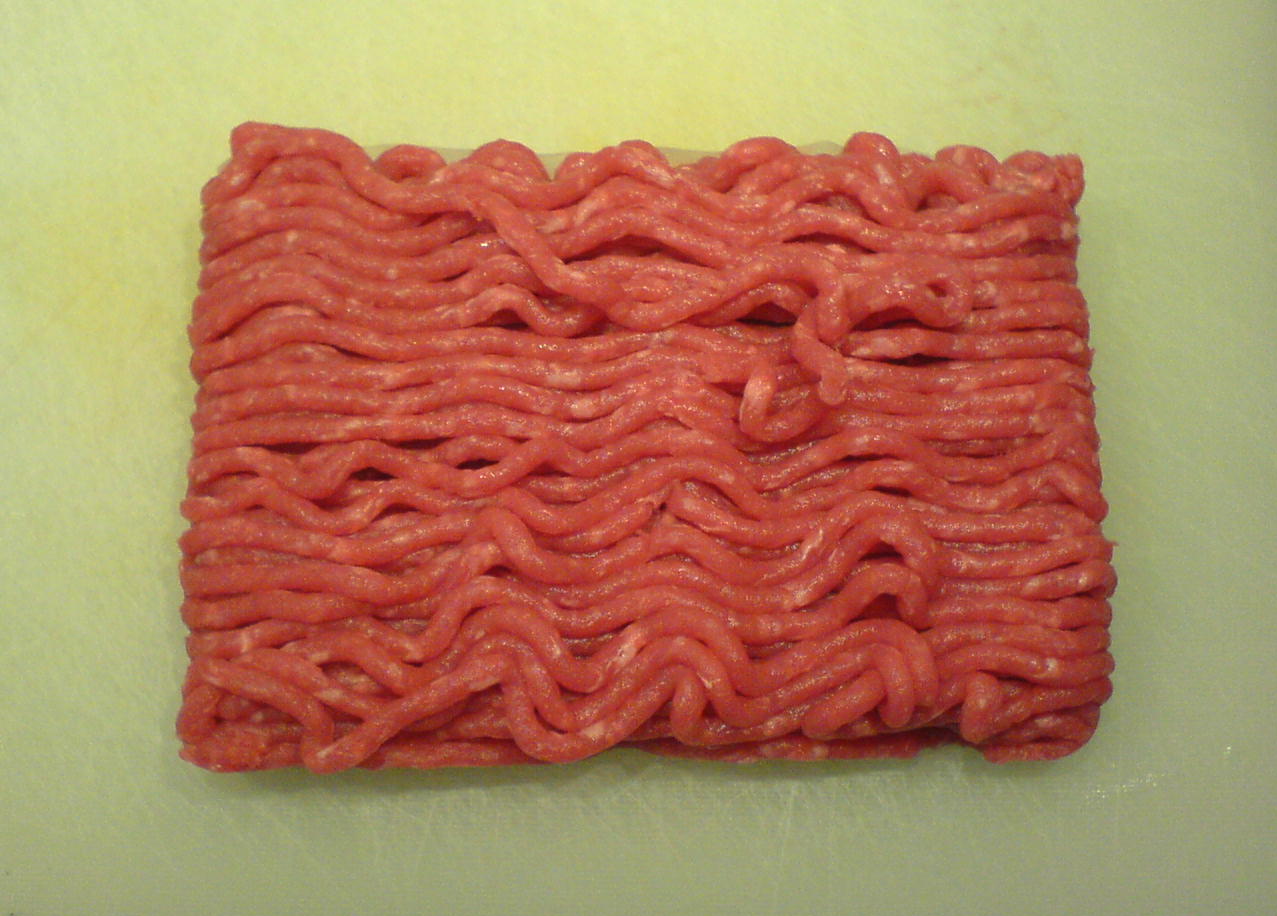
Ground beef with mixed red and brown coloring from uneven oxygen penetration. Photograph: Wikimedia Commons
Image Credits: Wikimedia Commons (CC BY-SA 3.0)
How to tell browning apart from spoilage
Run three checks before you decide. First, the sniff test. Fresh meat smells faintly metallic or like nothing much. Spoiled meat smells sour, like ammonia, or just wrong.
Second, the touch test. Fresh meat feels moist but not tacky. A sticky or slimy film means bacteria are growing. Third, the calendar test. Ground meat past two days and steaks or roasts past five days in the fridge are done. It does not matter how they look.
One more color confuses people: iridescence. A rainbow sheen on sliced beef or lunch meat comes from light splitting across muscle fibers and fat. It is not spoilage. Kansas State's extension specialists explain this. Green or gray patches combined with slime and odor are different. Those go straight in the bin.
The bottom line
Meat turns brown in the fridge because its myoglobin oxidizes into metmyoglobin. That is a normal chemical change the USDA calls safe. Judge freshness by smell, texture, and storage time instead. Two days for ground meat. About five for other cuts. And use a thermometer when you cook.
Store meat in the coldest part of the fridge. Keep it tightly wrapped. Cook it within those windows. When you do cook it, remember to rest the meat after cooking so the juices spread back through. For the science of the brown crust you actually want, read our explainer on the Maillard reaction.
This article is for general information only, not professional food-safety advice. When in doubt, throw it out.
Frequently asked questions
Why is my ground beef brown in the middle but red outside?
Oxygen only reaches the surface. The outer layer turns into red oxymyoglobin. The inside stays grayish-brown from lack of air. The USDA says this uneven coloring does not mean the meat is spoiled or old.
Does brown meat mean it is expired?
Not by itself. Browning is oxidation of myoglobin. It happens even in properly refrigerated, in-date meat.
Check the use-by date, the smell, and the texture together. Meat that is slimy, sticky, or sour-smelling is spoiled no matter its color.
How long can raw meat stay in the fridge?
USDA-based guidance cited by The Kitchn: up to two days for ground meat. About five days for steaks, roasts, and other whole cuts. Freeze anything you will not cook within those windows.
Why do stores wrap meat in plastic that lets air in?
Oxygen-permeable wrap lets the surface form red oxymyoglobin. That is the cherry-red color shoppers read as fresh. Vacuum-sealed meat skips that step. It looks purplish-red until it meets air, which is equally normal.
---
Rive News is the research desk behind these explainers. We read the primary sources, check the numbers, and write what we can verify.
Latest in Food
- Why Should You Rest Meat After Cooking?
- Why Does Frozen Meat Need to Thaw in the Fridge, Not the Counter?
- Why Do Apples Turn Brown After Cutting?
- The Maillard Reaction in Simple Terms
Subscribe for one verified food-science explainer in your inbox every morning.
Corrections: spotted an error? We fix verified mistakes promptly and note the update. Standards: every claim traced to a named source; no invented quotes, statistics, or experts.
Related stories

Why Does Bread Go Stale Faster in the Refrigerator?
Bread goes stale faster in the fridge because starch recrystallizes fastest near 4°C. Here is the retrogradation science and the right way t

Baking soda and baking powder: what's the difference?
Baking soda is pure sodium bicarbonate; baking powder adds two dry acids for double-acting lift. Learn when to use each, plus exact substitu

What Is the Maillard Reaction in Simple Terms?
The Maillard reaction is the browning chemistry between amino acids and sugars above 140 C that creates the crust, color, and rich flavor of