
Why Bread Dough Rises Twice: Flavor, Gluten, and Better Crumb
Key takeaways
- The first rise (bulk fermentation) builds flavor and develops the gluten network; the second rise (proofing) inflates the shaped loaf before baking.
- Punching dough down between rises redistributes gas bubbles, evens out the crumb, and lets fermentation byproducts keep developing flavor.
- A loaf can rise fully yet taste flat if fermentation was rushed: time, not just volume, is what makes good bread.
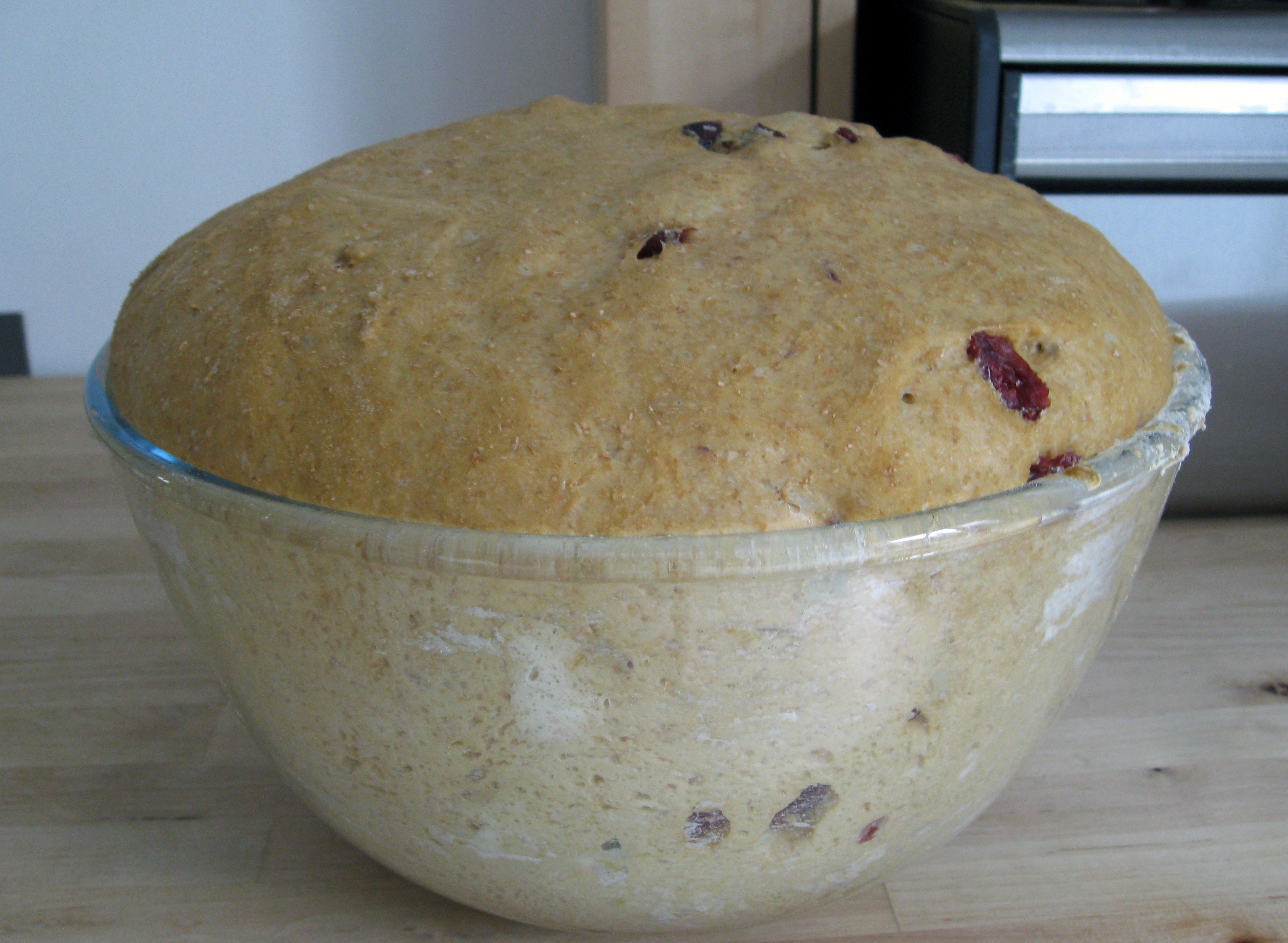
Most bread recipes ask you to let the dough rise, punch it down, shape it, and let it rise again. It feels like busywork. It is not.
The two rises do different jobs, and skipping the first one costs you the two things that separate great bread from merely risen bread: flavor and crumb structure.
This article explains why bread dough needs to rise twice, what happens chemically during each rise, and how to tell when each one is done.
Rise one: bulk fermentation builds flavor and structure
The first rise has a technical name: bulk fermentation. It starts the moment the dough is mixed and lasts until the dough is divided and shaped.
During this phase, yeast gets to work on the sugars in the flour, converting them through anaerobic fermentation into carbon dioxide, ethanol, and metabolic energy. The CO2 is the gas that makes dough expand, but the other products matter just as much.
As fermentation proceeds, yeast and bacteria produce organic acids and alcohols that give bread its complex flavor. A loaf can have enough rise and still taste flat if fermentation was rushed. Time is the ingredient that fast methods skip.
Long, slow fermentation also lets enzymes break down some of the flour's complex carbohydrates, which many bakers credit for a more digestible loaf.
Meanwhile, the gluten network is organizing itself. Gluten forms when two flour proteins, glutenin and gliadin, absorb water and are worked together through mixing and folding. As the dough rests, the network relaxes slightly, becoming easier to expand without snapping back.
The second loaf in a simple comparison, mixed, bulk fermented, folded once or twice, then shaped and proofed slowly, usually has better structure than one mixed briefly and baked after a short rise, because fermentation time allowed the gluten to organize, relax, and trap gas more effectively.
Why you punch the dough down
Between the two rises comes the step every recipe insists on: punching the dough down, or degassing. Knocking the gas out of the dough does three useful things.
First, it evens out the gas distribution. The first rise produces large, uneven bubbles; pressing them out and re-kneading redistributes the CO2 into smaller, uniform pockets, which is what gives the finished loaf an even crumb instead of gaping holes.
Second, it brings fresh food to the yeast. Yeast cells in a risen dough have eaten the sugars immediately around them and are sitting in their own waste products. Deflating and folding the dough moves yeast into contact with fresh sugars, restarting vigorous fermentation for the second rise.
Third, it changes the starch-to-gluten balance. Each fermentation consumes carbohydrates and turns them into gas, so proofing, punching down, and proofing again leaves a different ratio of starch to gluten than a single rise would, subtly changing the texture of the finished bread.
Bakers on The Fresh Loaf describe bulk fermentation as a preparation phase: the microbes multiply and their byproducts build flavor while the gas they make is deliberately removed, since at this stage it is the flavor compounds and the organized gluten that matter, not the bubbles.
Rise two: proofing sets up the final loaf
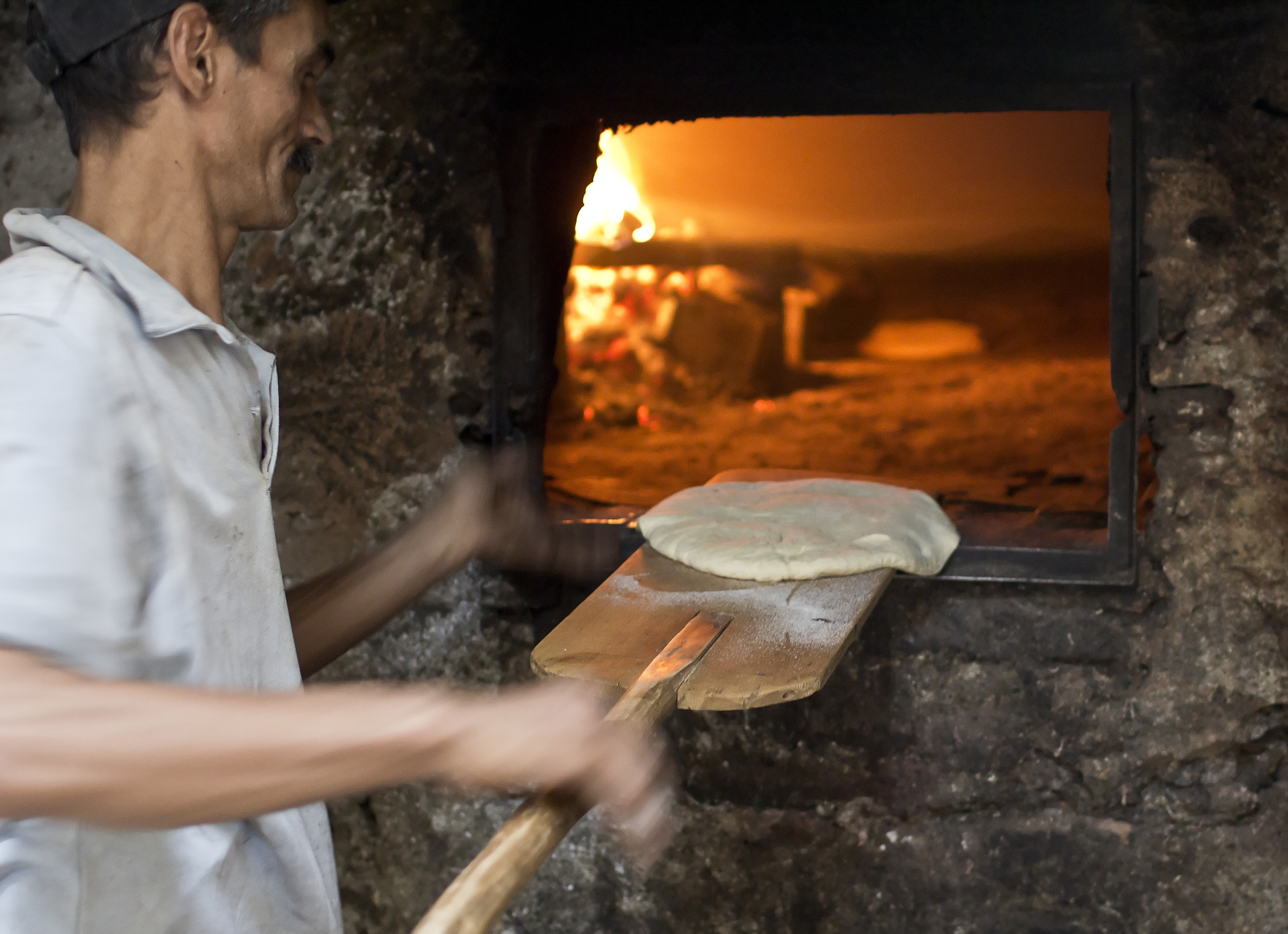
After shaping, the dough gets its second rise, called proofing. Now the goals are narrower.
The shaped loaf needs to fill with gas evenly so it has something to expand with in the oven's heat, the dramatic final lift bakers call oven spring. The flavor work is largely done; this rise is about volume and structure.
This is also where timing gets delicate.
The important thing during the final proof is to stop before the gluten network collapses. When the gluten can no longer hold the carbon dioxide the yeast produces, the little gluten balloons burst and the bread deflates before your eyes. Temperature is the biggest lever on proofing speed, which is why experienced bakers stabilize their dough temperature to keep proofing times consistent from batch to batch.
The classic doneness test is the finger poke. Gently poke the dough with a floured finger.
If the hole disappears completely, the loaf is under-proofed. If the dent springs halfway back, proofing is just right. If the hole stays fully dented in, the dough is over-proofed.
Experience teaches the difference faster than any timer, and right after shaping the dough can feel similar to an over-proofed loaf, so judge by how light and elastic it feels as well as by the poke.
What happens if you skip a rise?
You can make bread with a single rise, and many quick recipes do exactly that. Omitting the second proof mostly sacrifices the flavor component of the yeast, flour, and sugar interaction, letting the raw ingredients speak more directly.
For some enriched doughs that is an acceptable trade. For a lean loaf, though, the result is bread that looks right but tastes plain, with a tighter, less interesting crumb.
The deeper reason recipes keep both rises is that each one solves a different problem.
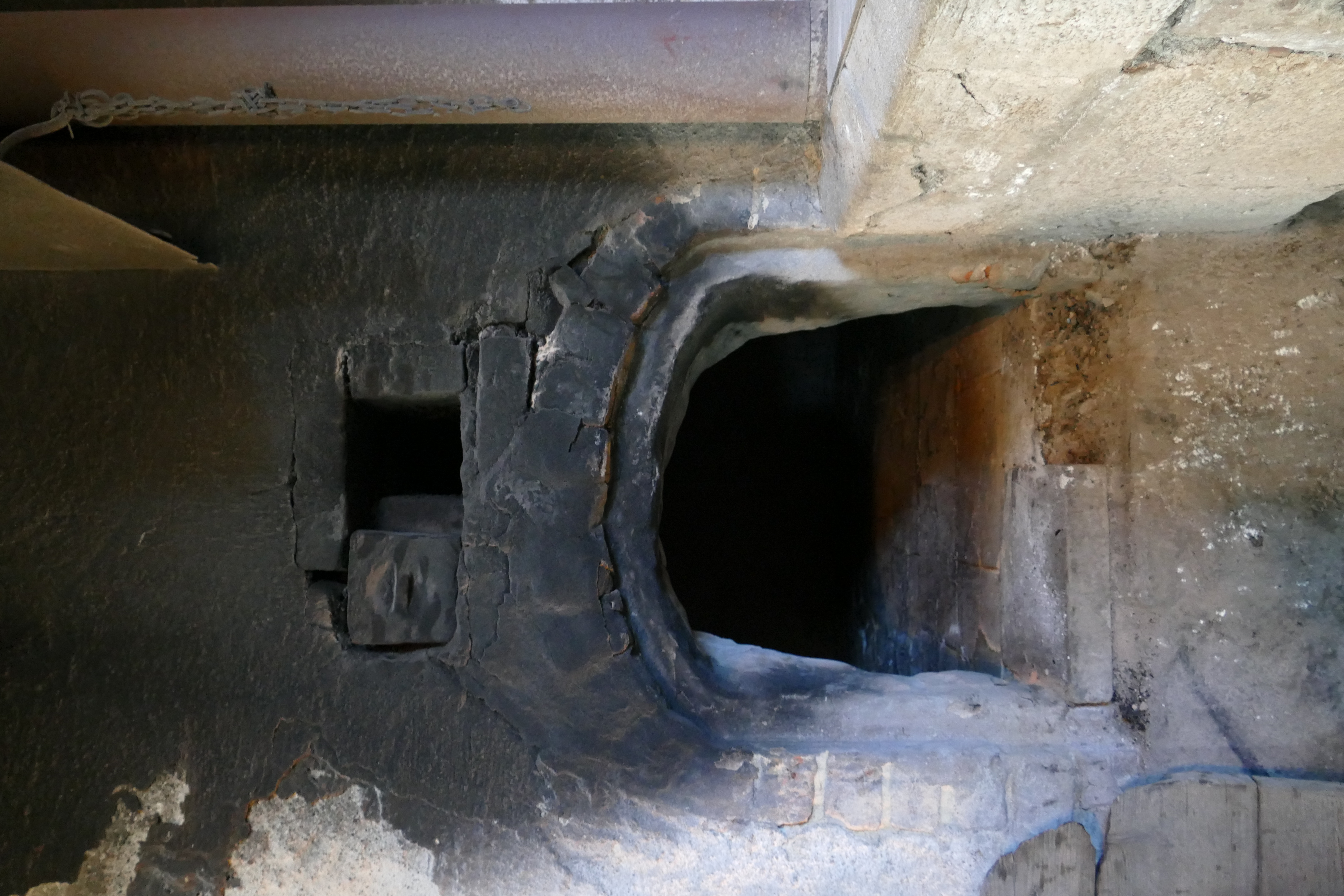
Bulk fermentation solves flavor and gluten organization. Proofing solves final volume and oven spring. Neither can fully cover for the other, which is why the two-rise rhythm has survived centuries of baking tradition, from home kitchens to the communal ovens that once served whole villages.
The bottom line
Bread dough rises twice because the first rise is about chemistry and the second is about physics. Bulk fermentation gives yeast time to produce the acids and alcohols that make bread taste like bread, while the gluten network organizes and relaxes.
Punching the dough down resets the gas into an even crumb. The final proof then inflates the shaped loaf so it can spring in the oven.
Rush the process and you get volume without flavor; respect it and you get both. The same patience principle applies across the kitchen, from why you salt eggplant before cooking to why fresh pasta's quick boil needs watching.
FAQ
Q: What is bulk fermentation in bread baking?
A: It is the first rise, from mixing until shaping. During it, yeast ferments sugars into CO2, ethanol, and flavor compounds, while the gluten network develops and relaxes. It is the phase that builds most of the bread's flavor.
Q: Why do you punch down bread dough?
A: To redistribute gas into smaller, even bubbles, bring yeast into contact with fresh sugars, and even out the crumb. It also lets fermentation byproducts keep developing flavor during the second rise.
Q: How do I know when my dough is done proofing?
A: Use the finger poke test: poke the dough gently. If the indent disappears, it is under-proofed. If it springs back halfway, it is ready. If it stays dented, it is over-proofed and should go into the oven immediately.
Q: Can I skip the second rise?
A: You can, but the bread will taste flatter and have a tighter crumb, because you lose the slow flavor development that the first rise provides. Quick breads accept the trade; lean loaves suffer from it.
---
Topics: bread baking, fermentation, yeast, baking science
Rive News is the research desk behind this publication, covering travel, food, science, and everyday explainers.
Latest in Food
- Why Do You Salt Eggplant Before Cooking?
- Why Does Fresh Pasta Cook Faster Than Dried Pasta?
- Why Does Rice Get Mushy and How Do Absorption Ratios Work?
Subscribe for weekly food science explainers and practical kitchen tips.
Related stories

Why Does Bread Go Stale Faster in the Refrigerator?
Bread goes stale faster in the fridge because starch recrystallizes fastest near 4°C. Here is the retrogradation science and the right way

Baking soda and baking powder: what's the difference?
Baking soda is pure sodium bicarbonate; baking powder adds two dry acids for double-acting lift. Learn when to use each, plus exact

What Is the Maillard Reaction in Simple Terms?
The Maillard reaction is the browning chemistry between amino acids and sugars above 140 C that creates the crust, color, and rich flavor