
Why Do You Salt Eggplant Before Cooking: Texture and Taste
Key takeaways
- Salting eggplant draws out water through osmosis, which firms the flesh and improves browning, especially for frying.
- Salt does not pull bitter alkaloids out of the flesh; it only masks bitterness, and modern varieties are already mild.
- The step matters most for quick, high-heat cooking; for long roasts and braises, it rarely earns its 30 to 45 minutes.
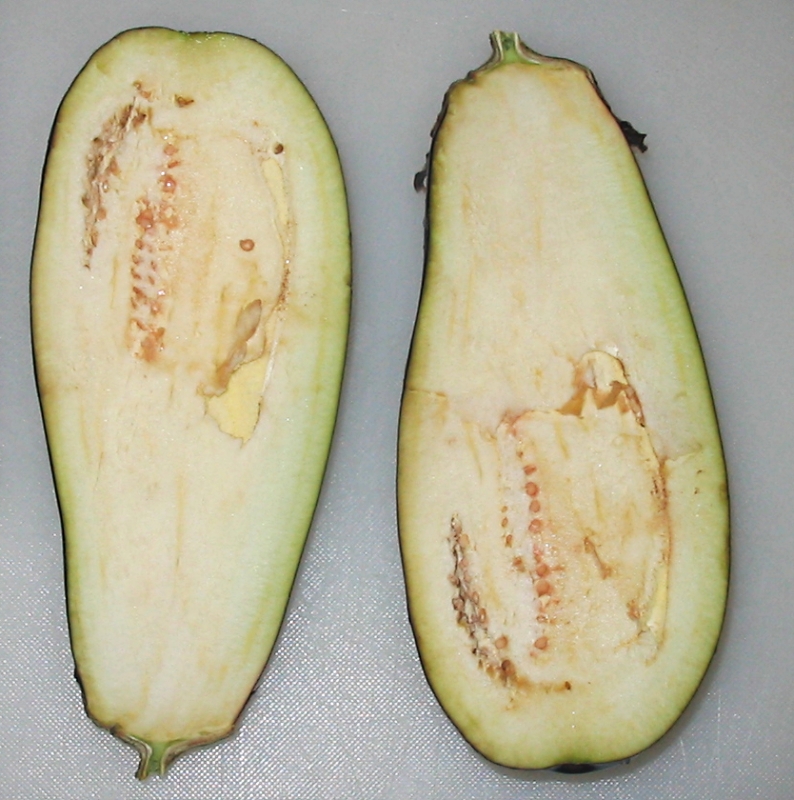
Salting eggplant means sprinkling cut slices, rounds, or cubes with a generous layer of salt and letting them rest for 30 to 60 minutes before cooking. The slices bead up with drawn-out liquid, which gets rinsed or wiped away. After a pat dry, the eggplant goes into the pan or oven.
The practice comes from a time when eggplants were far more bitter than the ones in today's markets. Older advice said the salt pulled bitterness out of the flesh. That explanation turned out to be only partly right, and for a different reason than most cooks were told.
This article takes a closer look at salting eggplant, including what salt actually does to the flesh, the bitterness question, when the step earns its time, and how to do it right.
What salt actually does to eggplant
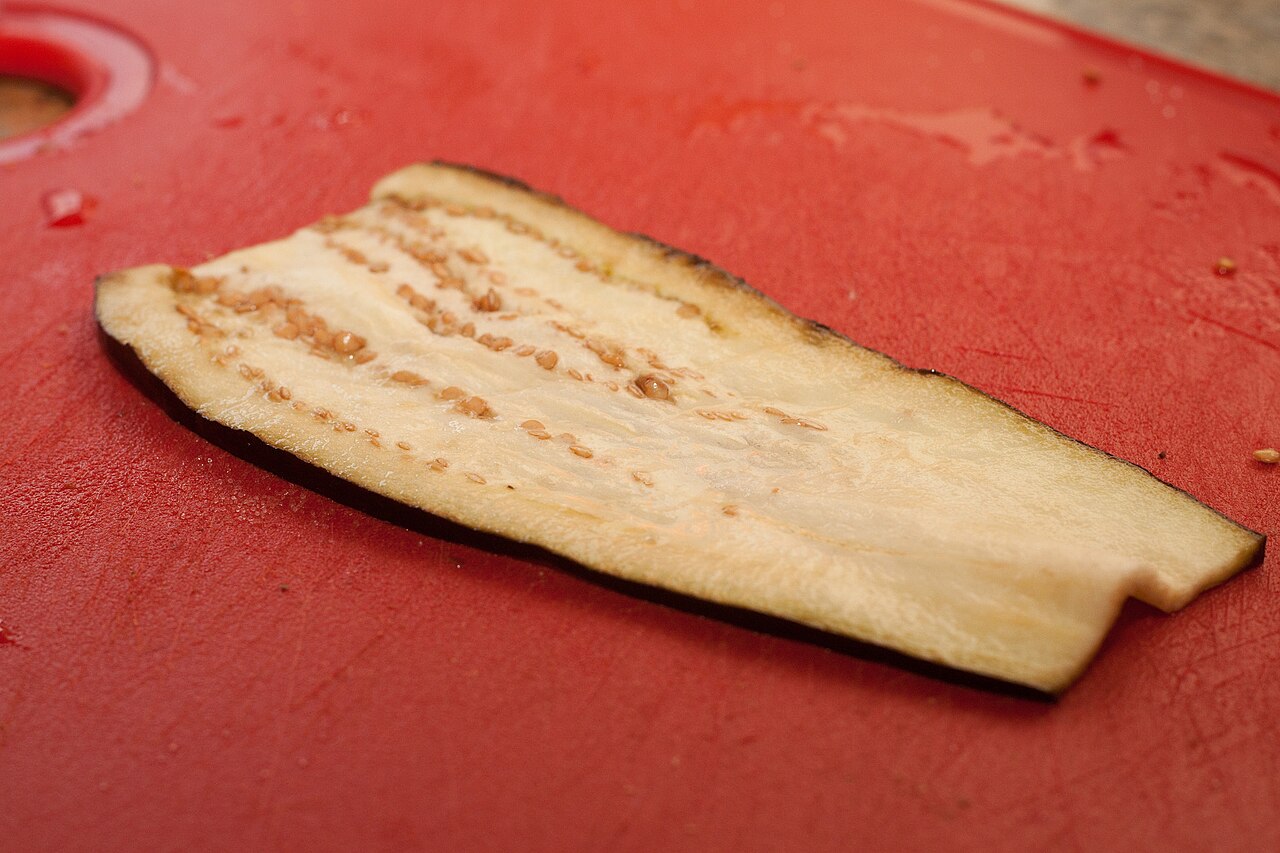
Eggplant flesh is mostly water and air, packed into a sponge-like network of cells. When salt sits on the cut surface, osmosis pulls water out of the cells toward the higher salt concentration outside. Within minutes the slices start to glisten, and by 30 minutes they can look noticeably wet.
That water loss is the whole point. Less water in the flesh means a firmer slice that holds its shape in the pan. It also means better browning, since surface moisture is the enemy of a crisp, golden crust.
Salt also seasons the eggplant from the outside in. As moisture leaves, a small amount of salt works its way into the flesh. Chef Michael Costa of Zaytinya, the José Andrés restaurant group, told Tasting Table his kitchens always salt eggplant, noting that eggplants are mostly water and that salting helps concentrate their flavor and texture.
The sponginess of raw eggplant matters here too. Dry, salted flesh absorbs oil more slowly at first, which can help fried slices stay crisp instead of turning greasy. Food and Wine's test kitchen found this especially useful for frying, where a crisp exterior and creamy interior is the goal.
The bitterness question: what salting cannot do
Here is the part that surprised many cooks. Salting does not remove bitterness from eggplant the way the old advice claimed.
Nik Sharma, Food52's Kitchen Scientist columnist and author of The Flavor Equation, explains that the bitter-tasting alkaloids in eggplant are relatively large molecules that cannot simply exit through osmosis when salt is added. Instead, salt masks and reduces the perception of bitterness, since salt draws out liquid while muting bitter taste on the tongue.
Eggplants belong to the nightshade family and contain small amounts of the alkaloids alpha-solanine and alpha-chaconine. According to Sharma, one eggplant holds about 11 milligrams of solanine, and a person would need to eat at least 12 raw eggplants for it to become dangerous. Cooking heat breaks most of these compounds down anyway.
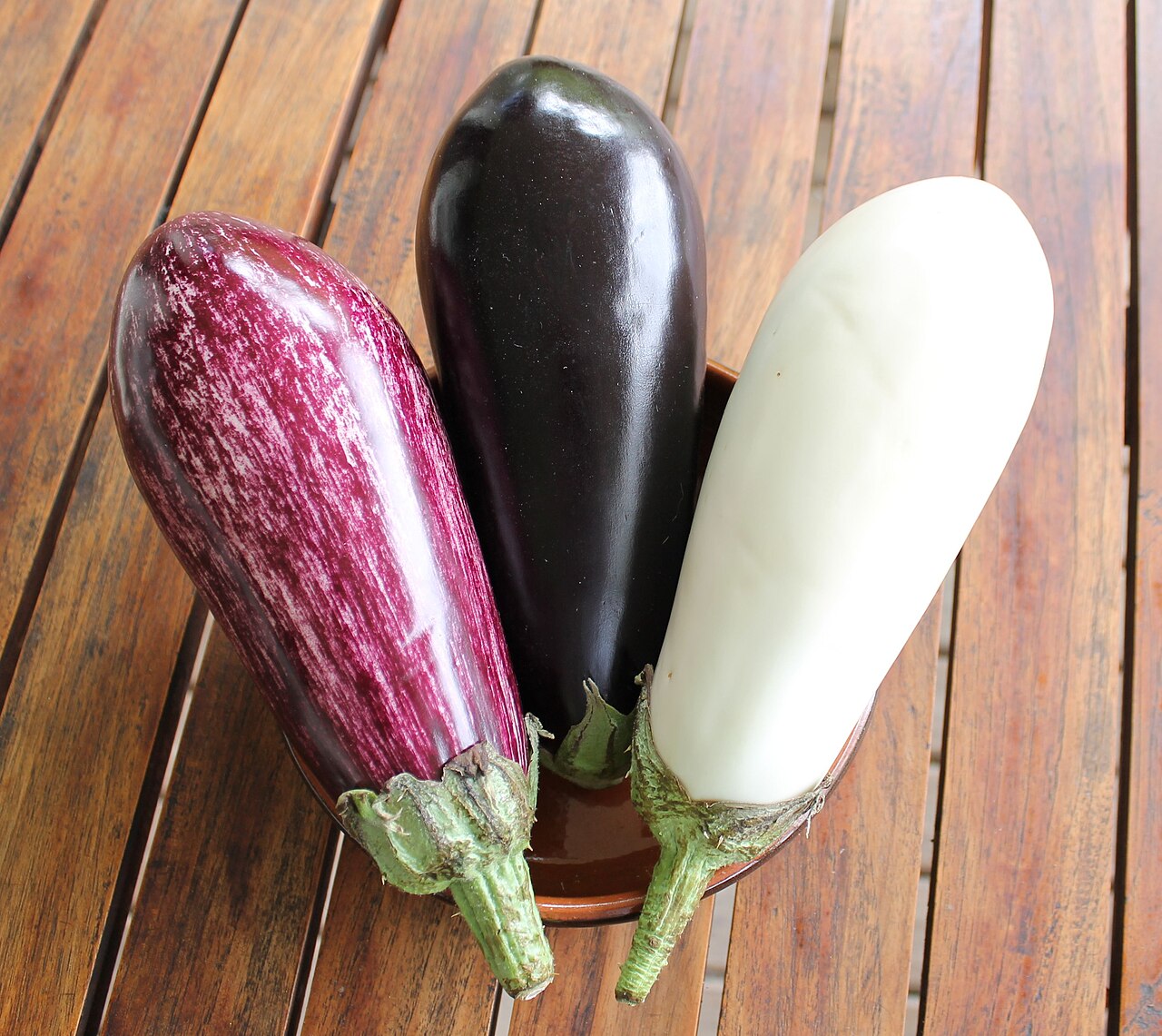
The bigger story is breeding. Farmers have spent decades selecting eggplant varieties that taste milder, so the bitterness that made salting feel mandatory has mostly been bred out of supermarket produce. That is why many professional chefs now treat the step as optional.
When salting eggplant is worth your time
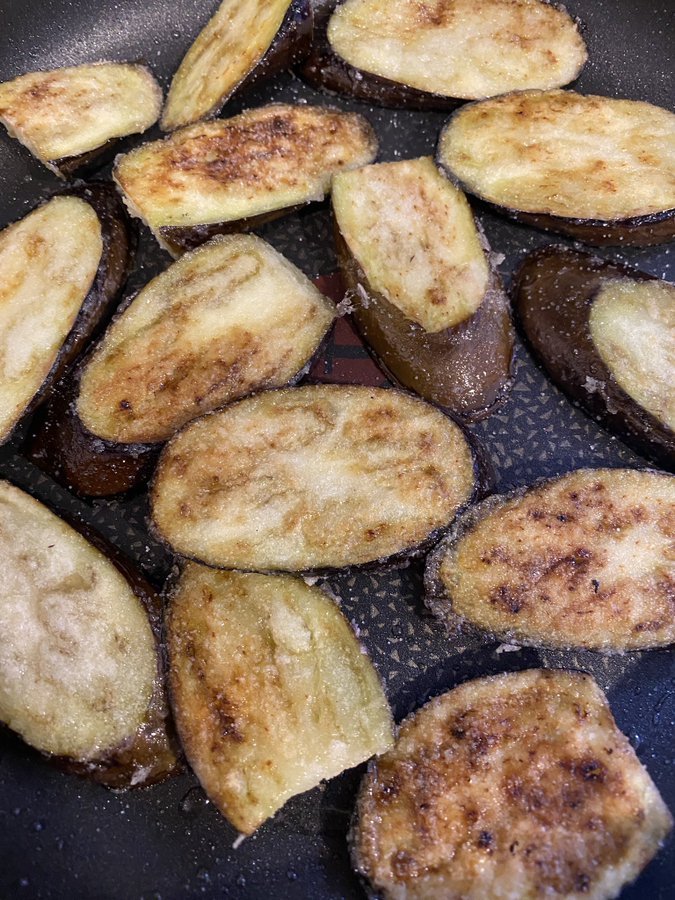
Quick, high-heat cooking is where salting earns its place. Frying is the strongest case: a drier slice browns faster, stays firmer, and soaks up less oil in the first minutes of cooking. Grilling benefits too, since drier flesh chars instead of steaming.
Anna Theoktisto of the Food and Wine test kitchen puts it plainly: she would not bother salting with a long cooking time, but for a quick cook the step is probably beneficial for a better final texture. That distinction, between fast and slow cooking, is the most useful rule of thumb.
Sara Jenkins, chef and owner of Porsena in New York, told Epicurious she has rarely found an eggplant bitter enough to need salting and usually just cuts it up, oils it, and starts cooking. Her one exception is deep-frying, where the moisture difference matters most.
Costa's kitchens salt as a matter of routine, but even he says it depends on the eggplant and the final result you are after. The step is a tool, not a law.
When you can skip it entirely
Long cooking times make salting redundant. Eggplant destined for a slow roast, a braise, or a baked dish like moussaka breaks down and turns creamy no matter what. The moisture you would draw out in 45 minutes leaves during the long cook anyway.
A Guardian test cited by BuzzFeed found that while salted eggplant took up less oil at first, salted and unsalted versions ended up absorbing about the same amount of fat once fully fried, with results that tasted basically identical. Salting is not magic, and it does not rescue a bad technique.
Ottolenghi skips the step in his roasting recipes. For roasted or baked dishes, the extra 30 to 45 minutes of waiting buys very little.
How to salt eggplant the right way
If you decide the step is worth it, the method is simple. Cut the eggplant into slices, rounds, or cubes and lay them on a baking sheet lined with paper towels. Sprinkle generously with salt on both sides.
Let the pieces rest for at least 30 minutes; 45 minutes is the sweet spot Sharma uses before frying. You will see beads of liquid on the surface. Discard that liquid, rinse the pieces under cold tap water to remove excess salt, and pat them completely dry with paper towels or a clean kitchen towel.
That last part matters as much as the salting. Any surface moisture left behind will steam the eggplant instead of browning it, undoing the work you just did.
One more tip: cut eggplant browns quickly once exposed to air, thanks to an enzyme called polyphenol oxidase, the same one that browns sliced apples. A few drops of lemon juice or vinegar on the cut faces slows it down. The browning does not affect taste, and it disappears during cooking.
Does salting eggplant actually remove bitterness?
No, not in the way the old advice claimed. The bitter alkaloids are too large to leave through osmosis. Salt draws out water and masks bitter perception on the tongue, but modern eggplants are bred mild, so bitterness is rarely an issue to begin with.
How long should I salt eggplant?
Thirty minutes is the minimum for a noticeable effect; 45 minutes is the standard for frying. An hour is fine too, but longer rests do not keep improving the result. Always rinse and pat dry afterward, or the extra salt stays in the dish.
Do I have to rinse the salt off?
Yes. The resting period leaves a salty, bitter liquid on the surface along with undissolved salt.
Rinse under cold water and pat dry. Skipping the rinse makes the finished dish noticeably over-salted.
Does salting reduce how much oil eggplant absorbs?
At first, yes. Drier flesh takes up oil more slowly, which helps fried slices crisp.
Over a full fry, though, tests show salted and unsalted pieces end up absorbing similar amounts of fat. The real win is texture, not calorie savings.
The bottom line
Salting eggplant is a moisture-control technique, not a bitterness cure. It draws water out of the spongy flesh, which gives firmer slices and better browning for frying and other quick, high-heat cooking.
For slow roasts and braises, the step is usually a waste of time. Salt for 30 to 45 minutes when you want crisp texture, rinse and pat dry, and skip it when the cook is long.
Tags: eggplant, cooking tips, kitchen science, vegetables
Latest in Food
- Why Potatoes Turn Green and What Solanine Is
- Why Rice Gets Mushy and How Absorption Ratios Work
- Why Garlic Turns Blue or Green in Pickles
- Why Hard-Boiled Eggs Get a Green Ring Around the Yolk
Get one kitchen-science explainer in your inbox every morning. Subscribe to the Rive News newsletter.
Related stories

Why Does Bread Go Stale Faster in the Refrigerator?
Bread goes stale faster in the fridge because starch recrystallizes fastest near 4°C. Here is the retrogradation science and the right way

Baking soda and baking powder: what's the difference?
Baking soda is pure sodium bicarbonate; baking powder adds two dry acids for double-acting lift. Learn when to use each, plus exact

What Is the Maillard Reaction in Simple Terms?
The Maillard reaction is the browning chemistry between amino acids and sugars above 140 C that creates the crust, color, and rich flavor