
Why Do Hard Boiled Eggs Get a Green Ring Around the Yolk
Key takeaways
- The green ring is ferrous sulfide, created when sulfur from the white reacts with iron in the yolk during overcooking.
- Longer cooking, higher heat, slow cooling, and older eggs all make the ring more pronounced.
- It is completely harmless; a gentle simmer plus an immediate ice bath keeps yolks clean and yellow.
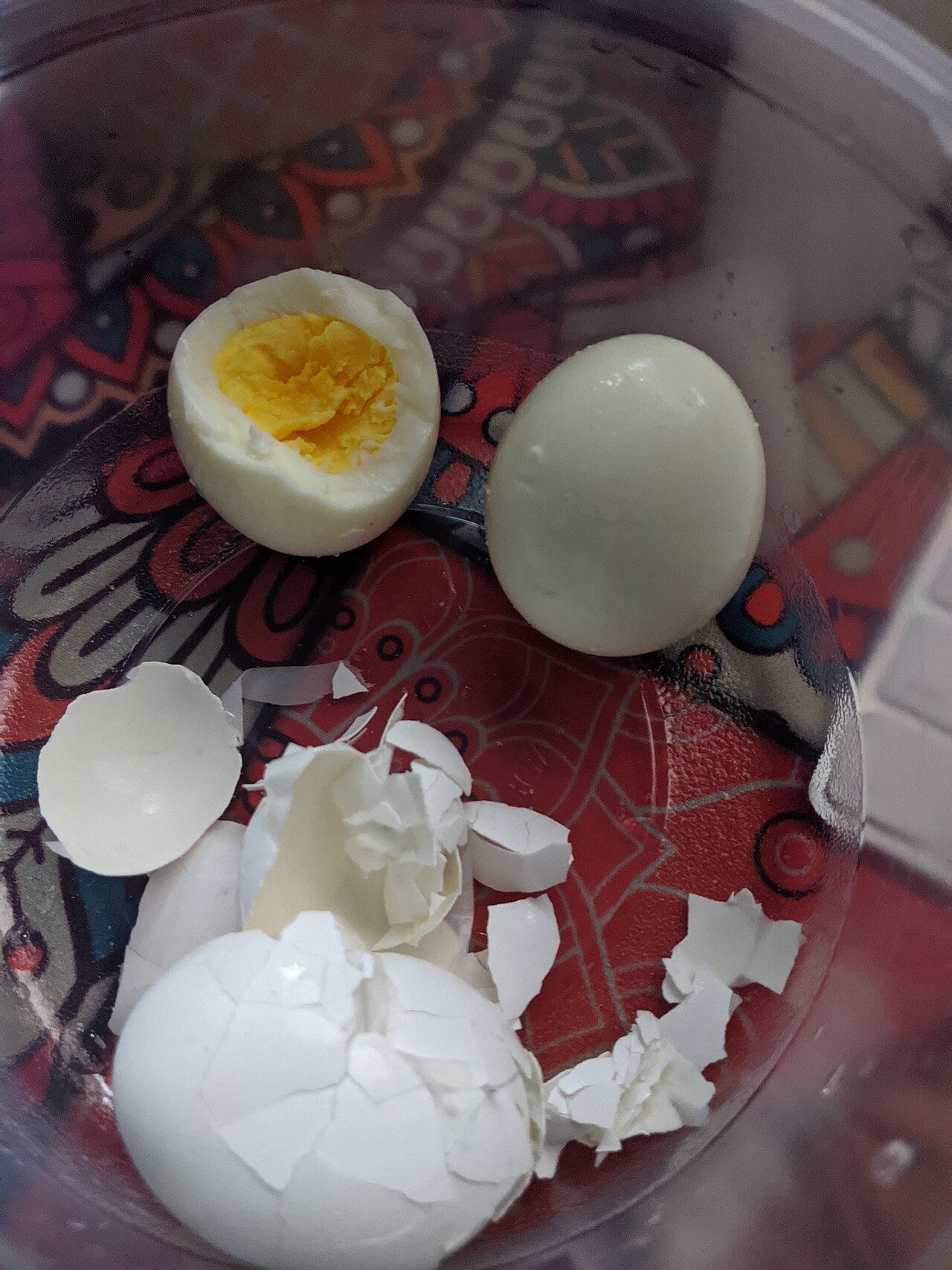
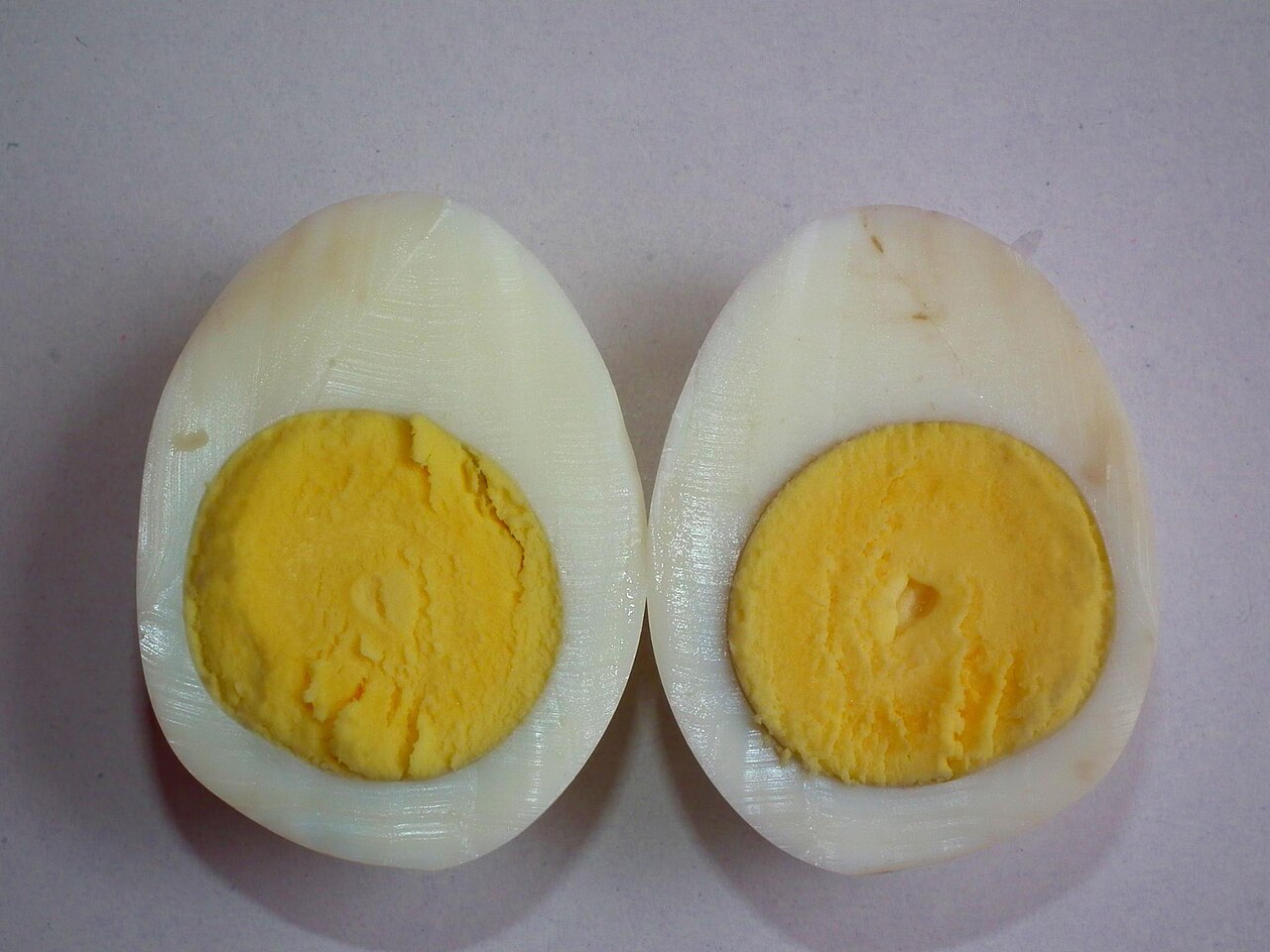
The green ring is a thin greenish-gray band that forms on the outside of a hard-boiled yolk, right where it meets the white. It shows up most often in deviled eggs, egg salads, and Cobb salads, where the cut yolk is on display. The color looks wrong, and many cooks assume the egg has gone bad.
It has not. The ring is a simple chemical reaction between two elements that are naturally present in every egg, and it is a reliable signal of one thing: the egg cooked too long, too hot, or cooled too slowly.
This article takes a closer look at the green ring, including the chemistry that makes it, why overcooking causes it, whether it is safe to eat, and how to boil eggs for clean yellow yolks.
The chemistry: iron plus sulfur
An egg white is rich in sulfur-containing proteins. A yolk is rich in iron.
Heat breaks the white's proteins down, releasing hydrogen sulfide gas, and that gas migrates to the yolk's surface, where it meets the iron. The result is ferrous sulfide (also called iron sulfide), a greenish-gray compound that deposits exactly at the boundary between white and yolk.
"A green ring sometimes seen around the yolk of a hard-boiled egg results from a reaction between sulfur in the egg white and iron in the yolk," says Alexandra Kazaks, PhD, a member of the Institute of Food Technologists' Nutrition Division.
"This reaction produces ferrous sulfide, a compound with a greenish-gray color. The ring appears where the yolk and white meet."
The University of Nebraska-Lincoln describes the same mechanism: sulfur from the whites and iron from the yolk form ferrous sulfide at the yolk's surface when the egg is overcooked. It is harmless and tasteless.
Why overcooking causes it
Three cooking variables control how much ferrous sulfide forms. The first is time: the longer the egg cooks, the more the white's proteins break down, releasing more sulfur and iron into the reaction.
The second is temperature: high heat speeds the chemistry up, so a rolling boil produces rings faster than a gentle simmer. The third is cooling: if eggs cool slowly, the reaction keeps running after the pot comes off the heat.
Kazaks explains that all three stack. A long, hot cook followed by a slow cool-down is the classic recipe for a pronounced ring. Food52's test kitchen demonstrated it directly: eggs boiled for 13 minutes and moved to an ice bath stayed yellow, while the same 13-minute eggs left to cool without the bath developed the gray-green ring.
Egg age matters too. Older eggs are slightly more alkaline, and that higher pH encourages hydrogen sulfide production.
Fresher eggs, with their lower pH, generate less of the gas. Starting with the freshest eggs you can find is a small but real advantage.
Is the green ring safe to eat?
Yes, completely. "The green ring is harmless," Kazaks says.
"It's just a sign of prolonged heat exposure or older eggs. While it may affect the egg's appearance, it does not indicate the egg is unsafe to eat."
Dt Amreen Sheikh, chief dietitian at KIMS Hospitals in Thane, told the Indian Express the same: if the egg was fresh before cooking, cooked correctly, and stored properly, the gray ring is typically harmless. She notes the real drawback is texture, since overcooking makes the yolk drier and chalkier and the white rubbery, sometimes with a faint sulfur smell.
Susie Craig of Washington State University Extension adds that the eggs keep the same nutritional value. The ring is a cosmetic issue in an otherwise nutritious food: eggs supply high-quality protein plus nutrients like vitamin B12 and choline.
The actual food-safety rule to remember has nothing to do with the ring. A boiled egg left at room temperature too long, or one with a rotten smell or slimy texture, should not be eaten, ring or no ring.
How to boil eggs for clean yellow yolks
Start with fresh eggs when you can. Their higher acidity means less hydrogen sulfide gas during cooking, which means less raw material for the ring.
Cook at a gentle simmer, not a rolling boil. Both the cold-start method (eggs in cold water, brought up gradually) and the hot-start method (eggs lowered into boiling water) can work; the cold start heats more evenly and cracks fewer shells, while the hot start is faster but riskier for cold eggs. Either way, once the water is moving, keep it at a bare simmer and time the cook for the doneness you want, typically 9 to 12 minutes for fully set yolks.
Then stop the cooking cold. Move the eggs straight into an ice bath or under cold running water.
This halts both the cooking and the sulfur-iron reaction, and it makes peeling easier. As a bonus, Kazaks suggests cracking the shell on a hard surface, rolling gently to loosen it, and peeling from the wide end where the air pocket sits, with cold water helping wash away shell fragments.
What causes the green ring around egg yolk?
Sulfur in the egg white reacts with iron in the yolk during cooking, forming ferrous sulfide, a greenish-gray compound. The reaction intensifies with longer cooking times, higher temperatures, slow cooling, and older eggs.
Is it safe to eat eggs with a green ring?
Yes. Food scientists and dietitians agree the ring is harmless and does not change the egg's safety or nutritional value. Discard an egg for a rotten smell, slimy texture, or long room-temperature storage, not for the ring.
How do you keep yolks from turning green?
Use fresh eggs, cook at a gentle simmer rather than a rolling boil, time the cook (9 to 12 minutes for hard yolks), and transfer the eggs to an ice bath immediately. Fast cooling stops the sulfur-iron reaction in its tracks.
Does the green ring mean the egg is bad?
No. It means the egg was overcooked or cooled slowly.
The egg is safe to eat, though the texture may be drier and chalkier than a perfectly cooked one. For picture-perfect deviled eggs, nail the timing next time.
The bottom line
The green ring around a hard-boiled yolk is ferrous sulfide, made when sulfur from the white meets iron in the yolk under prolonged heat. It is harmless, tasteless at these levels, and purely a sign of overcooking or slow cooling. Simmer gently, time the cook, chill the eggs fast, and the yolks stay clean and yellow.
Tags: eggs, cooking tips, food chemistry, food safety
Latest in Food
- Why Do You Salt Eggplant Before Cooking
- Why Rice Gets Mushy and How Absorption Ratios Work
- Why Garlic Turns Blue or Green in Pickles
- Why Whipped Cream Turns to Butter If You Overwhip
Get one kitchen-science explainer in your inbox every morning. Subscribe to the Rive News newsletter.
Related stories

Why Does Bread Go Stale Faster in the Refrigerator?
Bread goes stale faster in the fridge because starch recrystallizes fastest near 4°C. Here is the retrogradation science and the right way

Baking soda and baking powder: what's the difference?
Baking soda is pure sodium bicarbonate; baking powder adds two dry acids for double-acting lift. Learn when to use each, plus exact

What Is the Maillard Reaction in Simple Terms?
The Maillard reaction is the browning chemistry between amino acids and sugars above 140 C that creates the crust, color, and rich flavor