
Why Does Bread Go Stale So Fast? The Science of Staling Explained
Key takeaways
- Bread goes stale through starch retrogradation: gelatinized starch recrystallizes and squeezes water out of the crumb.
- The refrigerator speeds staling up to six times faster than the counter, because cold accelerates crystallization.
- Freezing at -18°C halts the process; the room-temperature counter is best for bread you will eat within days.
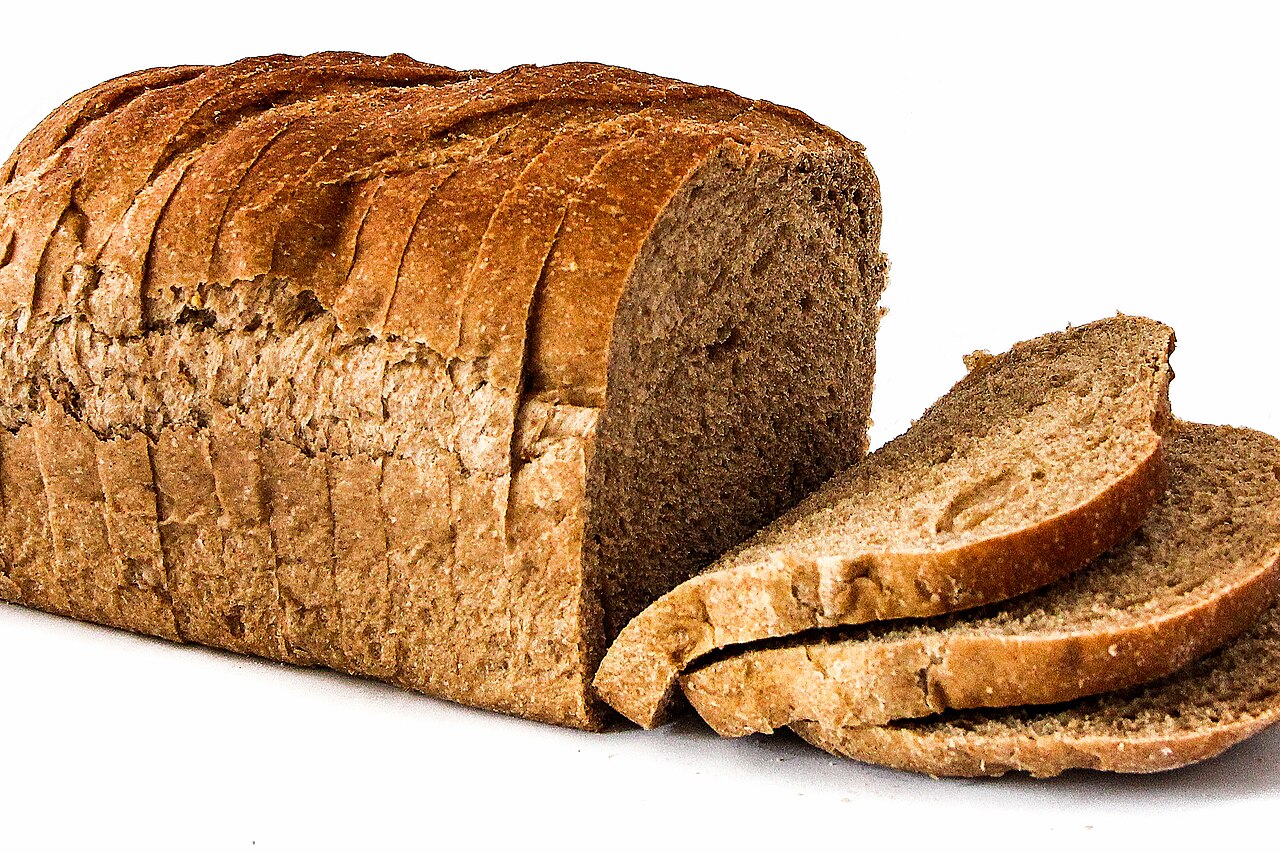
Freshly baked loaves of bread. Photograph: FranHogan / Wikimedia Commons
A loaf that was soft and springy this morning can feel firm and dry by tomorrow, even in a sealed bag. It has not simply dried out. The bread's own starch has reorganized itself into a harder structure, pushing water out of the crumb as it goes.
Food scientists have studied this process for decades, and it explains every frustrating thing about stale bread, including why the refrigerator makes it worse.
This article explains why bread goes stale so fast, including starch retrogradation, moisture migration, and the role of temperature. It covers why staling is not the same as drying out or going moldy, and how to store bread so it stays fresh longer.
Starch retrogradation: the engine of staling
Bread is mostly starch, and starch is a shape-shifter. In the oven, heat makes starch granules in the flour absorb water, swell, and melt into a soft, flexible gel. Food scientists call this gelatinization, and it is what gives fresh bread its soft crumb.
The problem starts as the bread cools. The gelatinized starch molecules slowly realign into an ordered crystalline structure, a process called recrystallization or starch retrogradation. As The Hindu explains, this recrystallization pushes water out of the starch structure and into other parts of the bread, making the crumb firm and less pleasant to chew.
Starch has two main components, and they stale on different schedules. Amylose retrogrades quickly, completing within about 24 hours after cooling, and sets the initial firmness of fresh bread. Amylopectin retrogrades slowly and continuously over days and weeks, driving the long-term hardening.
A 2026 study in the journal Foods confirmed this two-stage pattern: amylose determines initial hardness while amylopectin retrogradation drives the long-term staling observed over days of storage.
Crucially, this happens even without moisture loss. Bread sealed in airtight packaging still hardens, because the change is internal and structural. That is why a bag alone never stops staling.
It slows moisture exchange with the air, but it cannot stop the starch from recrystallizing.
Why the refrigerator is the worst place for bread
This is the counterintuitive part. Refrigeration slows mold growth, so it feels like the right place for freshness. For texture, it is the worst possible choice.
Starch retrogradation happens fastest at temperatures just above freezing, around 4°C (39°F). That is exactly refrigerator temperature. The cold accelerates the crystallization of starch, so bread in the fridge firms up much faster than bread on the counter.
The Schoolaredu food-science guide puts the penalty starkly: cold above-freezing temperatures act as a catalyst for retrogradation, making bread go stale up to six times faster than keeping it at room temperature.
Freezing is the opposite story. Drop the temperature to -18°C (0°F) and molecular motion slows so dramatically that retrogradation nearly halts. Frozen bread keeps its soft texture until thawing.
That is why bakers and food scientists agree on the same rule: store bread at room temperature for what you will eat within a few days, and freeze the rest.
Moisture migration plays a supporting role. After baking, water moves from the moist crumb toward the drier crust, and the two gradually equalize. The crust goes soft while the crumb feels dry, even though the total moisture has barely changed.
Alibaba's product-insights analysis notes that fresh bread holds 35 to 40 percent moisture, and this internal redistribution, combined with retrogradation, produces the full stale experience.
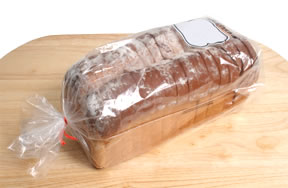
A bag of sliced bread. Photograph: Wikimedia Commons / public domain
Stale is not dry, and it is not moldy
Three different things get lumped together as "old bread," and they are separate processes.
Staling is the structural change described above: retrogradation plus moisture redistribution. It changes texture and taste but does not make bread unsafe. Stale bread is perfectly edible.
Drying out is actual moisture loss to the air. It happens when bread is left unwrapped, and it is the one problem a bag or bread box genuinely fixes.
Mold is a biological process. Fungal spores feed on the bread's nutrients in warm, humid conditions. Mold is about safety, not texture, and moldy bread should be discarded.
Understanding the split matters for storage decisions. The refrigerator slows mold but accelerates staling, so it trades one problem for a worse one. The counter at room temperature keeps texture best for a few days, while the freezer is the only option that stops staling for weeks.
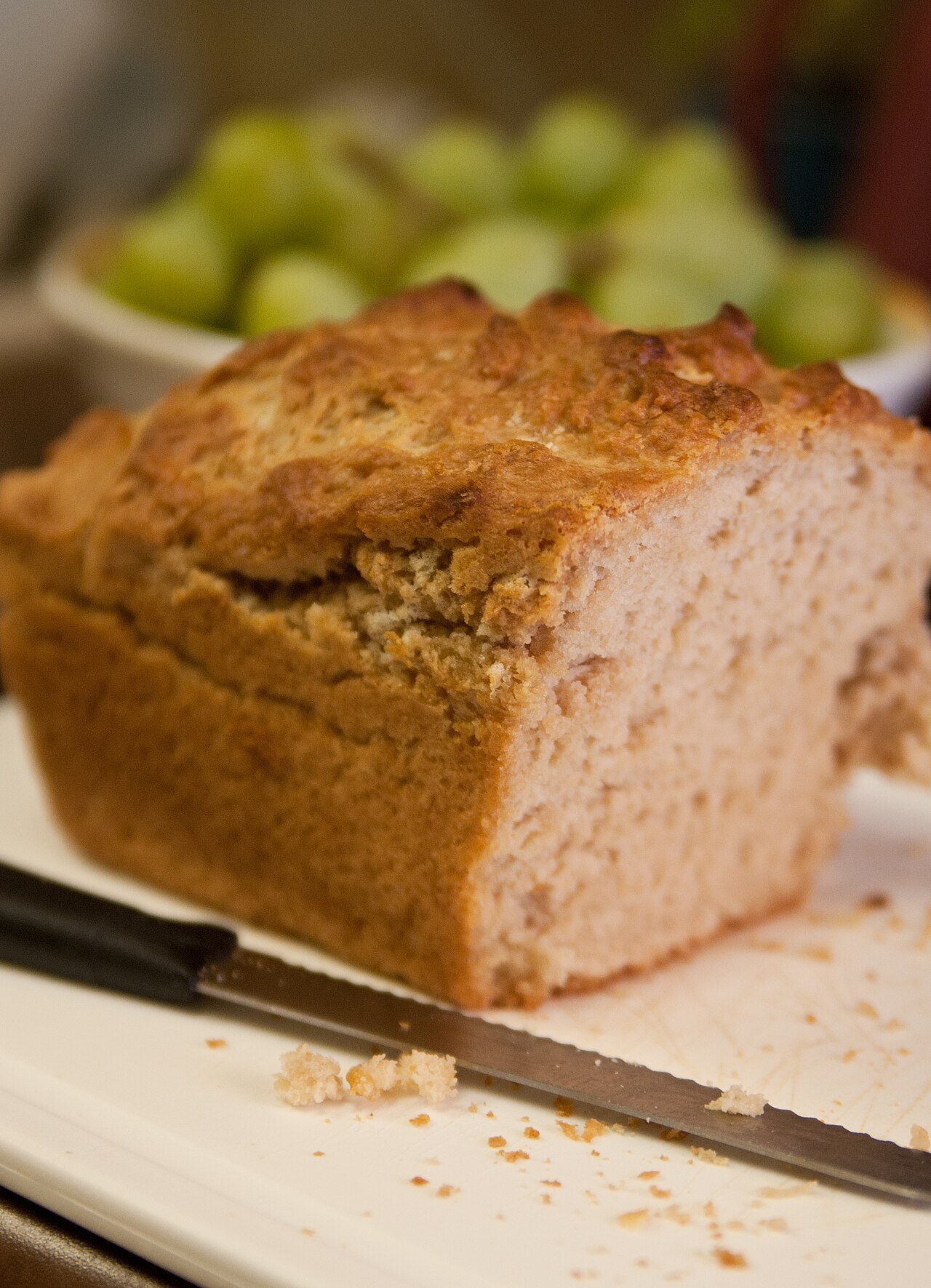
A sliced loaf showing the soft interior crumb. Photograph: Mark Bonica / Wikimedia Commons
How to keep bread fresh longer
The science points to a short, practical list.
For bread you will eat within three days: keep it at room temperature in a paper bag, bread box, or a loosely closed plastic bag. Room temperature minimizes retrogradation while the bag limits drying. Do not refrigerate it.
For longer storage: slice the loaf and freeze the slices in a well-sealed freezer bag, pressing out the air. Freezing at -18°C halts starch recrystallization. Toast slices straight from frozen when you want them; thawing reverses nothing, but toasting refreshes the texture.
Revive slightly stale bread: gentle heat temporarily reverses some firmness. A few minutes in a warm oven or a quick toast loosens the crystallized starch structure and drives off surface moisture. It will not return a week-old loaf to bakery freshness, but it rescues a day-old one.
Buy and bake accordingly. Smaller loaves, or loaves you freeze in portions, waste less than a large loaf slowly staling on the counter.
Image Credits: Wikimedia Commons / FranHogan (CC BY-SA 4.0); public domain contributor; Mark Bonica (CC BY 2.0)
Why does bread go stale even in a sealed bag?
Because staling is mainly starch retrogradation, an internal structural change, not moisture escaping. The starch molecules recrystallize and push water out of the crumb whether or not the bag is sealed. A sealed bag slows drying but cannot stop the recrystallization.
Should I store bread in the refrigerator?
No. Refrigerator temperatures around 4°C accelerate starch retrogradation, making bread go stale up to six times faster than at room temperature, according to food-science guides. Use the fridge only if mold is the bigger risk, and accept the texture cost.
Does freezing bread really stop it going stale?
Yes. At -18°C (0°F), molecular motion slows so much that starch recrystallization nearly halts. Bread frozen promptly after baking keeps a fresh-like texture until thawed.
Slice before freezing so you can toast individual portions straight from the freezer.
Is stale bread safe to eat?
Stale bread is safe; staling is a texture change, not spoilage. Mold is the safety concern. If bread shows mold, discoloration, or an off smell, discard it.
Otherwise, stale bread is fine for toast, croutons, breadcrumbs, and bread pudding.
The bottom line
Bread goes stale fast because its starch is programmed to recrystallize the moment baking ends, squeezing water out of the crumb in a process called retrogradation. Cold accelerates it, which is why the refrigerator is bread's worst enemy, and deep freezing is the only storage method that stops it. Keep today's bread on the counter, freeze the rest, and you will waste far less of every loaf.
Latest in Food & Cooking
- Why bread goes hard while crackers go soft
- Why apples turn brown after cutting
- How to cook rice that is never sticky or burnt
Subscribe to the Rive News newsletter for one practical explainer every morning.
Related stories
Why Does Bread Go Stale Faster in the Refrigerator?
Bread goes stale faster in the fridge because starch recrystallizes fastest near 4°C. Here is the retrogradation science and the right way
Baking soda and baking powder: what's the difference?
Baking soda is pure sodium bicarbonate; baking powder adds two dry acids for double-acting lift. Learn when to use each, plus exact
What Is the Maillard Reaction in Simple Terms?
The Maillard reaction is the browning chemistry between amino acids and sugars above 140 C that creates the crust, color, and rich flavor