
Why bread has a crust when it bakes
By Rive News / Research desk | Rive News / Published October 29, 2026 at 9:00 AM PKT
Key takeaways
- Bread crust forms when the outside of the dough dries in the oven and heats past about 140 degrees Celsius.
- The Maillard reaction between amino acids and sugars creates the brown color and much of the flavor.
- The inside stays pale because steam keeps the crumb near 100 degrees, too cool for browning.
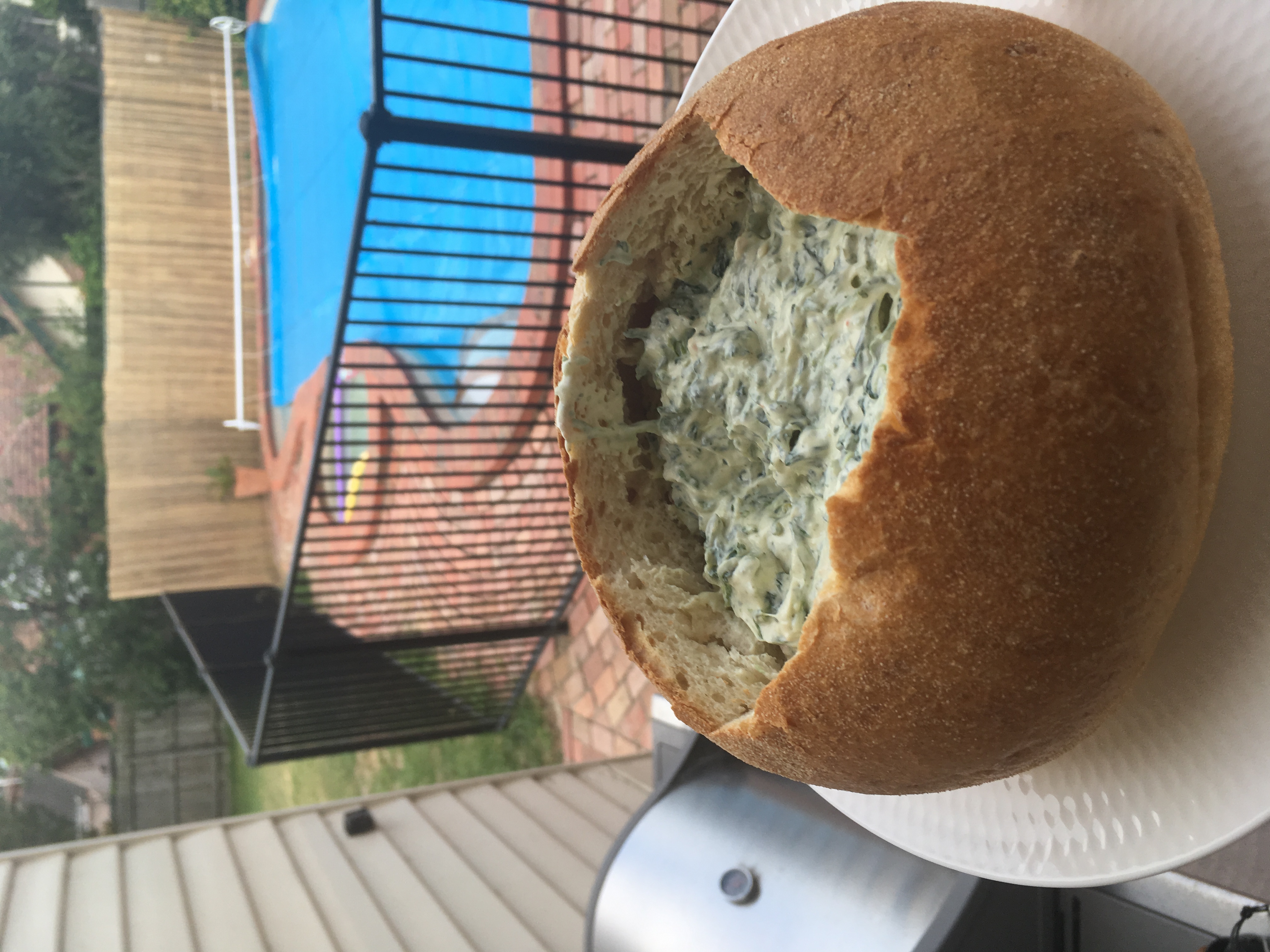
[A cob loaf with a golden, crusty exterior.] Photograph: Finbar.concaig
Image Credits: Wikimedia Commons
Bread has a crust because its outside and its inside experience two different ovens. The surface dries out, heats up, and browns.
The interior stays wet, holds near the boiling point of water, and never gets hot enough to brown. That split is the whole story of crust.
This article explains how the crust forms step by step, what the Maillard reaction adds, why steam matters in the first minutes of baking, and why some loaves end up with thick hard crusts while others stay thin and crisp.
Dough goes in wet all the way through
A shaped loaf is soft and damp from surface to center. Its outer layer is exposed to the oven air, but at the start of baking it is still wet dough, not crust. Nothing about the surface is brown or firm yet.
Heat reaches the surface first. Water on the outside begins to evaporate, and starches at the surface start to gelatinize, which means they absorb water and swell. This early stage is soft and flexible, which matters because the loaf still needs to expand.
The inside heats more slowly. Water trapped in the crumb turns to steam, and that steam pushes outward, inflating the loaf.
Bakers call this final rise oven spring. If the surface hardens too early, oven spring gets cut short and the loaf stays squat.
Steam keeps the surface soft at first
Professional bakers often inject steam into the oven for the first minutes of a bake. The steam keeps the dough surface moist and flexible, which lets the loaf expand fully before the crust sets. It also gelatinizes surface starch, and that gelatinized starch later gives the crust its shine and crackle.
Home ovens usually lack steam injection, but the same idea applies. A covered pot or a tray of water can add humidity early in the bake. Without that humidity, the surface dries fast and forms a rigid shell before the interior has finished rising.
Scoring fits into this stage too. A blade cut across the top gives the expanding loaf a planned place to split open. Without a score, the loaf may burst at a weak spot instead, or the crust may tear unevenly as steam escapes.
The surface dries and crosses the browning threshold
Once surface water has mostly evaporated, the temperature of the outer layer can climb past 100 degrees Celsius. The crumb cannot follow, because its water keeps it pinned near boiling point. That temperature gap is why the crust browns while the crumb stays pale.
Bake With Shivesh puts the Maillard reaction for baking between 140 and 165 degrees Celsius. In that range, amino acids from wheat proteins react with sugars, producing brown color and roasted flavors. The reaction needs protein, sugar, and heat together, and bread dough supplies all three.
Caramelization is a separate reaction that involves sugar alone and starts around 170 degrees Celsius, according to the same source. Both reactions can happen on a crust, but Maillard does most of the work on ordinary bread. Egg wash boosts browning further because eggs add extra protein and sugar to the surface.
As the surface dries and hardens, proteins and starches set into a firm shell. The longer and hotter this stage runs, the thicker and harder the crust becomes. A short hot bake gives a thin crisp crust, while a long dry bake gives a thick leathery one.
Why crusts differ from loaf to loaf
Dough composition changes the crust. Doughs enriched with milk, eggs, or sugar brown faster because they carry more protein and sugar into the Maillard reaction. Lean doughs made of flour, water, salt, and yeast brown more slowly and often need higher heat for color.
Hydration matters as well. Wetter doughs keep their surfaces moist longer, which delays crust formation and often produces a thinner, more delicate crust. Drier doughs lose surface moisture fast and tend to form thicker, harder crusts.
Oven temperature and time complete the picture. Baking guides cited by Alibaba put the start of crust formation around 150 degrees Fahrenheit, or 65 degrees Celsius, when surface water evaporates and starches gelatinize.
Maillard browning follows above 150 degrees Celsius. A loaf baked at 210 to 230 degrees Celsius for its first 10 to 15 minutes, as Bake With Shivesh recommends for bread, browns briskly once the surface dries.
Acidity plays a smaller role. A slightly acidic dough, like sourdough, can slow the Maillard reaction and produce a lighter crust unless the bake is longer or hotter. That is one reason two loaves at the same oven setting can come out different colors.
What the crust does for the loaf
Crust is not just packaging. It carries a large share of the loaf's aroma and flavor, even though it makes up a small share of its weight. The hundreds of flavor compounds from Maillard browning give bread its toasty, nutty notes, while the crumb on its own tastes mild and wheaty.
Crust also protects the crumb. It slows moisture loss after baking, which is why a whole unsliced loaf stays fresh longer than sliced bread. Once the loaf is cut, the exposed crumb dries quickly, and that is when staling speeds up.
Texture is the third job. A crisp crust contrasts with a soft crumb, and that contrast is part of why fresh bread is satisfying to bite into. When crust goes soft in humid air, the loaf loses that contrast even though the flavor remains.
Why some crusts turn out too hard
A rock-hard crust usually means the surface lost too much water or spent too long in dry heat. High oven temperature without steam is a common cause, and so is a long bake at a low temperature in a dry oven. Slow baking sounds gentle, but extended exposure to dry heat can dehydrate the surface more thoroughly than a shorter, hotter bake with steam.
Covering the loaf early in the bake, adding steam, and checking the internal temperature helps. Bread is generally done when its center reaches about 88 to 99 degrees Celsius, or 190 to 210 degrees Fahrenheit, depending on the type. Baking far past that point only dries the crust further without improving the crumb.
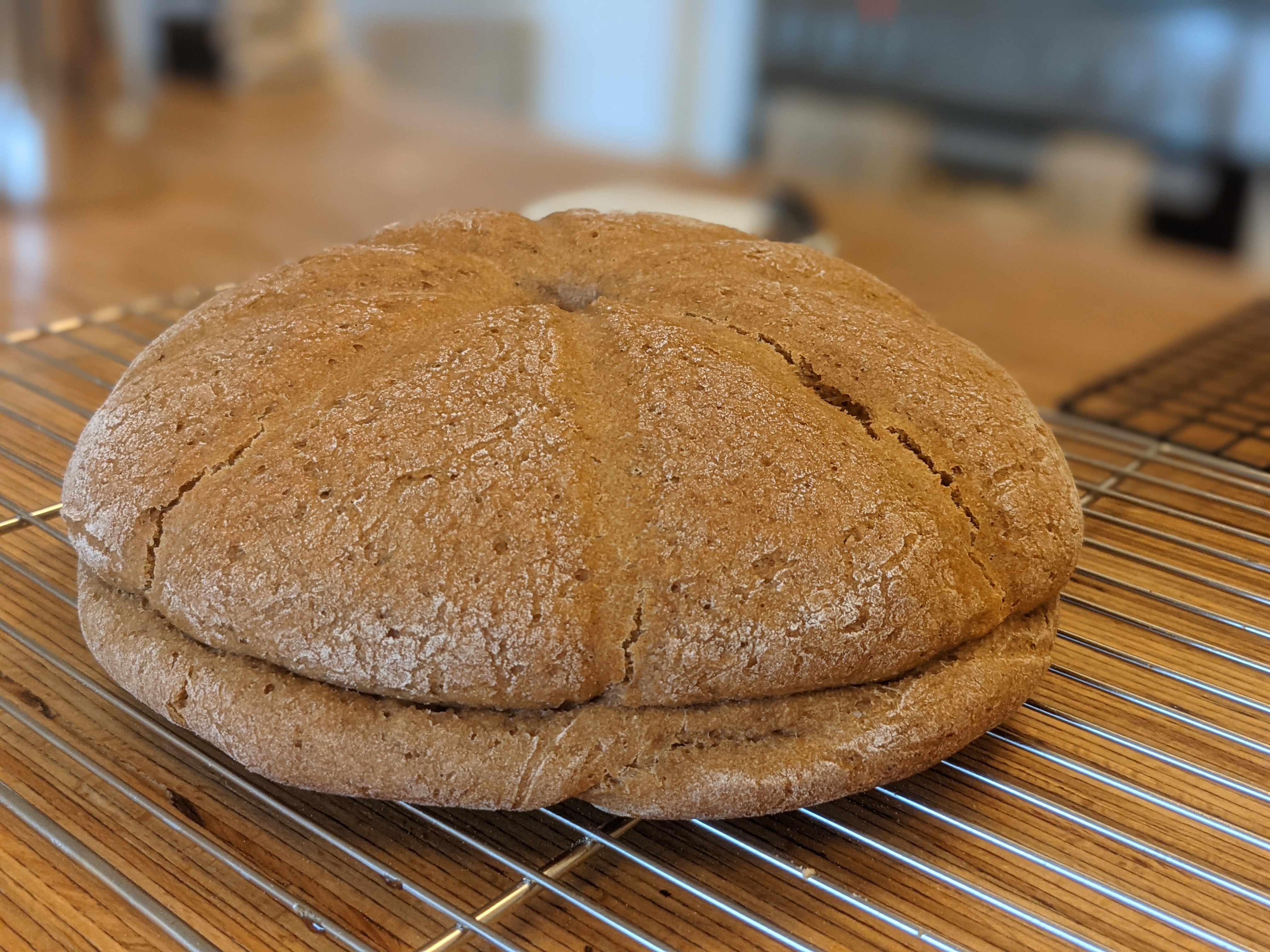
[A baked loaf showing a firm, browned crust.] Photograph: Shisma
Image Credits: Wikimedia Commons
Frequently asked questions
Why does bread crust brown but the inside stays white
The surface dries and heats past 140 degrees Celsius, where Maillard browning runs. The crumb stays wet and cannot pass about 100 degrees, so it never reaches browning temperature. Same loaf, two different temperatures.
Does steam make crust soft or crisp
Steam early in the bake keeps the surface soft so the loaf can expand, and it gelatinizes surface starch. That starch later dries into a thin, glossy, crisp crust. Steam late in the bake would soften the crust instead, so bakers add it only at the start.
Why does my homemade bread have a thick hard crust
The usual causes are a dry oven, no steam early on, or too long in the heat. Try a covered bake for the first part, then uncover to color the crust. Check the internal temperature rather than baking by color alone.
Can bread have no crust at all
Not from normal baking, since any dough surface exposed to oven heat will dry and set. Pullman loaves baked in lidded tins come close, because the lid traps steam and keeps the surface pale and soft. The crust is still there, just thin and light.
The bottom line
Bread has a crust because heat treats the outside and the inside differently. The surface dries, passes the Maillard threshold, and sets into a browned shell.
The crumb stays moist and cool, so it stays soft and pale. Steam, scoring, dough recipe, and bake time decide whether that shell ends up thin and crisp or thick and hard.
Once you see crust as dried, browned dough rather than a separate ingredient, most crust problems become easier to fix. Control moisture early, give the loaf room to spring, and let color develop only after the shape is set.
Tags: bread, baking, food science
Rive News is the research desk behind this article, covering everyday food science from published sources.
Related
- What the Maillard reaction is in simple terms
- Why bread dough needs kneading to rise well
- Why bread goes stale so fast
- Can you revive stale bread, and how does the trick work
Subscribe for one everyday food-science explainer in your inbox each week.
Rive News publishes explainers from named public sources; corrections are noted on the article page.
Related stories
Why Does Bread Go Stale Faster in the Refrigerator?
Bread goes stale faster in the fridge because starch recrystallizes fastest near 4°C. Here is the retrogradation science and the right way
Baking soda and baking powder: what's the difference?
Baking soda is pure sodium bicarbonate; baking powder adds two dry acids for double-acting lift. Learn when to use each, plus exact
What Is the Maillard Reaction in Simple Terms?
The Maillard reaction is the browning chemistry between amino acids and sugars above 140 C that creates the crust, color, and rich flavor