
Why bread dough needs kneading to rise well
By Rive News / Research desk | Rive News / Published October 28, 2026 at 9:00 AM PKT
Key takeaways
- Kneading links two wheat proteins into a stretchy gluten network that can trap gas.
- That network is what lets dough rise, hold its shape, and bake into an even crumb.
- Under-kneaded dough stays sticky and flat, while over-kneaded dough turns tough and tight.
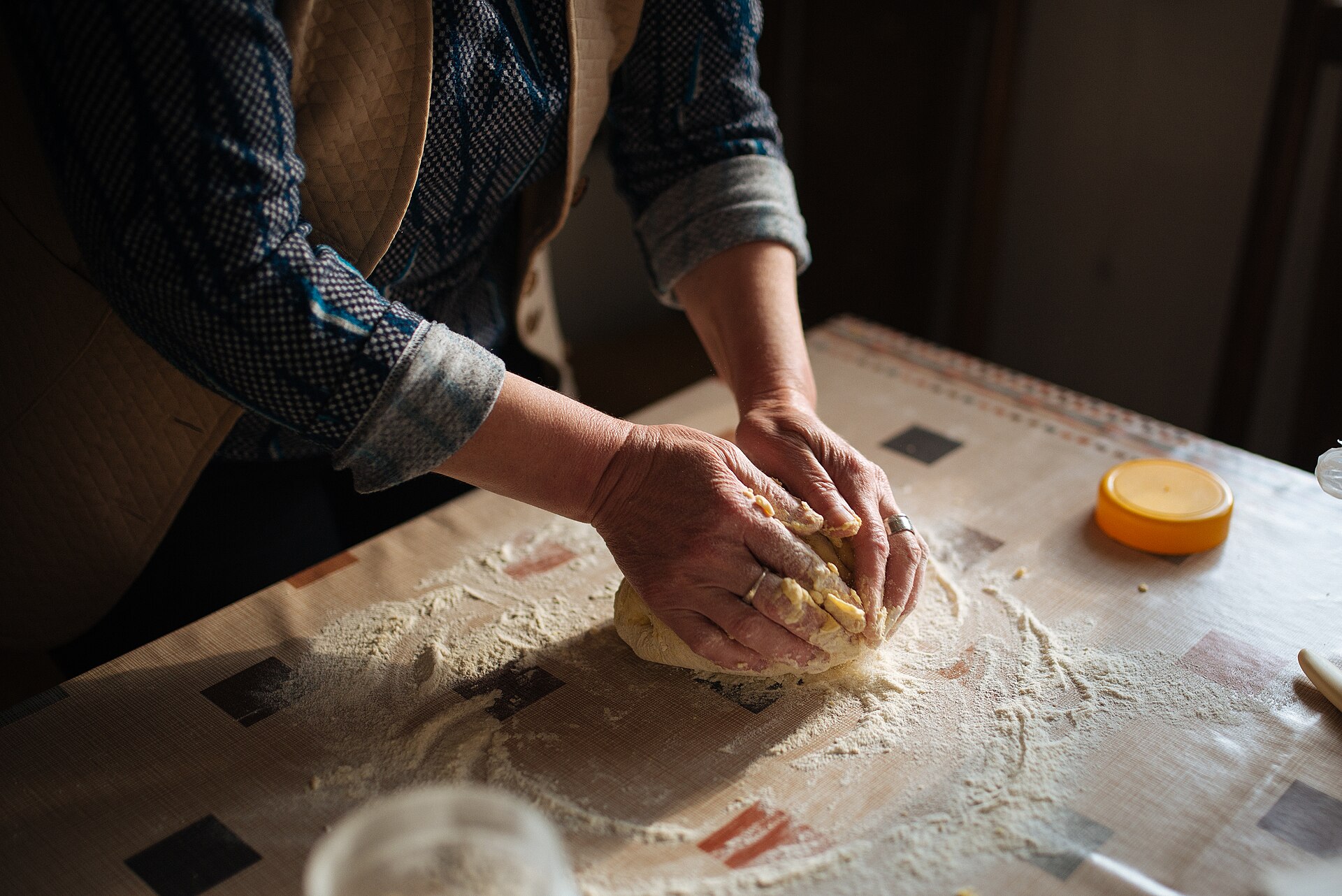
[Hands working a smooth ball of dough on a floured board.] Photograph: Wikimedia Commons contributor
Image Credits: Wikimedia Commons
Kneading is the repeated pushing, folding, and turning of dough after flour and water are mixed. It is physical work with a chemical purpose: it organizes wheat proteins into gluten, the stretchy network that gives bread its structure. Without that network, yeast gas escapes and the loaf stays dense.
This article explains what kneading does to dough, including gluten formation, gas trapping, texture and shaping, how much kneading is enough, and when no-knead methods can skip it.
What kneading actually does
Flour and water alone make a shaggy, sticky mass. Kneading changes that mass step by step.
The dough first clings to the bowl and tears easily. Then it pulls away from the sides, firms up, and turns smooth and elastic.
Two wheat proteins drive this change. Gliadin and glutenin, found in the endosperm of wheat, link up when flour meets water and the mixture is worked. MasterClass describes how kneading warms and stretches those strands, letting the proteins bond into a more elastic dough with better structure.
The result is not a single ingredient appearing from nowhere. Gluten forms as soon as flour and water mix, but the network starts out weak and disordered. Kneading aligns the strands and strengthens their bonds, turning a loose tangle into a web that can stretch without tearing.
How gluten traps gas and lifts the loaf
Yeast ferments sugars in the dough and releases carbon dioxide. That gas needs somewhere to go. In well-kneaded dough, tiny bubbles form inside the gluten web and stay put instead of escaping through the surface.
Each bubble acts like a small balloon. As fermentation continues, the bubbles grow and the dough expands. BBC Maestro puts it plainly: the gluten network provides structure and elasticity, allowing carbon dioxide to be trapped, which is what helps bread rise.
Kneading also spreads the yeast and the bubbles evenly. MasterClass notes that kneading distributes yeast equally and evens out dough temperature, which supports uniform proofing and baking. That even spread is why a well-kneaded loaf has a regular crumb rather than one giant hole beside a dense patch.

[An ancient terracotta model of bakers kneading dough, held at the Louvre.] Photograph: Wikimedia Commons contributor
Image Credits: Wikimedia Commons
Texture, shape, and handling
Gluten does more than lift dough. It decides how the finished bread feels in the hand and in the mouth. A strong network gives a chewy, open crumb with airy pockets, while a weak one gives a crumbly, close texture.
Handling improves for the same reason. Kneading turns a sticky mass into a smooth ball that can be shaped into a boule, a baguette, or a pan loaf. BBC Maestro notes that un-kneaded dough stays sticky and hard to shape, which makes the whole bake harder to control.
Salt and yeast also benefit from the mixing action. Kneading spreads both through the dough so fermentation and flavour develop evenly. A pocket of unsalted dough next to a salty patch would proof and taste unevenly, and thorough kneading prevents that split.
How much kneading is enough
There is no single time that fits every dough. Enriched doughs with butter and eggs, whole wheat doughs with bran, and wet doughs at high hydration all behave differently. Bread flour, made from hard wheat, usually holds around 12 to 14 percent protein, according to Modkitchn, so it can form more gluten than a low-protein flour.
Watch the dough, not the clock. Early on it sticks and tears. Midway it starts to hold together and pull cleanly from the bowl.
FoodReference describes the shift: after about four or five minutes at medium speed in a stand mixer, the dough becomes elastic as the gluten forms fully.
The windowpane test gives a clear endpoint. Pinch off a small piece and stretch it gently.
If it stretches thin enough to see light through without tearing, the gluten is developed. If it rips early, keep kneading and test again after a short rest.
What happens when kneading goes wrong
Skipping kneading in a traditional recipe usually shows up at every stage. The dough stays sticky and hard to shape.
The rise is poor because gas escapes through the weak network. The baked loaf comes out flat, dense, and heavy.
Over-kneading causes a different failure. MasterClass warns that overworked gluten turns brittle, giving tough crusts and a dense, dry crumb. The dough may feel tight and spring back hard when shaped, and it resists stretching instead of yielding gently.
Both faults are fixable in the next bake. Under-kneaded dough needs more working or a longer rest so the network can relax and reform. Over-kneaded dough needs a rest too, since time lets tight gluten relax before shaping.
When no-knead bread breaks the rule
No-knead recipes look like a contradiction, but they follow the same science on a slower clock. Given a long, slow fermentation, gluten strands form and align with little or no mechanical work. Time replaces muscle.
That trade has limits. No-knead doughs are usually wet and baked in a pot, which supports their softer structure.
They suit rustic loaves better than finely shaped breads that need a firm, developed network. The method works because the goal, an organized gluten web, stays the same even when the route changes.
Sheena Otto, executive baker at Sheena's Cocina, summed up the core point to The Takeout: "Kneading does this by strengthening the gluten so that it is able to trap and hold gas that leavens the dough and your bread as its baking." The quote captures the whole job in one line: strength first, rise second.
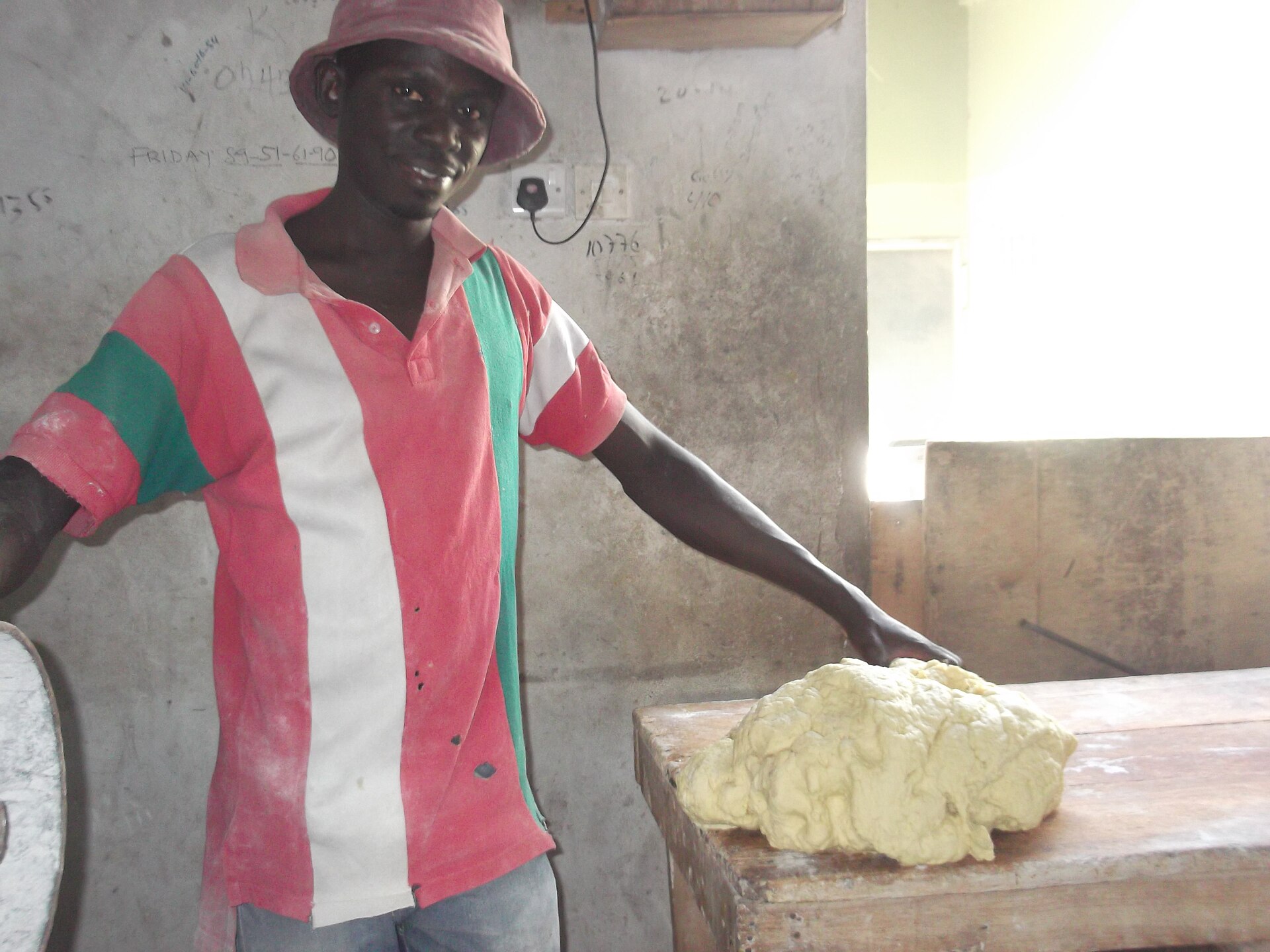
[A baker beside a large mound of bread dough in a bakery.] Photograph: Wikimedia Commons contributor
Image Credits: Wikimedia Commons
Practical tips for home bakers
Start with a light hand on the flour. Extra flour on the bench makes dough easier to handle, but too much dries it out and stiffens the crumb. A lightly floured surface and a bench scraper do most of the work.
Rest the dough if it fights back. A ten-minute rest, known as autolyse when it happens before kneading or simply a bench rest mid-knead, lets flour hydrate and gluten relax. The dough then stretches further with less effort.
Use a stand mixer with care. A dough hook develops gluten faster than hands, so check early and often. Stop at the windowpane stage rather than running the mixer to a fixed time.
Keep notes from bake to bake. Flour brand, hydration, and room temperature all shift kneading time. A short note about what worked turns a good loaf into a repeatable one.
Frequently asked questions
Does all bread dough need kneading?
No. Traditional lean doughs need kneading or a long ferment to build gluten, but cakes, muffins, and quick breads use different structures. Those batters rely on eggs, starch, and chemical leaveners rather than a gluten web, so heavy kneading would toughen them instead of helping.
Can you knead dough too little and still save it?
Yes, in most cases. Give the dough a rest, then knead again in short bursts until it passes the windowpane test. A longer first rise also helps, since fermentation and time keep developing gluten after mixing stops.
Is hand kneading better than a mixer?
Neither is better in every case. Hands give direct feedback on stickiness and elasticity, which helps beginners learn the stages. A mixer saves effort on large or wet doughs, though it can overwork a small batch quickly if left running.
Why does my dough tear when I stretch it?
Tearing usually means the gluten network is not yet developed or the dough is too dry. Knead a little longer, or rest the dough for ten minutes so the proteins relax. Adding a splash of water during mixing can help if the dough feels stiff from the start.
The bottom line
Kneading matters because bread needs a container for its own gas. The pushing and folding builds a gluten network strong enough to trap carbon dioxide, hold a shape, and bake into an open, even crumb.
Time can substitute for effort in no-knead recipes, but the network itself is never optional. Learn the windowpane test, watch the dough change, and the rest of the bake gets easier.
Tags: bread, kneading, gluten, baking
Rive News's research desk covers food science and everyday cooking questions, checking each claim against published sources before writing.
Related
- Why bread dough rises twice
- What gluten is and why kneading develops it
- Why bread goes stale so fast
- What letting dough rest means
Subscribe for one food science explainer each week.
Rive News publishes researched explainers with named sources and a corrections note on every article.
Related stories
Why Does Bread Go Stale Faster in the Refrigerator?
Bread goes stale faster in the fridge because starch recrystallizes fastest near 4°C. Here is the retrogradation science and the right way
Baking soda and baking powder: what's the difference?
Baking soda is pure sodium bicarbonate; baking powder adds two dry acids for double-acting lift. Learn when to use each, plus exact
What Is the Maillard Reaction in Simple Terms?
The Maillard reaction is the browning chemistry between amino acids and sugars above 140 C that creates the crust, color, and rich flavor