
What letting dough rest means: gluten, hydration, and timing
By Rive News / Research desk | Rive News / Published October 24, 2026 at 9:00 AM PKT
Key takeaways
- Resting lets tight gluten strands relax, so the dough stretches instead of springing back.
- Flour hydrates fully during the rest, a process called autolyse that takes 20-30 minutes.
- Yeast and enzymes keep working during the rest, building gas, tenderness, and flavor.
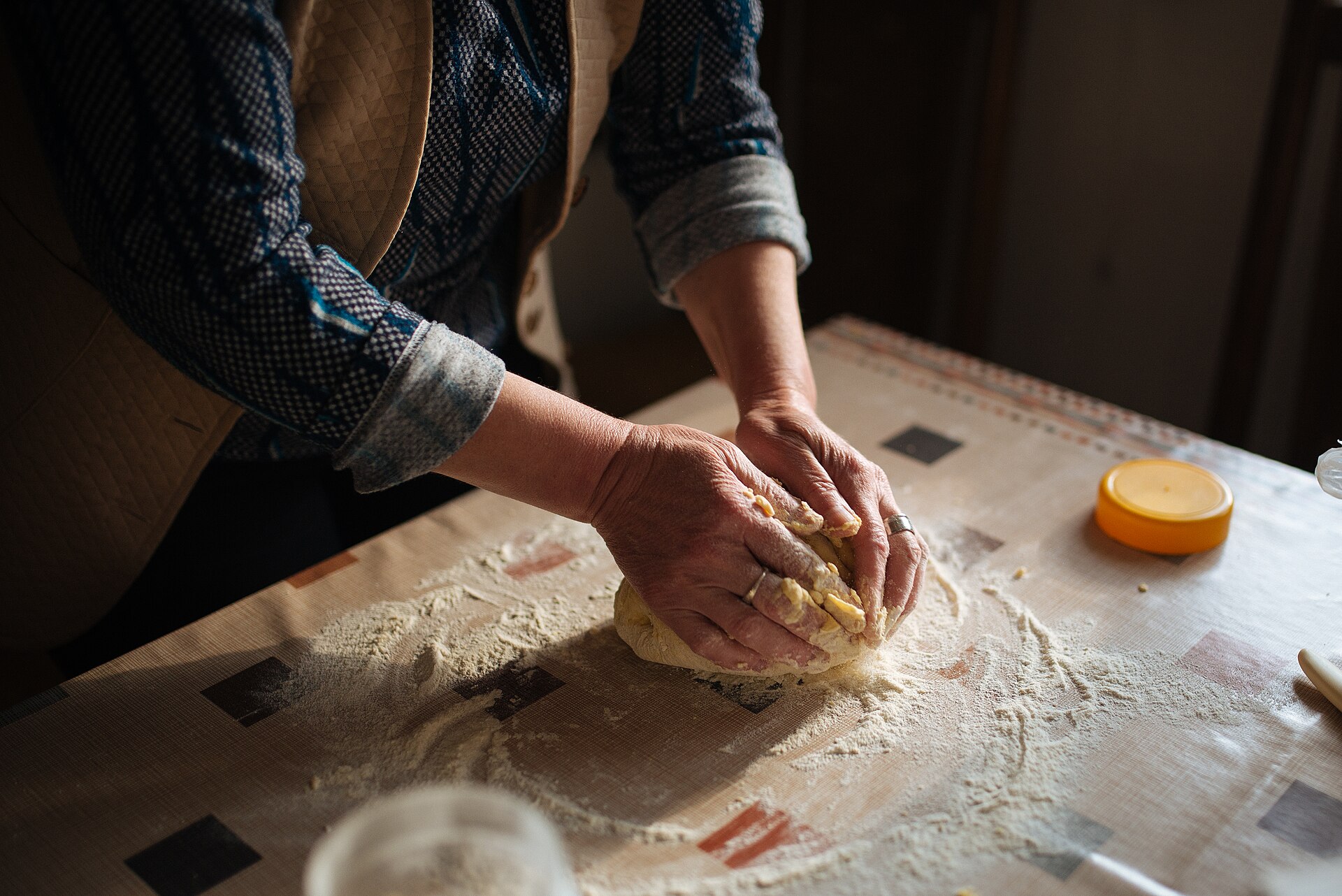
[A baker's hands kneading bread dough. Photograph: kneading bread dough]
Image Credits: Wikimedia Commons
To let dough rest means to leave it alone, covered, for a set time after mixing or kneading. Nothing happens that you can see at first. But inside the bowl, three processes are running: the gluten network relaxes, the flour finishes absorbing water, and yeast and enzymes keep transforming starches and proteins.
Rest is not the same as rising, though rising often happens during a rest. A rest is a physical and chemical pause. Even unleavened doughs like pie crust and tortillas benefit, because the gluten still needs time to relax and the flour still needs time to hydrate.
This article explains what letting dough rest means, including how gluten relaxes, how hydration works during the rest, what yeast and enzymes do in the meantime, and how long to rest different doughs.
Gluten relaxes so the dough cooperates
Kneading builds the gluten network. Two proteins in wheat flour, glutenin and gliadin, link up when mixed with water and worked.
The result is an elastic web that traps gas and gives bread its structure. But fresh from kneading, that web is tight and springy.
Try rolling out a dough straight after kneading and it fights you. It shrinks back the moment you lift the pin. That snap-back is gluten tension.
A rest lets the tension drain out of the network. The strands reorganize and loosen, and the dough becomes extensible: it stretches instead of resisting.
This is why pizza makers rest dough between stretches and why croissant dough goes back into the fridge between folds. Each rest resets the gluten so the next round of shaping works instead of tearing. A ten to twenty minute bench rest after dividing and pre-shaping is the standard pause that prevents dough from tearing or shrinking during final shaping, according to TastyHomeFood's dough guide.
Skip the rest and the dough stays tight. It tears when stretched, shrinks in the pan, and bakes up dense because the rigid network cannot expand freely around the gas bubbles. Even a short rest makes a noticeable difference in how the dough handles.
Flour finishes hydrating: the autolyse effect
Flour particles do not absorb water instantly. Right after mixing, the inside of each flour granule is still dry while the surface is wet.
Over the next twenty to thirty minutes, water penetrates completely, swelling the starch granules and making the proteins more available for gluten formation. Bakers call this process autolyse.
The practical payoff is large. Bread mixed and immediately kneaded fights the baker; bread given a thirty-minute rest before kneading cooperates, TastyHomeFood notes. The rest reduces the kneading time needed and improves the final crumb structure, because the gluten forms more evenly when the flour is fully hydrated first.
This hydration effect is so powerful that whole methods are built on it. The no-knead technique, popularized by Jim Lahey, uses minimal initial mixing and then lets time do the work over twelve to eighteen hours. During that long rest, water fully hydrates the flour and gluten forms naturally through contact and gravity, without mechanical kneading, according to WhyThese's gluten analysis.
The lesson scales down to weeknight baking. If a recipe tells you to rest the dough before kneading, it is not padding the method. It is letting the flour drink.
Yeast and enzymes keep working while you wait
For yeasted doughs, a rest is not passive at all. The yeast keeps consuming sugars and producing carbon dioxide and organic acids. The gas gets trapped in the relaxing gluten network, which is what makes the dough rise and gives the baked loaf its airy texture.
The acids do quieter work. They break down larger protein and starch molecules, which tenderizes the gluten network and creates flavor compounds.
Longer rests, especially cold fermentation in the refrigerator, slow the yeast while letting bacterial enzymes keep working. That combination produces the tangy complexity of artisan breads and sourdough.
Enzymes deserve their own mention. Flour contains natural enzymes, including proteases, that start breaking down some gluten proteins during a long rest, making the network more pliable.
Other enzymes convert starches into sugars, which feeds the yeast and deepens flavor and crust color. As one experienced baker summarized on The Fresh Loaf, a rest does three things: it further develops gluten as proteins hydrate, it relaxes the gluten structure, and it gives enzymes time to break starches into sugars.
Temperature steers all of this. Warmer rests speed fermentation; cooler rests slow it and favor flavor. That is why many recipes offer a room-temperature option and a slower refrigerator option.
Both work. They just produce different bread.
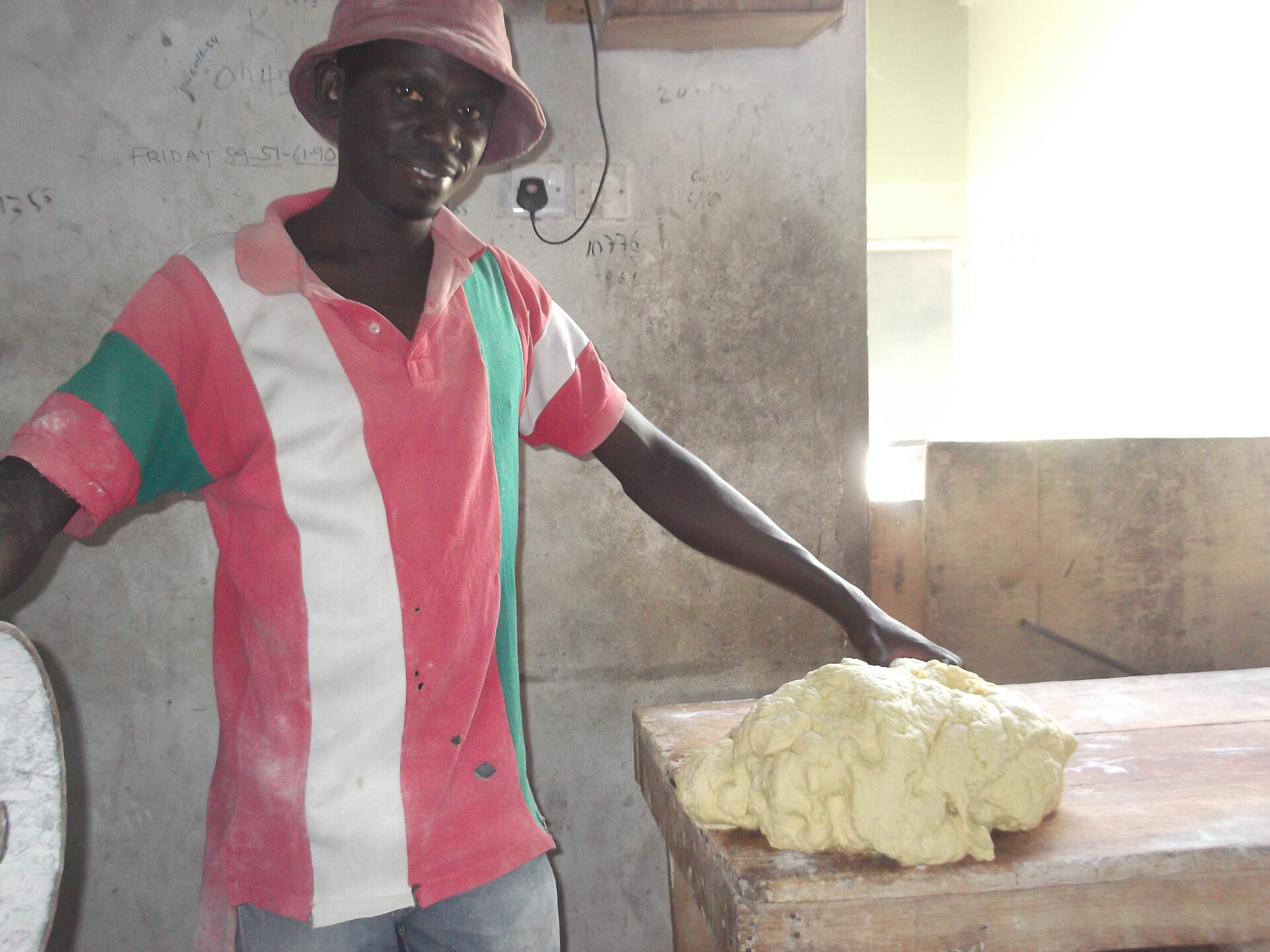
[A baker preparing to knead bread dough in a bakery. Photograph: bakery dough preparation]
Image Credits: Wikimedia Commons
How long to rest different doughs
The right rest depends on the dough and what you want from it. Standard yeasted bread dough typically goes through three distinct rests, per TastyHomeFood:
- Bulk fermentation. After initial mixing and before shaping. For commercial yeast doughs, one to two hours at room temperature (72-78°F / 22-26°C) lets the dough double in volume.
- Bench rest. After dividing and pre-shaping. Ten to twenty minutes relaxes the gluten before final shaping.
- Proofing. After final shaping and before baking. Thirty to ninety minutes allows the final gas production that creates oven spring.
Non-yeast doughs need rest too, for different reasons. Pie crust dough rests for thirty minutes to an hour so the flour hydrates and the dough firms up enough to roll cleanly.
Tortilla dough rests so the gluten relaxes enough to roll thin without springing back. Pasta dough rests for the same reason.
Gluten-free doughs have their own rest logic. Without gluten, structure comes from hydration: starches, psyllium, and gums need time to swell and gel.
Tom Beresford of The Wheat Glade puts it memorably: bakers who skip the rest often blame the flour blend, but "nine times out of ten, the missing step was not extra xanthan gum or a different flour blend. It was time." Twenty to forty minutes lets thirsty gluten-free flours absorb water and stops the finished loaf tasting gritty.
Too short a rest gives tough, resistant dough. Too long, especially warm, risks over-fermentation: the dough gets sticky, slack, and hard to shape as the yeast exhausts its food and acids weaken the network.
When in doubt, watch the dough, not the clock. Doubled in size, puffy to the touch, and holding a gentle fingerprint dent are better guides than any timer.
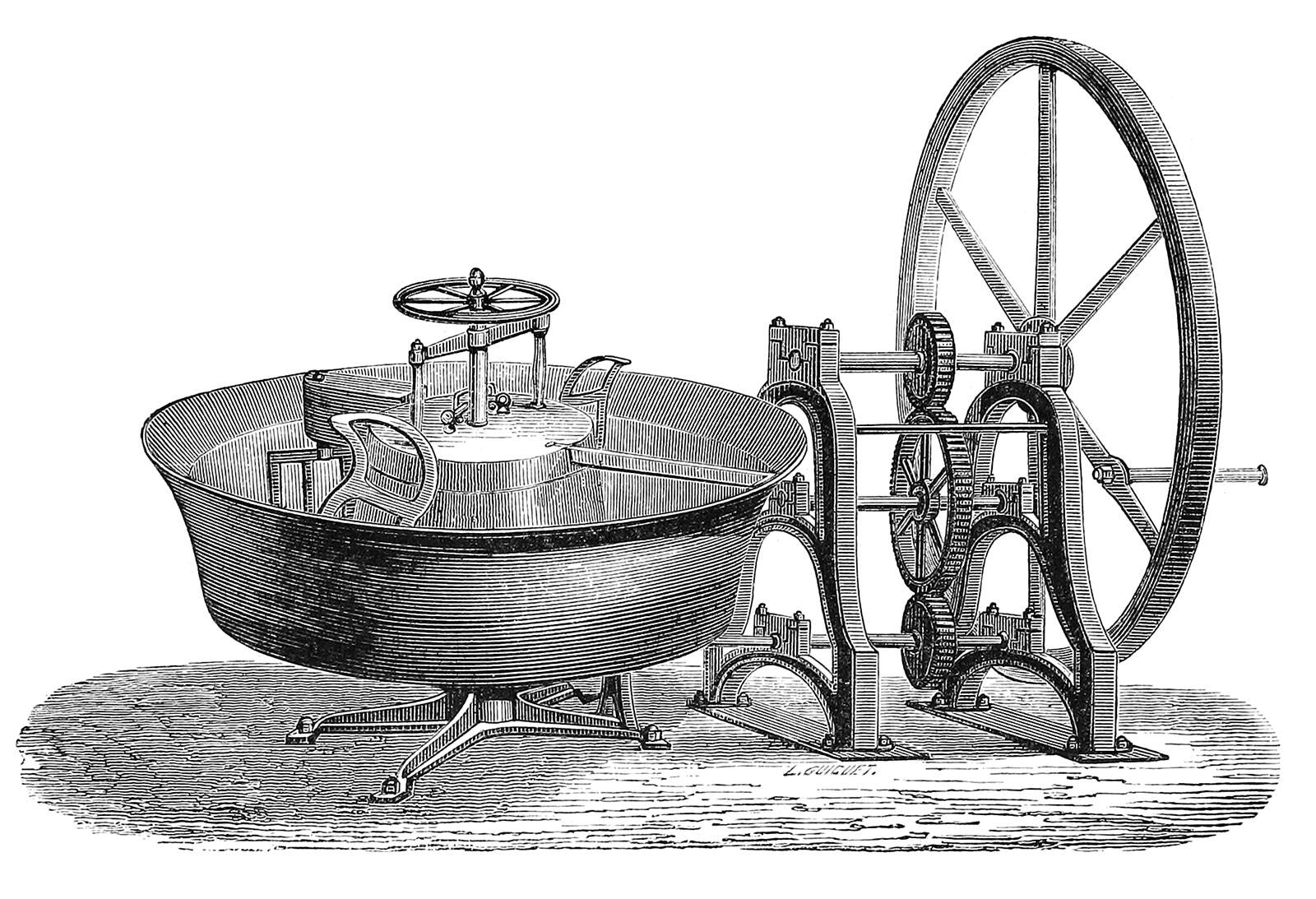
[An 1877 engraving of a mechanical dough kneading machine. Photograph: historical kneading machine]
Image Credits: Wikimedia Commons
What is autolyse in bread baking?
Autolyse is a rest period after mixing flour and water, before kneading. Over twenty to thirty minutes, water fully penetrates the flour, which improves gluten formation, reduces kneading time, and gives a better crumb.
Does resting dough replace kneading?
Partly. Long rests, like the twelve to eighteen hours in no-knead bread, develop gluten through hydration and time alone. Shorter rests do not replace kneading, but they make kneading easier and more effective.
Why does my dough spring back when I roll it?
The gluten network is still tense from mixing or kneading. Cover the dough and let it rest for ten to twenty minutes so the gluten relaxes, then try again.
Can you rest dough in the fridge?
Yes. Cold fermentation slows yeast activity while enzymes keep building flavor. It is the standard route to more complex-tasting bread, and it makes timing flexible.
What happens if dough rests too long?
Over-fermentation. The dough becomes sticky and slack, the yeast runs out of food, and excess acid weakens the gluten. The loaf bakes up flat with a sour edge.
The bottom line
Letting dough rest means giving gluten time to relax, flour time to hydrate, and yeast and enzymes time to build gas and flavor. Match the rest to the dough: an hour or more of bulk fermentation for bread, ten to twenty minutes on the bench before shaping, and thirty to ninety minutes of proofing before the oven.
Your next step is simple: next time a recipe says rest, cover the bowl and walk away. The dough is working even when you are not.
Tags: baking, bread, dough, gluten, food science
Rive News's research desk writes plain-English explainers from primary sources and baking guides. Every fact in this article traces to a cited source.
Related
- Why do some cakes sink in the middle?
- Why does milk curdle when heated or mixed with acid
- Why do onions make you cry? The kitchen chemistry explained
- What is the difference between granulated and caster sugar?
Subscribe to the Rive News newsletter for one practical food explainer each week.
Rive News publishes research-backed explainers. Corrections: reply with the article URL and the correction.
Related stories
Why Does Bread Go Stale Faster in the Refrigerator?
Bread goes stale faster in the fridge because starch recrystallizes fastest near 4°C. Here is the retrogradation science and the right way
Baking soda and baking powder: what's the difference?
Baking soda is pure sodium bicarbonate; baking powder adds two dry acids for double-acting lift. Learn when to use each, plus exact

What Is the Maillard Reaction in Simple Terms?
The Maillard reaction is the browning chemistry between amino acids and sugars above 140 C that creates the crust, color, and rich flavor