
Why chillies burn your mouth without any real heat
By Rive News / Research desk | Rive News / Published October 29, 2026 at 9:00 AM PKT
Key takeaways
- Capsaicin in chillies activates TRPV1, the mouth's heat detector, without raising tissue temperature.
- The burn is a pain signal, not a taste, which is why a cold chilli still feels hot.
- Milk, yoghurt, and fatty food calm the burn because capsaicin dissolves in fat, not water.
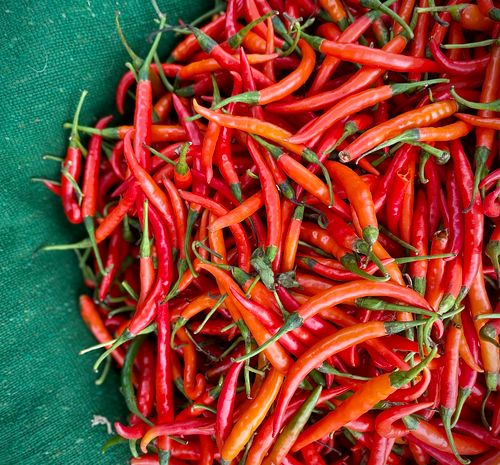
[Fresh red chillies piled together.] Photograph: Red chillies
Image Credits: Pexels
Chillies burn your mouth because a chemical in them tricks your heat detectors into firing. That chemical is capsaicin, and it binds to a receptor called TRPV1, which normally warns the brain about dangerously hot temperatures. The brain cannot tell a chemical trigger from a real burn, so it reports fire even when the chilli is at room temperature.
This article explains how that trick works, including where capsaicin sits in the chilli, why the burn feels like heat, why water makes it worse, and what actually calms it down.
This article is for general information only and is not medical advice; talk to a clinician about any symptoms.
Capsaicin, the chemical behind the heat
Capsaicin is an alkaloid compound found in chilli peppers, and it is the main source of their pungency. It concentrates in the white placenta, the pale membranes that hold the seeds inside the fruit, rather than in the seeds themselves. Removing seeds alone therefore leaves most of the heat behind, which surprises cooks who blame the seeds.
The compound evolved as a defence. Mammals feel the burn and tend to avoid the fruit, while birds, which lack the same sensitivity in this receptor, eat chillies without pain and spread the seeds. That split is useful for the plant, since birds carry seeds farther and pass them intact, while mammals would chew and destroy them.
Capsaicin is oil-based and hydrophobic, meaning it does not dissolve well in water. That single property explains most of the kitchen advice about soothing a burn, and most of the mistakes people make when they reach for a glass of water.
TRPV1, the heat detector that gets fooled
TRPV1 stands for transient receptor potential vanilloid 1. It is an ion channel on sensory nerve endings in the mouth, skin, and digestive tract, and it normally fires when tissue reaches a potentially damaging temperature. The threshold sits above 43 degrees Celsius, according to the Hong Kong University of Science and Technology's Science Focus explainer, which cites that figure for the receptor's heat response.
When capsaicin binds to TRPV1, the channel opens and charged particles flow into the pain-sensing neuron. That shift in electrical potential, called depolarisation, triggers the neuron to fire a signal to the brain. The brain reads that signal the same way it reads a signal from genuinely hot food, because the channel and the nerve are the same in both cases.
Spiciness is therefore not one of the basic tastes. Sweet, salty, sour, bitter, and savoury are detected by taste buds, while capsaicin bypasses taste pores and binds to pain receptors instead. The result is a chemesthetic sensation, a chemical feeling that borrows the language of heat without any flame.
Why the whole body reacts
A chilli burn rarely stays in the mouth. Eyes water, the nose runs, the face flushes, and sweat appears, because the pain signal triggers a wider defensive response. Fiona Russell, a postdoctoral researcher in chronic pain at King's College London, explained in Lab News that activation of TRPV1 causes sensory nerves to release neuropeptides, chemicals that promote local inflammation effects such as increased blood flow and plasma leakage from blood vessels.
That release explains the redness and swelling that can follow a very hot chilli. The body behaves as though tissue is under attack, because from the nerve's point of view, it is. Blood flow rises to the area, fluid leaks from small vessels, and the face flushes in the same pattern seen after real heat exposure.
The response also explains why tolerance builds. Repeated exposure can desensitise the receptor system over time, so regular chilli eaters feel less burn from the same pepper. The receptor still works, but its response softens with frequent activation, which is why a chilli that once felt fierce can later feel mild.
The Scoville scale, from zero to millions
Heat varies enormously between chilli varieties, and the standard measure is the Scoville scale. Pharmacist Wilbur Scoville created it in 1912, originally by diluting chilli extracts until trained tasters could no longer detect heat. Modern measurements use laboratory methods, but the unit, the Scoville Heat Unit, remains.
Bell peppers sit at zero on the scale, because they contain no capsaicin. Jalapeños range from about 2,500 to 10,000 units, Tabasco peppers from 25,000 to 50,000, and habaneros from 100,000 to 350,000, according to the Phys.org summary of the scale.
The Carolina Reaper reaches about 2.2 million units, while pure capsaicin tops the scale at 16 million.
Those numbers describe concentration, not temperature, which is why the scale and the burn go together. A pepper with more capsaicin activates more receptors more strongly, so the brain reports a fiercer burn, even though every pepper on the scale is served at roughly the same temperature.
Why water fails and milk works
Water is the instinctive remedy, and it is the wrong one. Capsaicin is hydrophobic, so cold water cannot wash it away, and the Royal Society of Chemistry's education pages warn that water spreads capsaicin around the mouth and can make the pain worse. Beer behaves much the same way, because its alcohol content is too low to dissolve much capsaicin.
Fatty and oily foods work better, because capsaicin dissolves in fat. Milk is the classic remedy for two reasons: its fat dissolves capsaicin, and it contains casein, a protein that acts like a detergent and binds to capsaicin, making it more soluble. Cream and dairy yoghurt work on the same principle, which is why yoghurt appears in spicy dishes as a cooling element.
Starchy and fatty foods help too. Rice, bread, and naan give capsaicin something to cling to besides the tongue, and they physically carry some of it away. Sugar also helps, because it increases capsaicin's solubility in water, a fact Scoville himself noted in his early work on the scale.
For hands and eyes, the same chemistry applies. Washing with soap and water works better than water alone, because soap lifts oily compounds from skin. Touching the face after chopping chillies transfers capsaicin to sensitive skin and eyes, where TRPV1 receptors fire just as they do in the mouth.
The 1997 discovery that pinned it down
The receptor behind the burn was identified only in 1997, when a team led by neuroscientist David Julius identified and cloned the capsaicin receptor. Their Nature study showed that capsaicin selectively activated sensory neurons through a previously unidentified channel in the TRP family, giving a molecular explanation for a sensation humans had described for centuries.
That discovery mattered beyond the kitchen. Because TRPV1 also responds in painful conditions such as arthritis and neuropathic pain, researchers studied blockers of the receptor as potential painkillers.
That work faltered when blockers were found to cause overheating in people, since TRPV1 also helps regulate body temperature. The failure still taught researchers how central the receptor is to the body's heat-sensing system.
Today, capsaicin appears in topical creams for certain pain conditions, used at controlled doses under medical guidance. The same molecule that burns the mouth can, in a different dose and setting, quiet overactive pain nerves. That dual life is a reminder that the burn is a signal, and signals can be tuned.
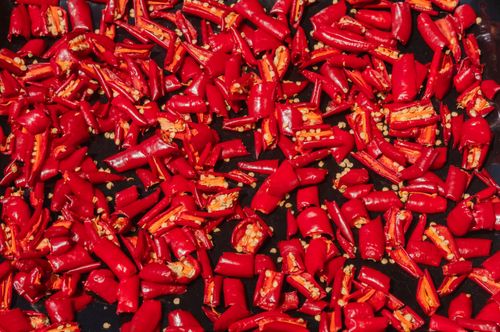
[Sliced red chilli peppers on a dark surface, showing their seeds.] Photograph: Sliced chillies
Image Credits: Pexels
Frequently asked questions
Does a chilli actually burn or damage the mouth?
A chilli at normal eating temperature does not raise mouth tissue to burning temperature, so the sensation is a false heat alarm rather than a thermal injury. Extremely hot peppers can still irritate tissue and cause real discomfort, so a severe or lasting reaction deserves medical attention.
Why does a cold chilli still taste hot?
Capsaicin activates TRPV1 chemically, without needing heat, so a chilli straight from the fridge triggers the same receptor as a hot one. The brain receives the same "hot" signal either way, because it cannot distinguish the chemical trigger from a temperature trigger.
Is milk really better than water for a chilli burn?
Yes. Milk's fat dissolves capsaicin and its casein protein binds to it, while water spreads the oily compound around the mouth. Yoghurt, cream, and fatty or starchy foods work for the same reason.
Where is the heat in a chilli concentrated?
The heat concentrates in the white placenta membranes inside the fruit, not in the seeds. Removing seeds without removing the membranes leaves most of the capsaicin behind.
The bottom line
Chillies burn the mouth by hijacking a heat detector, not by being hot. Capsaicin opens TRPV1 channels on pain nerves, the nerves fire, and the brain reports burning because that is the only message those nerves know how to send. The Scoville scale measures how much capsaicin is doing the hijacking, and fatty foods calm the burn by dissolving the chemical that started it.
Knowing the mechanism changes the remedy. Skip the water, reach for milk or yoghurt, and handle hot chillies with the respect due to a chemical that evolved to be felt.
Tags: chillies, food science, spice
The Rive News research desk writes plain-language explainers drawn from public sources, with every key claim tied to a named source.
Related
- Why do onions make you cry? The kitchen chemistry explained
- Why cheese melts differently depending on the type
- Why slow-cooked onions taste sweet in the pan
Subscribe for one clear explainer each morning on the everyday things cooks wonder about.
Rive News publishes explainers from public sources and corrects errors when readers point them out.
Related stories
Why Does Bread Go Stale Faster in the Refrigerator?
Bread goes stale faster in the fridge because starch recrystallizes fastest near 4°C. Here is the retrogradation science and the right way
Baking soda and baking powder: what's the difference?
Baking soda is pure sodium bicarbonate; baking powder adds two dry acids for double-acting lift. Learn when to use each, plus exact
What Is the Maillard Reaction in Simple Terms?
The Maillard reaction is the browning chemistry between amino acids and sugars above 140 C that creates the crust, color, and rich flavor