
Why slow-cooked onions taste sweet in the pan
By Rive News / Research desk | Rive News / Published October 28, 2026 at 9:00 AM PKT
Key takeaways
- Raw onions store sweetness as long fructan chains that taste buds cannot detect as sweet.
- Gentle heat breaks those chains into fructose and glucose, which taste sweet.
- Slow cooking also drives off water and browns the sugars, deepening the flavour.
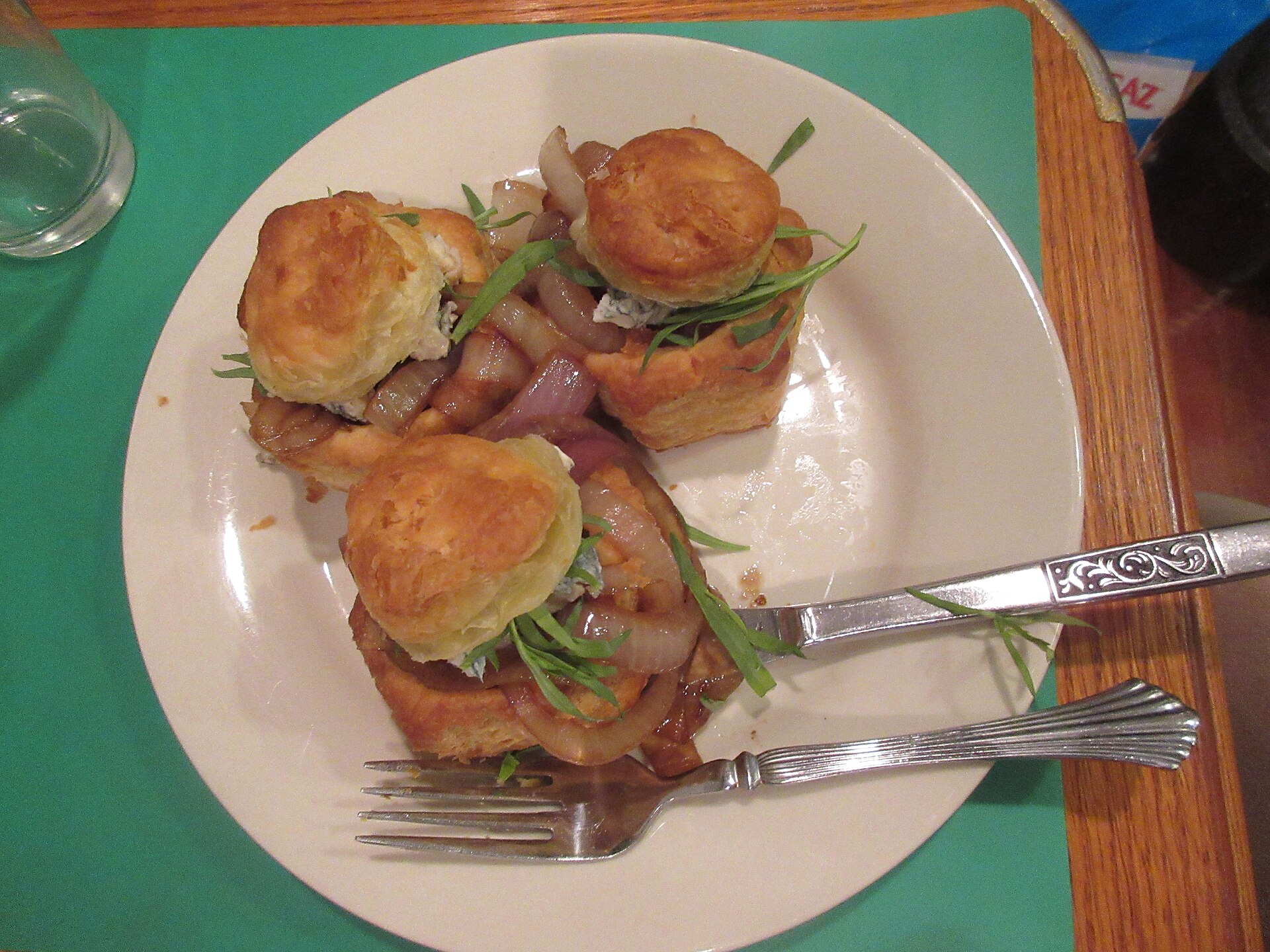
[Caramelized onion tarts show the deep golden colour of onions cooked slowly until sweet.] Photograph: caramelized onion tarts
Image Credits: Wikimedia Commons
A raw onion bites. A slowly cooked onion soothes. The same vegetable can taste sharp enough to sting the eyes and, an hour later, sweet enough to spread like jam.
No sugar is added in between. Cooking changes the onion itself, unlocking sweetness that was already there and quieting the flavours that hid it. This article explains the three changes at work, including sugar release, water loss, and browning, and why slow heat does the job better than high heat.
Why raw onions taste sharp
Raw onions are loud. Cutting an onion breaks its cells open, and sulfur compounds rush out. Those compounds create the biting aroma and the tears.
They also dominate flavour, so any sweetness in the raw onion gets pushed to the background.
The sweetness was never absent. It was outshouted. A raw onion contains sugars, but they are locked up in long chains and masked by pungency.
Tasting a raw slice gives the sulfur compounds the lead role. Cooking rewrites that balance.
Cell walls also matter. A raw onion is crisp because its cell walls are intact and full of water. That crunch carries the sharp compounds straight to the nose and tongue.
Once heat softens those walls, the onion collapses and its flavour profile changes with its texture.
The hidden sugars: fructans
Onions store energy as fructans, long chains of fructose units joined together. These chains are too large for taste buds to register as sweet. That is why a raw onion does not taste sugary despite containing plenty of stored carbohydrate.
Heat breaks the chains apart. As the chains split, they release shorter sugars, above all fructose and glucose. Fructose tastes about 1.7 times sweeter than ordinary table sugar, according to A Grateful Kitchen.
Once freed, it is easy for the tongue to detect. This release is the first and largest reason slow-cooked onions taste sweet.
Onions contain roughly 4 to 5 percent natural sugars, mostly fructose, glucose, and sucrose, as described in the Jackson State University guide to caramelised onions. The number is modest, but concentration changes everything. As water leaves the pan, those sugars make up a larger share of what remains.
A smaller, denser mass tastes sweeter than the same sugars spread through a watery, crisp slice.
Why slow heat beats fast heat
Time lets the changes happen in order. In the early phase, gentle heat softens the onion and enzymes and heat begin breaking down complex carbohydrates. In the middle phase, moisture evaporates steadily and the surface temperature climbs.
In the late phase, concentrated sugars brown and new flavour compounds accumulate.
High heat compresses that sequence. The outside browns before the inside has finished releasing its sugars. The result can be dark and bitter rather than sweet, because sugars that brown too far turn acrid.
Slow heat keeps the whole batch moving together, so browning happens after sweetness has built up.
Stirring matters for the same reason. Onions in contact with the hot pan surface brown faster than onions piled on top. Regular stirring evens out the heat and stops any one patch from scorching.
A scorched patch does not just taste bad on its own; its bitterness spreads through the batch when stirred in.
Caramelization and the Maillard reaction
Two browning reactions share the work, and they are not the same thing. Caramelization breaks sugars down under heat alone, producing golden colour and new sweet, nutty flavour compounds. The Maillard reaction pairs sugars with amino acids from proteins, producing deeper savoury and roasted notes.
Shirley Corriher captured the result in CookWise, as quoted by Saveur: "New compounds are formed. Some of the compounds that form in onions are even sweeter than sugars."
That line explains why caramelized onions taste more complex than plain sugar water. New molecules are being created, not just old ones concentrated.
Butter is a popular cooking medium partly because its milk solids add proteins that feed the Maillard reaction. Oil works too, and it is more forgiving, since it does not brown on its own. Either way, the onion's own sugars and amino acids do most of the work.
The fat mainly carries heat and keeps the onions from sticking.
What sweetness actually tastes like here
Caramelized onions do not taste like candy. Their sweetness is soft and rounded, balanced by savoury depth from browning. That balance is why they work on burgers, in tarts, and folded into risotto.
They add sweetness without making a dish taste like dessert.
Colour is a useful guide, but it is not the same as sweetness. Onions can taste noticeably sweeter before they turn deep brown, because sugar release happens earlier than heavy browning. Deep colour signals that browning reactions have added complexity, not that sweetness has just appeared.
Judging only by colour can lead a cook to overdo it and cross into bitterness.
Volume tells another part of the story. A pan of sliced onions cooks down to a fraction of its starting size. That shrinkage is mostly water leaving.
What remains is concentrated onion: more sugar, more browned flavour compounds, and less crunch per bite.
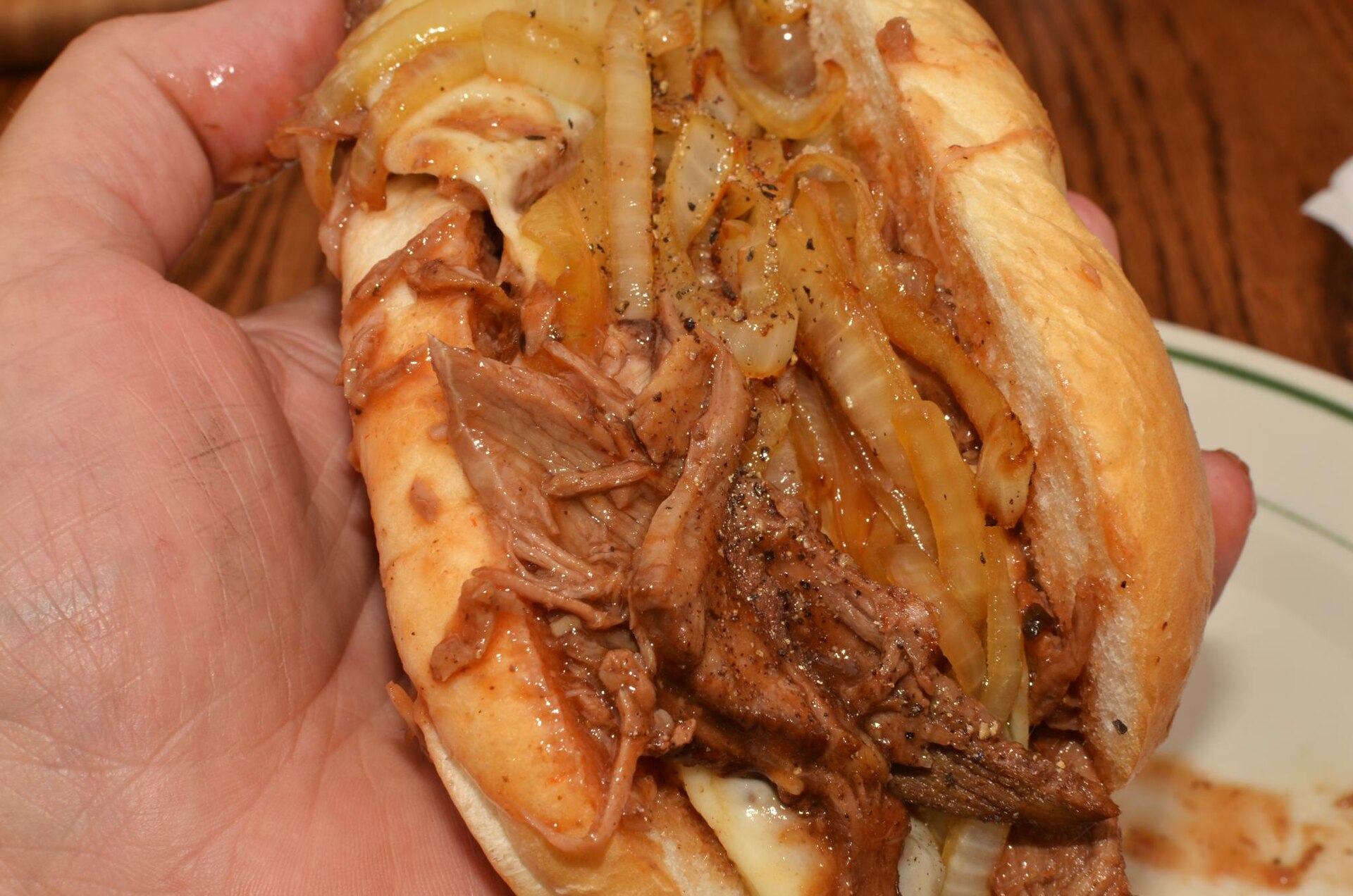
[A cheesesteak topped with caramelized onions shows how slow-cooked onions add sweet depth to savoury food.] Photograph: cheesesteak with caramelized onions
Image Credits: Wikimedia Commons
Common mistakes that kill the sweetness
The most common mistake is impatience. Turning the heat up to hurry the process browns the outside before the inside sweetens. The onions may look done while still tasting sharp in the middle.
Low to medium heat, with patience, gives a better result.
Uneven slicing is another problem. Thick pieces lag behind thin ones, so the batch finishes unevenly. Slicing to a consistent thickness lets every piece move through the same stages at the same pace.
It is a small step that pays off across the whole pan.
Letting the pan go dry at the end is a third trap. Once most water has gone, sugars can scorch within a minute. A splash of water deglazes the pan, lifts browned flavour from the surface, and buys time.
The water evaporates again, but the flavour it lifted stays in the onions.
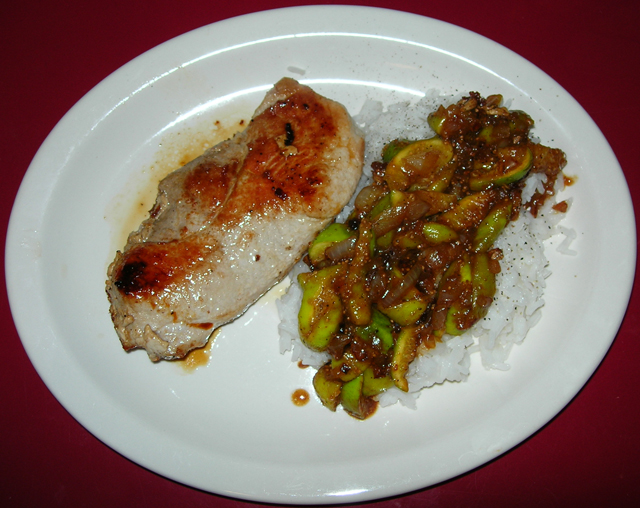
[Figs with caramelized onions and pork pair the onions' gentle sweetness with rich savoury flavours.] Photograph: figs and caramelized onions with pork
Image Credits: Wikimedia Commons
Frequently asked questions
Do onions gain sugar when cooked?
No. Cooking does not add sugar. It frees sugars already stored as fructans, concentrates them by driving off water, and creates new sweet-tasting compounds through browning.
The total carbohydrate stays roughly the same, but its form and concentration change.
Why do my onions taste bitter instead of sweet?
Bitterness usually means scorching. High heat or a dry pan at the end browns sugars past sweetness into bitter compounds. Lower the heat, stir more often, and add a splash of water when the pan starts to dry.
Can I caramelize onions without butter?
Yes. Neutral oil works well and is more forgiving, since it does not brown on its own. Butter adds flavour through its milk solids, but it also demands closer attention to avoid burning.
How long does it really take?
A proper batch usually takes 30 minutes to an hour on gentle heat, depending on quantity and slice thickness. Onions that brown in 10 minutes at high heat are browned, not caramelized, and they will taste sharper.
The bottom line
Slow-cooked onions taste sweet because heat frees their stored sugars, water loss concentrates those sugars, and gentle browning builds new sweet and savoury compounds. Rush the process and you get colour without sweetness, or bitterness instead of depth. Give the pan time, keep the heat low, and the sharpest vegetable in the kitchen turns into one of the sweetest.
Tags: onions, caramelization, cooking science
Rive News / Research desk: The Rive News research desk writes plain-language explainers from published sources, with every key fact traceable to its source.
Related
- Why onions make you cry
- How to stop onions from burning when frying
- What the Maillard reaction is in simple terms
- Why garlic turns blue when you cook it
Subscribe for one clear food-science explainer each week.
Rive News follows a simple standards rule: no invented facts, quotes, or statistics, and every key claim carries its source.
Related stories
Why Does Bread Go Stale Faster in the Refrigerator?
Bread goes stale faster in the fridge because starch recrystallizes fastest near 4°C. Here is the retrogradation science and the right way
Baking soda and baking powder: what's the difference?
Baking soda is pure sodium bicarbonate; baking powder adds two dry acids for double-acting lift. Learn when to use each, plus exact
What Is the Maillard Reaction in Simple Terms?
The Maillard reaction is the browning chemistry between amino acids and sugars above 140 C that creates the crust, color, and rich flavor