
Why garlic turns blue when you cook it
By Rive News / Research desk | Rive News / Published October 27, 2026 at 9:00 AM PKT
Key takeaways
- Cutting garlic releases an enzyme that converts its sulfur compounds into pigments, and acid speeds the change from blue to green.
- Older garlic and cold-stored garlic are more likely to change colour, because the reactive compounds build up over time.
- Blue garlic from cooking is safe to eat. Blue patches on an unused clove, especially with a rough texture, are more likely mould and should be discarded.
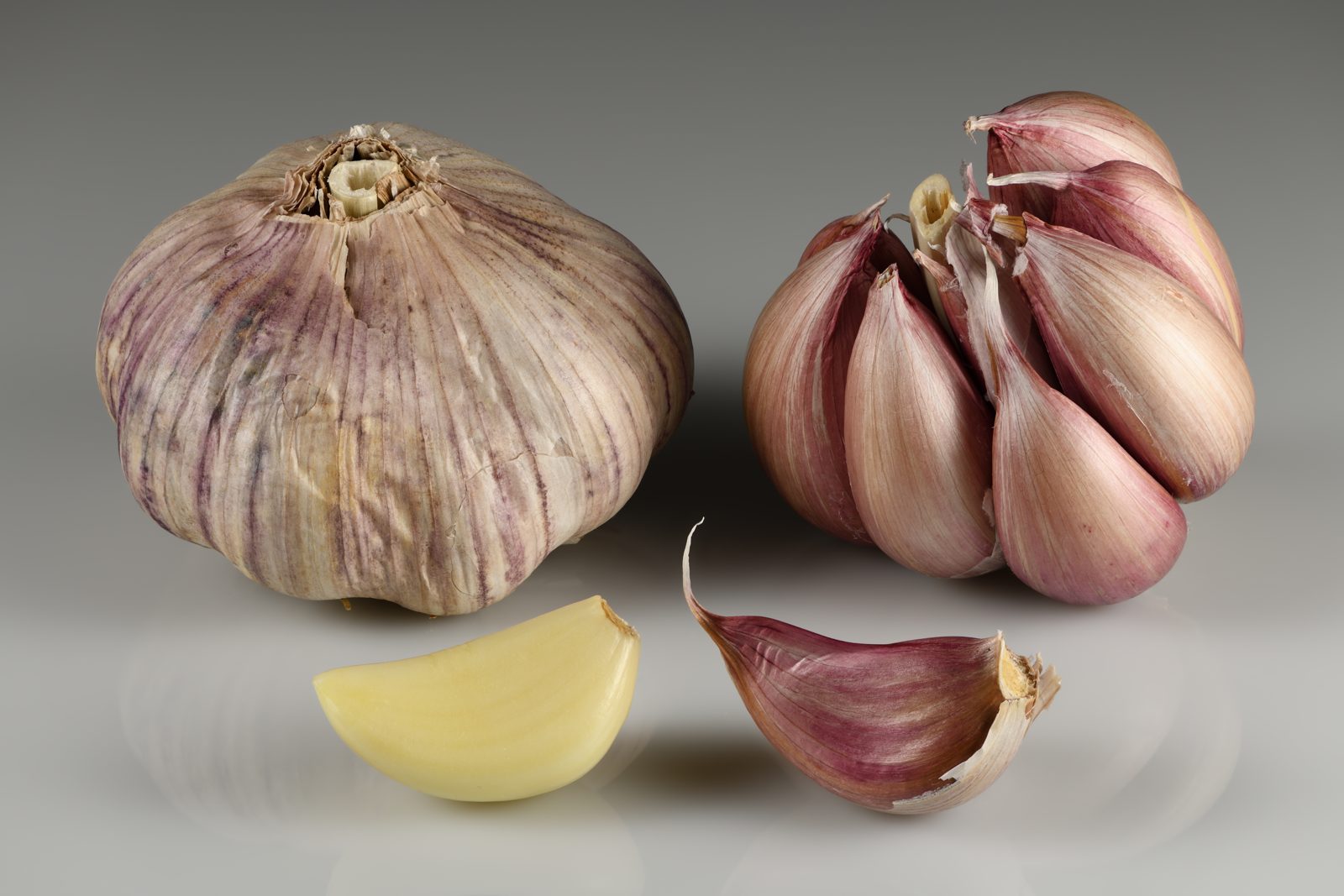
[Fresh garlic bulbs and peeled cloves, the starting point for the colour change.] Photograph: garlic bulbs and cloves
Image Credits: Wikimedia Commons
Few kitchen surprises are as startling as garlic turning blue in the pan. One minute the cloves are creamy white, and a few minutes later they are turquoise, teal, or green. The colour looks wrong enough that many cooks throw the whole dish away.
In nearly every case, that is unnecessary. The colour comes from a natural chemical reaction inside the garlic itself, not from spoilage, and the garlic is safe to eat. This article explains the reaction step by step, including why acid triggers it, why older garlic changes colour more readily, and how to tell harmless blue garlic from actual mould.
What happens the moment you cut garlic
Garlic keeps its key chemicals apart while the clove is whole. Two of them matter here: alliin, a sulfur-containing compound, and alliinase, an enzyme. Cutting, crushing, or chopping breaks the cell walls and lets the two meet.
Alliinase converts alliin into allicin, the compound behind garlic's pungent smell and sharp flavour.
That is only the first step. Allicin is unstable, and it breaks down further into a family of sulfur compounds. Some of those compounds react with amino acids in the garlic to form pyrroles, which are rings of carbon and nitrogen atoms.
Pyrroles link together into pigments, and the number of rings in the chain decides the colour. Food Republic's account of the chemistry gives the neat version: if three pyrrole rings connect, the garlic turns blue, and if four connect, it looks more green.
So the colour is not a dye added by anything in your kitchen. It is built by the garlic's own chemistry, starting from the moment the knife goes in. Whole, uncut cloves do not change colour this way, because the enzyme and its target never meet.
Why acid and metals speed it up
Acid is the most common trigger in cooking. Vinegar, lemon juice, wine, and tomatoes all lower the pH around the garlic, and the pigment-forming reactions run faster in acidic conditions. That is why blue garlic shows up so often in pickles, marinades, and vinaigrettes, and in pan sauces finished with lemon or wine.
Trace metals play a supporting role. Garlic's sulfur compounds can react with tiny amounts of copper from cookware, water pipes, or ingredients, forming blue-green copper compounds. Food safety specialist Angela M.
Fraser, cited by Mashed, explains that it takes only a very small amount of copper to produce the reaction, and that the copper can come from perfectly ordinary sources such as tap water or butter. The reaction does not need a copper pan. It needs almost any source of trace copper plus acid plus time.
Iodine can contribute too. Some older kitchen references note that the iodine in iodized table salt can push garlic toward blue or green, which is one more reason the colour appears unpredictably from one dish to the next. The same garlic, cooked two ways, can stay white in one pan and turn teal in another.
Why older and colder garlic changes colour more
Age is the strongest predictor of blue garlic. As a bulb ages and loses moisture, its alliin and alliinase concentrate, and the precursors of the blue pigments build up. Food Republic notes that older garlic has more time to build up extra alliin and alliinase, giving it both a stronger flavour and a greater tendency to change colour.
That is why garlic for Chinese laba, the pickled garlic whose vivid colour is prized rather than feared, is often aged for months before pickling. The colour that alarms a home cook is the same colour that a traditional recipe deliberately produces.
Cold storage pushes in the same direction. Flavor scientist Arielle Johnson, author of Flavorama, explains the enzyme's role in plain terms: "Alliinase can react with sulfur-containing molecules, such as free amino acids, which create vivid blue and green pigments." Johnson also notes that garlic is more likely to turn blue when it has been stored at cold temperatures, which is why refrigerated garlic changes colour more readily than garlic kept in a cool, dry pantry.
Freshness, then, is the simplest prevention. A young, firm bulb bought recently is far less likely to turn blue than a bulb that has sat for months, especially one stored in the fridge.
Is blue garlic safe to eat
Yes, with one distinction that matters. Blue or green garlic produced during cooking or pickling is safe to eat, according to Fraser and Johnson alike. The pigments are harmless byproducts of the garlic's own chemistry, and they do not change the garlic's safety.
The flavour may be slightly stronger, because the same ageing that builds pigment also concentrates flavour compounds, but the garlic is not spoiled.
The exception is garlic that turns blue without any cooking or acid involved. If whole cloves sitting unused on your counter develop blue or green patches, that is more likely mould. The way to tell the difference is texture and distribution.
Mould usually appears on only a small part of the clove and creates a rough, fuzzy surface. Reaction blue, by contrast, spreads through the cut or cooked garlic and feels smooth. When in doubt about an unused clove, throw it away.
The dish is not worth the uncertainty.
One more caution applies to garlic stored in oil at room temperature, which is a separate food safety issue from colour. Oil-packed garlic can support the growth of the bacterium that causes botulism if it is not refrigerated and used promptly, so colour is not the risk to watch there. Refrigeration and short storage are the rules for garlic in oil regardless of its colour.
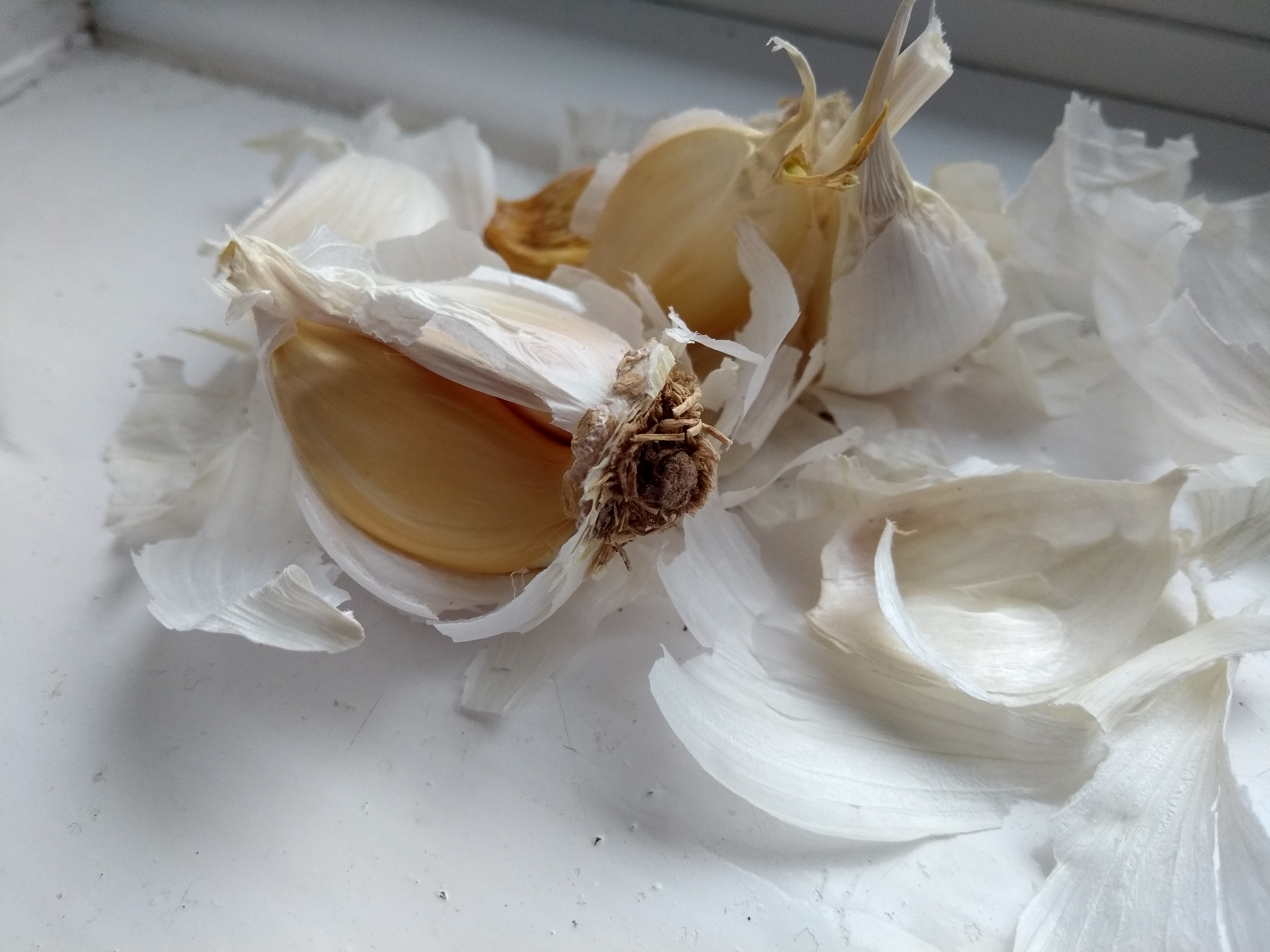
[Peeled garlic cloves, which change colour more readily than whole bulbs because cutting releases the relevant enzyme.] Photograph: garlic cloves
Image Credits: Wikimedia Commons
How to prevent it, if the colour bothers you
The colour is harmless, but it can still ruin the look of a pale sauce or a dish served to guests. Four habits reduce it sharply.
Use young garlic. Buy firm, heavy bulbs with tight skins, and use them within a few weeks rather than letting them age for months. Store garlic in a cool, dry, dark place, not in the refrigerator, and not in a sealed plastic bag, where moisture encourages enzyme activity.
Keep cut garlic away from acid until the last moment. If a recipe calls for lemon juice or vinegar, add the garlic late, or add the acid late, so the two spend less time together. Heat also inactivates the enzyme, so garlic added to a hot pan and cooked quickly changes colour less than garlic left to sit raw in an acidic marinade.
Avoid long holds of peeled garlic. Peeled cloves stored for days give the enzyme time to work, and the colour often appears before cooking even starts. Peel what you need, when you need it.
None of these steps is necessary for safety. They are purely cosmetic, and skipping them costs nothing but a surprising colour.
Frequently asked questions
Is it safe to eat garlic that turned blue while cooking?
Yes. Blue or green garlic produced during cooking or pickling comes from a natural reaction between the garlic's sulfur compounds and amino acids, and food safety specialists confirm it is safe to eat. Discard garlic that shows blue patches while still unused on the counter, as that is more likely mould.
What makes garlic turn blue instead of green?
The colour depends on how many pyrrole rings link together in the pigment. Three linked rings produce blue, and four produce green, so garlic often passes through blue on its way to green as the reaction continues.
Does cooking garlic in a copper pan cause the blue colour?
Copper can contribute, because trace copper reacts with garlic's sulfur compounds to form blue-green compounds. But acid, garlic age, and cold storage are usually the bigger factors, and blue garlic appears in non-copper cookware too.
How can I stop garlic from turning blue?
Use young, fresh garlic, store it in a cool dry pantry rather than the fridge, add acid late in cooking, and avoid storing peeled cloves for days. Heat inactivates the enzyme, so quick cooking in a hot pan also helps.
The bottom line
Garlic turns blue because cutting it releases an enzyme that converts its sulfur compounds into pigments, and acid, age, and cold storage all speed that reaction along. Three linked pigment rings give blue, four give green, and the colour is harmless when it appears during cooking or pickling. Use fresh garlic, keep it out of the fridge, and add acid late if you want to avoid the surprise.
And if an unused clove turns blue on the counter, trust the mould rule instead and throw it out.
Tags: garlic, food chemistry, cooking science, kitchen tips
Rive News's research desk covers practical explainers on cars, careers, study, fitness, and food, written from public sources and checked against a published QA list.
Related
- Why garlic turns blue or green when cooked
- Why does garlic turn blue or green in pickles?
- Why do hard boiled eggs get a green ring around the yolk?
Subscribe for one practical explainer each morning, written to be read in five minutes.
Standards: facts checked against public sources listed above; corrections welcomed and noted on update.
Related stories
Why Does Bread Go Stale Faster in the Refrigerator?
Bread goes stale faster in the fridge because starch recrystallizes fastest near 4°C. Here is the retrogradation science and the right way
Baking soda and baking powder: what's the difference?
Baking soda is pure sodium bicarbonate; baking powder adds two dry acids for double-acting lift. Learn when to use each, plus exact
What Is the Maillard Reaction in Simple Terms?
The Maillard reaction is the browning chemistry between amino acids and sugars above 140 C that creates the crust, color, and rich flavor