
Why chocolate melts in your hand, not its wrapper
By Rive News / Research desk | Rive News / Published October 28, 2026 at 9:00 AM PKT
Key takeaways
- Well-tempered chocolate melts near 33 to 34 degrees Celsius, below skin temperature.
- Your bare hand transfers heat directly into the bar by conduction, so it softens fast.
- The wrapper only delays melting by adding a barrier and an air gap, not by stopping it.
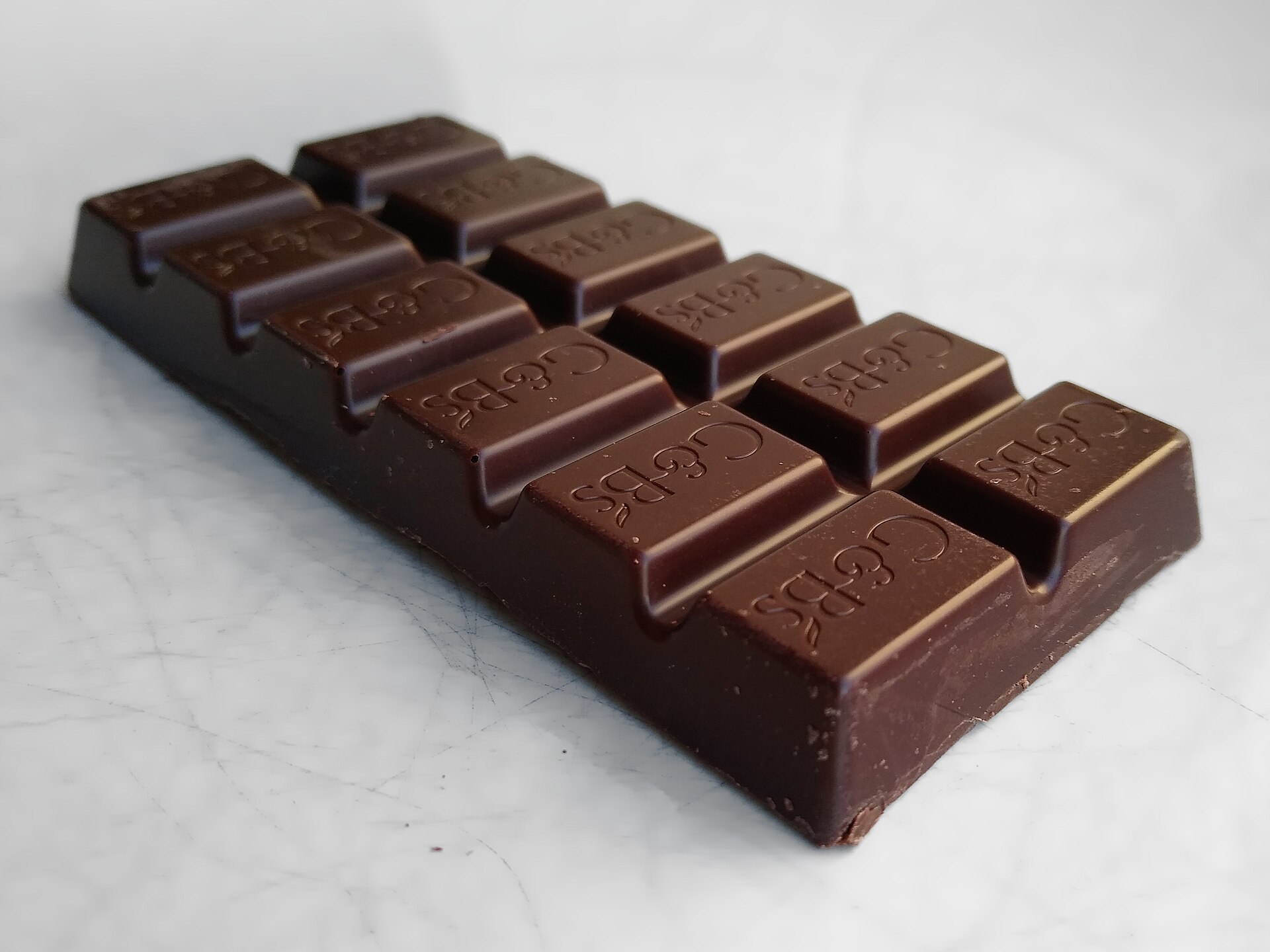
[A dark chocolate bar, broken into pieces, shows the clean snap of well-tempered chocolate.] Photograph: the chocolate bar
Image Credits: Wikimedia Commons
Chocolate melting in your hand is a matter of temperature, not magic. The fat that holds a chocolate bar together, cocoa butter, turns liquid at a temperature just below that of your skin. Hold a bare piece for a few seconds and heat flows straight from your hand into the bar.
This article explains what sets that melting point, why the wrapper slows the process, and why a wrapped bar still melts if you wait long enough.
What melting point actually means
A melting point is the temperature at which a solid turns into a liquid. For most kitchen fats, that change happens gradually over a wide range of temperatures. Cocoa butter is unusual because its change is sharper.
According to Mini Chemistry, the preferred crystal form of cocoa butter, known as Form V, melts at around 33 to 34 degrees Celsius.
That number matters because human skin is warmer. Skin on the palm sits close to body temperature, roughly 37 degrees Celsius. The gap between the two numbers is small, only a few degrees, but it is enough.
Once the bar reaches its melting point, its solid crystal structure gives way.
Cocoa butter is made of triglycerides, fats built from glycerol and three fatty acids. ChefsResource notes that cocoa butter melts generally around 31 to 34 degrees Celsius, depending on its exact mix of fatty acids. The main fatty acids involved are stearic, palmitic, and oleic acids.
Their tidy, regular arrangement is what lets the bar stay firm at room temperature and then soften quickly once warmed.
Why your bare hand wins so quickly
Heat moves in three ways: conduction, convection, and radiation. When you hold chocolate, conduction does most of the work. Your skin touches the bar directly, and heat flows from the warmer surface into the cooler one.
There is no gap to cross and no insulating layer in between.
Your hand is also a steady heat source. Unlike a warm room, which warms the bar slowly from all sides, your palm keeps feeding heat into one spot. The surface of the chocolate reaches its melting point within seconds, even if the centre is still firm.
That is why the outside turns glossy and soft while the middle may still snap.
Pressure plays a small part too. Gripping the bar presses it against warm skin and increases contact. A piece resting lightly on a fingertip melts more slowly than one squeezed in a closed palm.
The difference is contact area, not a different kind of heat.
What the wrapper actually does
A wrapper is thin, but it changes the heat path in two ways. First, it stops direct contact between skin and chocolate. Heat must now pass through foil or paper before it reaches the bar.
Second, a loosely wrapped bar often has tiny pockets of air between wrapper and chocolate. Air is a poor conductor of heat, so those pockets slow the transfer further.
The wrapper also keeps the bar at room temperature for longer at the start. A wrapped bar taken from a cool shelf starts near 20 degrees Celsius. It must climb more than 10 degrees before it reaches its melting point.
An unwrapped piece already warmed by handling starts closer to that line.
None of this makes the wrapper a refrigerator. Foil and paper are thin, and they conduct heat far better than a thick insulator would. The wrapper buys time, measured in seconds or a few minutes, not hours.
On a hot day, a wrapped bar left in a warm hand or a sunny pocket will still melt.
Why the difference feels so sharp
The contrast feels dramatic because the two situations are easy to compare. You unwrap a bar, hold a piece, and watch it soften. The wrapped half of the same bar still feels firm.
It is tempting to conclude that the wrapper somehow protects chocolate from heat entirely. In reality, the wrapped piece is simply behind on the same warming curve.
Time is the hidden variable. If you hold the wrapped bar for several minutes, it will soften too. The foil may feel cool at first because metal draws heat away from your fingers, which can add to the illusion.
Once the wrapper itself warms up, heat passes through it steadily.
Storage temperature matters as well. Chocolate kept at 15 to 18 degrees Celsius, the range often recommended for storage, starts further from its melting point than chocolate kept at 25 degrees. A warm kitchen shortens the wrapper's head start.
A cold bar lengthens it.
Tempering and crystal forms
Not all chocolate melts at exactly the same temperature, because cocoa butter can crystallise in several forms. These forms are numbered I through VI, and each has its own melting point. Form V is the form chocolatiers aim for, since it gives a glossy surface, a clean snap, and a smooth melt.
Poorly tempered chocolate contains a mix of crystal forms, including some that melt at lower temperatures. Such chocolate may feel soft or crumbly and can melt more readily in the hand. Well-tempered chocolate holds its shape a little longer, then melts cleanly once it crosses its threshold.
Bloom is a related effect worth knowing about. If chocolate warms and cools repeatedly, cocoa butter can rise to the surface and recrystallise there, leaving a whitish coating. Bloomed chocolate is safe to eat, but its texture and appearance suffer.
It is another sign that chocolate lives close to its melting point at everyday temperatures.
Dark, milk, and white chocolate differences
Recipe changes shift the melting behaviour slightly. Dark chocolate has a higher proportion of cocoa butter and cocoa solids, and it generally holds its shape a touch longer than milk chocolate. Milk chocolate contains milk fats, which melt at lower temperatures but make up a smaller share of the bar.
White chocolate contains cocoa butter but no cocoa solids, so its behaviour depends almost entirely on its fat mix.
These differences are small compared with the main effect. Every real chocolate bar is governed by cocoa butter's melting range. Products made with vegetable fat substitutes instead of cocoa butter behave differently, which is why some compound coatings feel waxy and resist melting.
They are not the same material, so they do not follow the same rules.
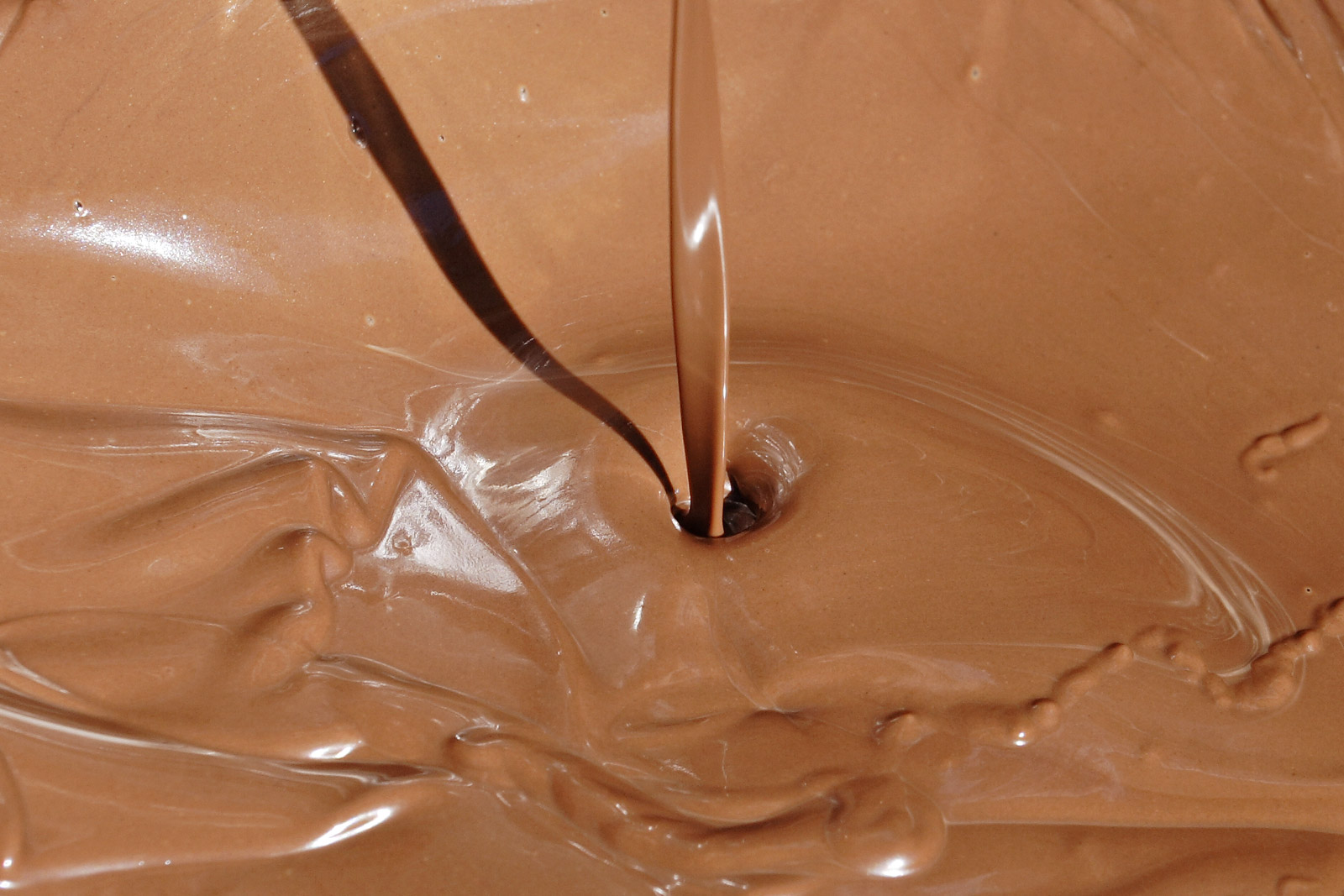
[Melted chocolate pools smoothly once cocoa butter passes its melting point.] Photograph: melted chocolate
Image Credits: Wikimedia Commons
A simple test you can try
Take two squares from the same bar. Leave one in its wrapper and hold the other bare in your palm. Note how long each takes to soften.
Then repeat the test with the wrapped square held for a full two minutes. The wrapped square will usually soften as well, just later.
The test shows the key point plainly. The wrapper delays heat, it does not block it. Direct skin contact is the fastest route for heat into chocolate, and removing that contact is what buys the wrapped bar its extra time.
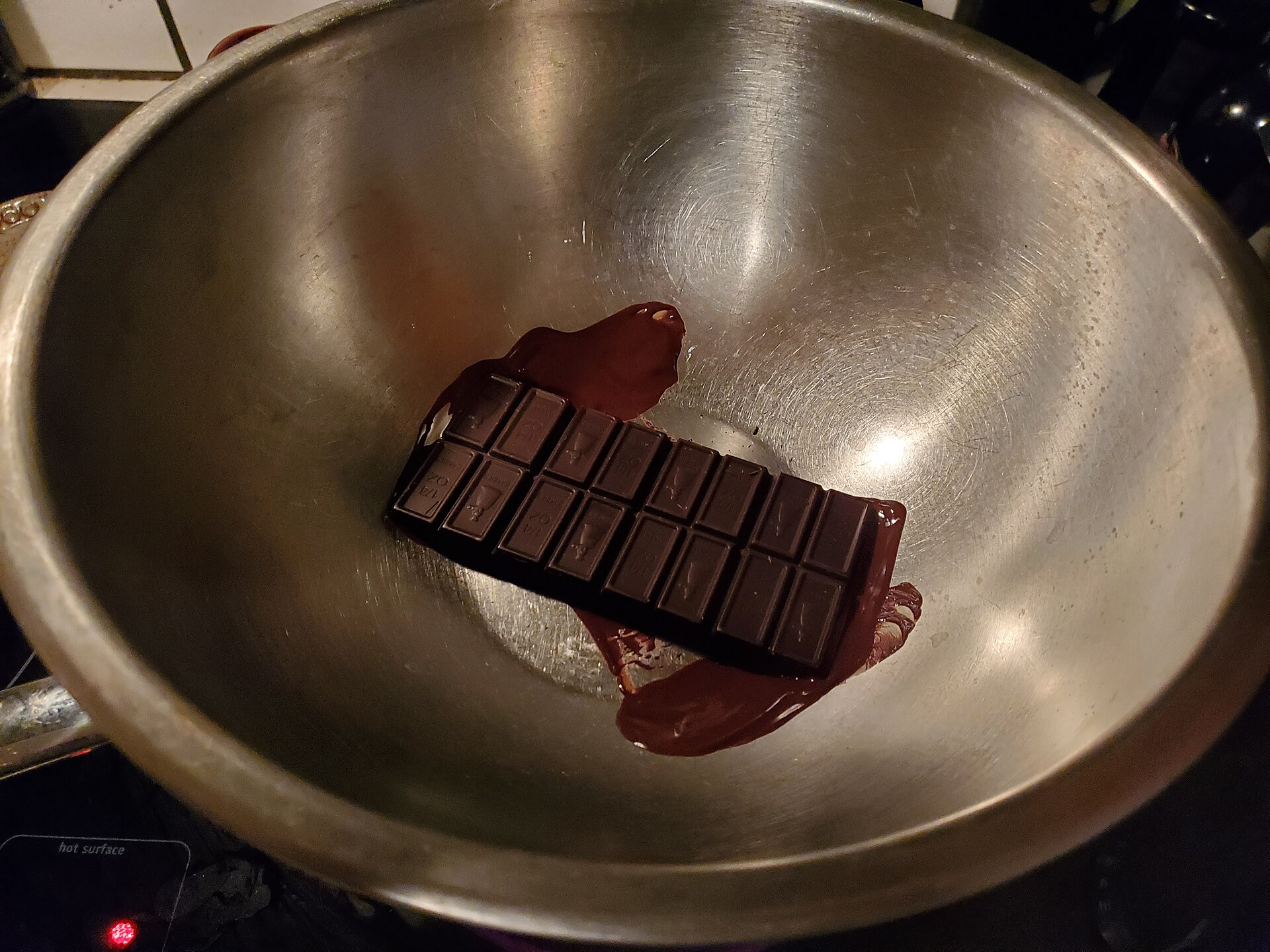
[Chocolate melting in a double boiler shows the same fat softening under gentle, indirect heat.] Photograph: chocolate in a double boiler
Image Credits: Wikimedia Commons
Frequently asked questions
Why does chocolate melt in the mouth even faster?
The mouth is warmer and wetter than the hand, and chewing breaks the bar into small pieces. More surface area means faster heat transfer. Saliva also helps carry heat and dissolve sugar, so the bar collapses quickly.
Does foil keep chocolate cold?
Foil reflects some radiant heat, but its main effect in the hand is as a contact barrier. It is too thin to insulate for long. A foil wrapper delays melting by seconds to minutes, depending on starting temperature and grip.
Will chocolate melt in the wrapper on a hot day?
Yes. If the surrounding temperature rises above about 34 degrees Celsius, the whole bar will eventually reach its melting point. The wrapper cannot hold back ambient heat indefinitely.
Why does some chocolate feel waxy instead of melting?
Some coatings replace cocoa butter with other vegetable fats that melt at higher temperatures. Those products resist hand warmth and can feel waxy. Real chocolate, made with cocoa butter, melts near body temperature by design.
The bottom line
Chocolate melts in your hand because its cocoa butter gives way near 34 degrees Celsius, below skin temperature. The wrapper helps only by breaking direct contact and adding a thin, air-filled barrier that slows heat flow. Given enough time or enough ambient heat, the wrapped bar melts too.
The wrapper is a delay, not a shield.
Tags: chocolate, cocoa butter, food science
Rive News / Research desk: The Rive News research desk writes plain-language explainers from published sources, with every key fact traceable to its source.
Related
- Why chocolate seizes when water touches it
- What blooming cocoa powder in hot liquid actually does
- What the Maillard reaction is in simple terms
- Why onions make you cry
Subscribe for one clear food-science explainer each week.
Rive News follows a simple standards rule: no invented facts, quotes, or statistics, and every key claim carries its source.
Related stories
Why Does Bread Go Stale Faster in the Refrigerator?
Bread goes stale faster in the fridge because starch recrystallizes fastest near 4°C. Here is the retrogradation science and the right way
Baking soda and baking powder: what's the difference?
Baking soda is pure sodium bicarbonate; baking powder adds two dry acids for double-acting lift. Learn when to use each, plus exact
What Is the Maillard Reaction in Simple Terms?
The Maillard reaction is the browning chemistry between amino acids and sugars above 140 C that creates the crust, color, and rich flavor