
Why Chocolate Seizes When Water Touches It
Key takeaways
- Melted chocolate is very dry, so even a small drop of water makes sugar and cocoa particles stick together.
- Seized chocolate turns thick, dull, and grainy in seconds, and stirring will not smooth it back.
- Adding hot cream can rescue seized chocolate as a sauce or ganache, but it cannot restore it for dipping.
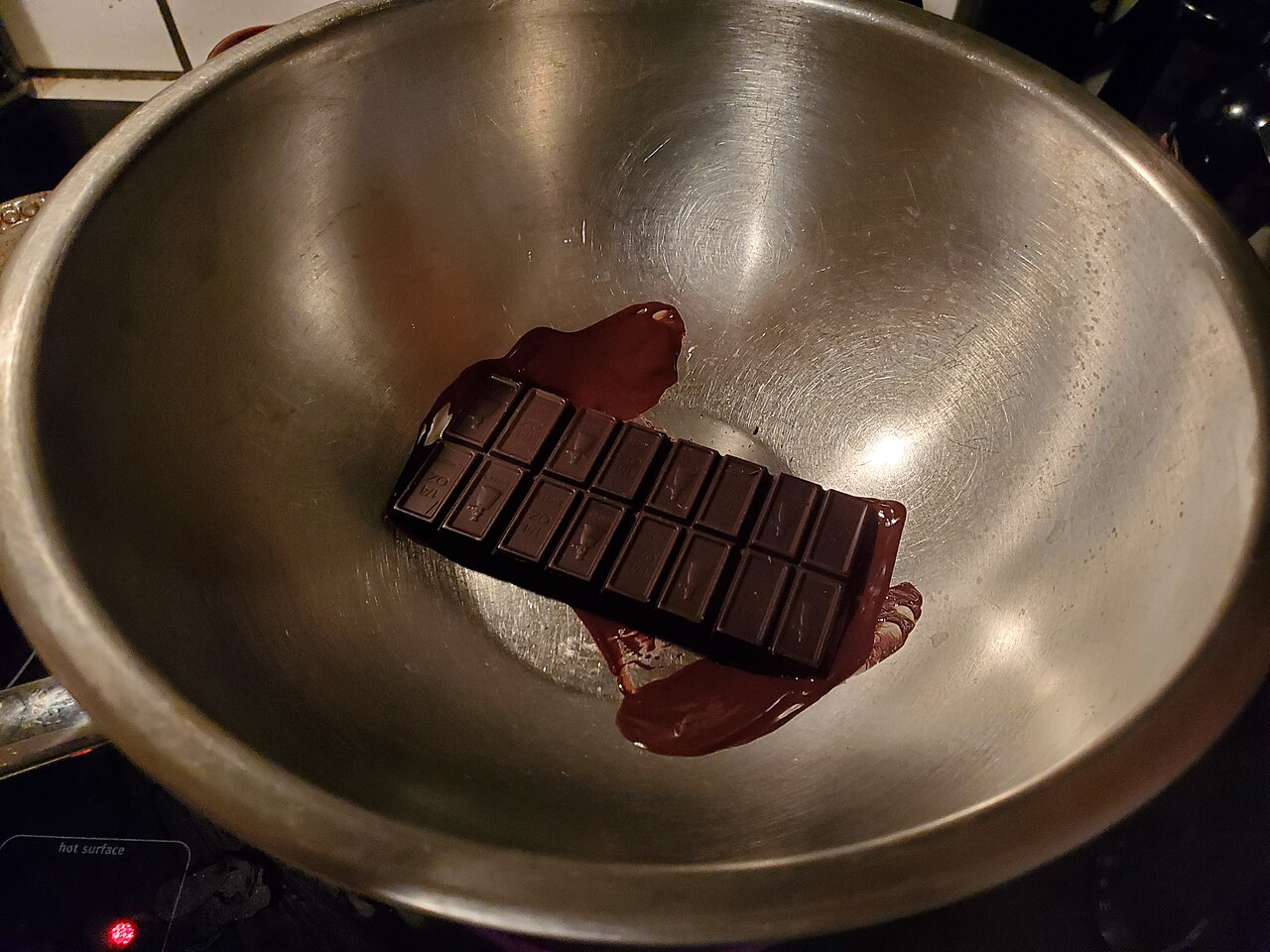
One drop of water can ruin a bowl of melted chocolate. The chocolate is smooth and glossy one moment, and thick, dull, and grainy the next. Stirring does not help.
Adding more chocolate does not help. The bowl has seized, and the batch must be rescued or restarted.
Seizing looks like magic, but it is simple physics. Chocolate is a dry food, and water changes how its particles behave. This article explains what chocolate is made of, why a tiny amount of water causes such a large change, how overheating causes a similar failure, and how to prevent and fix seizing.
What chocolate is made of
Chocolate is a mix of dry particles held in fat. The fat is cocoa butter, a vegetable fat from cacao beans that largely decides how chocolate behaves, according to Smithsonian Magazine. The dry particles are sugar and cocoa solids.
In solid chocolate, the cocoa butter holds those particles in a firm crystal structure. In melted chocolate, the cocoa butter is liquid, and the dry particles float in it.
The key fact is how dry the mix is. Making chocolate removes almost all moisture from the cocoa beans, so the finished product holds very little water. That dryness is what lets melted chocolate flow so smoothly.
The liquid cocoa butter coats each tiny particle, and the particles slide past each other with little friction.
Chocolate also has a crystal structure that matters for texture. Cocoa butter can lock into six different crystal forms when it cools, according to Smithsonian Magazine. Chocolatiers aim for one form, called Form V, which gives chocolate its glossy look and sharp snap.
Tempering is the process of heating and cooling chocolate to favor that form. Seizing is a different problem, but it shares the same root: chocolate is a structured material, and small changes in water or heat can break that structure.
Why a drop of water causes seizing
Water and cocoa butter do not mix. When a drop of water falls into melted chocolate, the water does not dissolve into the fat. Instead, it finds the dry particles.
Sugar dissolves in water, and cocoa solids cling to it. The water wets the particles and turns them sticky.
Food science expert Harold McGee explains the mechanism this way: the small amount of water acts as a kind of glue, wetting the many millions of sugar and cocoa particles just enough to make patches of syrup that stick the particles together. That sentence, quoted by The Kitchn, captures the whole process. A little water does not thin the chocolate.
It glues it.
The result is a paste. The particles that once slid past each other in liquid fat now clump into a stiff mass. The chocolate loses its shine, turns grainy, and stops flowing.
The change happens fast, often within a single stir, which is why cooks describe seizing as sudden.
The amount of water needed is tiny. A wet spoon, a damp bowl, or a few drops of steam from a double boiler can be enough. Even condensation from a lid placed over a pot of chocolate can drip back in and seize the batch.
That sensitivity is why chocolatiers joke that they do not even think about water while working with chocolate, a line reported by Smithsonian Magazine.
The same logic explains why some recipes add liquid to chocolate without seizing. A recipe that adds a large amount of cream or milk at once gives the water enough volume to mix with the whole batch, forming a smooth sauce. A tiny amount of water, by contrast, is just enough to wet the particles and glue them, but not enough to turn the mix into a sauce.
Seizing lives in that middle zone: too much water to ignore, too little to dissolve.
Seizing is not the same as overheating
Overheating causes a failure that looks similar but works differently. Chocolate scorches when it gets too hot, and the texture turns thick and dull. The Kitchn notes that chocolate can seize if it gets too hot and scorches, which is why gentle heating matters.
The temperature limits are low. Dark chocolate should not be heated past about 120 degrees Fahrenheit, and milk or white chocolate should stay below about 110 degrees, according to guidance summarized by Tasting Table. Above those points, the cocoa butter separates from the solids and the chocolate turns greasy and dull.
That damage cannot be reversed by cooling alone.
Overheated chocolate and water-seized chocolate need different responses. Water-seized chocolate can often be turned into a sauce by adding hot cream. Overheated chocolate that has scorched may taste burnt, and no fix will remove that flavor.
Telling the two apart matters: if the chocolate seized right after a splash, a drip, or a puff of steam, water is the likely cause. If it seized after long heating on high power, heat is the likely cause.
How to prevent seizing
Dry tools are the first defense. Use a dry bowl, a dry spatula, and dry hands when handling chocolate. Wipe the bowl before adding chocolate, even if it looks clean.
A single drop clinging to a spoon is enough to start the problem.
Keep steam away from the bowl. A double boiler is the safest way to melt chocolate, but the bowl must sit above the water, not in it. Turn off the heat before setting the bowl on top, and keep the water at a simmer rather than a rolling boil.
Never cover a pot of chocolate with a lid, since condensation can drip back into the bowl.
Melt chocolate gently. In a microwave, use short bursts of about 20 seconds and stir between each burst, according to The Kitchn. Stirring spreads the heat and keeps the bottom from scorching.
On the stove, use low heat and a heavy pot or a double boiler, and remove the chocolate while a few lumps remain. The leftover heat will melt them as you stir.
Add flavorings with care. Extracts, liqueurs, and fruit juices all contain water. Adding a spoonful of liqueur to melted chocolate can seize it just as surely as a splash from the tap.
When a recipe calls for liquid flavoring, add it with enough cream or butter to keep the mix smooth, or add it to the cream before combining with the chocolate.
How to rescue seized chocolate
Seized chocolate cannot be restored for dipping or coating. The smooth, tempered flow is gone, and no fix brings it back. But the chocolate is not wasted.
It can be turned into a sauce, a ganache, or a baking ingredient, where the texture no longer matters.
The standard rescue is hot cream. The Kitchn advises adding hot cream to seized chocolate and stirring gently with a rubber spatula until the mix loosens. The cream gives the water enough volume to blend with the whole batch, turning the stiff paste into a thick sauce.
Food52 gives the same advice and notes that the rescued chocolate works well in brownies, chocolate sauce, mousse, or any dessert that melts chocolate with butter or liquid.
Work off the heat when rescuing. Add the cream a spoonful at a time and stir gently. The mix may look worse before it looks better, since the paste needs time to loosen.
Patience matters more than force. Vigorous stirring can cool the mix unevenly and leave lumps.
Use the rescued chocolate the same day. A ganache made from seized chocolate will not temper, so it will not set with a glossy snap. It will still taste like chocolate, and it works well as a filling, a drizzle, or a sauce over ice cream.
If the recipe needs a firm coating, start a fresh batch with dry tools instead of trying to force the rescued chocolate back into shape.
If the chocolate tastes scorched, skip the rescue. Burnt flavor does not leave, and the rescued sauce will carry it. In that case, discard the batch and start over with lower heat.
Why chocolate is so sensitive
Chocolate sensitivity comes from its structure. The cocoa butter crystal forms that Smithsonian Magazine describes make chocolate a material with many possible states. A small change in temperature or water shifts the balance between those states, and the texture follows.
That sensitivity is also what makes chocolate rewarding to work with. Tempering exploits that structure on purpose, guiding the cocoa butter into Form V through careful heating and cooling.
Seizing is the same structure breaking the other way.
Cooks who understand the mechanism stop fearing chocolate. The rule is simple: keep water out, keep heat gentle, and keep tools dry. When a mistake happens, the rescue is simple too.
Add cream, make a sauce, and start fresh for the next dipping batch. The same care with fat and water shows up across the kitchen, from why whipped cream turns to butter when overwhipped to why spices lose flavor over time.
Frequently asked questions
Can seized chocolate be fixed for dipping?
No. Adding cream can turn seized chocolate into a sauce or ganache, but it cannot restore the smooth flow needed for dipping. Start a fresh batch for coating work.
How much water does it take to seize chocolate?
Very little. A wet spoon, a few drops of steam, or condensation from a lid can be enough. The exact amount depends on the batch size, but even a small splash can start the clumping.
Does seizing happen with white chocolate too?
Yes. White chocolate has no cocoa solids but still holds sugar and milk particles in cocoa butter. Water can make those particles clump the same way, and white chocolate is more sensitive to heat as well.
Can I add milk instead of cream to rescue seized chocolate?
Hot cream works best because its fat content helps the mix smooth out. Milk can work in a pinch, but the result is thinner. Add liquid a spoonful at a time and stir gently.
The bottom line
Chocolate seizes because a tiny amount of water glues its dry particles together. The cocoa butter cannot keep the particles sliding once water wets them, so the chocolate turns into a stiff paste. Keep tools dry, keep steam away, and melt gently.
If the bowl seizes, add hot cream and use it as a sauce. The batch is not ruined. It just changed jobs.
Tags: chocolate, baking science, melting chocolate, kitchen tips
Latest in Food
- Why Chocolate Seizes When Water Touches It
- Why Whipped Cream Turns to Butter If You Overwhip
- Why Do Potatoes Turn Green and What Is Solanine
- Why Do Spices Lose Flavor Over Time
Subscribe for weekly kitchen science explainers that make cooking easier.
Related stories

Why Does Bread Go Stale Faster in the Refrigerator?
Bread goes stale faster in the fridge because starch recrystallizes fastest near 4°C. Here is the retrogradation science and the right way

Baking soda and baking powder: what's the difference?
Baking soda is pure sodium bicarbonate; baking powder adds two dry acids for double-acting lift. Learn when to use each, plus exact

What Is the Maillard Reaction in Simple Terms?
The Maillard reaction is the browning chemistry between amino acids and sugars above 140 C that creates the crust, color, and rich flavor