
Why Whipped Cream Turns to Butter If You Overwhip
Key takeaways
- Whipping builds a network of fat globules around air bubbles, and that network is what makes cream fluffy.
- Overwhipping breaks that network apart, and the freed fat clumps into butter while water separates out.
- The change is one way, but overwhipped cream can still be finished as butter instead of being thrown away.
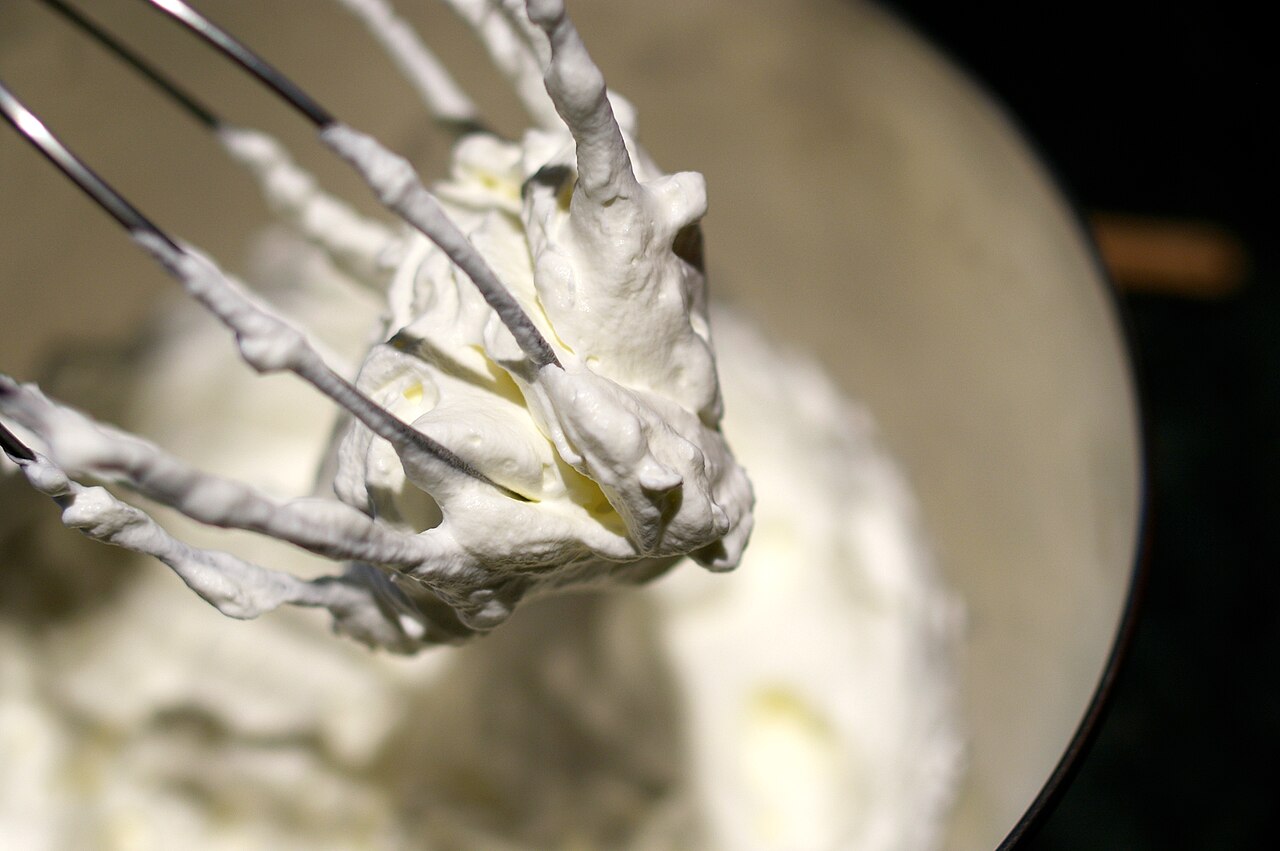
Whipped cream sits on a knife edge. A minute of beating turns liquid cream into a fluffy topping. A minute too much turns the same bowl grainy, then wet, then solid.
The topping separates into a pale lump and a thin liquid, and the dessert topping becomes butter.
The change is not a mistake in the recipe. It is the same process that makes butter, taken one step too far. This article explains what cream is, how whipping builds its fluffy structure, why extra whipping destroys that structure, and what to do when the bowl goes too far.
What cream actually is
Cream is an emulsion, a mixture in which tiny droplets of one substance stay suspended in another. In cream, microscopic globules of milk fat float in water that also holds lactose and proteins. The fat content of cream is 35 to 40 percent, according to the University of Guelph Food Science department.
Each fat globule is wrapped in a thin membrane that keeps it separate from its neighbors. That wrapper is what keeps cream liquid in the carton. The globules are small and stable, so they drift in the watery part of the cream instead of clumping together.
Shaking or beating the cream damages those wrappers, and that damage is the start of both whipped cream and butter.
Temperature matters from the beginning. The fat inside each globule contains crystals, and those crystals help the globules stick to each other in a controlled way. Cold cream whips well because the fat stays firm enough to build a structure.
Warm cream whips poorly because the fat softens and melts, and the structure never firms up. The University of Guelph notes that whipping is very temperature dependent for exactly this reason.
How whipping builds fluffy cream
Whipping does two things at once. It beats air into the cream, and it knocks the fat globules against each other. As the globules collide, they begin to stick together partway, a process food scientists call partial coalescence.
The globules link into chains and clusters that spread around the air bubbles, according to the University of Guelph.
Those linked globules form a network that holds the air in place. One fat-stabilized bubble links to the next, and the network spreads through the bowl. Water, lactose, and proteins sit trapped in the spaces around the bubbles.
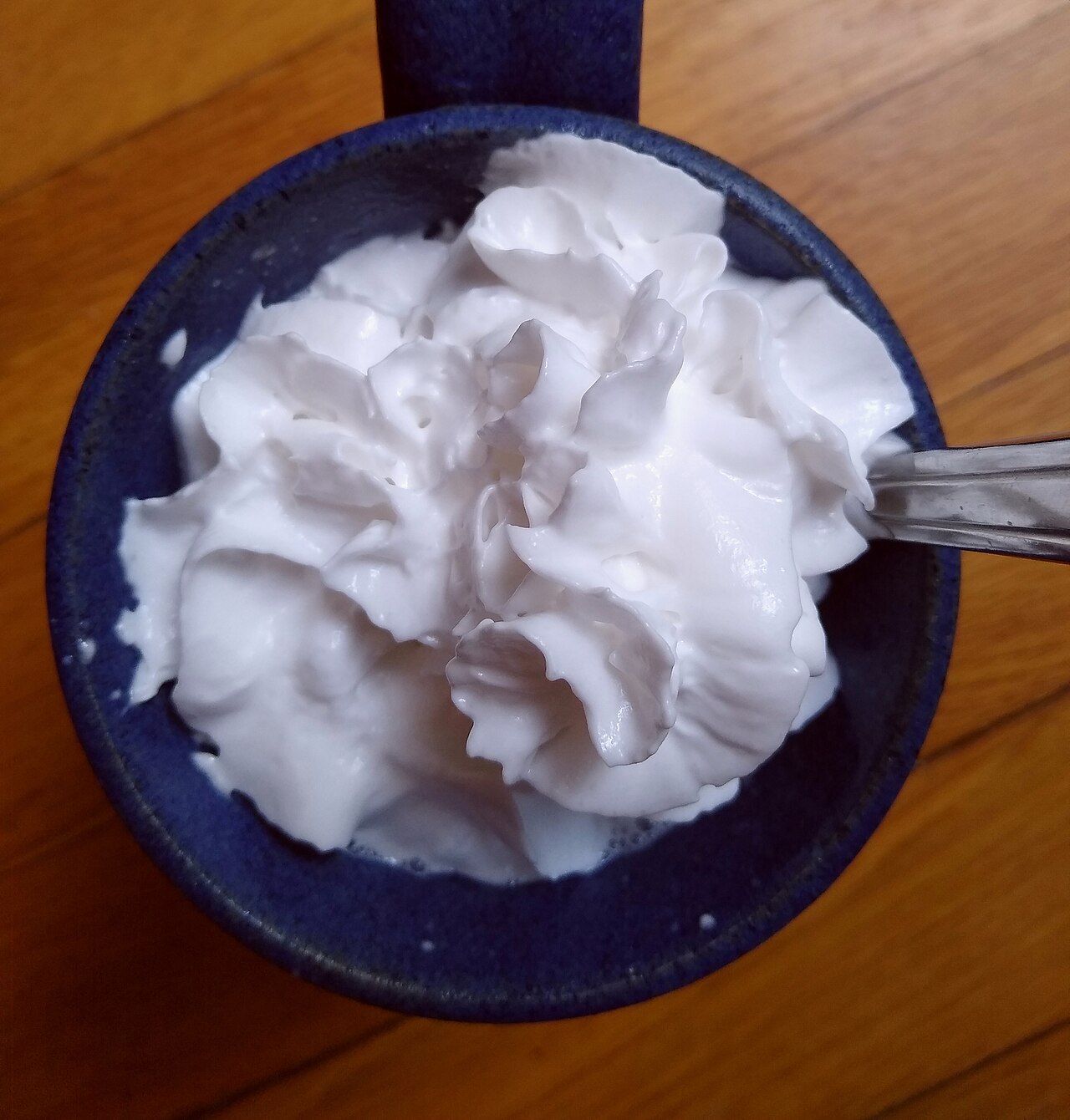
The result is a foam that stands up in soft peaks and feels light on the tongue.
Proteins help too. As air is beaten in, proteins unfold and form a thin film around each air bubble, according to Indiana Public Media A Moment of Science. On their own, those protein films would collapse in seconds under gravity.
The fat network gives them strength, so the bubbles hold their shape.
The stages of whipping follow a clear order. First the cream thickens and the whisk leaves trails. Then soft peaks form, with tips that curl over when the whisk lifts.
Then stiff peaks form, with tips that stand straight. Stiff peaks are the last safe stage. The cream looks dry and firm, and it is ready to use.
One more round of beating takes it past the peak stage and into butter.
Why overwhipping makes butter
Overwhipping pushes partial coalescence all the way to full coalescence. The fat globules no longer stick together in chains that hold air. Instead, they merge into larger and larger clumps that cannot hold air at all.
The air bubbles collapse, the foam falls, and the fat separates from the water.
The University of Guelph states the turning point plainly: if whipped cream is whipped too far, the fat will begin to churn and butter particles will form. That is the moment the bowl goes grainy. The smooth foam turns lumpy, and a thin liquid starts to pool around the lumps.
The chemistry behind the change is simple. Fat and water do not mix, and once the fat globules merge, the fat pushes the water out. The solid that remains is butter, and the liquid that separates is buttermilk.
Scientific American describes the same process in a shaking experiment: the fat molecules clump together until butter forms and the fat clearly separates from the liquid in the cream.
Butter is about 80 percent milkfat, according to Indiana Public Media. That number shows how much water the process removes. The cream started at 35 to 40 percent fat, and the finished butter holds roughly twice that share.
The rest of the water leaves as buttermilk.
Speed matters as much as force. In the Scientific American jar-shaking test, cream first thickened into whipped cream within two minutes, then turned abruptly into butter after five to 20 minutes of total shaking. Room-temperature cream turned to butter in about five to six minutes, while refrigerated cream took 13 to 15 minutes.
Warm fat molecules move faster and clump sooner, so warm cream crosses the line faster than cold cream.
The warning signs
The bowl gives clear signals before the change becomes final. The cream loses its shine and looks dry and grainy. The whisk leaves rough tracks instead of smooth trails.
Small lumps appear, and the texture feels curdled rather than silky.
The sound changes too. A whisk moving through soft cream makes a smooth swishing noise. As the cream breaks, the sound turns heavier and the whisk meets more resistance.
That resistance is the butter clumps forming.
The last sign is liquid. When buttermilk starts to pool around the lumps, the foam has collapsed and the fat has separated. At that point the cream cannot be whipped back into peaks.
The air is gone, the fat has merged, and no amount of beating will rebuild the network. The bowl has become butter and buttermilk, and the cook should switch to finishing it as butter.
How to avoid overwhipping
Cold tools are the first defense. Chill the cream, the bowl, and the beaters before starting. In chilled cream, the fats stick together readily and form the reinforcing network that holds the bubbles, according to Indiana Public Media.
Cold cream also gives the cook a wider margin, since it crosses into butter more slowly than warm cream.
Watch the cream, not the clock. Recipes give times, but cream, temperature, and beaters vary. Stop the mixer every 20 to 30 seconds once the cream thickens, and lift the whisk to check the peaks.
Soft peaks mean the cream is ready for most uses, and stiff peaks mean it is ready for piping or folding.
Use a lower speed near the end. A fast beater can jump from stiff peaks to broken cream in seconds. Slowing down at the end gives the cook time to see the change and stop.
Hand whisking is slower but gives the most control, and it is a good choice for small amounts.
Add sugar and flavorings early, not at the end. Sugar added after the peaks form requires extra beating to mix in, and that extra beating can push the cream over the edge. Adding sugar to the cold cream before whipping spreads it evenly with no extra work.
How to rescue overwhipped cream
Slightly overwhipped cream can sometimes be saved. If the cream looks grainy but no liquid has separated, stop beating at once. Fold in a spoonful or two of fresh, cold, unwhipped cream with a spatula, using gentle strokes.
The fresh cream can smooth the texture enough for a topping, though the result will be softer than a fresh batch.
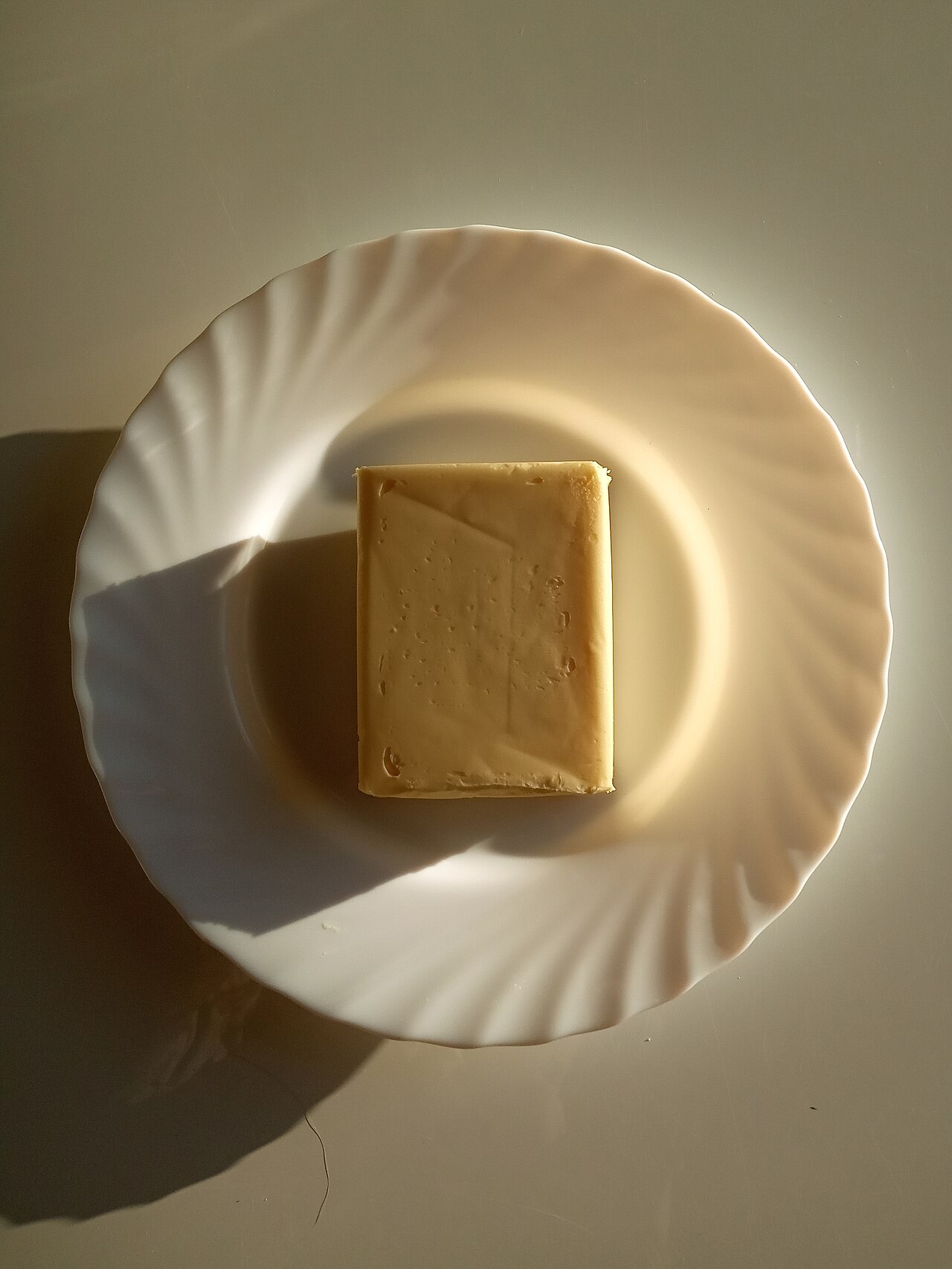
Fully separated cream cannot go back to whipped cream, but it can become butter. Keep beating or shaking until the butter clump firms up and the buttermilk separates fully. Drain the buttermilk, then knead the butter in a bowl of cold water to wash out the remaining milk.
Press out the water, add a pinch of salt if wanted, and chill the butter. The result is real butter, made by accident.
Save the buttermilk too. The thin, tangy liquid left after churning works in pancakes, waffles, and biscuits, where its acidity adds flavor and tenderness. An overwhipped bowl is not a loss.
It is a bowl that skipped ahead to the next recipe. The same kitchen science explains other surprises, such as why chocolate seizes when water touches it and why potatoes turn green.
Frequently asked questions
Can you fix overwhipped cream by adding more cream?
Sometimes, if the cream is only slightly grainy. Folding in a little fresh cold cream can smooth it. Once liquid has separated and butter lumps have formed, the cream cannot return to whipped peaks.
Why does cold cream whip better than warm cream?
Cold fat stays firm and builds a stable network around air bubbles. Warm fat softens and melts, so the network never firms up. Cold tools and cold cream also slow the slide into butter.
Is the liquid from overwhipped cream real buttermilk?
Yes. The liquid that separates when cream churns is buttermilk. It is thin and tangy, and it works well in pancakes, waffles, and biscuits.
How long does it take for cream to turn to butter?
In a shaking test reported by Scientific American, cream thickened into whipped cream within two minutes and turned into butter after five to 20 minutes of total shaking. Room-temperature cream changed faster than chilled cream.
The bottom line
Whipped cream turns to butter because whipping is churning. Gentle beating builds a fat network that traps air, and hard beating breaks that network and lets the fat clump into butter. Keep the cream cold, watch the peaks, and stop at stiff peaks.
If the bowl goes too far, finish it as butter and use the buttermilk. Nothing has gone wrong. The cream simply finished the job early.
Tags: whipped cream, butter, baking science, kitchen tips
Latest in Food
- Why Whipped Cream Turns to Butter If You Overwhip
- Why Chocolate Seizes When Water Touches It
- Why Do Potatoes Turn Green and What Is Solanine
- Why Does Sourdough Taste Sour and Where Does the Flavor Come From
Subscribe for weekly kitchen science explainers that make cooking easier.
Related stories

Why Does Bread Go Stale Faster in the Refrigerator?
Bread goes stale faster in the fridge because starch recrystallizes fastest near 4°C. Here is the retrogradation science and the right way

Baking soda and baking powder: what's the difference?
Baking soda is pure sodium bicarbonate; baking powder adds two dry acids for double-acting lift. Learn when to use each, plus exact

What Is the Maillard Reaction in Simple Terms?
The Maillard reaction is the browning chemistry between amino acids and sugars above 140 C that creates the crust, color, and rich flavor