
Why Egg White Turns White When Heated
Key takeaways
- Raw egg white is translucent because its folded proteins are dissolved evenly in water, letting light pass through.
- Heating to around 61°C unfolds the first proteins (ovotransferrin); ovalbumin, 54% of the protein, denatures near 80°C.
- Unfolded proteins bond into a dense mesh that scatters light, which the eye reads as solid white.
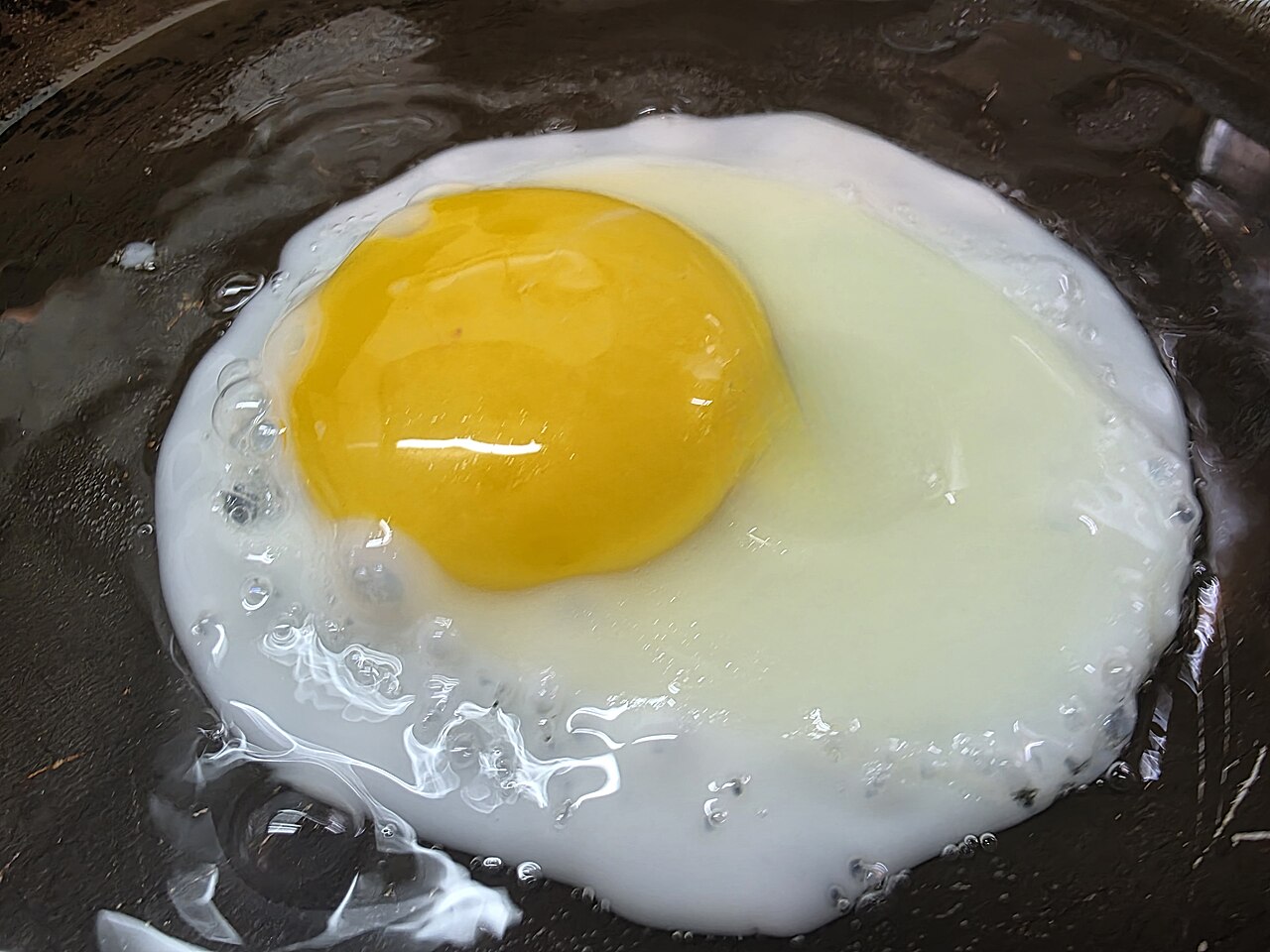
Image Credits: Wikimedia Commons / contributor
A raw egg white is nearly clear. Slide it into a hot pan and it turns opaque white within seconds, starting at the edges and racing inward. Nothing was added and nothing was removed.
The transformation is pure physics and chemistry, driven by the shape of proteins.
The egg white, or albumen, is about 90% water with proteins dissolved in it. Those proteins, mainly ovalbumin, ovotransferrin, and lysozyme, start out folded into precise three-dimensional shapes. Heat breaks the weak bonds holding those shapes, the proteins unravel, and the new tangle scatters light instead of passing it.
This article walks through that process step by step.
The starting point: folded proteins in water
In a raw egg white, each protein molecule is folded into a compact ball. Its water-loving parts face outward, which keeps it dissolved, and its water-fearing parts are tucked inside. Because the molecules are small and evenly dispersed, light passes through with little scattering.
The result looks clear, like a thin gel.
This folded state is called the native structure. It is held together by relatively weak forces: hydrogen bonds, ionic interactions, and van der Waals forces. Those bonds are strong enough to keep the shape at room temperature but fragile enough that modest heat can break them.
What heat does: denaturation
Heating gives the protein molecules kinetic energy. The polypeptide chains vibrate more and more violently until the weak bonds stabilizing the native shape give way. The protein unfolds.
That loss of shape is called denaturation.
Denaturation does not break the protein's backbone. It changes its physical properties without breaking the primary chain. The process is irreversible: once unfolded, the protein cannot refold into its original shape.
The critical detail is that different egg-white proteins have different melting temperatures, the point where each switches from folded to unfolded. Ovotransferrin is the most heat-sensitive major protein, making up about 12% of the egg-white protein. It begins to denature and coagulate at approximately 61 to 65°C.
That early denaturation is why egg whites start to thicken at relatively low cooking temperatures.
Ovalbumin is the heavyweight: roughly 54% of the protein content. It is far more heat-resistant and needs temperatures around 80°C to fully denature. During denaturation it exposes four internal sulfhydryl groups, which matter for the next stage.
From unfolded to solid: coagulation
Unfolding is only half the story. An unfolded protein has its water-fearing interior exposed, and those interiors stick to each other. Unfolded molecules bond together into aggregates, forming a solid network that traps water inside it.
That network is coagulation.
As heating continues, ovalbumin can form disulfide bridges, strong covalent bonds between its sulfhydryl groups. The 2012 ICALS conference study on heat and egg-white proteins measured this transition directly: coagulation and precipitation of the proteins appeared around 74°C over a 20-minute treatment, with transmittance falling as aggregates grew. After 20 minutes at 89°C, only about 23.4% of proteins remained soluble.
That cross-linked mesh is what makes a cooked egg white firm. The bonds between unfolded proteins are both covalent (disulfide bridges) and non-covalent (hydrophobic and electrostatic interactions), which is why the set is permanent.
Why white? The light-scattering answer
A dissolved, folded protein is smaller than the wavelength of visible light, so light slips past. A coagulated protein mesh is a tangle of aggregates large enough to scatter light in every direction. Scattered light across all wavelengths looks white to the human eye.
It is the same reason snow is white while ice is clear, and why milk is white while water is transparent. The underlying material did not gain pigment. The structure changed, and structure controls how light behaves.
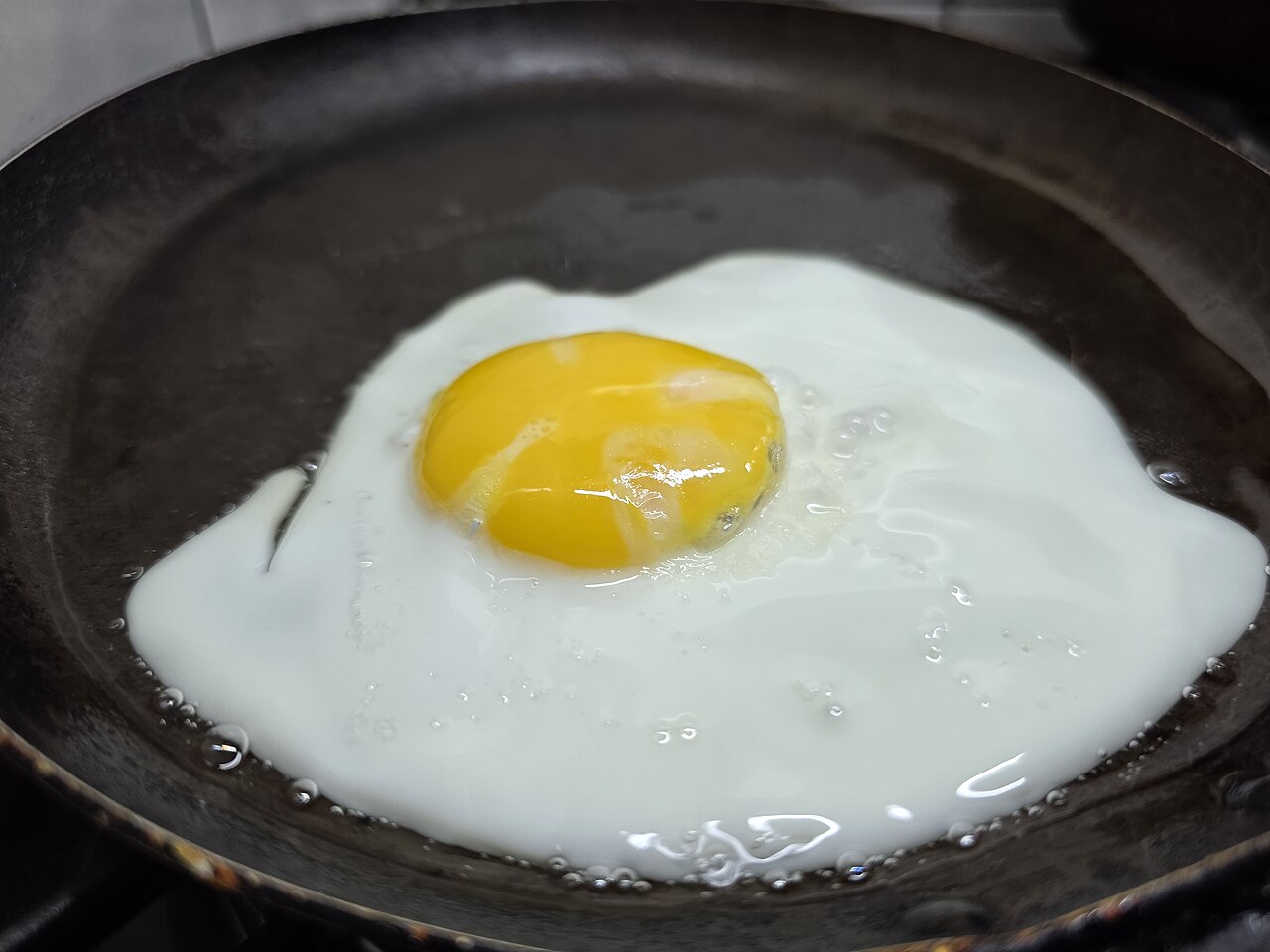
This also explains the texture gradient in a fried egg. The bottom and edges pass 61°C first as ovotransferrin denatures, turning cloudy. The interior follows as ovalbumin crosses 80°C and the full mesh forms.
A soft, translucent edge on a fried egg is simply a zone that has not finished denaturing yet.
Temperature is not the whole story
One nuance from food science: denaturation does not happen on cue at a single temperature. Chef and food scientist Cesar Vega has noted that thermal history matters.
Heat an egg at just 35°C and wait long enough, and proteins will still denature. Boiling denatures the proteins too, but it happens so fast that the texture differs from a slow, low-temperature cook.
Time and temperature trade off. High heat drives rapid unfolding and tight, rubbery aggregates. Gentle heat lets the mesh form slowly, trapping water evenly for a tender set.
That is why a fried egg can be leathery at the edges and silky in the middle: each zone lived a different thermal history.
Older eggs behave differently again. Over time, some ovalbumin converts into S-ovalbumin, an even more heat-stable form. That is why older eggs can need more heat or time to set firmly, and why they whip differently in a meringue.
Putting it to use in the kitchen
Understanding denaturation explains most egg-cooking rules of thumb. Low, slow heat for custards and soft scrambles keeps the mesh loose and creamy. High heat for fried eggs sets the white fast but risks a rubbery texture if the pan is too hot.
Salt and acid shift the chemistry slightly by changing how proteins interact, which is why a splash of vinegar in poaching water helps the white gather instead of feathering. And the famous green ring on an overcooked hard-boiled yolk is a related reaction: hydrogen sulfide from the white's proteins reacts with iron in the yolk at high heat and long times.
None of these tricks change the core event. Heat unfolds the proteins, the proteins tangle, the tangle scatters light. Clear becomes white, and liquid becomes solid.
Egg white science questions, answered
At what temperature does egg white turn white?
The first whitening starts near 61 to 65°C, when ovotransferrin denatures. The full opaque set needs about 74 to 80°C, where ovalbumin denatures and the protein mesh cross-links completely.
Is the change reversible?
No. Denaturation of egg-white proteins is irreversible. The unfolded proteins form new covalent and non-covalent bonds with each other, and there is no kitchen process that refolds them.
Why do older eggs cook differently?
Some ovalbumin converts to S-ovalbumin with age, a more heat-stable form. Older eggs need more heat or longer times to set firmly, and their whites are thinner to begin with.
Does whipping egg whites denature them?
Mechanical whipping also denatures proteins, exposing the same sticky interiors, which is why beaten whites form stable foam. Heat is just the faster, more dramatic route.
The bottom line
Egg white turns white when heated because heat unfolds its proteins and the unfolded proteins tangle into a mesh. Ovotransferrin starts the process near 61°C, ovalbumin finishes it near 80°C, and the resulting light-scattering network is what your eyes read as solid white. The same denaturation that changes the color also builds the firm texture.
Latest in Food
- The Maillard reaction explained in simple terms
- Why you should rest meat after cooking
- Why honey crystallizes and whether it is still good
- Why bread goes hard while crackers go soft
Subscribe for one food-science explainer every morning.
Related stories
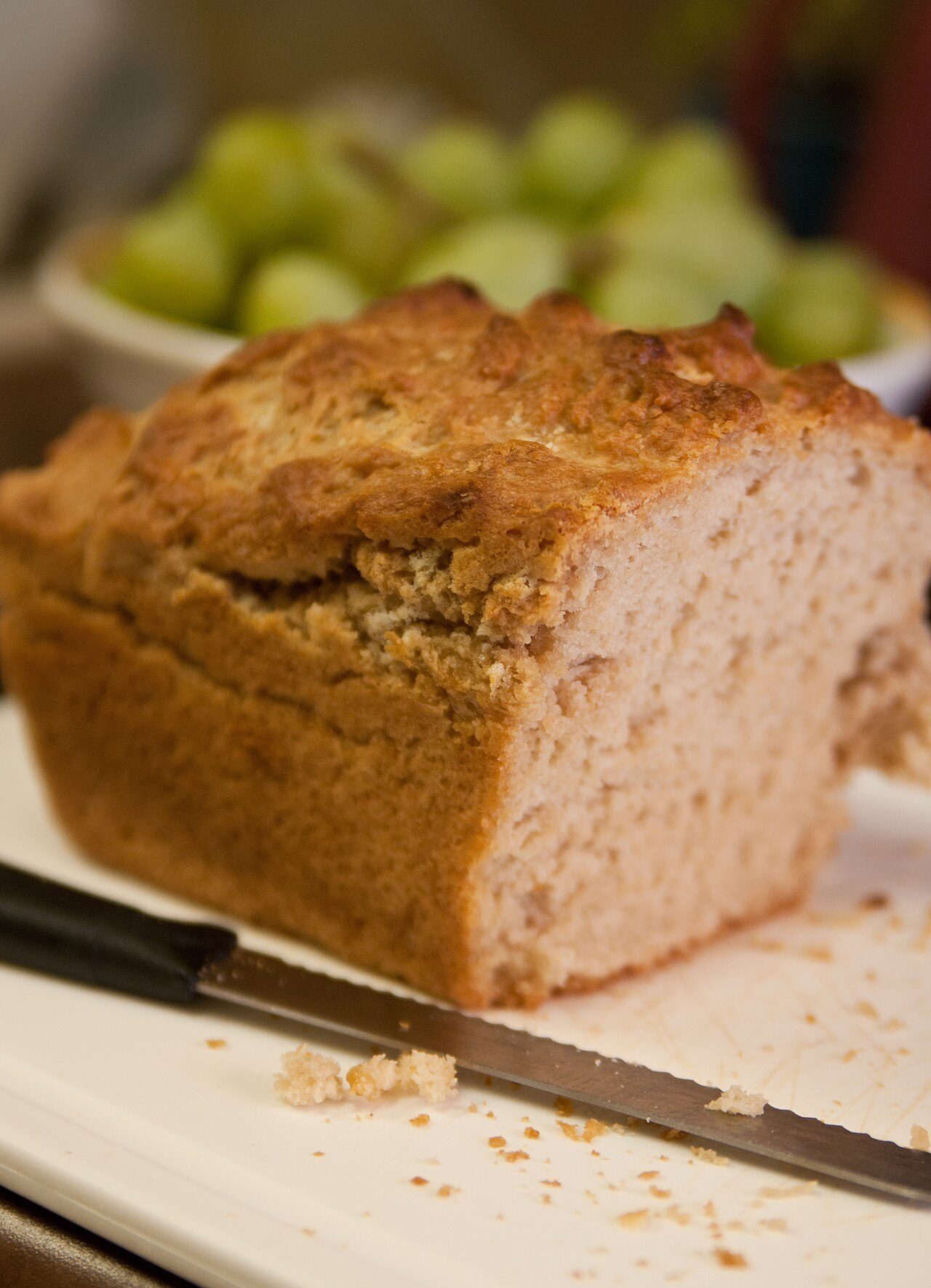
Why Does Bread Go Stale Faster in the Refrigerator?
Bread goes stale faster in the fridge because starch recrystallizes fastest near 4°C. Here is the retrogradation science and the right way
Baking soda and baking powder: what's the difference?
Baking soda is pure sodium bicarbonate; baking powder adds two dry acids for double-acting lift. Learn when to use each, plus exact
What Is the Maillard Reaction in Simple Terms?
The Maillard reaction is the browning chemistry between amino acids and sugars above 140 C that creates the crust, color, and rich flavor