
How to Fix an Oversalted Dish Without Starting Over
Key takeaways
- Salt dissolves evenly, so the only true fix is giving it more room: dilute, or add unsalted bulk.
- A potato does not remove salt from a dish, since the salt stays in the broth you eat.
- Acid, fat, and a little sweetness can soften saltiness, but they mask it rather than remove it.
One extra spoonful of salt can turn a good dinner into a wince. The pot still smells fine, the texture is right, and the whole dish feels one pinch from ruined. You do not need to throw it out.
Salt follows simple rules, and once you know them, most oversalted dishes can be rescued in minutes.
This article explains why salt is hard to undo, how to fix soups and sauces, how to fix grains and rice, how to fix meat and dry dishes, and why the potato trick fails.
Why salt is hard to undo
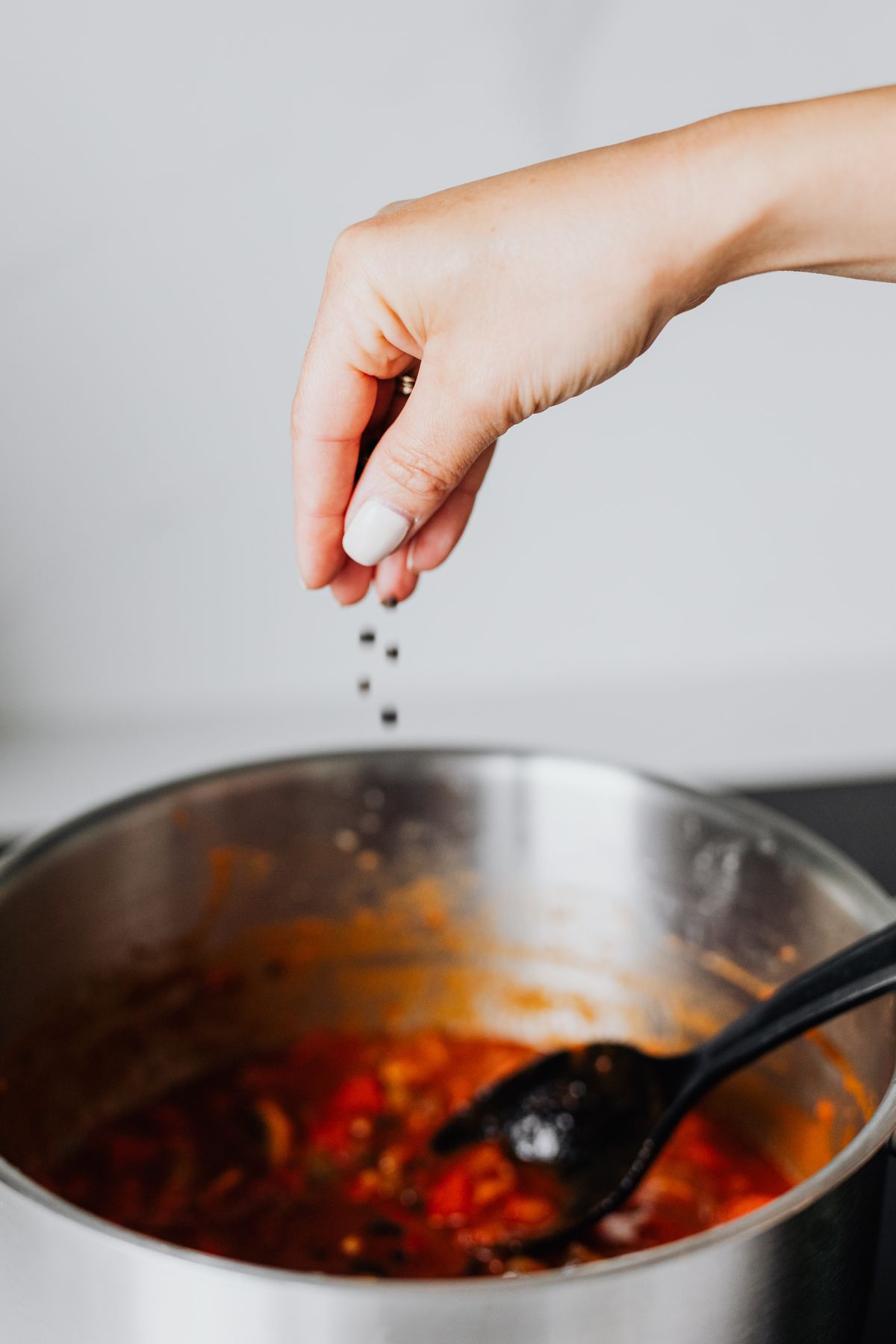
Salt is not a coating on food. Table salt dissolves into sodium ions and chloride ions in the liquid of a dish. Taste science describes salty taste as the perception of sodium ions entering taste cells in the mouth.
Once the salt has dissolved and spread, every spoonful carries roughly the same concentration.
That even spread is the core problem. You cannot scoop the salt back out, because it is no longer sitting in one place. You can only change the ratio of salt to everything else.
That leaves two real moves: add more unsalted food or liquid, or shift how salty the dish tastes with other flavours.
Think of it like food colouring in water. One drop colours a glass deep blue. The same drop in a bathtub barely tints the water.
The dye is still there. There is simply more water around it. Salt behaves the same way in a pot.
Timing matters too. Seasonings are usually added near the end of cooking, or even at the table, because their effect changes as a dish cooks. A soup that tasted right at noon can taste salty after an hour of simmering, because water evaporated while the salt stayed behind.
Taste again after reducing, not before.
Fix soups, stews, and sauces first
Liquid dishes are the easiest to save. Add unsalted liquid a little at a time, then taste. Water works.
Unsalted broth works better, since it adds flavour instead of thinning the dish. For cream soups, add milk, cream, or plain yoghurt to keep the richness.
Go slowly. Add a small splash, stir, wait a minute, and taste. You can always add more liquid.
You cannot take it back out. If the pot gets too full, ladle some broth into a bowl first, then add fresh unsalted liquid.
Bulk is the second lever. Add unsalted vegetables, beans, pasta, rice, or grains. They absorb salty broth and stretch the dish across more servings.
A soup that feeds four can feed six after a fix, which is a fine trade for saving dinner.
Acid helps once dilution has done the heavy lifting. A squeeze of lemon juice or a splash of vinegar shifts attention away from salt. Sour taste comes from hydrogen ions, a separate signal from salty taste, and the contrast can make a dish taste balanced again.
Add acid one teaspoon at a time. Too much turns a salty soup into a sour one.
Fat softens the edges. A spoonful of unsalted butter, a swirl of cream, or a drizzle of olive oil coats the mouth and dulls salt perception. This works best in sauces and creamy soups.
Keep the fat unsalted, or you add back what you are trying to remove.
Fix grains, rice, and pasta
Grains hold salt on their surface and inside the cooked grain. Rinsing helps with the surface part. If your rice or pasta is oversalted, drain it and rinse briefly under water, then return it to the pot with a little fresh unsalted liquid.
The stronger fix is the same as for soup: add more. Cook a second batch of rice or pasta with no salt at all, then mix the two batches. The salt spreads across the full volume, and the dish lands closer to normal.
This is also the moment to serve the dish with plain sides, such as bread or unsalted vegetables, so each bite balances out.
For a salty grain salad, add unsalted bulk that fits the dish. Chopped cucumber, tomatoes, herbs, or beans add volume without salt. A squeeze of lemon and a glug of oil then pull the flavours together.
Taste after each addition, since cold dishes hide salt less than hot ones.
If you cook rice that never turns sticky or burnt, remember that salted cooking water is part of the problem. Start the rescue batch with plain water and no salt at all.
Fix meat and dry dishes
Dry dishes have no broth to dilute, so the fix changes. For meat in a salty sauce, lift the meat out, fix the sauce with the liquid methods above, then return the meat. The sauce carries most of the salt, and it is far easier to adjust on its own.
For a salty roast or grilled meat with no sauce, slice it thin and serve it with unsalted sides. Plain rice, potatoes, bread, or a fresh salad spread the salt across each bite. A squeeze of citrus or a spoonful of unsalted yoghurt on the side helps too.
For a salty marinade caught before cooking, rinse the meat under cool water and pat it dry. This removes surface salt. It will not pull salt out of meat that has brined for hours, but it still helps with a quick marinade that went too far.
For salty ground meat dishes, such as a too-salty filling, mix in unsalted bulk. Extra vegetables, beans, or plain breadcrumbs stretch the filling. Then rebalance with acid or a little sweetness.
Check the dish after it rests for five minutes, since flavours settle as it cools.
Meat that has been salted early can still turn out well. Learning why you should rest meat after cooking helps here, because resting lets juices redistribute and gives you a fair taste before you season again.
What about the potato trick
The potato trick says a raw potato dropped into a salty pot will soak up the salt. It sounds tidy, and it is mostly wrong. A potato does absorb some salty liquid as it cooks.
But when you eat the soup, you eat that liquid too, potato or no potato.
Food writers who tested the idea put it plainly: salt is not a flavour you can cancel or neutralise. You can only dilute it by adding volume. A potato adds a little volume, and that is all it does.
A cup of broth or a handful of beans does the same job better.
The trick survives because it feels like a fix. The cook does something, the pot simmers, and hope does the rest. A better use of the same ten minutes is adding unsalted broth, tasting, and adjusting acid.
That is a fix you can measure.
Prevent it next time
Taste as you go, and season in small pinches. It is easy to add salt. It is impossible to remove it.
Salt early dishes lightly, then finish seasoning after reducing, resting, or cooling, when the final concentration is clear.
Watch salty ingredients. Broth, soy sauce, cheese, cured meats, and canned beans all carry salt of their own. If a recipe includes two or three of them, cut the added salt in half and taste before adding more.
A dish with bacon and salted broth rarely needs a full pinch of its own.
Use coarse salt with care. A teaspoon of fine table salt and a teaspoon of coarse kosher salt hold different amounts of salt by weight. Switching salts without adjusting the amount is a common way to overshoot.
Pick one salt for cooking and learn how it behaves.
Keep notes for repeat dishes. Write down how much salt you used and whether the dish needed more or less. Two lines in a notebook beat a ruined pot next month.
Over time, your hands learn the right pinch for each pan you own.
Good seasoning is part of why cooked food tastes rich. The Maillard reaction builds deep flavour when food browns, and salt then sharpens it. Seasoning should lift those flavours, not drown them.
Frequently asked questions
Does sugar fix a salty dish?
A pinch of sugar can soften saltiness, but it does not remove salt. Use half a teaspoon at a time in sauces and tomato dishes. Stop when the dish tastes balanced, not sweet.
Will adding water ruin my soup?
A small amount will not. Add unsalted broth in small steps and taste each time. If the soup gets thin, simmer it briefly after the salt is fixed, or thicken it with a spoonful of starch mixed in cold water.
Can I fix a dish that is both salty and spicy?
Yes. Dilution helps both. Add unsalted bulk or liquid, then add fat or a little sweetness to calm the heat.
Acid can sharpen heat, so go easy on lemon or vinegar in spicy dishes.
How do I know when to give up on a dish?
If the dish is so salty it stings, and doubling the volume still leaves it harsh, repurpose it. A salty stew can become a small flavour base for a much larger pot, or a salty filling can stretch into a big batch of soup.
The bottom line
Salt spreads evenly, so the fix is to spread it thinner. Add unsalted liquid or bulk, taste after each step, then balance with acid, fat, or a pinch of sweetness. Skip the potato trick and trust dilution instead.
Season lightly next time, taste late in cooking, and let the dish speak before you reach for the salt again.
Tags: cooking, salt, kitchen fixes, sauces
Latest in Food
- How to cook rice that is never sticky or burnt
- Why you need to rest meat after cooking
- How the Maillard reaction makes food taste better
- How to sharpen a kitchen knife without a sharpener
Subscribe for one practical cooking guide each week.
Related stories

Why Does Bread Go Stale Faster in the Refrigerator?
Bread goes stale faster in the fridge because starch recrystallizes fastest near 4°C. Here is the retrogradation science and the right way

Baking soda and baking powder: what's the difference?
Baking soda is pure sodium bicarbonate; baking powder adds two dry acids for double-acting lift. Learn when to use each, plus exact

What Is the Maillard Reaction in Simple Terms?
The Maillard reaction is the browning chemistry between amino acids and sugars above 140 C that creates the crust, color, and rich flavor