
Why Does Meat Shrink So Much When You Cook Burgers
Key takeaways
- Burgers shrink because heat drives off water, renders out fat, and tightens proteins.
- Ground beef typically loses 25-30% of its weight during cooking, mostly fat and moisture.
- Leaner blends shrink differently than fatty ones, and high heat plus overworking the meat makes it worse.
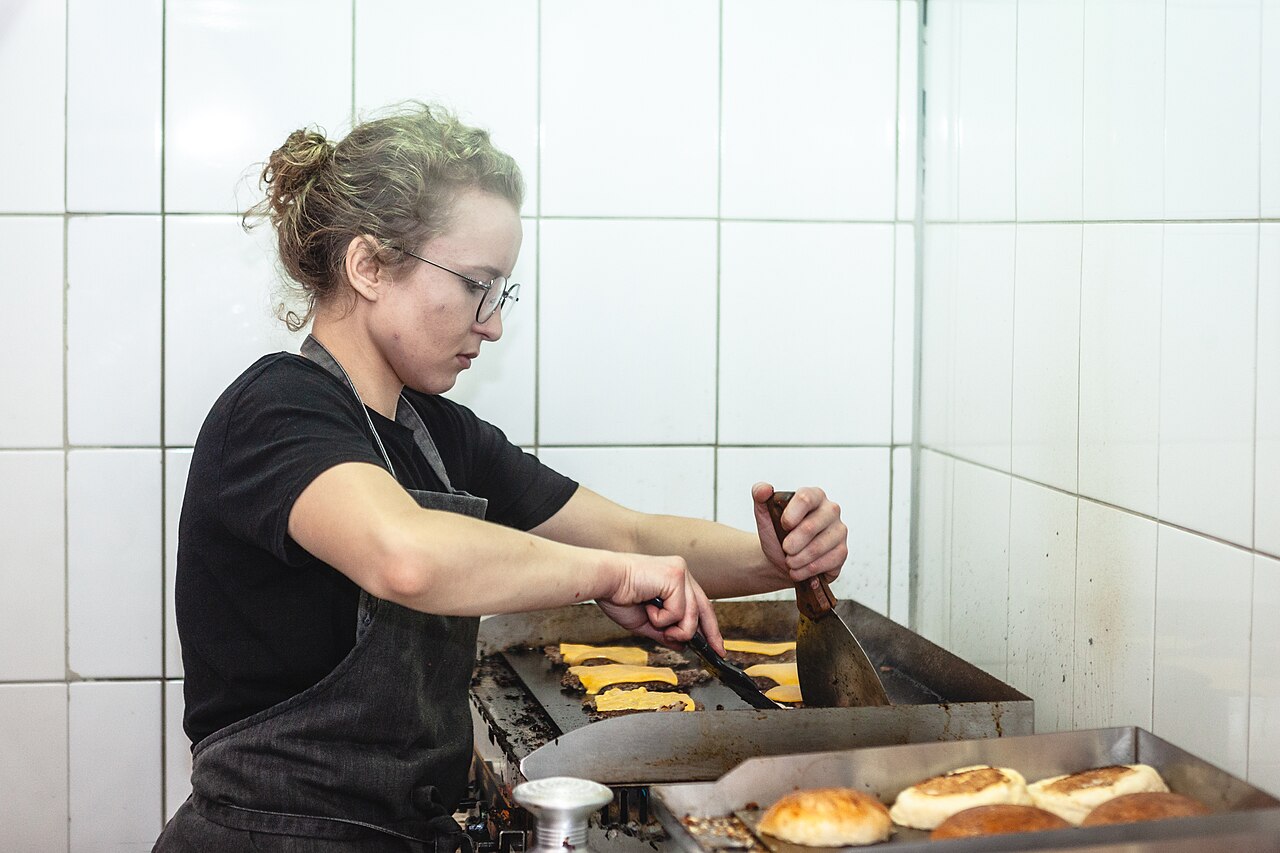
Smashburger patties on a hot griddle: heat drives off water, renders fat, and tightens proteins. Image: Wikimedia Commons.
Image Credits: Wikimedia Commons
You form four generous patties, sized to the bun with room to spare. Ten minutes later they are thick little pucks swimming in a pan of rendered fat, and the buns dwarf them. It happens to everyone, and it is not your imagination.
Meat shrinks when it cooks because heat sets off three separate processes at once: water escapes as steam, fat melts and drains away, and the proteins themselves tighten like tiny fists. Burgers show it worst because ground meat exposes so much surface to the heat.
This article takes a closer look at why meat shrinks so much when you cook burgers, including the water, fat, and protein mechanics, how much shrinkage to expect, and how to keep patties closer to their original size.
Water leaves first
Raw meat is mostly water. Mashed's cooking-science explainer (published July 2026) cites the USDA figure that meat is about 75% water, varying by type and cut. When heat hits, that water begins converting to steam at 212°F (100°C) and escapes, carrying both weight and volume with it.
WeightWatchers' raw-to-cooked conversion guide puts the general shrinkage rate for meat, poultry, and fish at about 25%. Their example is concrete: 16 ounces of raw boneless, skinless chicken breast yields about 12 ounces cooked. For burgers, the effect concentrates because a patty's large surface area gives steam many exits.
Higher heat accelerates the loss. WeightWatchers notes that higher cooking temperatures produce greater shrinkage, so gentler heat keeps more moisture in the meat. This is one reason a burger blasted on a screaming-hot grill ends up smaller than one finished over moderate indirect heat.
Fat renders and drains away
The second process is rendering: solid fat melting into liquid and leaving the patty. A restaurant-style burger might be 20% fat, as Mashed notes, and a large share of a burger's volume loss comes from that fat dripping out onto the grill or pooling in the pan.
Fat content decides how dramatic the loss is. Metro Cooking Dallas's ground-beef guide reports typical weight loss of 25-30% for ground beef, with higher-fat blends losing more because more fat renders off. Their math on a 73/27 blend (73% lean, 27% fat) estimates 28 to 36% weight loss from 5 pounds raw.
Leaner blends like 90/10 lose less to rendering but can shrink more from moisture loss and protein tightening, which is why they often turn out dry.
Cooking method matters too. Metro Cooking Dallas notes that grilling or broiling at high temperatures leads to more weight loss than gentler methods, because high heat accelerates both rendering and evaporation. For a burger, the fat that renders into the pan is gone for good, because fat changes how heat moves through food, much as capsaicin behaves differently with fat, which is part of why chillies burn your mouth.
Proteins tighten and squeeze
The third process is invisible but decisive. Meat proteins, mainly the muscle proteins myosin and actin, change shape with heat. First they denature, meaning their structures unfold, then they coagulate, linking into a tighter, harder network.
Mashed describes the result plainly: the protein structure gets tighter and more solid, and the process is irreversible at high heat, which is why an overcooked steak turns tough and can never be made tender again.
In burgers this tightening does visible work. Kitchenouse's grilling guide explains that the sides of the patty contract faster than the center, which creates the familiar bulging middle and overall shrinkage that can reach 20%. The proteins are literally wringing the patty like a sponge, squeezing out both water and melted fat.
A food scientist quoted by WCBE (in a 2012 piece on burger proteins) added the molecular detail: when myosin denatures, the proteins cross-link into a gel, and too much cross-linking produces noticeable shrinkage and a rubbery texture. In ground beef, grinding has already destroyed the collagen sheaths, so the myosin behavior dominates. Lean meat with little fat to interfere gives those proteins free rein, which is why a 95%-lean burger can shrink into a dry puck unless the cook compensates with added moisture.
Two common habits make it worse. Salting the meat before shaping draws out moisture early and exacerbates shrinkage, per Kitchenouse. And overworking the ground beef when forming patties packs the proteins tightly together, so they contract harder on the grill.
Handle the meat as little as possible, and never press a patty flat with the spatula: pressing just forces out the juices you want to keep.
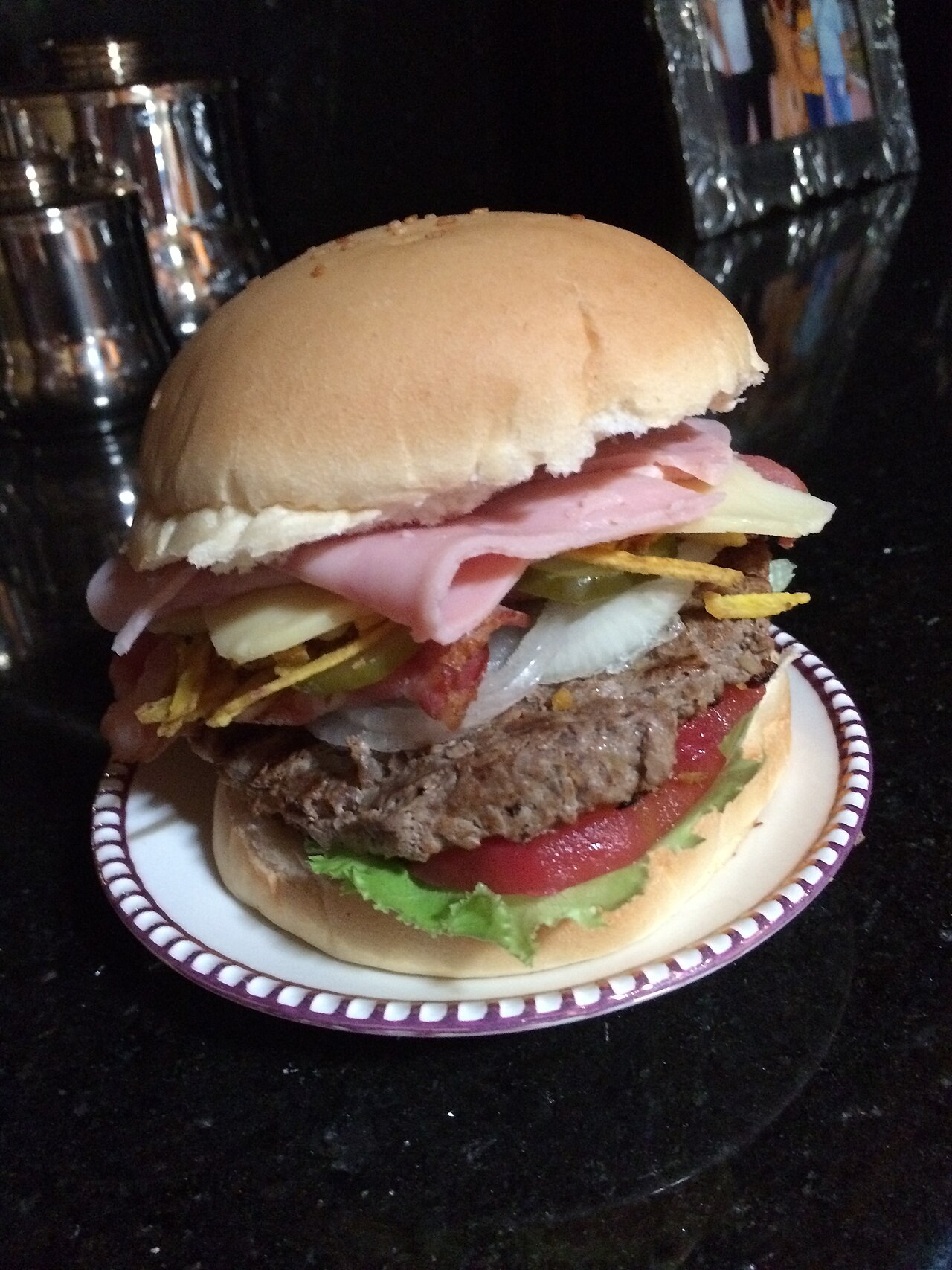
A finished homemade burger: the cooked patty comes off the grill thicker and smaller than the raw one that went on. Image: Wikimedia Commons.
How to keep burgers closer to bun size
Start by forming patties wider than the bun and pressing a shallow dimple into the center. The dimple acts as a pressure valve, letting the middle expand instead of puffing up while the edges contract, a tip Kitchenouse recommends.
Choose the right blend for the job. An 80/20 lean-to-fat ratio is the classic burger blend: enough fat to keep the patty juicy and limit protein over-tightening, not so much that half the patty renders away. Going much leaner means compensating with gentle handling and careful temperature control.
Cook with two heat zones. Kitchenouse suggests preheating a two-zone grill to 400-500°F, searing over direct heat, then finishing over indirect heat. Flip once, do not press, and pull the burgers at a safe internal temperature: 160°F (71°C) for ground beef, the figure ShunGrill's grilling guide cites for food safety.
Rest the patties for a few minutes before serving. Resting lets the juices redistribute instead of running out onto the plate at first bite. It will not restore lost size, but it keeps what remains juicy.
None of this eliminates shrinkage entirely. A burger that loses nothing in the pan was probably not cooked at all. But the difference between a 10% shrink and a 30% shrink is the difference between technique and accident.
How much do burgers shrink on the grill?
Expect roughly 20-30% loss in diameter and weight for a standard 80/20 patty cooked over direct heat. Higher-fat blends and hotter grills push toward the upper end. Forming patties about an inch wider than the bun is the standard compensation.
Should I buy extra meat to account for shrinkage?
Yes. WeightWatchers' conversion math is the practical rule: if you want four 4-ounce cooked burgers, buy 20 ounces of raw meat. For 80/20 ground beef, plan on losing about a quarter of the raw weight.
Does salting burgers early really make them shrink more?
It contributes. Salt dissolves some proteins and draws out moisture before cooking, which tightens the texture and increases shrinkage. Salt the formed patties just before they hit the grill instead of mixing salt through the raw meat.
Why does my burger puff up in the middle?
Because the edges contract faster than the center as proteins tighten, squeezing the middle upward. The shallow thumbprint dimple in the center of each raw patty counteracts this, so the finished burger cooks flat and fits the bun.
The bottom line
Meat shrinks so much when you cook burgers because heat attacks from three directions: water steams out of the 75%-water muscle, solid fat renders into liquid and drains away, and the myosin and actin proteins denature, cross-link, and squeeze the patty smaller. Together they typically cost 25-30% of the raw weight. You cannot stop physics, but you can negotiate with it: pick an 80/20 blend, handle the meat gently, salt late, dimple the center, cook over two heat zones, and never press the patty.
Latest in Food & Cooking
New to the lab? Get one plain-English explainer like this in your inbox every morning.
Related stories
Why Does Bread Go Stale Faster in the Refrigerator?
Bread goes stale faster in the fridge because starch recrystallizes fastest near 4°C. Here is the retrogradation science and the right way
Baking soda and baking powder: what's the difference?
Baking soda is pure sodium bicarbonate; baking powder adds two dry acids for double-acting lift. Learn when to use each, plus exact
What Is the Maillard Reaction in Simple Terms?
The Maillard reaction is the browning chemistry between amino acids and sugars above 140 C that creates the crust, color, and rich flavor