
Why eggs crack when you boil them in water
By Rive News / Research desk | Rive News / Published October 29, 2026 at 9:00 AM PKT
Key takeaways
- Cold eggs dropped into boiling water crack because the shell, the contents, and the air pocket expand at different rates.
- The air pocket at the wide end of the egg expands as it heats, pushing outward against the shell.
- Starting eggs in cold water, keeping the boil gentle, and giving eggs room prevents most cracks.
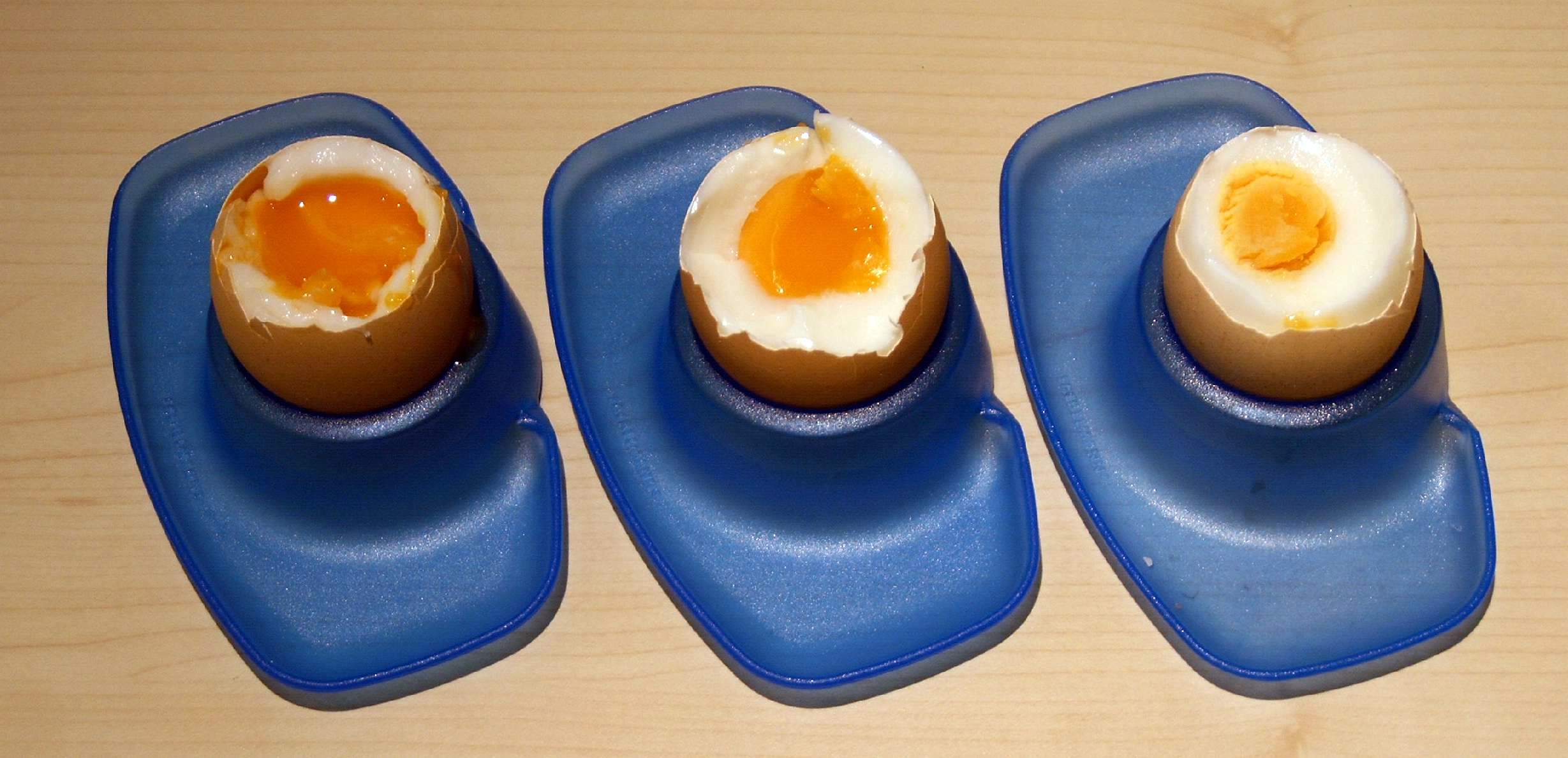
[Four boiled eggs cut open, showing yolks at different stages of cooking.] Photograph: Wikisearcher
Image Credits: Wikimedia Commons
An egg cracks in boiling water when pressure inside the shell beats the strength of the shell itself. Three forces usually combine: sudden heat, expanding air, and physical knocks in a rolling boil. None of them means the egg was bad, and a crack during cooking does not automatically ruin breakfast.
This article explains how each force works, why fridge-cold eggs are the most vulnerable, and which habits genuinely prevent cracks, including starting temperature, pot size, and heat level.
The shell is strong but not flexible
An eggshell is mostly calcium carbonate, a hard mineral that protects the contents but does not stretch. The shell is also full of microscopic pores, tiny openings that let gases pass in and out. Those pores matter because they are one of the few ways pressure inside the egg can escape.
Inside the shell sit two thin membranes, and between them at the wide end is a small air pocket called the air cell. The air cell grows as the egg ages because moisture slowly leaves through the pores. Older eggs therefore have larger air cells, which is one reason they are easier to peel but can also be more prone to cracking.
KitchPrep sums up the core problem in one line: eggs crack in boiling water because rapid heat and air-cell pressure stress the shell and its membranes. When that stress finds a weak spot, the shell splits.
Heat shock hits first
The most common trigger is temperature shock. A fridge-cold egg goes straight into water near 100 degrees Celsius, and the outside of the egg heats far faster than the dense yolk inside. The shell and the outer white expand quickly while the center lags behind, and that uneven expansion stresses the shell.
The Times of India describes the same mechanism, noting that a cold egg placed directly into rapidly boiling water expands too quickly and creates pressure that breaks the shell. Letting eggs sit out for 15 to 20 minutes before cooking narrows the temperature gap and lowers the risk.
Starting eggs in cold water works even better for many cooks. The egg and the water heat together, so expansion happens gradually instead of all at once. The shell still faces pressure, but it faces it slowly, which gives the structure time to cope.
The air pocket pushes from inside
Heat shock is only half the story. As the egg warms, the air trapped in the air cell expands, and expanding gas needs room. The shell is rigid, so the pressure has nowhere to go except against the shell and membranes.
This is why pricking the wide end of the egg with a pin helps some cooks. The pinhole gives the expanding air an escape route, so pressure never builds to the breaking point. The hole is tiny, and the membranes still protect the white, so little or no white leaks out.
Age changes the math here. A fresh egg has a small air cell and less gas to expand. An older egg has a bigger air cell and more gas pushing outward, which is one reason older eggs can crack more readily even though they peel more easily.
The rolling boil adds impact
Even a healthy shell can fail if it gets knocked around. A violent rolling boil throws eggs against the pot walls and against each other, and each bump can turn a hairline flaw into a full crack. Crowding the pot makes this worse because eggs have no room to move without colliding.
The Times of India notes that eggs bumping against each other in the pot is a separate cause of cracking, apart from heat. A gentle simmer cooks just as well and keeps the eggs far calmer.
Thin spots and invisible fractures from handling or transport add to the risk. Heat finds the weakest point, so an egg that looked fine in the carton can still split along a flaw you never saw. That is bad luck as much as bad technique, and no method prevents every crack.
What actually prevents cracks
The most reliable fix is the cold start. Place eggs in a single layer in a pot, cover them with cold water, then bring the water up to heat. Once it boils, turn the heat down to a gentle simmer instead of a rolling boil.
Give eggs space. A single layer with room between eggs means fewer collisions, and enough water to cover the eggs by about an inch keeps the temperature even. Lower eggs into hot water with a spoon if you prefer a hot start, rather than dropping them in from a height.
Vinegar and salt are often recommended, but their role is limited. They do not stop the shell from cracking.
If a crack does form, vinegar or salt in the water can help leaking white set faster, which keeps the egg tidier. They are damage control, not prevention.
Room temperature eggs, a pinprick at the wide end, and a gentle simmer together cover all three causes: less shock, less trapped pressure, and fewer knocks. No single trick does all three jobs alone.
Is a cracked boiled egg safe to eat
A crack that happens during cooking is usually fine. The egg was cooking in boiling water, which kills most surface bacteria, and the white sets quickly around the break. The Times of India advises avoiding a cracked boiled egg only if the egg was already cracked before cooking, or if it smells sour or looks unusual when peeled.
Peeling a cracked egg can be messier, and a little white may escape into the pot and turn wispy. That white is still cooked egg, just untidy. If the shell broke before cooking and the egg sat unrefrigerated or smells off, throw it out rather than guessing.
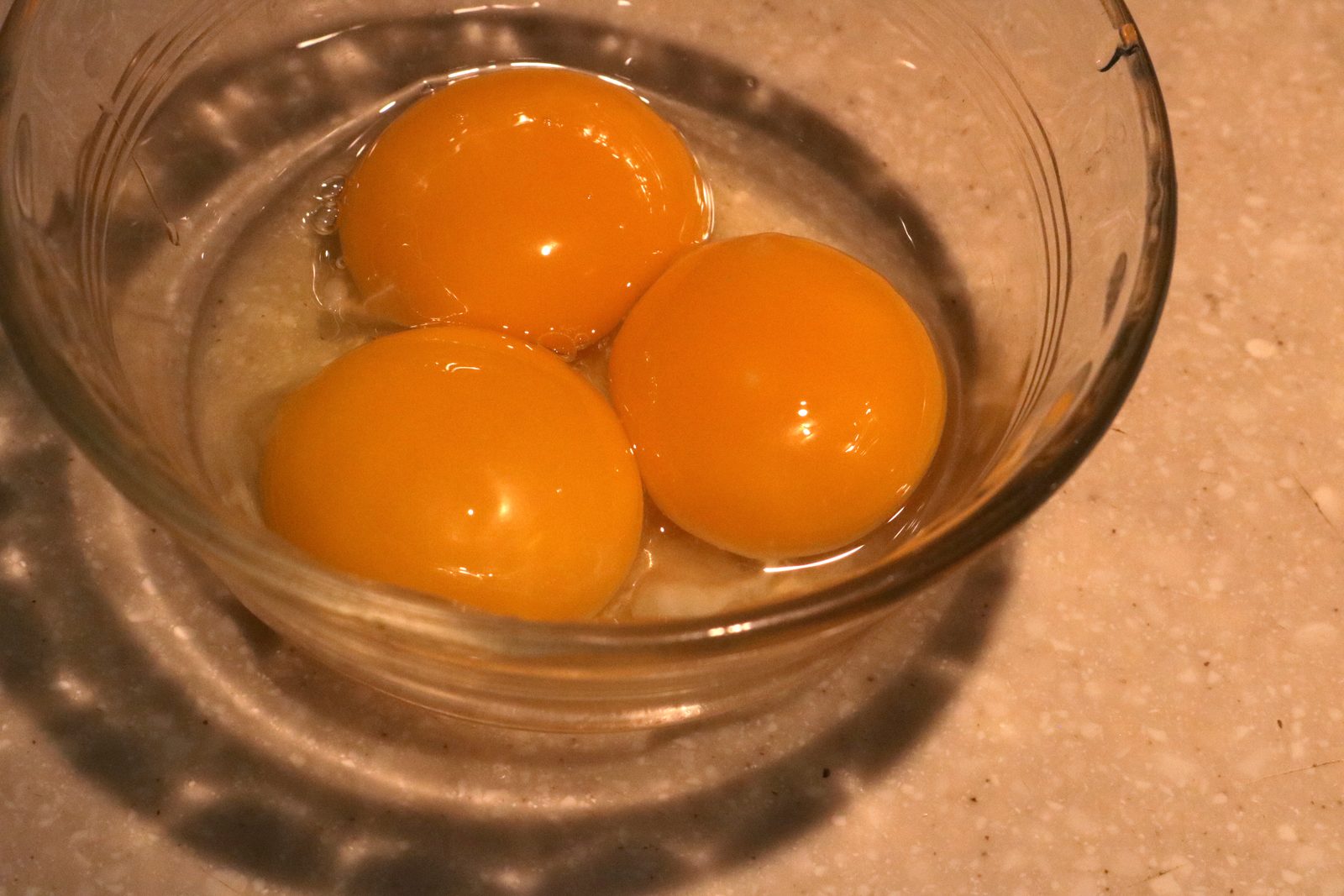
[A carton of raw eggs, the starting point for a pot of boiled eggs.] Photograph: claralieu
Image Credits: Wikimedia Commons
Frequently asked questions
Why do my eggs crack even when I start with cold water
A cold start removes heat shock but not air pressure or impact. Older eggs have larger air cells, and a vigorous boil can still knock them together. Try a pinprick at the wide end, a roomier pot, and a gentler simmer.
Does adding vinegar to the water prevent cracking
No, vinegar does not strengthen the shell or stop pressure from building. It can help white leaking from an existing crack set faster, so the egg looks neater. Real prevention comes from temperature control and gentle handling.
Why do older eggs crack more but peel more easily
Older eggs lose moisture through the shell pores, which enlarges the air cell and loosens the bond between white and membrane. The larger air cell means more expanding gas during cooking, while the looser bond makes peeling easier afterward.
Should I throw away an egg that cracks while boiling
Not usually. If the crack happened during cooking in boiling water and the egg smells normal, it is fine to eat. Discard it if the egg was cracked before cooking, was stored badly, or smells sour when peeled.
The bottom line
Eggs crack in boiling water because heat, trapped air, and bumps attack the shell at the same time. A cold egg in a rolling boil faces the worst version of all three. Starting in cold water, keeping the simmer gentle, and giving eggs room in the pot removes most of the risk.
You will still lose an egg now and then to a hidden flaw, and that is normal. But the difference between a pot full of cracked shells and a pot of clean ones usually comes down to temperature, space, and patience rather than luck.
Tags: eggs, boiling, food science
Rive News is the research desk behind this article, covering everyday food science from published sources.
Related
- White vs brown eggs: what the shell color really means
- Why hard boiled eggs get a green ring around the yolk
- How to tell if eggs are still fresh without cracking them
- Why egg whites whip into foam but yolks never do
Subscribe for one everyday food-science explainer in your inbox each week.
Rive News publishes explainers from named public sources; corrections are noted on the article page.
Related stories
Why Does Bread Go Stale Faster in the Refrigerator?
Bread goes stale faster in the fridge because starch recrystallizes fastest near 4°C. Here is the retrogradation science and the right way
Baking soda and baking powder: what's the difference?
Baking soda is pure sodium bicarbonate; baking powder adds two dry acids for double-acting lift. Learn when to use each, plus exact
What Is the Maillard Reaction in Simple Terms?
The Maillard reaction is the browning chemistry between amino acids and sugars above 140 C that creates the crust, color, and rich flavor