
Why egg whites whip into foam but yolks never do
By Rive News / Research desk | Rive News / Published October 24, 2026 at 9:00 AM PKT
Key takeaways
- Whisking unravels egg white proteins, which then link into a network that traps air bubbles and holds the foam's shape.
- Yolks are loaded with fats and emulsifiers that crowd the same surfaces but cannot build the network, so foam collapses.
- Even a trace of yolk can ruin a meringue, which is why clean bowls, clean whisks, and careful separation matter so much.
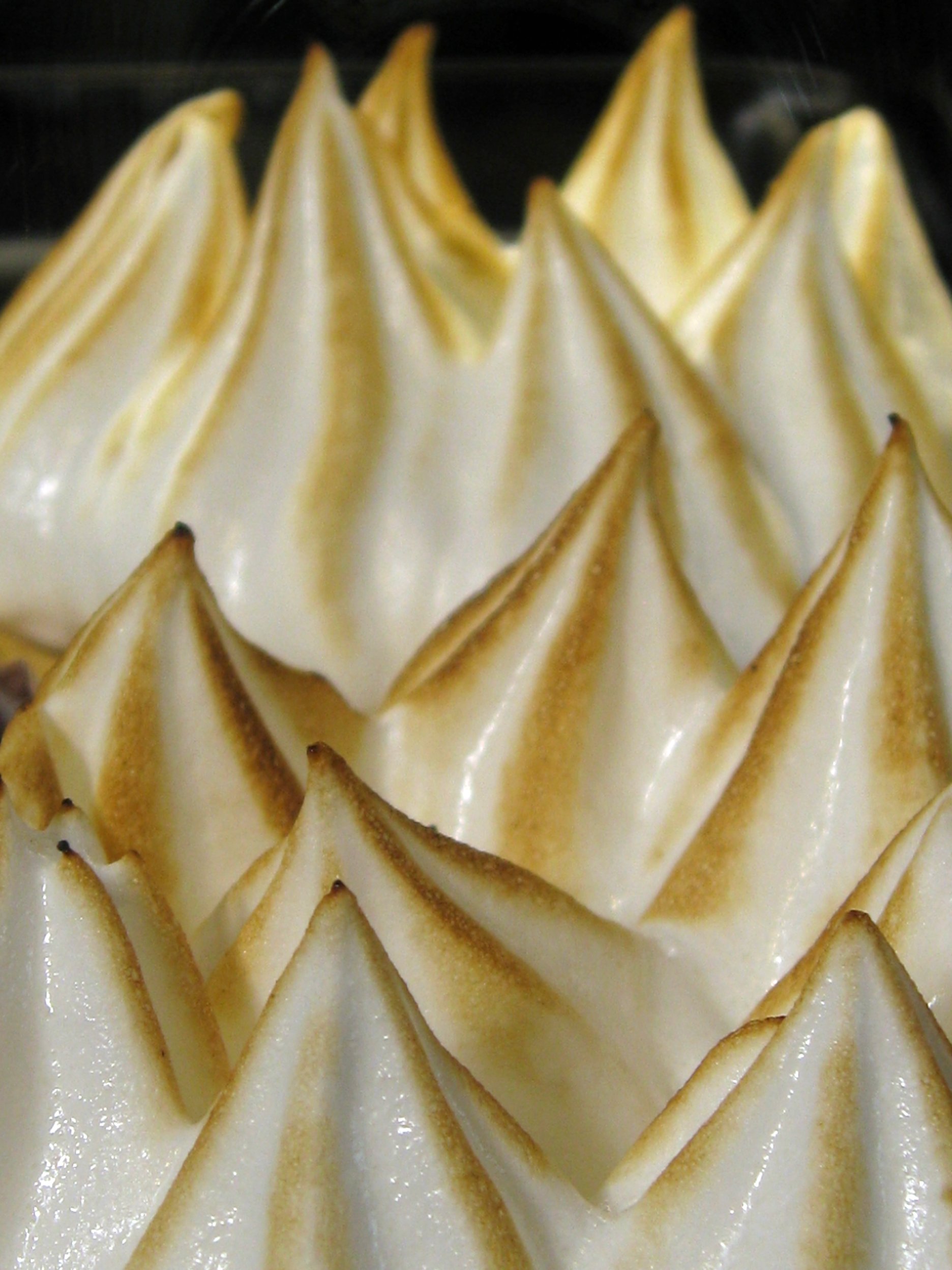
[Toasted meringue whipped into tall golden-brown peaks.] Photograph: Ruth Hartnup
Image Credits: Wikimedia Commons
Whisk egg whites for a few minutes and they transform from a slippery liquid into a cloud that stands in peaks. Whisk a yolk for an hour and you get a slightly frothy yolk.
Same egg, opposite behavior. The difference comes down to chemistry, not effort.
Egg whites are built for foaming. Their proteins are designed to unfold under mechanical stress and link together into a scaffold that traps air.
Yolks are built for something else entirely: delivering fat and nutrients to an embryo. Those fats and emulsifiers actively sabotage the protein network a foam needs.
This article explains what happens inside a whipped egg white, the two proteins that do the heavy lifting, why yolk fat is fatal to foam, the stages from froth to stiff peaks, why copper bowls and a squeeze of lemon juice help, and the mistakes that flatten a meringue.
What whisking does to egg white proteins
An egg white is roughly 85 to 90 percent water with about 10 percent protein dissolved in it. When you whisk, the mechanical beating forces air into the liquid and physically unravels the proteins, a process chemists call denaturation. Each unraveled protein exposes two ends: a hydrophobic end that fears water and prefers air, and a hydrophilic end that loves water.
The proteins line up at the boundary between air and water, hydrophobic ends pointing into the bubbles and hydrophilic ends pointing into the liquid. Then the unraveled proteins start bonding to each other, forming a cross-linked network around every bubble. That network is the scaffold that stiffens the foam and keeps the air trapped instead of escaping upward, as the food-science site SciFood explains.
Water alone cannot hold a foam. Shake plain water and the bubbles burst in seconds, because water's high surface tension squeezes the air out.
Proteins solve this by sitting between the air and the water and locking together into structure. Whipped cream works on the same principle, except it uses milk fat globules instead of protein to build the walls around the bubbles.
Ovalbumin and ovomucin: the division of labor
Two proteins in the white carry most of the load. Ovalbumin makes up about 54 percent of the albumen's protein and drives the initial foam volume when the whites are whipped, according to Prepared Foods and the Agriculture Institute's egg chemistry notes. Ovomucin holds onto the air bubbles during heating and stretches elastically as the bubbles expand, which matters when the foam goes into the oven.
This division of labor is why meringues survive baking. Whipped raw, the albumin protein forms the initial mass of tiny air bubbles.
But air expands when heated, and without backup the network would tear apart and collapse. Ovalbumin coagulates in the oven's heat, forming its own network inside the meringue and turning the wet foam into a dry, stable structure, pastry chef Bo Friberg explains in The Professional Pastry Chef. Beaten whites alone can increase in volume by up to eight times, a number Friberg cites from professional practice.
Other proteins play supporting roles. The interaction between lysozyme and globulin contributes to foam formation, though individually most minor proteins foam poorly. The system works because the team of proteins, not any single one, builds the scaffold together.
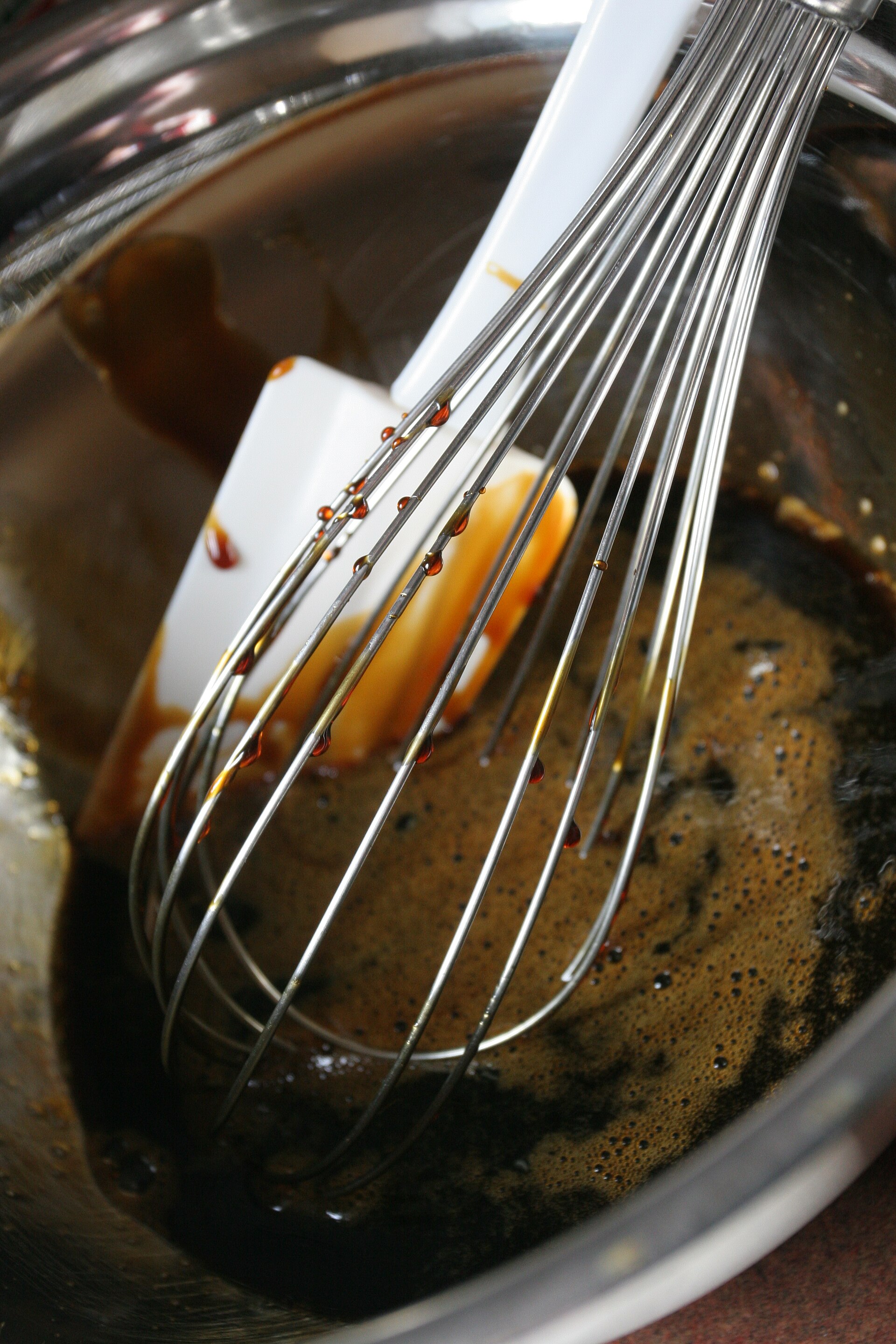
[A balloon whisk and rubber scraper resting in a stainless steel bowl.] Photograph: Marc-Lautenbacher
Image Credits: Wikimedia Commons
Why yolks can never do this
Yolks fail at foaming for the opposite reason whites succeed. Egg yolks are packed with fats, including triglycerides and cholesterol, plus powerful emulsifiers like lecithin.
Both fats and emulsifiers rush to the air-water interface just like the proteins do, but they cannot cross-link into a structural network. They occupy the space where the protein scaffold should form, and the foam has nothing to stand on.
SciFood's foam guide puts it bluntly: fats and yolk traces are foam killers, because emulsifiers at the interface will not bond with the proteins and provide no structure. Oils also latch onto the exposed hydrophobic cores of the unraveled proteins, blocking them from linking with each other.
This is why the classic rule about separating eggs is so strict. A single drop of yolk, a greasy fingerprint on the bowl, or a trace of oil on the whisk can prevent a meringue from ever reaching full volume.
The contaminant does not need to be visible. At the molecular scale, even small amounts of fat outcompete the proteins for the bubble surfaces.
The stages from froth to stiff peaks
Whipping is a continuum, and each stage has a use. At first the whites turn foamy with large, loose bubbles. Keep whisking and the bubbles shrink and multiply as the protein network tightens.
Soft peaks form next: the foam holds a shape but the tips curl over. This is the stage many recipes want for folding into mousses and souffles, since a softer foam mixes in more easily.
Continue to stiff peaks and the foam turns glossy and firm, holding sharp points that stand straight when the whisk is lifted. This is meringue territory.
Past stiff peaks lies over-whipping: the protein network squeezes so tight that it forces water out, and the foam turns grainy and weeps. SciFood notes that adding one fresh white and whisking gently can sometimes rescue an over-whipped batch by giving the proteins new partners to bond with.
Why copper bowls and acid help
Old French kitchens swore by copper bowls for whipping whites, and the chemistry backs them up. Egg white proteins contain cysteine amino acids, which carry sulfur atoms that can form strong disulfide bonds with each other. Too many of these bonds make the network overly tight, which is exactly what over-whipping does.
Copper ions released from the bowl bind to those sulfur atoms, blocking the disulfide bonds from forming. With one bonding pathway removed, the proteins cannot tighten into the grainy, split texture of an over-whipped foam. Silver bowls work the same way, if your budget stretches that far.
Acid works through a related trick. Lemon juice or cream of tartar lowers the pH, flooding the mixture with hydrogen ions.
The sulfur atoms on the cysteine residues then keep their hydrogen atoms and cannot form disulfide bonds either. Harold McGee, the food-science writer behind On Food and Cooking, recommends about 2 milliliters of lemon juice per egg white, added before whisking begins. Timing matters for sugar, too: it slows protein denaturation, so add it gradually after soft peaks have formed rather than at the start.
Mistakes that flatten a meringue
Most failures trace back to contamination or timing. The classic error is yolk in the whites, so separate each egg over a small bowl before adding the white to the main batch. A plastic bowl that once held oily food can sabotage a foam even after washing, since fat clings to plastic; glass, metal, or ceramic bowls are safer.
Adding sugar too early weighs down the foam before the network forms, producing a dense, heavy meringue that never reaches full volume. Salt, sometimes added out of habit, actively weakens the protein interactions the scaffold depends on, per SciFood.
And under-whipping leaves the network too weak to hold air, while over-whipping squeezes the water out of it. Watch the peaks, not the clock.
The payoff for getting it right is remarkable. Chefs figured out in the late 1600s that prolonged whisking of egg whites produced a stable foam, and the technique gave the world souffles, meringues, mousses, macarons, and pavlovas. A little protein chemistry goes a long way, much like the kitchen chemistry behind why onions make you cry or why milk curdles with heat and acid.
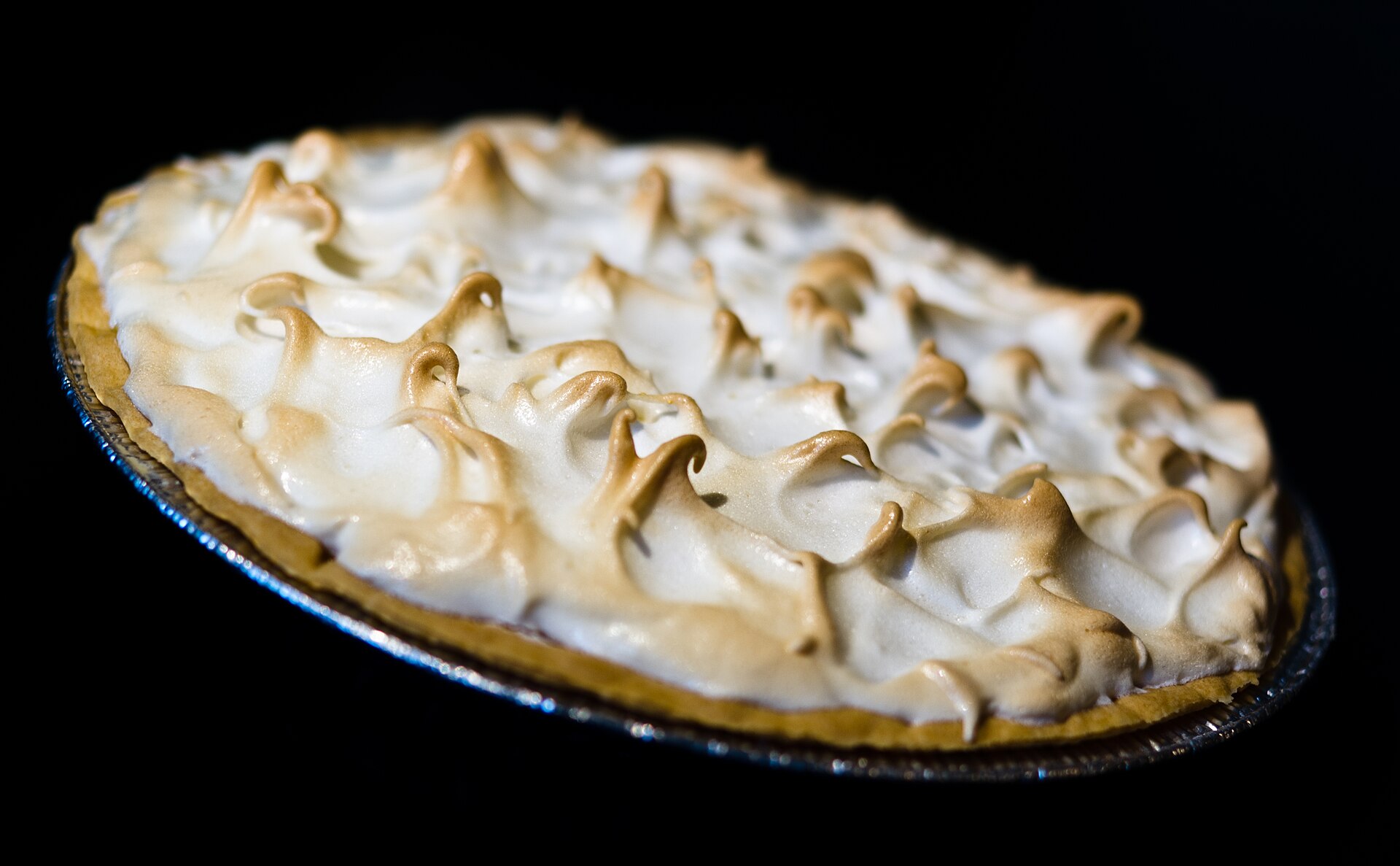
[A lemon meringue pie with golden toasted peaks.] Photograph: Scott Akerman
Image Credits: Wikimedia Commons
Frequently asked questions
Can I whip whole eggs into a foam?
Whole eggs foam weakly compared to whites alone, because the yolk's fats interfere with the protein network. Some recipes, like genoise sponge, whip whole eggs with sugar for a lighter foam, but it never reaches the volume or stability of pure whites.
Does the age of the egg matter?
Yes. Fresher eggs have thicker whites with more intact proteins, which whip into more stable foam. Very old eggs have thinner whites that produce weaker, less stable foams, so use fresh eggs for meringues.
Why does my meringue weep or bead?
Weeping usually means under-baking, undissolved sugar, or humidity. Over-whipped whites also leak water. Bake meringues low and slow, make sure the sugar fully dissolves, and avoid humid days when possible.
Is a copper bowl really necessary?
No. It helps prevent over-whipping, but a pinch of cream of tartar or a few drops of lemon juice achieves a similar stabilizing effect in any clean bowl.
The bottom line
Egg whites whip because their proteins unfold and link into an air-trapping network, with ovalbumin driving the volume and ovomucin guarding it through the heat of the oven. Yolks cannot do this because their fats and emulsifiers block the network from forming. Keep everything scrupulously fat-free, add sugar after soft peaks, and the foam will reward you.
Topics: egg science, meringue, baking, kitchen chemistry
Rive News is an independent research desk that explains how everyday systems work, from banking rails to household science. Articles cite public sources and link to the lab's related explainers.
Related
- Why do onions make you cry?
- Why does milk curdle when heated or mixed with acid?
- Why do some cakes sink in the middle?
- What is the difference between granulated and caster sugar?
Get one clear explainer like this in your inbox every morning. Subscribe to the Rive News newsletter.
Standards: every claim links to a named source; corrections are published promptly and never made silently.
Related stories
Why Does Bread Go Stale Faster in the Refrigerator?
Bread goes stale faster in the fridge because starch recrystallizes fastest near 4°C. Here is the retrogradation science and the right way
Baking soda and baking powder: what's the difference?
Baking soda is pure sodium bicarbonate; baking powder adds two dry acids for double-acting lift. Learn when to use each, plus exact
What Is the Maillard Reaction in Simple Terms?
The Maillard reaction is the browning chemistry between amino acids and sugars above 140 C that creates the crust, color, and rich flavor