
Why milk forms a skin when it is heated
By Rive News / Research desk | Rive News / Published October 28, 2026 at 9:00 AM PKT
Key takeaways
- The skin is a film of denatured milk proteins mixed with fat, dried by surface evaporation.
- It forms as milk heats and keeps forming as dishes cool, especially in soups and puddings.
- Stirring, covering the surface, or gentle heat all prevent it by breaking the same chain.
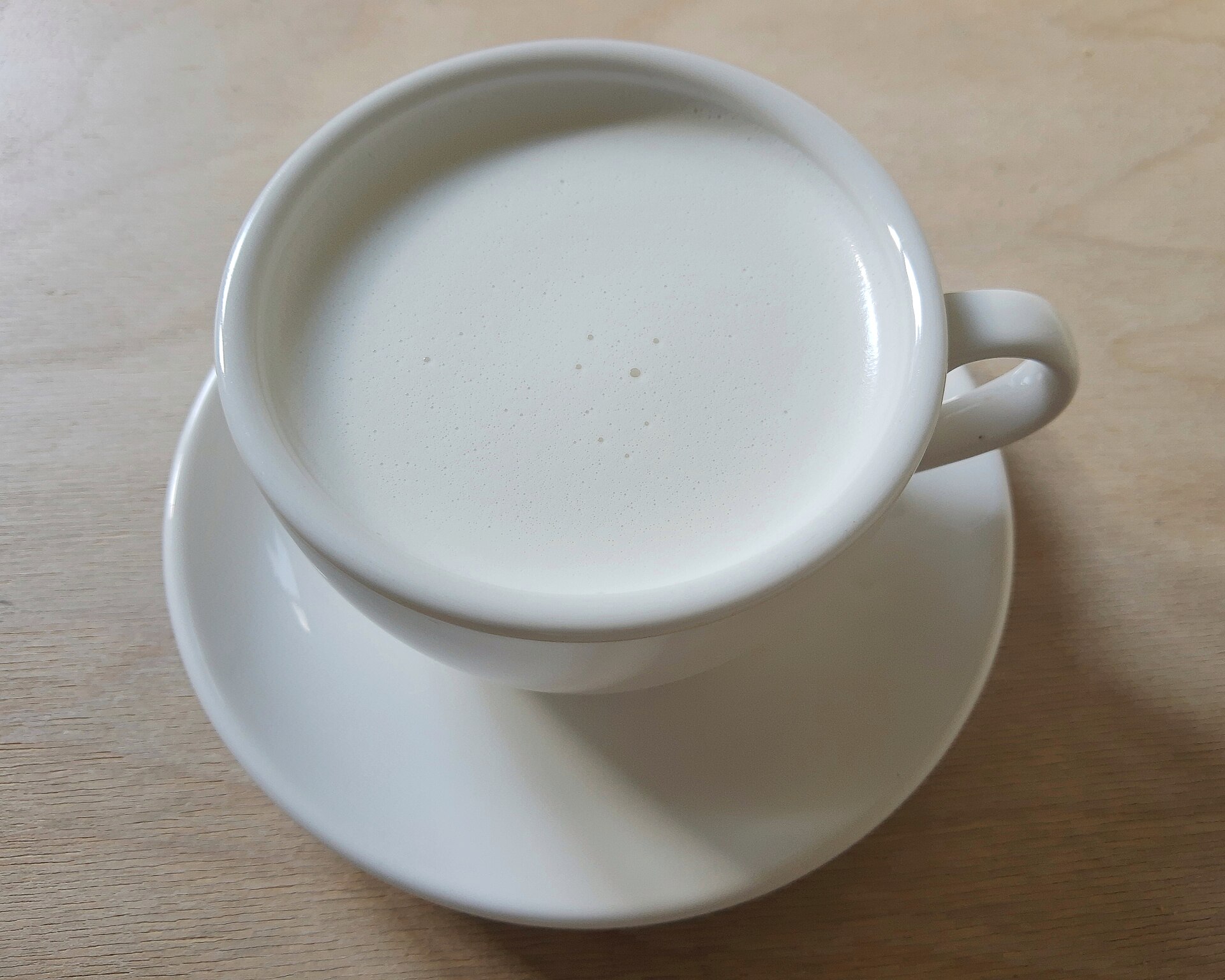
[Steamed milk in a cup.] Photograph: Wikimedia Commons contributor
Image Credits: Wikimedia Commons
Heat a pan of milk and leave it alone, and a thin, wrinkled film soon stretches across the surface. Lift it with a spoon and it holds together like a delicate sheet. It looks odd, and many cooks throw it away, but it is simply milk itself, rearranged by heat.
The film even has a name: lactoderm, or milk skin. This article explains how it forms, including protein denaturation, evaporation, fat, why it causes boil-overs, and how to stop it or use it on purpose.
Milk is mostly water with proteins and fat
Milk looks uniform in a glass, but it is a mixture. Water carries proteins, fat globules, milk sugar, and minerals. Two protein groups matter most here: casein, which forms the bulk of milk protein, and whey proteins such as beta-lactoglobulin.
At fridge temperature those proteins stay folded and dissolved, and the fat stays dispersed in tiny globules. Nothing films over because nothing has been pushed out of shape. Heat changes that balance, starting at the surface where water escapes fastest.
The Kitchn explains the two forces at work: as milk heats, water evaporates and the other elements become more concentrated, while the proteins casein and whey tend to coagulate once the milk reaches about 150 degrees Fahrenheit. Both forces together build the skin.
Heat unfolds proteins, and the surface dries them out
Denaturation is the first step. Heat shakes proteins out of their folded shapes, exposing parts that were tucked inside. Those unfolded proteins stick to each other and to fat globules, forming a loose mesh.
Evaporation finishes the job at the surface. Water leaves the top layer fastest, so the protein and fat mesh there becomes concentrated and dries into a film. Wikipedia describes the result directly: when milk is boiled, soluble milk proteins are denatured and then coagulate with milk fat, forming a sticky film across the top that dries by evaporation.
That drying explains the texture. A fresh film is soft and stretchy, while one left standing turns leathery as more water leaves it. The skin also keeps forming as a dish cools, which is why puddings and hot chocolate develop a second skin after serving if left uncovered.
Why whole milk skins more than skim
Fat content changes how obvious the skin becomes. Delighted Cooking notes that raw milk tends to form the thickest skin, since its fat and protein globules are dense, while homogenization in commercial milk breaks those globules down. Whole milk, with its fat intact, usually forms the most pronounced skin among pasteurized varieties.
Skim milk can still form a thin protein film, but with little fat to bind into it, the layer stays weaker. Fat gives the mesh body, so richer milk makes a tougher, more visible skin. That is also why cream-topped dishes and rich soups skin so readily.
Container shape plays a part too. Wikipedia notes that skin thickness varies with milk temperature, container shape, and the amount of milk in the container. A wide, shallow pan exposes more surface to evaporation than a tall, narrow pot, so it skins faster.
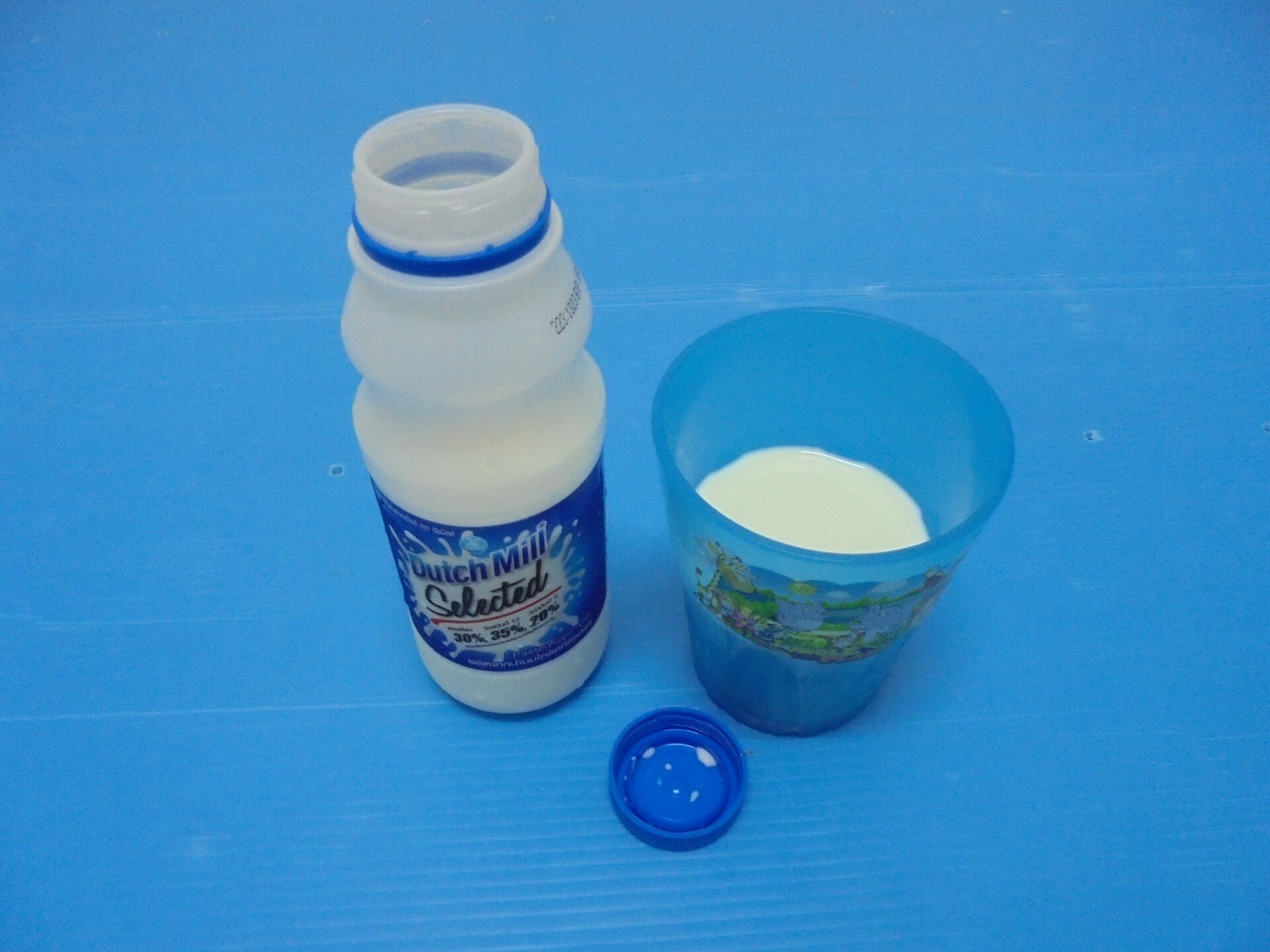
[A cup of milk beside a bottle of milk.] Photograph: Wikimedia Commons contributor
Image Credits: Wikimedia Commons
The skin is also why milk boils over
A milk skin is more than a cosmetic annoyance. Once it dries, it seals the surface like a lid. Steam rising from below cannot escape freely, so pressure builds under the film.
Delighted Cooking describes the chain: the skin forms a hard barrier, steam builds up beneath it, and the rising temperature pushes the liquid up until it boils over. Anyone who has turned away from a milk pan for a few seconds has met this sequence.
That is why milk seems to go from calm to overflowing with no warning. The surface looks still because the skin hides the bubbling below, and then the whole layer lifts at once. Stirring breaks the seal before pressure can build, which is why a watched, stirred pot behaves better.
Is the skin safe to eat
Yes. The skin is cooked milk protein and fat, and its nutritional value is not destroyed by denaturation. Wikipedia notes that the layer does not need to be discarded and can be consumed, since denaturation does not affect the protein's nutritional value.
Taste is a separate question, and cultures disagree about it. Some cooks prize the skin on puddings and hot chocolate as a treat, while others find its texture unpleasant. In some cuisines the skin is deliberately collected for dishes, which shows the film is an ingredient, not a defect.
Food safety still applies as usual. A skin on milk that has been left out for hours at room temperature does not make old milk fresh, and sour or off-smelling milk should be discarded whether it has a skin or not.
How to prevent a skin from forming
Stirring is the simplest fix. The Kitchn recommends stirring milk as it heats and continuing to stir occasionally as it cools, which breaks up protein clumps and keeps temperature even. A broken mesh cannot dry into a continuous sheet.
Covering the surface works on a different step. Pressing plastic wrap or wax paper directly against a cooling pudding stops evaporation from the surface, so the mesh stays moist instead of drying. A lid on a pot helps less, since steam still escapes around the edges, but a direct cover seals the surface itself.
Gentle heat helps too. A double boiler or low flame heats milk evenly and slowly, giving less evaporation and less violent protein clumping. Keep the milk below a rolling boil, and take it off the heat as soon as steam rises and small bubbles ring the edge.
How to use the skin on purpose
Some dishes treat the skin as a feature. Double skin milk, a Cantonese dessert, deliberately forms and layers milk skins for a silky, delicate texture. The method heats milk, lets a skin form, and builds the dessert around it rather than fighting it.
Home cooks can borrow the idea in small ways. Leaving a skin on a baked custard or a mug of hot chocolate gives a chewy top layer that some people enjoy peeling off and eating. If the household is divided, serve the skin on the side: lift it onto a small plate for whoever wants it.
The trick is choosing deliberately. Skin by accident is a surprise at the table, while skin on purpose is a texture decision. Either way, the science is the same, and the cook stays in control.
Frequently asked questions
Why does milk skin form in the microwave too?
Microwaves heat unevenly and still evaporate surface water, so the same protein and fat mesh forms. Stirring halfway through and covering the mug loosely helps, though a microwave skin can form quickly because hot spots reach coagulation temperature fast.
Does the skin mean the milk has gone bad?
No, a skin on freshly heated milk is normal and not a spoilage sign. Spoiled milk smells sour, tastes off, or curdles into lumps rather than a smooth film. Judge freshness by smell and taste, not by the presence of a skin.
Can I just stir the skin back into the milk?
Yes, stirring breaks the film and mixes the protein and fat back into the liquid. The texture may stay slightly thicker, but the milk is fine to drink or cook with. Straining removes the film entirely for a smooth result.
Why does skin form again after I remove it?
Removing one skin does not stop the process, since hot milk keeps evaporating and denaturing protein at the surface. A new film forms as long as the milk stays hot and undisturbed. Stirring or covering the surface is needed to stop repeat skins.
The bottom line
Milk skin is protein and fat, unfolded by heat and dried by evaporation into a thin film. It is harmless, it explains boil-overs, and it can be prevented by stirring, covering the surface, or heating gently. Once the chain is clear, the film stops being a mystery and becomes a choice: stir it away, cover it up, or serve it as a treat.
Tags: milk, protein, cooking, kitchen science
Rive News's research desk covers food science and everyday cooking questions, checking each claim against published sources before writing.
Related
- Why milk curdles when added to hot tea
- Why milk curdles when heated or mixed with acid
- Why onions make you cry
- What the Maillard reaction is in simple terms
Subscribe for one food science explainer each week.
Rive News publishes researched explainers with named sources and a corrections note on every article.
Related stories
Why Does Bread Go Stale Faster in the Refrigerator?
Bread goes stale faster in the fridge because starch recrystallizes fastest near 4°C. Here is the retrogradation science and the right way
Baking soda and baking powder: what's the difference?
Baking soda is pure sodium bicarbonate; baking powder adds two dry acids for double-acting lift. Learn when to use each, plus exact
What Is the Maillard Reaction in Simple Terms?
The Maillard reaction is the browning chemistry between amino acids and sugars above 140 C that creates the crust, color, and rich flavor