
Why Do Pancakes Go Flat, and How to Make Them Fluffy?
Key takeaways
- Overmixing builds gluten and knocks out air, which is the top cause of flat pancakes.
- Fresh baking powder or baking soda supplies the carbon dioxide bubbles that lift the batter.
- Gentle mixing, steady medium heat, and one flip give the tallest, tenderest stack.
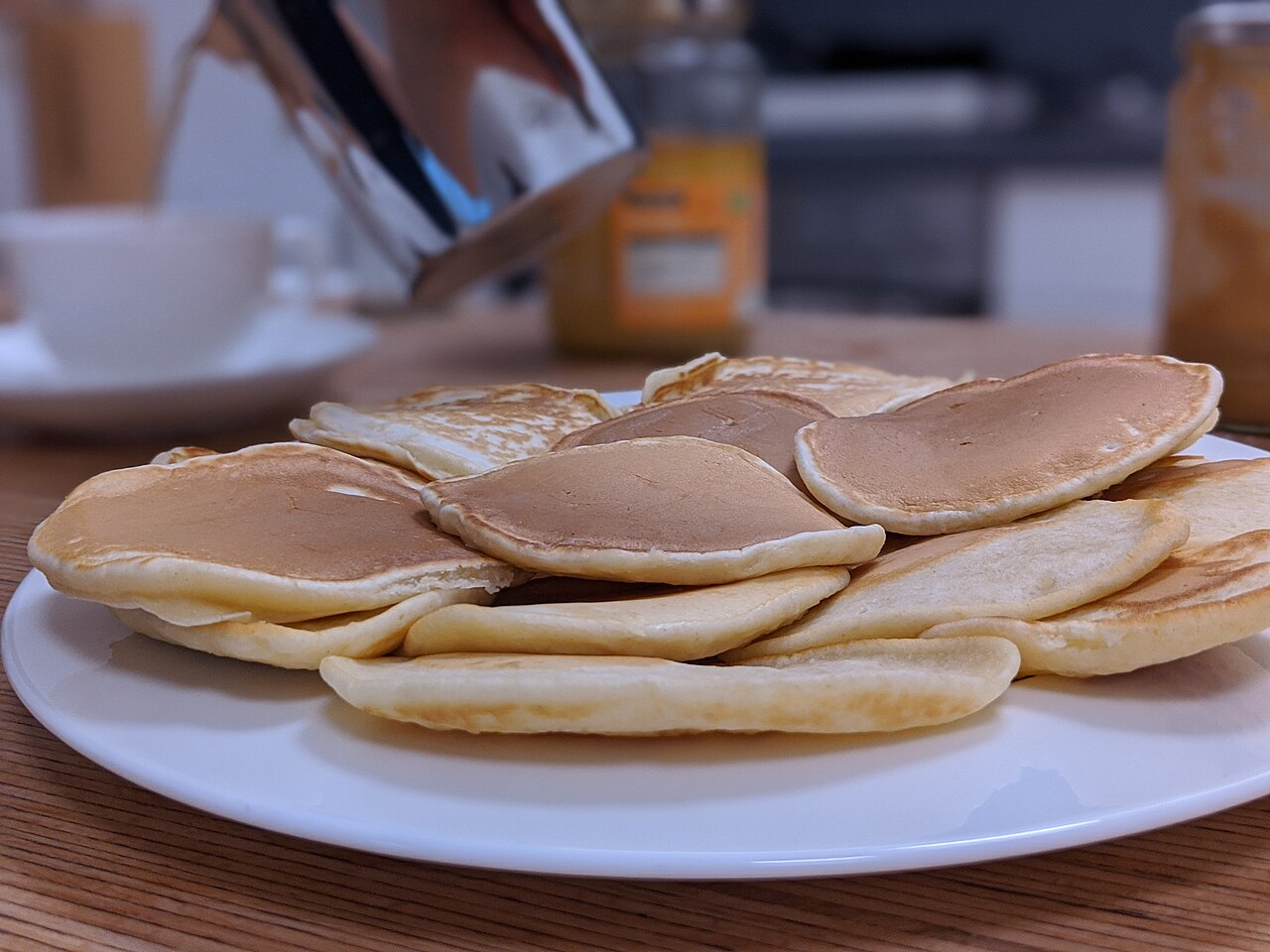
Pancakes go flat when the batter cannot hold the gas that should lift it. Baking powder and baking soda release carbon dioxide bubbles in the batter. As the pancake cooks, those bubbles expand, and the starch and egg proteins set around them into tall pockets.
Anything that removes the bubbles, or builds a tough structure that cannot stretch around them, leaves a flat pancake.
The good news is that most flat batches come from a short list of fixable habits. Overmixing is first. Stale leavening is second.
Wrong heat and early flipping follow close behind.
This article explains why pancakes go flat, how to make them fluffy, and how to check each suspect in your own kitchen.
Why pancakes go flat
Overmixing is the top cause. Stirring flour and liquid together develops gluten, the protein network that gives bread its structure. In bread, gluten is welcome.
In pancakes, too much gluten makes a tough, chewy crumb that cannot puff around gas bubbles.
Mixing also knocks out air. Baking powder and baking soda start making bubbles as soon as they meet liquid. Vigorous stirring pops those bubbles before they ever reach the pan.
Brunch and Batter puts it plainly: overmixing develops gluten, and it also removes "the air bubbles created by baking soda and baking powder. Those bubbles give pancakes their lift and fluffy texture, so once they form, treat them gently!"
Stale leavening is the second suspect. Baking powder and baking soda lose strength with age and with exposure to moisture. A pancake made with dead leavening has no gas to trap, so it stays flat no matter how gently you mix.
Check the date on the tin, and test the powder if you are unsure.
Missing acid is a quieter cause. Baking soda needs an acid to release gas. Buttermilk supplies that acid, which is why buttermilk pancakes rise so well.
A recipe that swaps buttermilk for plain milk without adjusting the leavening loses part of its lift. Baking powder carries its own acid, so it works without buttermilk, but the pairing matters when a recipe calls for soda.
Heat and handling finish the list. A pan that is too hot sets the outside before the inside can rise, so the pancake burns outside and stays dense inside. A pan that is too cool lets the batter spread wide instead of rising tall.
Flipping too early tears the unset structure, and pressing the pancake down with a spatula squeezes out the very air you worked to keep.
The fix: mix gently and stop early
Mix the wet and dry ingredients only until the dry flour disappears. The batter should look slightly lumpy. Those lumps are not a flaw.
They are small pockets of flour that never got stirred into gluten, and they leave the batter tender.
Count your strokes if it helps. The Sweet and Simple Kitchen describes combining the batter in roughly fifteen strokes, noting that flour that barely hydrates has no developed gluten to fight you. That is the right picture: a few strokes, then stop.
Use a fork or a whisk, and stir with a light hand. Fold rather than beat. If you see a few dry streaks, one or two more strokes will handle them.
If the batter looks smooth and glossy, you have gone past the point where fluffy lives.
Rest the batter briefly. A short rest of 5 to 10 minutes lets the flour hydrate fully and lets tight gluten strands relax. Brunch and Batter gives that range as the practical answer to a debated question, noting that some bakers worry about gas escaping during a rest.
A short rest is the safe middle ground.
The fix: check your leavening
Fresh leavening is the cheapest upgrade in pancake making. Baking powder and baking soda sit in cupboards for months, and both fade. If your tin has been open for a year, test it before you trust it.
Testing baking soda is simple. Add 1 teaspoon of vinegar to a spoonful of baking soda. If it bubbles vigorously, the soda is active.
Testing baking powder is just as quick: add boiling water to the powder, and look for immediate bubbling. Brunch and Batter gives both tests as the go-to check when a batch comes out flat.
Mind the pairing. If your recipe uses buttermilk, it should also use baking soda, since the acid in buttermilk reacts with the soda to release carbon dioxide. According to America's Test Kitchen, cited by Brunch and Batter, that reaction produces the bubbles that expand as the pancake cooks and create lift and height.
Without it, baking powder alone carries the whole rise.
Use double-acting baking powder when you can. It activates twice: once when it meets liquid, and again when it meets heat. That second lift in the pan helps the pancake rise even if the batter waited a few minutes.
Measure carefully, since too much leavening can leave a metallic taste.
The fix: heat, timing, and one flip
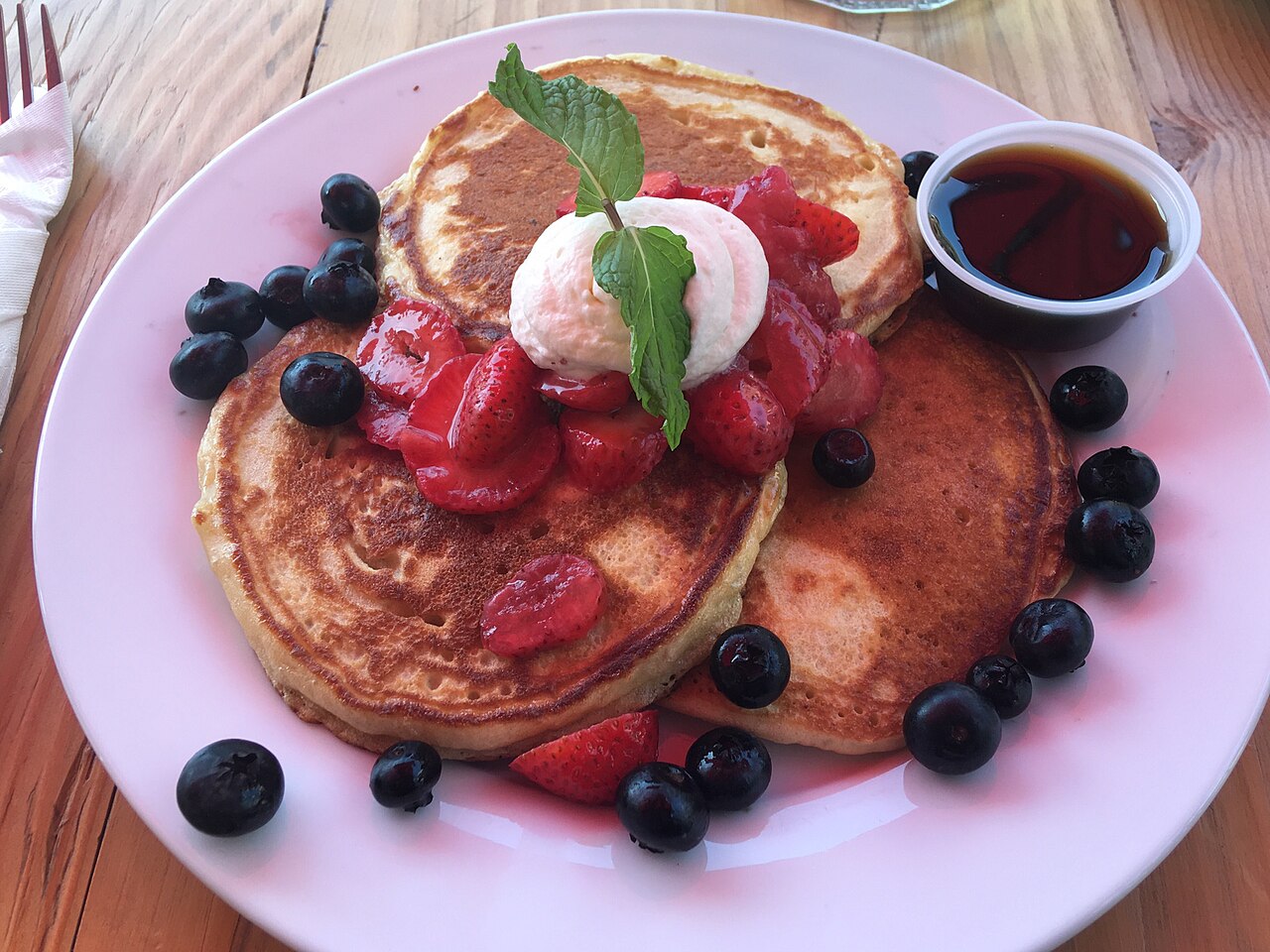
The ideal cooking temperature for pancakes is between 350 F and 375 F. On a home stove, that means medium to medium-low heat. An electric griddle holds that range more steadily than a pan, which is why many cooks prefer it.
Wait for the right moment to flip. Brunch and Batter advises watching for 8 to 10 consistent bubbles that pop through the top of the batter, and flipping only then. The bubbles tell you the inside has set enough to hold its shape.
Flip too soon, and the soft batter tears and collapses.
Flip once. A second flip squeezes air out and flattens the rise you just built. Slide the spatula fully under the pancake, turn it in one smooth motion, and leave it alone.
Never press the pancake down after flipping. Pressing feels like helping it cook, but it crushes the air pockets. If the center looks wet while the outside browns fast, loosely cover the pan with a lid after bubbles form.
The trapped steam makes a small oven effect that cooks the center through before the bottom over-browns.
Accept the test pancake. The first pancake tells you whether the heat is right, and it is often the least pretty of the batch. Adjust the burner, then cook the rest.
A steady pan beats a hot pan every time.
The advanced move: whipped egg whites
For the tallest pancakes, separate the eggs. Beat the yolks into the wet ingredients as usual. Whip the whites in a separate bowl until they form soft peaks, then fold them into the batter at the end.
Whipped whites add air directly. When heat hits the pan, those air pockets expand and lift the pancake. The technique takes an extra few minutes, and it is the one to reach for when the occasion calls for a showpiece stack.
Fold with care. Use a spatula, cut down through the center, sweep under the batter, and lift. A few strokes are enough.
Stirring the whites hard pops the bubbles you just made, which defeats the purpose.
The same care applies to storage. Cooked pancakes keep in the fridge for up to 3 days with parchment between them, or in the freezer for up to 2 months. Reheat in a toaster or skillet.
The rise will not return after storage, so this technique is best for pancakes served fresh. The same gentle-touch rule shows up elsewhere in the kitchen, such as when you want bread to rise instead of falling flat.
Why are my pancakes flat even though I followed the recipe?
The usual culprit is overmixing or stale leavening. A recipe cannot save a batter that was beaten smooth or a tin of baking powder that lost its strength. Test the leavening, mix only until the flour disappears, and try again.
Should pancake batter rest before cooking?
A short rest of 5 to 10 minutes helps the flour hydrate and the gluten relax. Longer rests let leavening gas escape, so keep the rest short and cook the batter promptly after it.
Can I use baking soda instead of baking powder?
Yes, but baking soda needs an acid to activate. For each teaspoon of baking powder in a recipe, use 1/4 teaspoon of baking soda plus 1/2 teaspoon of vinegar or lemon juice, or use buttermilk in place of regular milk.
Why do my pancakes burn outside and stay raw inside?
The pan is too hot. The outside sets and browns before the inside can rise and cook through. Lower the heat to medium or medium-low, and cover the pan loosely with a lid after bubbles form to finish the center.
The bottom line
Flat pancakes come from lost gas or tough batter, and both are in your control. Mix only until the flour disappears, keep the batter a little lumpy, and use fresh leavening matched to your liquid. Cook on steady medium heat, flip once when 8 to 10 bubbles pop, and never press the pancake down.
For the tallest stack, fold in whipped egg whites. Fix those habits and the same recipe turns out tall, tender, and golden. For another kitchen staple, see how to tell whether eggs are still fresh before cracking them.
Tags: pancakes, baking, breakfast, food
Latest in Food
- Why Bread Rises and Then Falls Flat
- How to Tell if Eggs Are Still Fresh Without Cracking Them
- How to Keep Herbs Fresh for Weeks in the Fridge
Subscribe to the Rive News newsletter for one practical explainer each week.
Related stories

Why Does Bread Go Stale Faster in the Refrigerator?
Bread goes stale faster in the fridge because starch recrystallizes fastest near 4°C. Here is the retrogradation science and the right way

Baking soda and baking powder: what's the difference?
Baking soda is pure sodium bicarbonate; baking powder adds two dry acids for double-acting lift. Learn when to use each, plus exact

What Is the Maillard Reaction in Simple Terms?
The Maillard reaction is the browning chemistry between amino acids and sugars above 140 C that creates the crust, color, and rich flavor