
Why Does Bread Rise and What Makes It Fall Flat?
Key takeaways
- Yeast eats sugar and releases carbon dioxide, which inflates the dough.
- Gluten forms a stretchy net that traps the gas and holds the loaf up.
- Most flat loaves fail from overproofing, dead yeast, weak gluten, or wrong temperature.
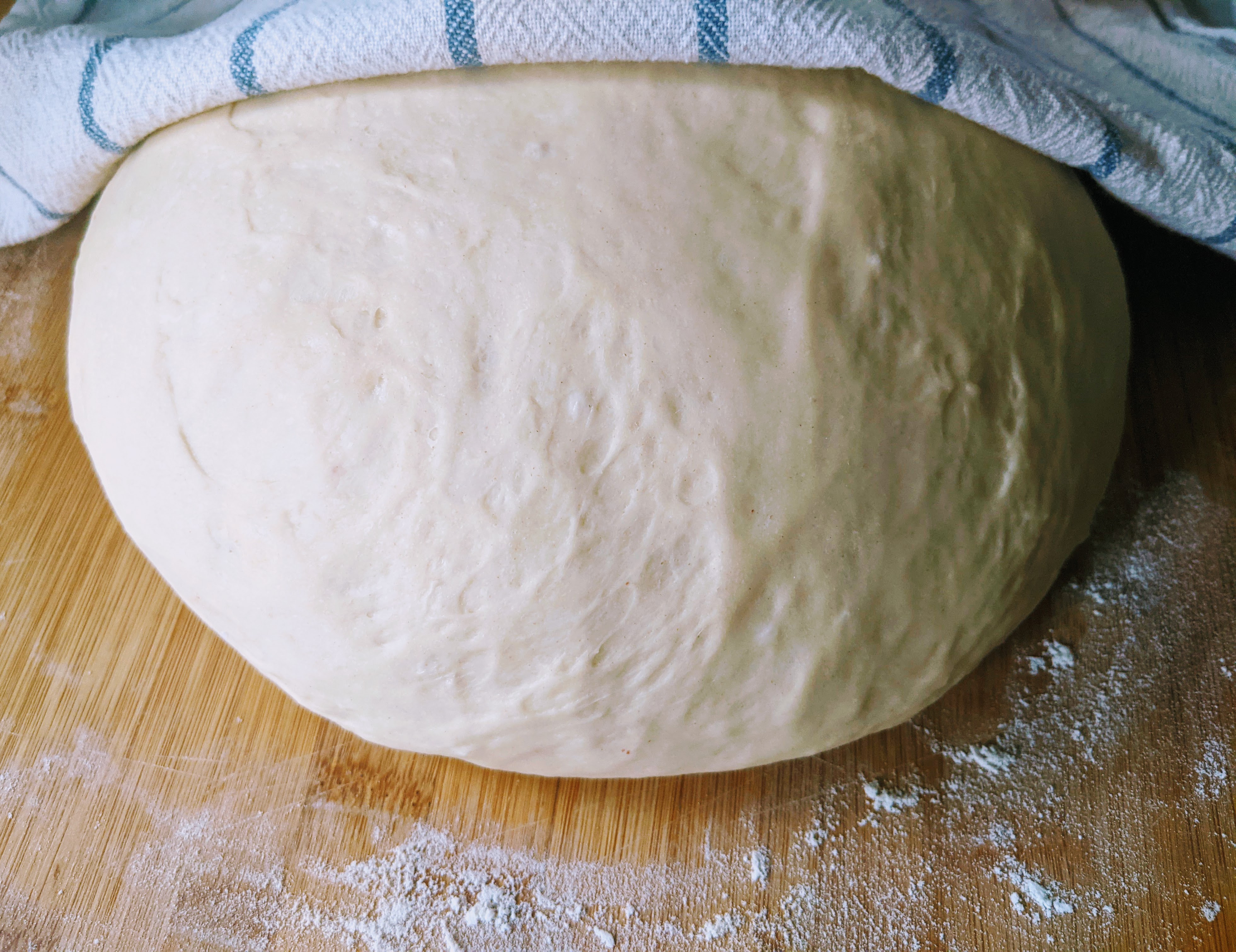
A lump of dough goes into a bowl flat and heavy. Hours later it is puffy, soft, and twice the size. The change looks like magic, but it is biology and chemistry working together.
Tiny living cells eat sugar, release gas, and hand the dough a structure that can hold that gas.
This article explains why does bread rise and what makes it fall flat, including what yeast does, how gluten traps gas, how kneading and proofing shape the loaf, and the most common reasons a loaf collapses.
What yeast does in dough
Yeast is a living single-celled fungus. The species used in most bread is Saccharomyces cerevisiae, the same species behind beer and wine. Once mixed with flour and water, it starts consuming simple sugars in the dough.
Some of those sugars come from the flour itself, and some come from enzymes that break starch into smaller sugar molecules.
The main byproducts are carbon dioxide gas, ethanol, and flavor compounds. The gas is what lifts the dough. The ethanol mostly evaporates during baking.
The flavor compounds stay and give bread its smell and taste. That is why a slow ferment tastes better than a rushed one: the yeast has more time to build flavor, not just gas.
The core reaction is fermentation. In simple form, one glucose molecule becomes two ethanol molecules and two carbon dioxide molecules. The equation reads C6H12O6 to 2C2H5OH plus 2CO2. That gas is the lift.
Without it, the dough would bake into a dense slab.
Temperature sets the pace. Most bread yeasts work well between about 25 and 35 degrees Celsius, with many guides narrowing the sweet spot to 25 to 30 degrees. Cooler dough ferments slowly, which builds more flavor.
Warmer dough ferments fast, which risks a weak structure. Water hotter than about 50 degrees Celsius kills the yeast outright, so hot liquid is one of the fastest ways to ruin a loaf.
How gluten traps the gas
Gas alone cannot lift bread. Without a net to catch it, the bubbles would escape at the surface and the dough would stay flat. That net is gluten, and it forms the moment flour meets water.
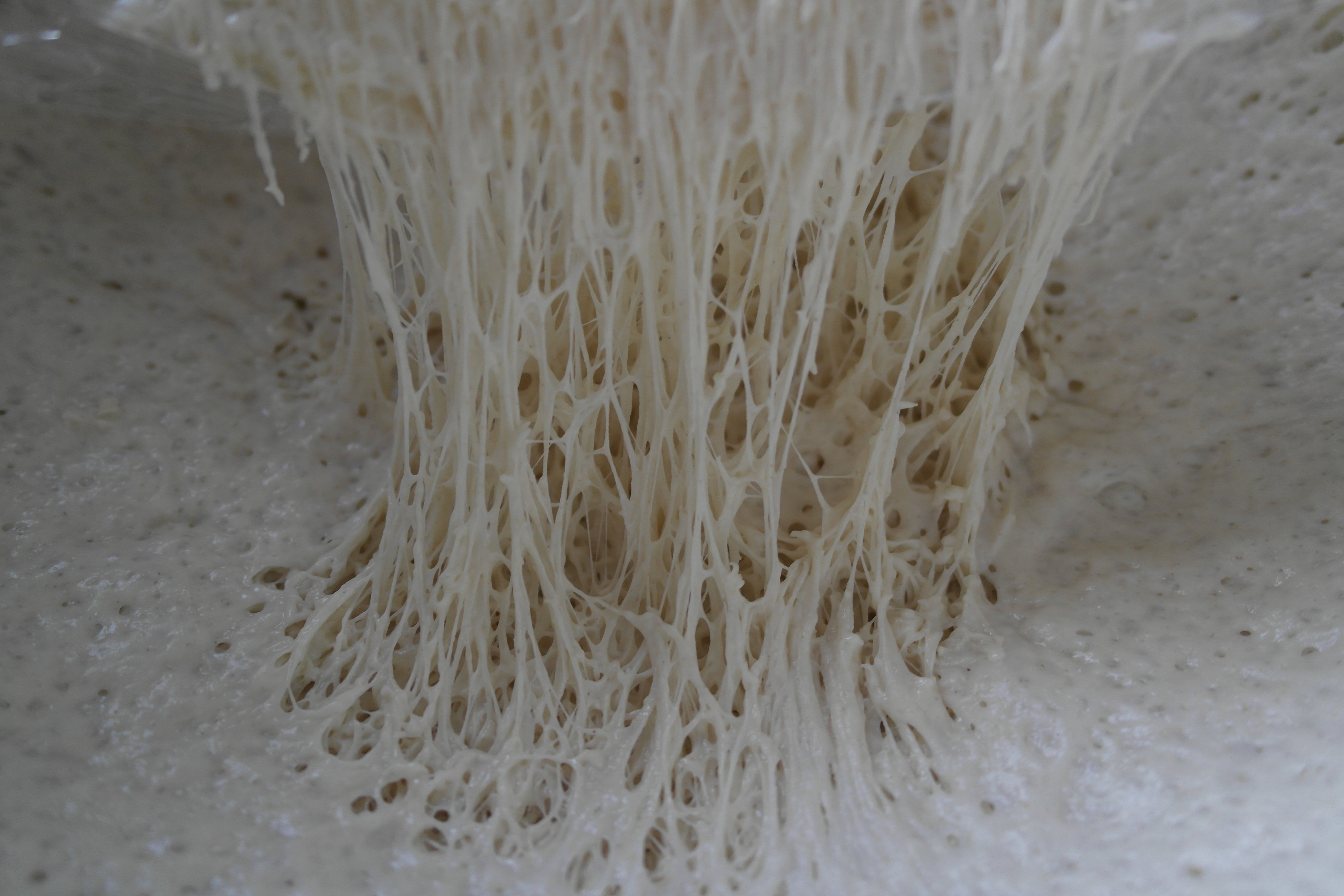
Two flour proteins, glutenin and gliadin, absorb water and link together during mixing and kneading. The result is a network that is both elastic and stretchy. It can stretch around a growing gas bubble without tearing at once.
Bakers describe dough as a set of balloons inside a flexible mesh, and the image fits. The yeast inflates the balloons, and the gluten keeps them in place.
Flour choice changes the strength of that net. Bread flour carries about 12 to 14 percent protein, while all-purpose flour carries about 10 to 12 percent. More protein means more gluten potential, which is why bread flour suits tall, chewy loaves.
Whole wheat flour also carries protein, but its bran flakes cut the gluten strands, so whole wheat loaves often rise less unless blended with bread flour.
Gluten also needs the right balance. A dough that is too tight resists expansion, so the loaf stays small. A dough that is too weak cannot hold its shape, so it spreads or tears.
Fermentation helps here, since resting lets the gluten relax slightly and stretch more easily. That balance is what kneading and folding build over time.
Kneading, folding, and shaping
Kneading lines the gluten strands up into sheets. Press, fold, and turn the dough until it turns smooth and springs back when poked. The classic check is the windowpane test: stretch a small piece thin enough to see light through it without tearing.
If it tears at once, the dough needs more work. If it stretches into a thin sheet, the gluten network is ready.
Folding suits wet doughs that resist heavy kneading. Every 30 minutes during fermentation, lift the edges of the dough and fold them toward the center. This move strengthens the gluten without crushing the gas bubbles that already formed.
Three folds are often enough to add tension and a smooth surface.
Shaping matters as much as mixing. A good shape builds surface tension, which helps the dough stand upright and trap gas during the final rise. A loose shape spreads and loses volume even when fermentation went well.
A shape pulled too tight restricts expansion. The goal is a firm skin that supports the dough without squeezing the air out of it.
Salt plays a quiet structural role. It slows fermentation, strengthens gluten, and improves flavor. Dough without enough salt can turn slack and bland.
Dough with far too much salt may ferment so slowly that it barely rises. Measure salt with the same care as yeast.
Proofing: the final rise
Proofing is the last rise after shaping, and it is where many loaves fail. The dough should look slightly inflated and lighter. A gentle poke should spring back slowly, not at once and not never.
The dough should feel airy yet firm enough to hold its shape without spreading.
Underproofed dough has not fermented enough to relax and expand. It may tear or burst in the oven as the remaining gas expands fast. Overproofed dough has gone too far.
The gluten network stretches past its limit, the bubbles merge and pop, and the loaf collapses under heat. Cookware Ninja puts it plainly: overproofing weakens the gluten, so dough that rose too much before baking cannot support its structure in the oven.
Time alone does not judge proofing. Room temperature, yeast amount, hydration, salt, and sugar all shift the schedule. A kitchen at 75 degrees Fahrenheit ferments dough faster than one at 68 degrees, even with the same recipe.
Watch the dough, not the clock, and learn how it behaves in your own kitchen.
The oven adds one last lift called oven spring. Heat makes the gas inside the dough expand fast, and the yeast gives a final burst of activity before the heat kills it. A well-proofed loaf jumps upward in the first minutes of baking, then the crust sets and locks the shape.
An overproofed loaf has no strength left for that jump, so it sinks instead.
Why bread falls flat
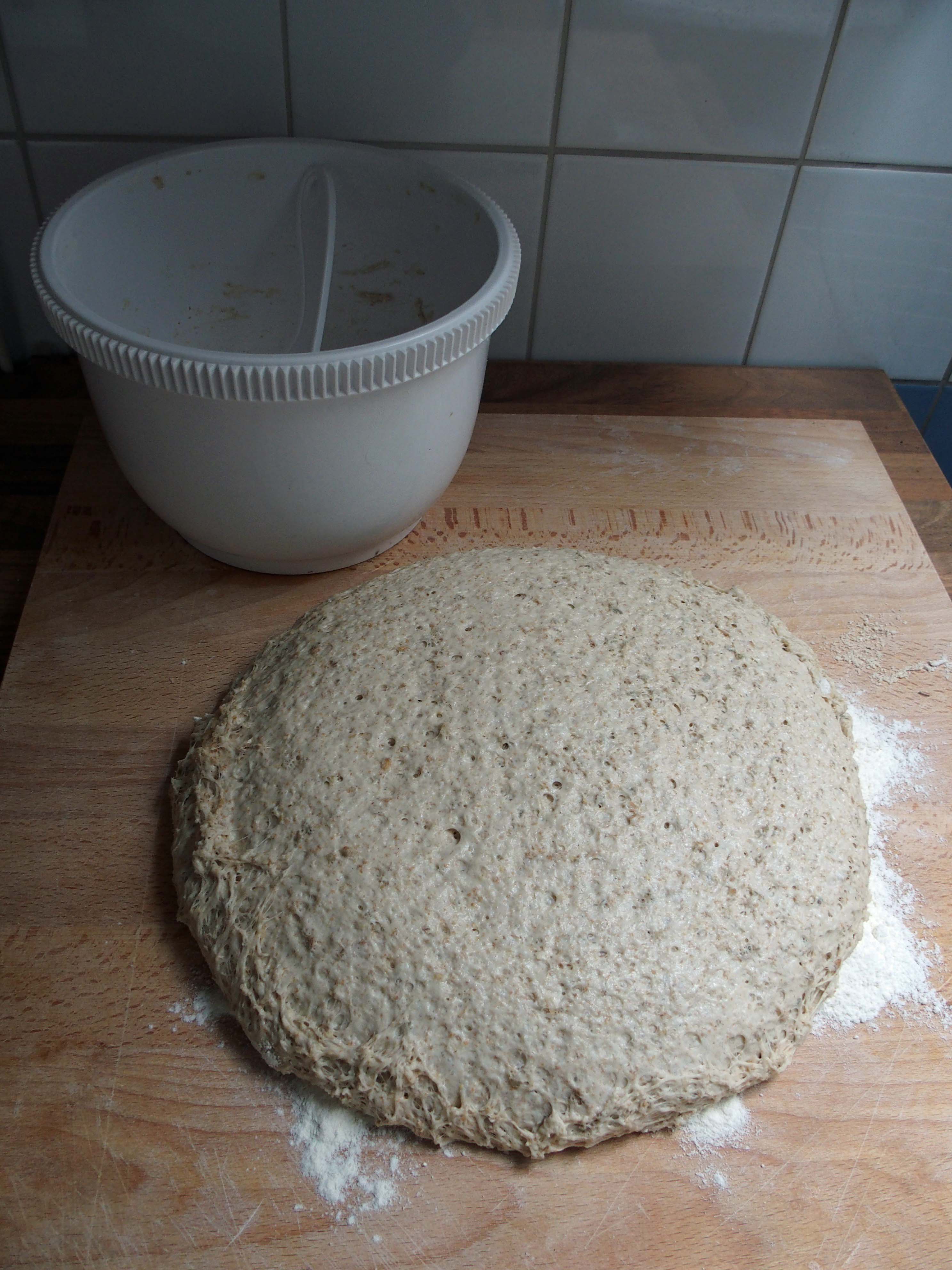
Flat bread always traces back to a broken link in the chain: not enough gas, gas that escapes, or a structure too weak to hold it. Five causes cover most failures.
Dead or tired yeast is the first suspect. Expired yeast, yeast stored badly, or yeast mixed with water that was too hot will not ferment. Test granules before mixing: stir them into warm water at about 105 to 110 degrees Fahrenheit with a pinch of sugar.
Active yeast foams within 10 minutes and smells nutty. No bubbles means the packet belongs in the bin.
Overproofing is the second cause, and it fools bakers because the dough looks great before baking. It doubled, it jiggled, it felt light. Then it sank.
The gluten had stretched past its limit, so the oven heat popped the bubbles instead of expanding them. Shorter proofing and the poke test prevent most of these collapses.
Weak gluten is the third cause. Under-kneaded dough, low-protein flour, or heavy bran can all leave the net too loose to hold gas. Fix it with proper kneading, a windowpane check, or a blend of bread flour with whole grain flour.
Gentle folds during fermentation add strength without heavy work.
Wrong temperature is the fourth cause. A cold kitchen slows yeast so much that the dough never gains volume. A very hot kitchen rushes fermentation, which weakens gluten and flattens flavor.
Aim for the mild range where yeast works steadily, and use a cool overnight proof in the fridge when time allows.
Too much handling is the fifth cause. Punching dough down hard, shaping with heavy pressure, or moving the loaf roughly after proofing knocks out the gas that took hours to build. Handle proofed dough gently, and let the oven do the final lifting.
Frequently asked questions
Can I use baking soda instead of yeast?
Baking soda works for quick breads like banana bread, where an acid such as buttermilk triggers gas release. It cannot replace yeast for a risen loaf, since it skips the slow fermentation that builds flavor and structure. The result would be a cake-like crumb, not bread.
Why did my bread rise and then collapse in the oven?
Overproofing is the most likely cause. The gluten stretched too far during the final rise, so it could not survive the oven spring. Next time, bake the loaf a little earlier, when a poke springs back slowly rather than staying dented.
Does a longer rise always mean better bread?
Up to a point, yes. Longer fermentation builds more flavor and a more open crumb. Past that point, the dough turns acidic, the gluten weakens, and the loaf collapses.
A long, cool ferment gives the best balance of flavor and strength.
How do I know the dough has risen enough?
Look for a slightly domed surface, small bubbles under the skin, and a soft, elastic feel. The poke test is the surest check. If the dent springs back slowly, the dough is ready.
If it springs back at once, it needs more time. If it stays dented, it is likely overproofed.
The bottom line
Bread rises because yeast turns sugar into gas and gluten traps that gas in a stretchy net. Kneading builds the net, fermentation fills it, and proofing times the finish. Flat loaves fail when one link breaks: dead yeast, overproofing, weak gluten, wrong temperature, or rough handling.
Fix the link, and the next loaf stands tall.
Tags: bread baking, yeast, fermentation, home baking
Latest in Food
- How to Keep Herbs Fresh for Weeks in the Fridge
- How to Reverse Stale Bread
- How Much Salt Does Pasta Water Need?
- How to Tell If Eggs Are Still Fresh Without Cracking Them
Subscribe for one practical cooking guide each week.
Related stories

Why Does Bread Go Stale Faster in the Refrigerator?
Bread goes stale faster in the fridge because starch recrystallizes fastest near 4°C. Here is the retrogradation science and the right way

Baking soda and baking powder: what's the difference?
Baking soda is pure sodium bicarbonate; baking powder adds two dry acids for double-acting lift. Learn when to use each, plus exact

What Is the Maillard Reaction in Simple Terms?
The Maillard reaction is the browning chemistry between amino acids and sugars above 140 C that creates the crust, color, and rich flavor