
Why popcorn pops when heat builds up inside kernels
By Rive News / Research desk | Rive News / Published October 29, 2026 at 9:00 AM PKT
Key takeaways
- Each popcorn kernel is a sealed pressure vessel holding starch and about 14 percent water.
- Heating to about 180 degrees Celsius turns that water to steam and builds pressure near 135 psi.
- The hull bursts, steam expands, and softened starch sets into the fluffy foam we eat.
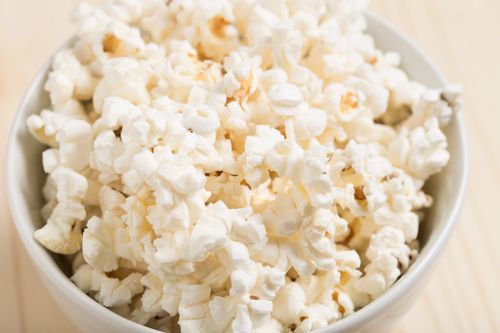
[Close-up of freshly popped popcorn in a white bowl.] Photograph: Popped popcorn
Image Credits: Pexels
Popcorn pops because heat turns water trapped inside the kernel into steam, and the steam has nowhere to go. Pressure climbs inside the hard outer shell until the shell bursts, and the starchy inside expands into foam in a fraction of a second. The pop is, in short, a tiny pressure vessel failing on purpose.
This article explains that chain in full, including the kernel's anatomy, the moisture window that makes popping possible, the role of starch, where the sound comes from, and why most corn never pops at all.
Inside the kernel: a pressure vessel
A popcorn kernel has three parts that matter for popping. The outside is the pericarp, a tough, mostly nonporous hull that seals the kernel shut. Inside sits the endosperm, a starchy core, along with a small amount of oil and a tiny drop of water locked within the starch.
That water is the engine of the whole process. Popcorn kernels pop best at about 13.5 to 14 percent moisture by weight, a figure repeated across food-science sources including Scientific American and Science Notes. Too little water means too little steam to build pressure, and too much water makes the result chewy or prone to mould in storage.
The hull is the vessel wall. It must be strong enough to hold pressure while the inside heats, and sealed enough that steam cannot leak out early. A cracked or chipped hull vents steam before pressure peaks, and the kernel stays unpopped.
Those stubborn leftovers at the bottom of the pot have a name, old maids, and a weak hull is often the reason.
Heat, steam, and the climb to 180 degrees
Popping begins when heat reaches the kernel, whether from hot oil, a hot-air popper, or microwaves. As the temperature rises toward about 180 degrees Celsius, or 356 degrees Fahrenheit, the water inside turns to steam. Because the hull seals the kernel, the steam cannot escape, so pressure builds rapidly.
Science Notes puts the rupture pressure at about 135 pounds per square inch, or 930 kilopascals, which is roughly nine times normal atmospheric pressure at sea level. That is a striking number for a snack, and it explains why the burst is so violent. The kernel is not gently opening; it is failing under a pressure comparable to a car tyre multiplied several times over.
Speed matters as much as temperature. Rapid heating keeps moisture inside until the pressure peak, while slow heating lets moisture leak away and leaves roasted or burnt corn instead of popped corn. That is why a baking sheet of kernels in a slow oven disappoints, while the same kernels in hot oil succeed.
Starch: the part that becomes the snack
Pressure alone would only crack the hull. The fluffy part of popcorn comes from starch, and heat changes the starch before the burst. As the kernel heats, starch granules in the endosperm absorb water and swell, a process called gelatinisation.
The starch turns into a hot, soft, gel-like mass inside the sealed hull.
When the hull finally fractures, usually at a weak point or natural seam, the superheated steam expands in an instant. That expansion forces the softened starch out through the crack, where it inflates like a balloon and cools almost immediately on contact with air. The result is a foam-like solid made mostly of expanded starch and protein, which is the texture we recognise as popcorn.
High-speed photography has shown that the kernel can flip into the air during the burst, propelled by the force of the steam release. Some researchers have compared the motion to a jumping jack, with the kernel's parts splaying outward as the starch expands. The whole event, from rupture to set foam, takes well under a second.
Where the pop sound comes from
For years, the obvious guess was that the sound came from the hull cracking. Research reported by Scientific American overturned that idea. The characteristic pop does not come from the crack itself, but from the release of vapour after the kernel has cracked.
The distinction is neat. The hull breaks first, silently enough, and then pressurised steam rushes out through the opening. That sudden release, like uncorking a bottle at high speed, makes the sound we associate with popcorn.
The crack sets up the pop, but the vapour makes it.
That finding came from careful work on a snack humans have eaten for thousands of years. People have snacked on popcorn since at least 3600 BC in Mexico, according to Science Notes, yet the detailed mechanism of the sound was only resolved recently. Old snacks can still hold new physics.
Why only popcorn pops
Not all corn pops, and the reason is the kernel's build. Popcorn is a special type of flint corn, bred and selected for a hard pericarp and an endosperm that gelatinises in the right way. Sweet corn, dent corn, and other varieties have softer hulls, different starch structures, or the wrong moisture balance, so they split, roast, or burn instead of exploding into foam.
Even within popcorn, quality varies, and poppers measure it two ways. Popping yield counts how many kernels pop versus how many remain unpopped, while expansion measures how large the popped flakes grow. A good batch scores well on both: few old maids, and flakes that swell to 20 to 50 times the original kernel's size, depending on the variety and method.
Storage decides much of the outcome before cooking starts. Kernels kept in an airtight container at room temperature hold their moisture, while kernels left open in dry air lose moisture below the ideal range and pop poorly. Over-dried kernels can sometimes be rehydrated, but the fix is unreliable, and fresh kernels are the simpler answer.
The methods all share one rule
Stovetop oil, air popping, and microwave bags look different, but they obey the same rule: heat the kernel fast, past 180 degrees Celsius, without letting steam escape early. A heavy pot with a tight lid, two to three tablespoons of neutral oil, and test kernels to judge temperature is the classic stovetop approach described by KitchPrep. When the test kernels pop, the rest go in, the pot is shaken to level them, and the lid is cracked slightly to vent steam.
Air poppers skip oil and blow hot air through the kernels, which suits eaters who want a lighter snack. Microwave bags trap steam in the bag itself, which is why a bag inflates before the popping slows. In every method, the signal to stop is the same: when popping slows to two or three seconds between pops, further heat only burns the finished pieces.
Two shapes dominate the bowl, and they come from the same kernel. Butterfly, or snowflake, popcorn has irregular wings and a larger surface for seasoning, while mushroom popcorn forms a compact ball that holds coatings better. The shape depends on the variety and on how the starch expands through the hull's break, not on a different popping mechanism.
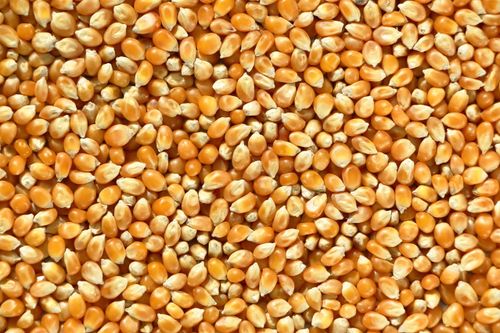
[Close-up of unpopped popcorn kernels showing their texture.] Photograph: Popcorn kernels
Image Credits: Pexels
Frequently asked questions
What temperature does popcorn pop at?
Popcorn pops at about 180 degrees Celsius, or 356 degrees Fahrenheit, when the water inside the kernel has turned to steam and pressure has reached roughly 135 psi. Below that window, the hull may not burst, and above it, early poppers burn while late ones catch up.
How much water must a kernel contain to pop?
About 13.5 to 14 percent moisture by weight is ideal, with some sources giving 14 to 15 percent as the working range. Too little water means too little steam, and too much water makes chewy or mould-prone popcorn.
Why do some kernels never pop?
Unpopped kernels, called old maids, usually have a damaged hull that leaks steam, or moisture below the ideal range from age or poor storage. A cracked hull cannot hold pressure long enough for the starch to gel before release.
Does the pop sound come from the hull cracking?
No. Research reported by Scientific American found the sound comes from vapour release after the hull cracks, not from the crack itself. The hull breaks first, and the rushing steam makes the pop.
The bottom line
Popcorn pops because a kernel is a sealed vessel with exactly the right contents. Heat turns its trapped water to steam, pressure climbs to about 135 psi, the hull bursts, and gelatinised starch expands into foam and sets in under a second. The pop sound is the steam escaping, not the shell breaking.
That chain also explains every kitchen tip that works. Keep kernels sealed and fresh, heat them fast, stop when popping slows, and the physics does the rest. The snack is simple, but the mechanism is a small, well-timed explosion.
Tags: popcorn, food science, cooking
The Rive News research desk writes plain-language explainers drawn from public sources, with every key claim tied to a named source.
Related
- Why bread dough rises faster in a warm kitchen
- Why does honey crystallize in the jar over time
- How to cook rice that is never sticky or burnt
Subscribe for one clear explainer each morning on the everyday things cooks wonder about.
Rive News publishes explainers from public sources and corrects errors when readers point them out.
Related stories
Why Does Bread Go Stale Faster in the Refrigerator?
Bread goes stale faster in the fridge because starch recrystallizes fastest near 4°C. Here is the retrogradation science and the right way
Baking soda and baking powder: what's the difference?
Baking soda is pure sodium bicarbonate; baking powder adds two dry acids for double-acting lift. Learn when to use each, plus exact
What Is the Maillard Reaction in Simple Terms?
The Maillard reaction is the browning chemistry between amino acids and sugars above 140 C that creates the crust, color, and rich flavor