
Why does honey crystallize in the jar over time
By Rive News / Research desk | Rive News / Published October 24, 2026 at 9:00 AM PKT
Key takeaways
- Honey crystallizes because it is a supersaturated sugar solution, and the less-soluble glucose separates out as tiny crystals.
- The glucose-to-fructose ratio set by the flowers the bees visited decides whether a jar grains in weeks or stays liquid for a year.
- Crystallized honey is safe and unchanged in taste; a gentle warm-water bath around 100 degrees Fahrenheit returns it to liquid.
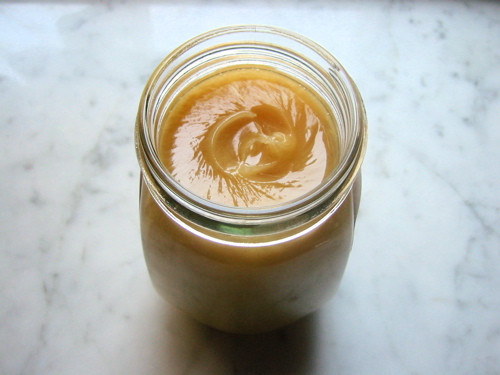
Honey jars with honeycomb on a market stall. Photograph: davide vizzini
Image Credits: Wikimedia Commons
One day your honey pours like syrup. A few months later it sits in the jar pale, thick, and grainy.
It looks like something went wrong. Nothing did.
This article explains why honey crystallizes in the jar over time, including the supersaturated-solution mechanism, why glucose is the culprit, what speeds the process up, what crystallized honey means for quality, and how to return it to liquid.
Honey is a supersaturated sugar solution
Crystallization starts with honey's basic chemistry. Honey is roughly 70 percent sugars and less than 20 percent water, according to the beekeeping guide from Paradise Honey Hives. That is far more sugar than the water could normally hold.
Chemists call this a supersaturated solution: an unstable state holding more dissolved material than it naturally should. Unstable systems seek equilibrium. In honey, equilibrium means some sugar leaves the solution and becomes crystals.
This is not a defect. It is the expected behavior of any supersaturated sugar solution left sitting long enough. The jar is simply doing chemistry on your shelf.
Glucose separates; fructose stays liquid
Honey's two main sugars behave differently. Fructose makes up roughly 30 to 44 percent of honey, and glucose roughly 25 to 40 percent, per the same Paradise Honey Hives guide. Fructose dissolves easily in water and stays fluid.
Glucose is the problem child. It is much less soluble in water than fructose.
When it can no longer stay dissolved, it separates from the solution as tiny crystals. Those crystals then act as templates, and more glucose attaches to them until the whole jar thickens.
That is why crystallized honey often turns paler. Glucose crystals are naturally white, so as they spread through the jar, the honey lightens in color. Darker honeys keep a brownish tint, but the shift is visible in most varieties.
Some honeys crystallize much faster than others
The ratio of glucose to fructose depends on the flowers the bees visited, and it varies by season and forage. That ratio sets the pace.
Emily Schmiedel, lead beekeeper for Jacobsen Salt Co.'s Hive Program, told Simply Recipes: "Honeys containing more glucose than fructose tend to crystallize faster."
Clover, sunflower, and dandelion honeys crystallize quickly because they run higher in glucose. Acacia and tupelo honeys, richer in fructose, can stay liquid for a year or more.
A crystallization-speed table published January 15, 2026 in the Alibaba spice-basics guide puts clover at 3 to 8 weeks and acacia at 6 to 12 or more months.
Tiny seed particles matter too. Pollen grains, bits of beeswax, propolis, and even air bubbles give crystals a starting point to form around.
"Any amount of pollen in raw honey acts as a substrate, causing the honey to crystallize over time too," Schmiedel said. Ultra-filtered commercial honey stays liquid longer partly because those particles are removed.
Temperature decides the pace
Cold speeds crystallization up. Honey stored below 10 degrees Celsius crystallizes faster, while room temperature around 20 to 25 degrees keeps it liquid longer, according to the Honey and Spice crystallization guide. Storing honey in the refrigerator is the fastest way to grain a jar.
Heat does the opposite, but only gently. A warm cupboard helps, and Schmiedel stores her own jars up high in the kitchen because heat rises. Temperatures above 25 degrees can affect honey quality over time, so room temperature is the sweet spot.
The practical rule: keep honey at room temperature in a sealed jar, not in the fridge. Cold does not preserve honey better. It just hurries the crystals.
What crystallized honey means
Crystallized honey is still honey. Under United States Department of Agriculture honey standards, honey may be legally sold as liquid, crystallized, or partially crystallized. Texture changed; identity did not.
In fact, crystallization is one of the markers that honey is real. Schmiedel told Simply Recipes that crystallization is actually one of the signs a honey is genuine, since heavily processed honey is often heated and filtered to stay pourable. If your jar never grains, that tells you something too.
The taste is unchanged. "The taste is unchanged, but the fine-grained texture actually makes it a bit easier to spoon and spread without the mess," Schmiedel said. Spread it on toast as is, or stir it into warm tea where the crystals dissolve instantly.
How to return it to liquid
If you want it pourable again, warm the jar gently. Tighten the lid and set the jar in a small water bath of about 100 degrees Fahrenheit, just up to the rim. Leave it for several minutes and the honey turns drippy again.
Keep the heat gentle and never boil it. HonestBee's beekeeping FAQ recommends a bath of 110 to 120 degrees Fahrenheit (43 to 49 degrees Celsius) with gentle stirring, and warns that permanently decrystallizing raw honey without damaging it is not possible. Expect the jar to grain again eventually.
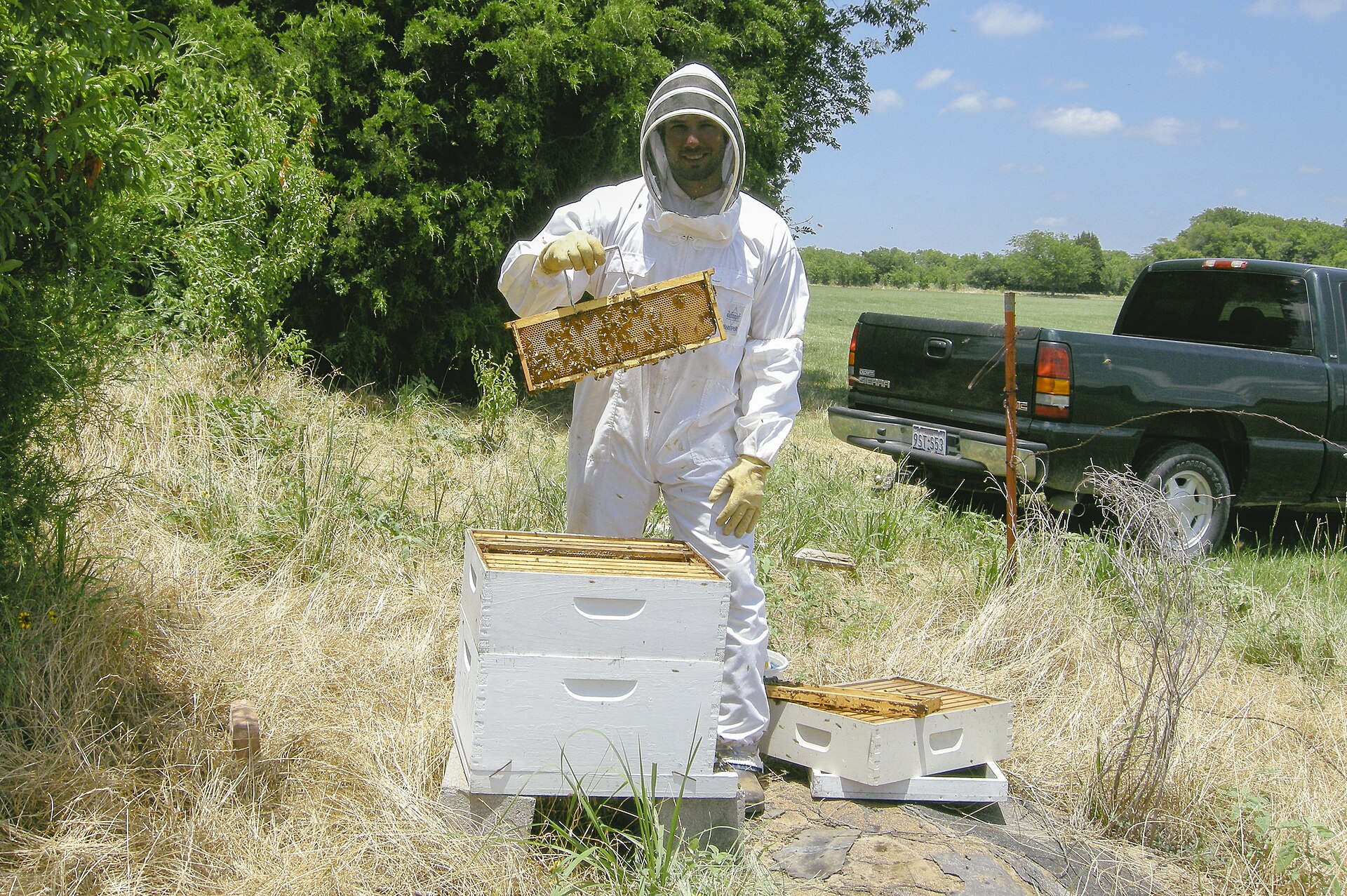
A beekeeper inspecting a honeycomb frame at an apiary. Photograph: Matthew T Rader
Image Credits: Wikimedia Commons
Do not microwave the jar. Microwaves heat unevenly and can scorch the honey, destroying the aromas and flavors that make it worth eating. The water bath is slower and safer.
The bottom line
Honey crystallizes because glucose separates from a supersaturated sugar solution, seeded by pollen and set in motion by the honey's floral source and your storage temperature. It is safe, the flavor is unchanged, and a gentle warm-water bath brings it back to liquid whenever you want.
Stop refrigerating your honey. The jar on the shelf knows what it is doing.
Frequently asked questions
Is crystallized honey safe to eat?
Yes. Crystallization is a texture change, not spoilage. USDA standards recognize crystallized honey as honey, and the taste is unchanged.
One beekeeper notes it is actually a marker of genuine, minimally processed honey.
Why did my honey crystallize but my friend's did not?
Different floral sources carry different glucose-to-fructose ratios. High-glucose honeys like clover grain in weeks; high-fructose honeys like acacia can stay liquid for a year. Storage temperature plays a role too.
How do I fix crystallized honey?
Tighten the lid and place the jar in a warm water bath of about 100 degrees Fahrenheit for several minutes. Stir gently if needed. Do not boil or microwave it.
Does crystallization mean honey went bad?
No. Honey does not spoil in any normal sense. Crystallization is the natural settling of a supersaturated sugar solution, and the jar will do it again after you reliquefy it.
Tags: honey, food science, kitchen tips
Rive News is a research desk covering education, careers, and everyday science. Articles are written from public sources and reviewed against a strict accuracy checklist.
Related
- Why Do Onions Make You Cry? The Kitchen Chemistry Explained
- Why does milk curdle when heated or mixed with acid: the science
- Why do some cakes sink in the middle?
- What Is the Difference Between Granulated and Caster Sugar?
Subscribe for weekly explainers that actually answer the question.
Rive News: every claim sourced, every number checked, no filler.
Related stories
Why Does Bread Go Stale Faster in the Refrigerator?
Bread goes stale faster in the fridge because starch recrystallizes fastest near 4°C. Here is the retrogradation science and the right way
Baking soda and baking powder: what's the difference?
Baking soda is pure sodium bicarbonate; baking powder adds two dry acids for double-acting lift. Learn when to use each, plus exact
What Is the Maillard Reaction in Simple Terms?
The Maillard reaction is the browning chemistry between amino acids and sugars above 140 C that creates the crust, color, and rich flavor