
How to Tell When Oil Is Hot Enough for Frying Without a Thermometer
Key takeaways
- Most frying works best between 350 and 375 F (175 to 190 C), where food crisps without soaking up oil.
- The wooden spoon test and the bread cube test give reliable readings without any tools.
- Oil that smokes is too hot, oil that barely bubbles is too cool, and crowded pans sink the temperature fast.
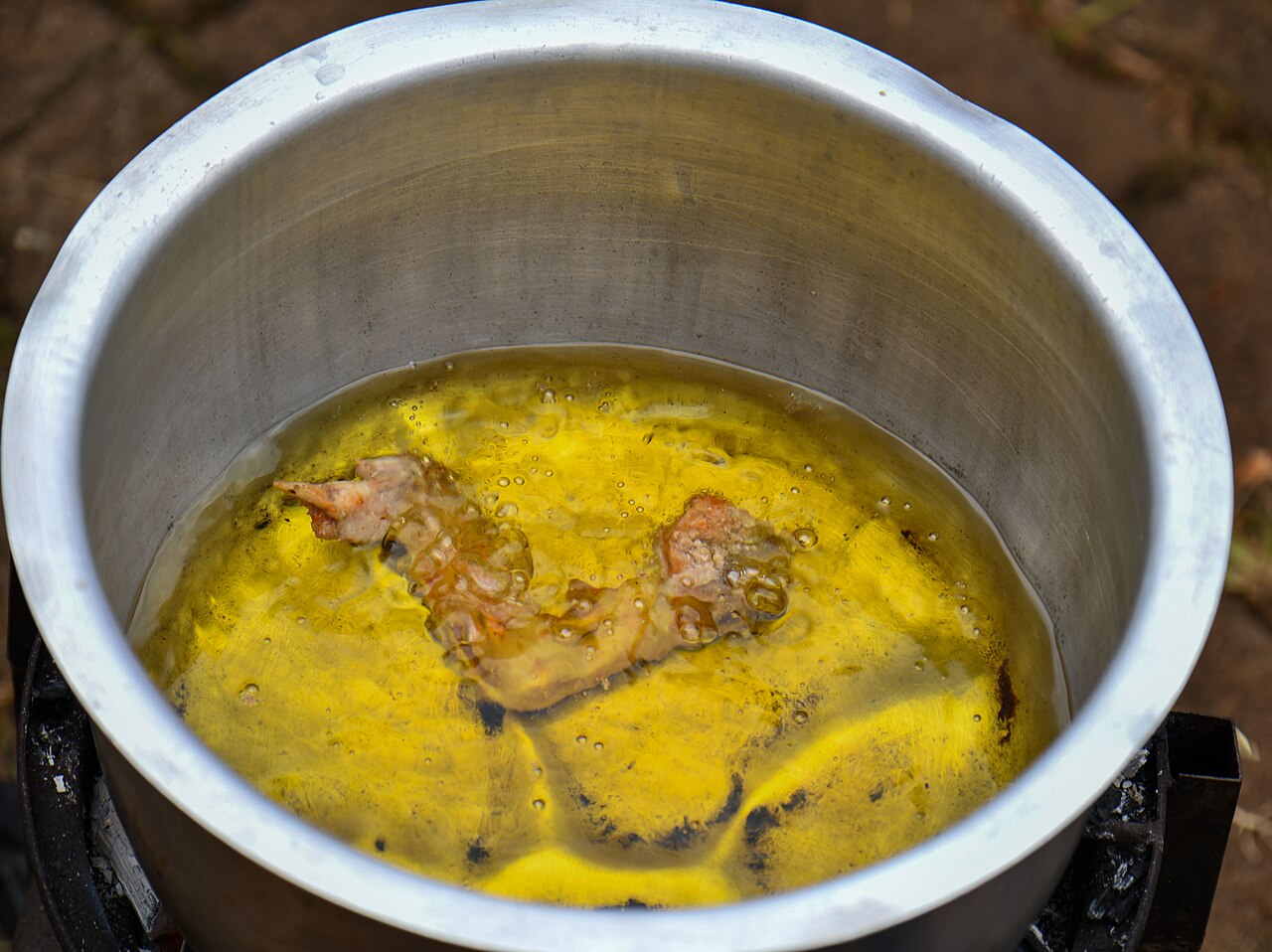
Frying lives or dies on oil temperature. Too cool, and food soaks up oil and turns soggy.
Too hot, and the outside burns before the inside cooks. A thermometer gives the exact number, but most home cooks do not own one, and many recipes still fry well without it.
This article explains how to tell when oil is hot enough for frying without a thermometer. It covers the target temperature, four tests that work with kitchen tools you already own, the signs of oil that is too cool or too hot, and the safety rules that keep frying calm.
Why temperature decides crisp or soggy
Hot oil does more than cook food. When food hits oil at the right temperature, moisture near the surface turns to steam and rushes outward.
Consillar's frying guide describes this as the steam barrier. The vigorous bubbling you see during frying is not the oil boiling.
It is water vapor leaving the food. The barrier holds while the oil stays hot enough to keep steam flowing.
When oil is too cool, too little steam forms. The outward pressure drops, oil seeps in, and the result is greasy food.
When too much cold food goes in at once, the oil temperature drops the same way, and the barrier fails before it starts. Greasy fried food is almost always a temperature problem, not a frying problem.
The target: 350 to 375 F for most frying
For most frying, the ideal range is 350 to 375 F (175 to 190 C). Chefs often aim near 360 F as a balance point.
Below that range, food absorbs oil. Above it, coatings darken fast while centers stay raw.
Some foods need their own targets. Fried chicken cooks best around 165 to 170 C (330 to 340 F), low enough for thick pieces to cook through in 12 to 15 minutes.
Chips get a two-stage fry: a low first fry near 130 to 140 C, then a crisping fry near 180 to 190 C. Fish in batter wants about 180 C for a fast crust.
If a recipe names a specific temperature, follow the recipe's timing and adjust the tests to match.
Test 1: the wooden spoon test
Dip the handle of a dry wooden spoon or a wooden chopstick into the oil. Watch the wood where it meets the oil. If small bubbles form around the wood and rise steadily, the oil is ready for most frying.
Consillar puts that reading at roughly 160 to 170 C. Science Insights places steady small bubbles near 340 F (170 C), which sits at the low end of frying territory. Either way, steady gentle bubbles mean the oil is hot enough to start.
No bubbles means the oil needs more time. Violent, aggressive bubbling means the oil is too hot.
Pull the pan off the heat for a few seconds and test again. The spoon must be dry and wooden.
Test 2: the bread cube test
Drop a small cube of white bread, about one inch across, into the oil. Count the seconds until it turns golden brown. The timing tells you the temperature band.
At about 160 C, the cube takes roughly 60 seconds to turn golden. At about 170 C, it takes roughly 40 seconds.
At 180 C or above, it browns in about 20 seconds. eHow gives a matching scale: fresh bread takes 45 to 60 seconds at 350 to 360 F, and 30 to 45 seconds at 375 to 380 F.
The bread test is the most precise of the no-tool methods, because it gives a number instead of a yes-or-no answer. Use fresh bread for the standard timing.
Dry or stale bread browns in about half the time, because it holds less moisture. If the cube sits and slowly soaks up oil, the oil is far too cool.
Test 3: the shimmer and flow test
Watch the oil itself before you test with food. As oil heats, it thins and flows nearly as freely as water.
A faint shimmer moves across the surface. On most stoves, a medium-high burner setting gets shallow frying oil into the 350 to 400 F range.
Hold your hand a safe distance above the pan, never touching the oil. The air should feel distinctly warm. If you heat the pan first without oil, then add oil once the air over the pan feels hot, the oil reaches frying temperature quickly.
Test 4: the small drop test
Drop one small piece of the food you plan to fry into the oil. It should sizzle at once, rise to the surface quickly, and begin browning within 30 to 60 seconds. That response means the oil is in range.
Slow sinking and slow bubbling mean the oil is too cool. Fish the piece out, wait, and test again.
Immediate violent bubbling and fast browning mean the oil is too hot. Pull the pan off the heat briefly and let it settle.
The drop test doubles as a taste check for batter or seasoning. It also confirms that the food's coating behaves in the oil. Use a small piece, so a too-cool test does not waste a full batch.
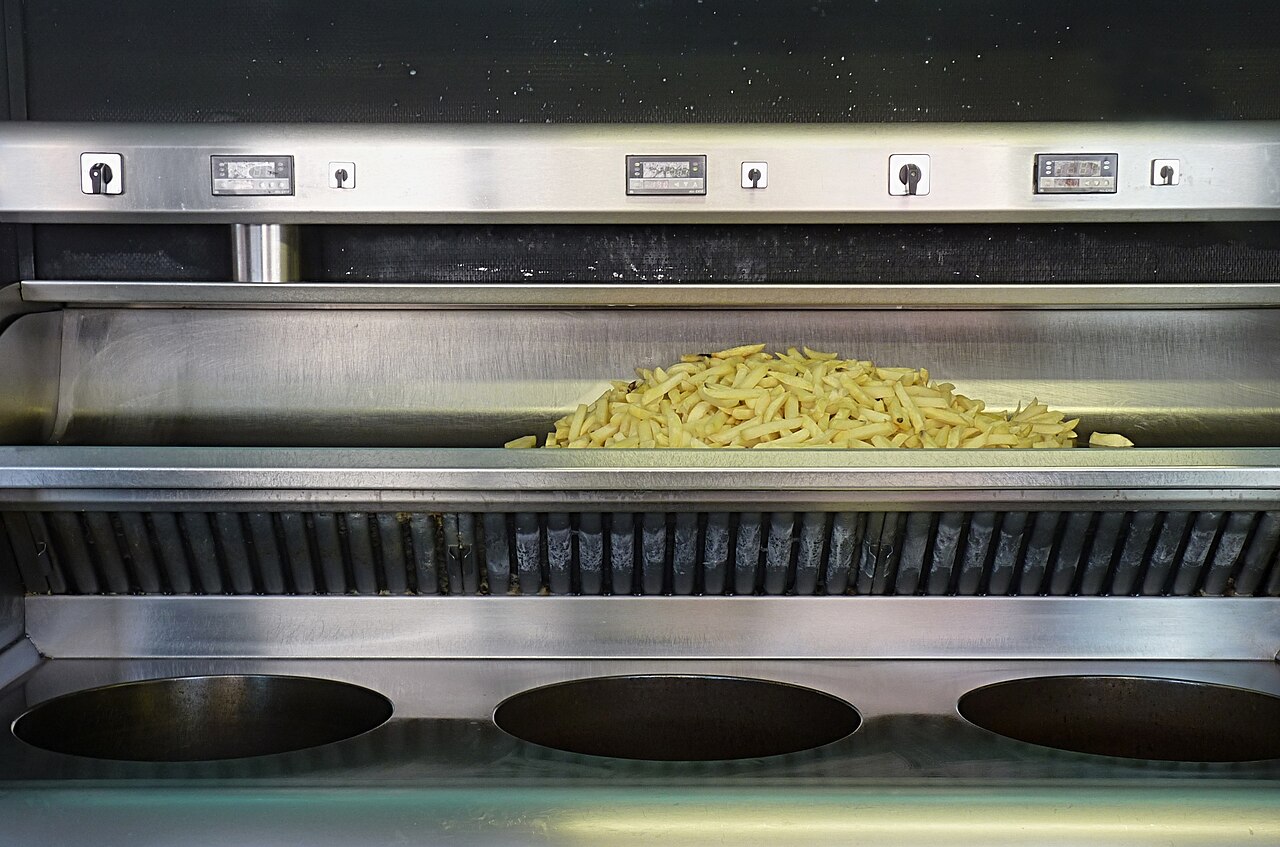
Too cool, too hot, and how to fix each
Oil that is too cool shows clear signs. The spoon test gives few or no bubbles. Bread soaks instead of browning.
Food sinks and sits quiet. The fix is patience: keep heating, test again in a minute or two, and do not add food early.
Oil that is too hot shows its own signs. It smokes, the spoon test erupts, bread browns in seconds, and food darkens before the center cooks. The fix is to pull the pan off the heat for 15 to 30 seconds, then test again.
Never add water to cool oil. Water in hot oil causes violent spattering.
The trickiest case is oil that starts right and then cools. Cold food drops the temperature sharply when it goes in.
A pot of oil at 180 C can fall toward 140 C when a large batch of cold food lands in it. At that point the steam barrier fails and the food absorbs oil.
Fry in small batches to hold the temperature. Consillar's rule of thumb is to fill no more than about 30 percent of the oil surface with food. Let the oil recover between batches, and re-test with the spoon before the next round.
Choose the right oil and the right pot
Use an oil with a high smoke point for frying. Refined sunflower, peanut, and vegetable blends suit most frying, with smoke points from about 200 to 230 C.
Refined avocado oil runs higher, near 270 C. Extra virgin olive oil smokes near 190 C, which sits at the edge of frying range and can turn acrid when overheated.
Fill the pot no more than one-third full. Food displaces oil, and steam bubbling raises the level further.
A heavy pot with high sides, such as a cast iron Dutch oven, holds temperature steadier than a thin pan. High sides also contain splashes.
Dry food before frying. Pat surfaces with paper towels, and coat battered food just before it goes in.
Wet food spatters, steams at the surface, and slows browning. Drain finished food on a wire rack over a sheet pan, not on paper towels, so the bottom stays crisp.
Safety rules that matter
Never leave frying oil unattended. Oil keeps heating even on a steady burner, and the temperature can climb past the smoke point without warning. Keep the handle turned inward, keep children and pets away from the stove, and keep a clear path so you can step back fast.
If oil catches fire, turn off the heat if you can do so safely, do not move the pot, and cover it with a large close-fitting lid to smother the flames. Never use water on an oil fire.
Water turns to steam and throws burning oil outward. Keep a dry powder or CO2 extinguisher nearby, not a water extinguisher.
Let used oil cool completely, at least 30 to 45 minutes, before straining or moving it. Strain through a fine mesh sieve, store in a sealed container in a cool dark place, and discard oil that turns very dark, thick, or foul-smelling. Frying oil can be reused 3 to 5 times with filtering, but oil used for fish should stay separate.
FAQ
How can I tell oil is hot enough without a thermometer?
Use the wooden spoon test or the bread cube test. Steady small bubbles around a wooden spoon handle mean the oil is near 160 to 170 C. A bread cube that turns golden in 40 to 60 seconds means the oil is in the 350 to 375 F frying range.
What temperature is best for frying?
Most frying works best between 350 and 375 F (175 to 190 C). Fried chicken does better near 165 to 170 C, and chips use a low first fry plus a high crisping fry. A thermometer is the most accurate way to hold those targets.
Why is my fried food greasy?
Greasy food usually means the oil was too cool or the pan was too crowded. Both break the steam barrier that keeps oil out of the food. Heat the oil fully, fry in small batches, and let the oil recover between rounds.
Can I use a popcorn kernel to test oil temperature?
Popcorn pops between roughly 360 and 400 F, so a kernel can work as a rough gauge. It is risky, because a popping kernel can spray hot oil. Cover the pan with a lid or splatter screen, use three or four kernels, and scoop out the rest once the first pops.
Should I throw out oil after one use?
No. Strain it while warm, store it sealed in a cool dark place, and reuse it for 3 to 5 sessions if it still looks and smells fresh. Discard it when it turns dark, thick, or foul-smelling.
The bottom line
Heat the oil to 350 to 375 F, confirm it with the spoon or bread test, and fry in small batches. Watch for smoke, which means too hot, and for quiet oil, which means too cool. The tests take seconds, and they are the difference between crisp food and a soggy batch.
Tags: frying, cooking tips, kitchen basics, oil temperature
Latest in Food
- How to store opened spices so they keep their flavour
- How to substitute butter in baking without ruining the recipe
- Simmering vs boiling: what is the difference
- How to make crispy potatoes with deep frying
Subscribe for one practical cooking explainer each week.
Related stories

Why Does Bread Go Stale Faster in the Refrigerator?
Bread goes stale faster in the fridge because starch recrystallizes fastest near 4°C. Here is the retrogradation science and the right way

Baking soda and baking powder: what's the difference?
Baking soda is pure sodium bicarbonate; baking powder adds two dry acids for double-acting lift. Learn when to use each, plus exact

What Is the Maillard Reaction in Simple Terms?
The Maillard reaction is the browning chemistry between amino acids and sugars above 140 C that creates the crust, color, and rich flavor