
How to Make Crispy Potatoes Without Deep Frying at Home
Key takeaways
- Crispy potatoes come from dry, rough surfaces meeting hot air, not from a vat of oil.
- Parboiling with a little baking soda builds a starchy layer that bakes into a brittle crust.
- Space on the tray, a hot oven, and serving at once matter as much as the recipe.
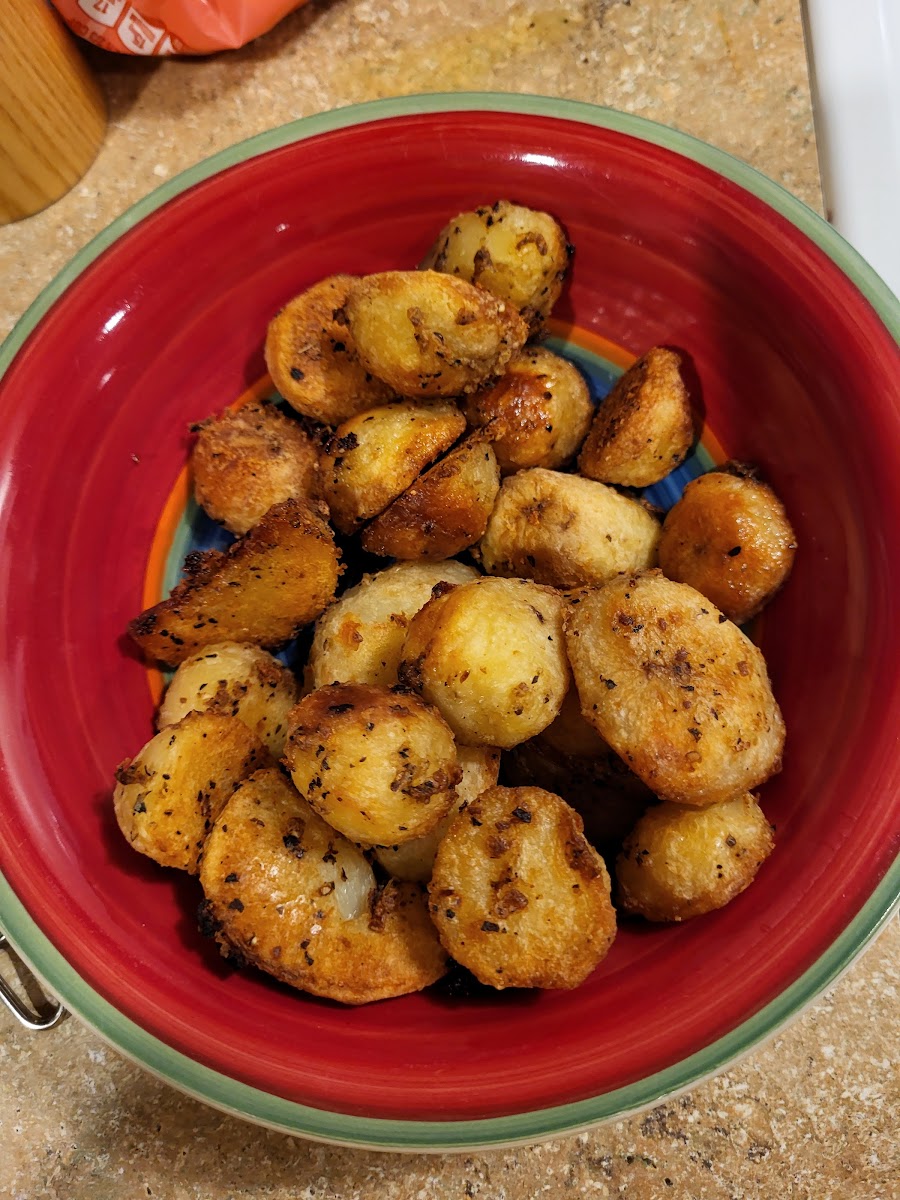
Crispy potatoes without deep frying are fully possible in a home oven or air fryer. The secret is not more oil. It is a dry, rough surface, a hot oven, and enough space for steam to escape.
This article shows how to make crispy potatoes without deep frying, including the science behind the crust, a step-by-step method, and fixes for soggy results.
Why most oven potatoes turn soggy
Wet potatoes steam instead of roasting. When cut potatoes hit a hot tray with water still on the surface, that water turns to steam and keeps the temperature at the surface low. The outside goes soft and leathery rather than crisp.
Crowding makes it worse. Potatoes packed shoulder to shoulder trap steam between them, so each piece cooks in damp air. A single layer with gaps lets steam escape and lets hot air reach every side.
Low heat is the third culprit. An oven set too cool dries the potato slowly without browning it.
The result is pale, dry, and limp. High heat drives off surface moisture fast, then browns the dry surface.
Serious Eats tested this directly. In a controlled test with 100-gram batches of Yukon Gold potatoes at 400 F (204 C), potatoes cooked straight from raw came out unevenly browned, wrinkled, and soft outside. The same potatoes, boiled first, came out browner and crisper.
The science of the crust
Crispness starts with starch. When potatoes boil, their starch granules absorb water and swell, a process called gelatinization. Serious Eats explains that this pre-organized starch layer becomes the structural foundation for crispiness.
Later, dry heat evaporates water from that gelatinized surface. What remains is a rigid, porous starch shell, and that shell is what cracks when you bite into it. Without the boil, the surface dehydrates before the starch has reorganized, so the crust ends up leathery instead of brittle.
Baking soda makes the effect stronger. Adding a small amount to the boiling water raises alkalinity, which breaks down the potato's outer cell layers faster. Serious Eats found that the softened surfaces then fracture and smear into a starchy slurry when tossed, and that slurry dries into a thin, brittle shell.
In the same test, the baking soda method won clearly. Potatoes boiled with baking soda, then roughed up and air fried, took about 11 minutes and produced the crispiest exterior, fluffy interior, and deep, even browning. Boiled-only potatoes took about 13 minutes and were noticeably better than raw, but not as crisp.
Roughing up the surface adds the final boost. Shaking parboiled potatoes in the pot or colander breaks their softened edges into ridges and crags. More surface area means more dehydration, more browning, and a louder crunch.
Pick the right potato
Floury potatoes crisp best. Countryfile's roast potato recipe calls for floury varieties such as Maris Piper or King Edward, and the logic holds for most markets: high-starch, low-moisture potatoes build a thicker crust.
In the United States, russets play the same role. They are starchy and fluffy inside, which suits roasting. Waxy potatoes, such as red potatoes, hold their shape well in salads but stay soft when roasted, so save them for other dishes.
Size matters too. Cut the potatoes into even chunks, roughly the same size, so they cook at the same rate.
Small pieces crisp faster and give more crust per bite. Large pieces stay fluffy inside but need longer in the oven.
Keep the skin on if you like it. Skin adds texture and helps the chunk hold together during the rough-up step. Scrub the potatoes well first.
The method: parboil, dry, roast
Start with about 1 kg (2.2 lb) of floury potatoes. Peel them or scrub them, then cut them into even chunks. Keep the pieces similar in size so none burn while others stay pale.
Parboil in salted water with a small amount of baking soda. Simmer until the edges soften and look slightly frayed, about 8 to 10 minutes for chunks. The potatoes should be tender at the edges but still firm in the center.
Drain and steam-dry. Tip the potatoes into a colander and let them sit for a minute or two so surface water escapes.
Then shake the colander firmly to rough up the edges. The pieces should look beaten up and coated in a pale starchy paste.
That paste is the future crust.
Coat lightly with oil and salt. A few tablespoons of a neutral oil with a high smoke point is enough for a full tray. Toss gently so the starchy coating stays on the potatoes rather than washing off into the bowl.
Roast on a preheated tray. Heat the oven to 425 F (220 C) for a convection oven, or 450 F (230 C) for a standard oven, following the 4ufood method, with the tray heating inside.
Spread the potatoes in a single layer with gaps between them. A preheated tray sears the bottoms on contact.
Roast for 35 to 40 minutes, turning once halfway. The 4ufood method bakes wedges for 20 minutes, flips them, then bakes 15 to 20 minutes more until deep golden. Countryfile's version roasts for 1 hour at 200 C (180 C fan), turning once, after a 15-minute boil and a smash step that adds surface area.
Season at the end. Salt, pepper, garlic powder, and smoked paprika all work, but add delicate herbs after roasting so they do not burn. A pinch of flaky salt while the potatoes are hot finishes the crust.
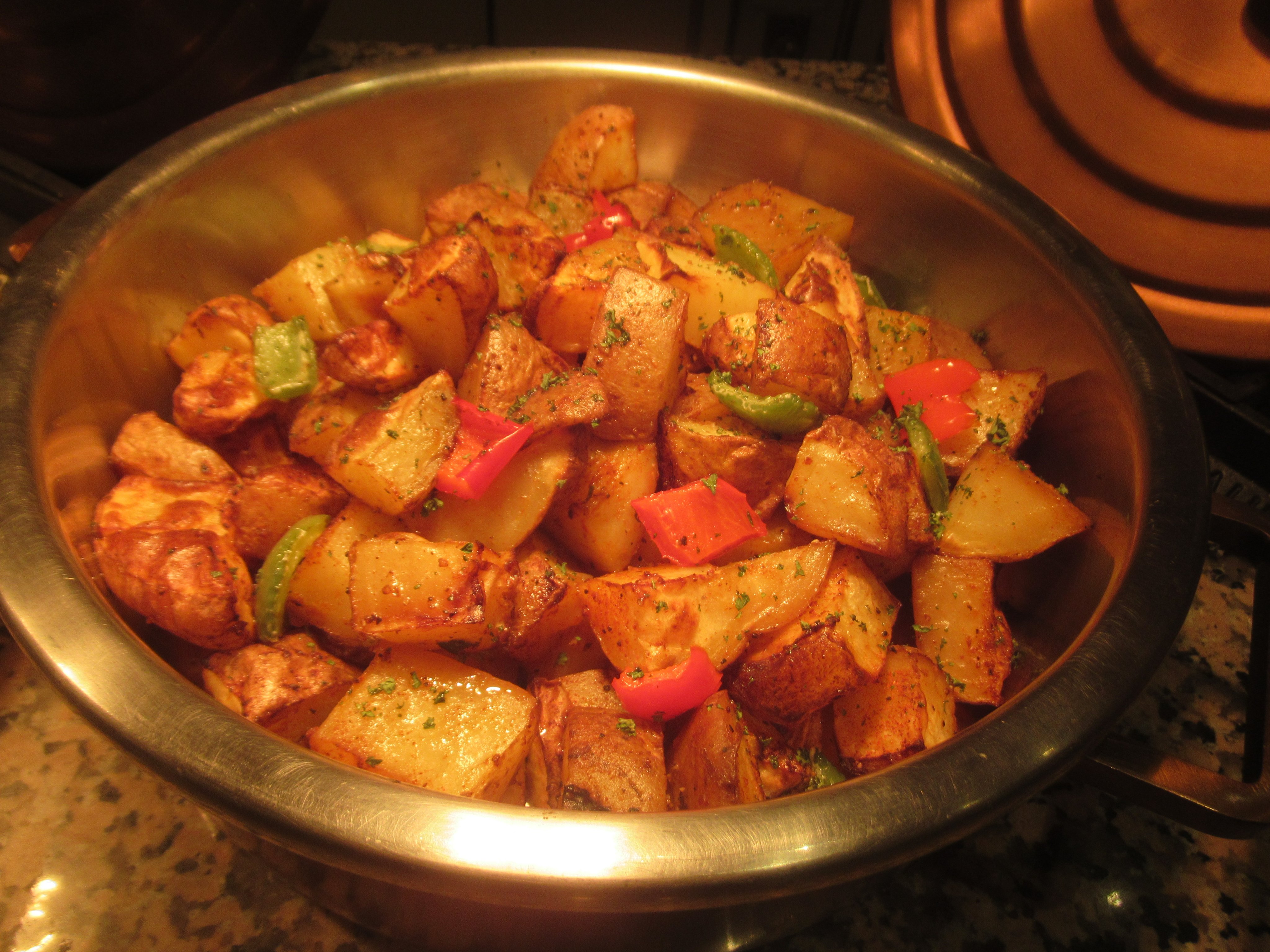
The air fryer version
The same steps work in an air fryer, with shorter times. Serious Eats ran its tests in an air fryer at 400 F (204 C), and the baking soda batch finished in about 11 minutes.
Work in small batches. Air fryers crisp by circulating hot air, and a crowded basket blocks that airflow. One layer, with space between pieces, gives the best result.
Shake the basket halfway through. A shake turns the pieces and exposes fresh surfaces to the hot air. Check early, since air fryers vary, and pull the potatoes when they are deep golden.
Fixes for common failures
If the potatoes come out soggy, the usual cause is moisture. Dry them longer after draining, and leave bigger gaps on the tray. A second tray is better than a crowded one.
If they stick, the tray was too cool or too dry. Preheat the tray with the oven, and brush it with oil just before the potatoes go on. Do not move the potatoes for the first minutes, so the crust sets before you flip them.
If they brown unevenly, the pieces were uneven or the tray was crowded. Cut even chunks next time, and rotate the tray halfway through. An oven thermometer can also help, since many ovens run hotter or cooler than the dial says.
If they go soft after serving, that is steam migration. Serious Eats notes that steam from the fluffy interior moves outward as potatoes cool, softening the crust. Serve at once, or hold them in a warm oven with airflow, and reheat briefly in an air fryer to revive the crust.
The same attention to heat and timing helps elsewhere in the kitchen. Preheat the oven properly before baking, learn how to tell when oil is hot enough without a thermometer, and remember that simmering and boiling are not the same step.
Frequently asked questions
Do I have to parboil potatoes before roasting?
You do not have to, but the results are clearly worse without it. Serious Eats found raw-roasted potatoes came out wrinkled and soft outside, while parboiled potatoes formed a rigid starch shell and crisped well.
How much baking soda should I add to the water?
Only a small amount. Serious Eats used a small amount of baking soda in its winning test, enough to raise alkalinity and soften the outer layers. Too much can leave a soapy taste, so keep it to a pinch per pot.
Can I use cornstarch instead of parboiling?
Cornstarch helps, but it is not a full substitute. The 4ufood method coats dried wedges in 1.5 tablespoons of cornstarch for 2.5 lb of potatoes, which bakes into an extra-crackly shell. For the best crust, combine the parboil with the cornstarch coating.
Why did my potatoes stick to the tray?
The tray was probably too cool or un-oiled. Preheat the tray in the oven, brush it with oil, and let the potatoes sear before moving them. A crowded tray also traps steam and makes sticking worse.
The bottom line
Crispy potatoes without deep frying come down to three moves: parboil with a little baking soda, dry and rough up the surfaces, then roast hot with space around each piece. The starch does the work, the oven finishes it, and serving at once keeps the crust at its best.
Tags: potatoes, roasting, oven cooking, side dishes
Latest in Food
- How to Store Opened Spices So They Keep Their Flavour
- How to Substitute Butter in Baking Without Ruining the Recipe
- Why Garlic Turns Blue or Green When Cooked
- Do You Need to Preheat the Oven for Baking
Subscribe for one practical cooking tip each week.
Related stories

Why Does Bread Go Stale Faster in the Refrigerator?
Bread goes stale faster in the fridge because starch recrystallizes fastest near 4°C. Here is the retrogradation science and the right way

Baking soda and baking powder: what's the difference?
Baking soda is pure sodium bicarbonate; baking powder adds two dry acids for double-acting lift. Learn when to use each, plus exact

What Is the Maillard Reaction in Simple Terms?
The Maillard reaction is the browning chemistry between amino acids and sugars above 140 C that creates the crust, color, and rich flavor