
Why Do Bananas Ripen Other Fruit Nearby? Ethylene Gas Explained
Key takeaways
- Bananas release ethylene gas, a natural plant hormone that switches on the ripening machinery in fruit.
- Nearby fruit absorbs the gas and ripens faster, so a banana can speed up avocados, pears, and peaches.
- The effect is so strong that banana tissue reacts to ethylene at concentrations as low as 0.1 parts per million.
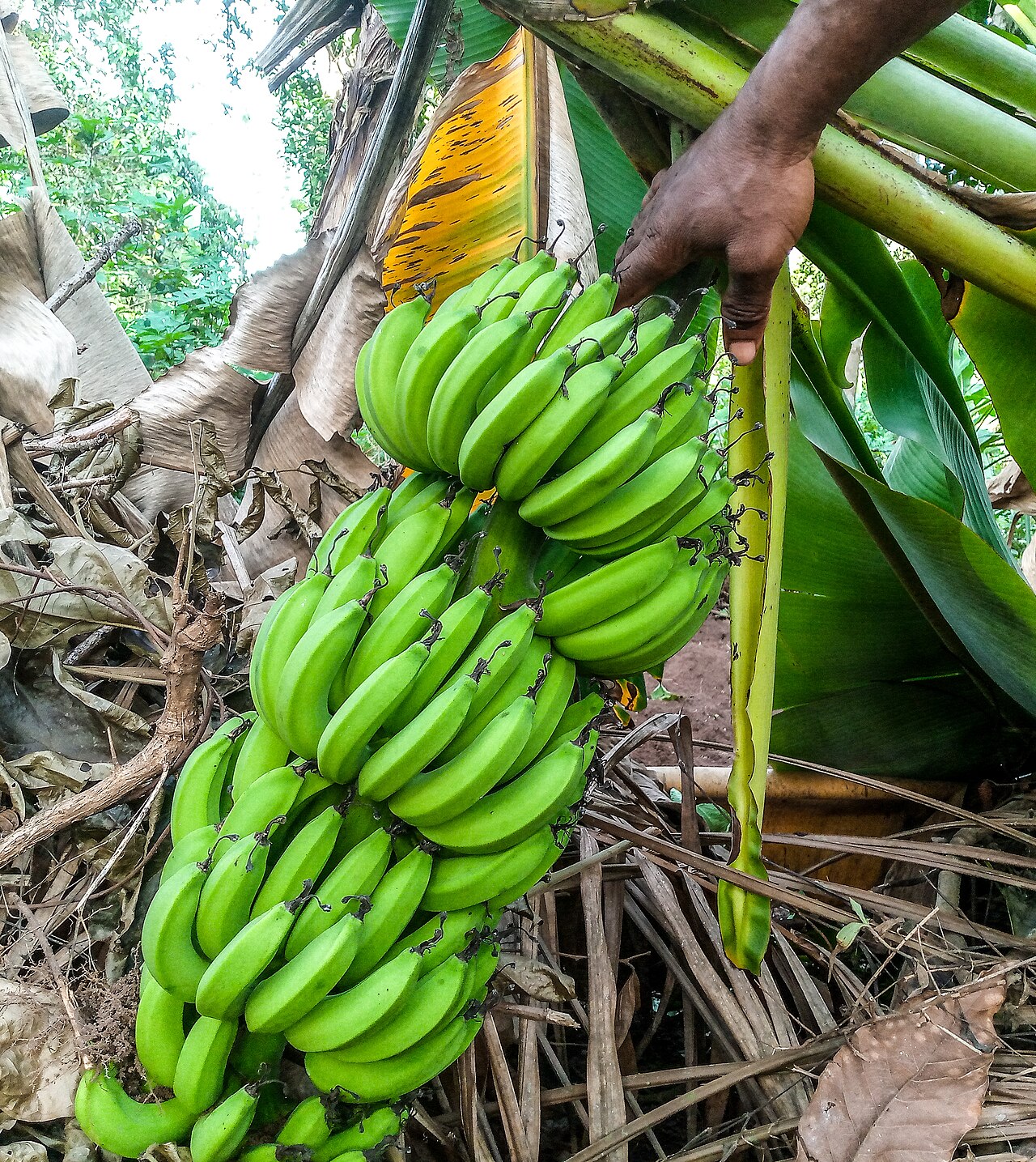
A freshly harvested bunch of bananas. Photograph: Frankincense Diala
A banana is not just sitting in your fruit bowl. It is broadcasting a chemical signal that nearby fruit can hear. That signal is ethylene gas, a simple molecule (C2H4) that plants use as a hormone to coordinate ripening.
This article explains why bananas ripen other fruit nearby, including how ethylene works as a plant hormone, why bananas produce so much of it, which fruits respond and which ignore it, and how to use or avoid the effect in your kitchen.
What ethylene is and why bananas make so much of it
Ethylene is a colorless gas that plants produce naturally. As Food Manifest explains in its ripening guide, it functions much like a hormone: it tells plant tissue when to start the ripening program. PostHarvest Technologies, a post-harvest science resource, describes ethylene as the trigger associated with the ripening of bananas, mangoes, and tomatoes.
Bananas belong to a group called climacteric fruits. The defining feature of this group is that they keep ripening after being picked, driven by a self-amplifying loop: ethylene triggers ripening, and ripening triggers more ethylene. A banana picked green is running on a built-in supply of starch and a hair-trigger ethylene response, which is why it ripens on your counter with no help from the plant.
The sensitivity is extreme. According to the LifeTips banana-storage guide, ethylene receptors in banana peel tissue saturate at just 0.1 parts per million.
For comparison, the same guide notes that apples emit ethylene at 10 to 100 ppm, tomatoes at 5 to 20 ppm, and ripe pears at 50 ppm.
A banana does not need much of its neighbor's gas to get the message.
What happens inside the fruit
When ethylene reaches a fruit's cells, it flips genetic switches. Enzymes such as amylase and pectinase get to work: amylase breaks stored starches into sugars, and pectinase breaks down pectin, the glue that holds cell walls together. That is why ripening fruit gets both sweeter and softer at the same time.
In bananas the sugar change is measurable. The LifeTips guide reports that during ripening, soluble solids rise from about 12 degrees Brix to 20 to 24 degrees Brix as starch converts into glucose, fructose, and sucrose.
The peel color changes are a side effect of the same program, as chlorophyll breaks down and yellow pigments take over.
Because ethylene is a gas, it drifts. A banana releasing ethylene into the air around a fruit bowl raises the concentration for everything nearby. Each nearby fruit that responds starts producing its own ethylene in turn, which is why the whole bowl seems to ripen in waves once the first banana turns yellow.
Which fruits listen and which ignore the signal
Not every fruit cares about ethylene. Climacteric fruits respond to it and continue ripening after harvest.
Food Manifest lists the group: apples, avocados, bananas, figs, mangoes, papayas, peaches, pears, and tomatoes. Put a ripe banana next to a hard avocado or an unripe pear, and ethylene will move them along.
Non-climacteric fruits, on the other hand, finish their ripening on the plant. Citrus fruits, grapes, cherries, pineapples, and berries will not get sweeter or softer from ethylene exposure.
Food Manifest notes that ethylene can still change the color of some non-climacteric fruits, such as citrus, but the sweetness stays put. A green strawberry next to a banana just stays a green strawberry, then rots.
This is the practical rule for your kitchen. Store ethylene-sensitive fruit with bananas only when you want it ripe. Keep bananas away from fruit you want to last.
The paper bag trick, explained by the science
The classic paper bag method is pure ethylene management. PostHarvest Technologies explains that placing fruit in a brown paper bag concentrates the ethylene the fruit gives off, speeding the ripening. KitchPrep's ripening guide adds that the method works within a day or two, especially if the bananas already show a little yellow.
Adding a companion fruit amplifies the effect. An apple or pear in the bag contributes its own ethylene, and a ripe avocado adds more.
The LifeTips guide warns, though, that unmonitored exposure beyond 36 to 48 hours can cause uneven softening and accelerated decay. The gas does not know when to stop.
The reverse works too. Storing bananas at least a meter away from other ethylene producers, in open air at 20 to 22°C, slows everything down. Once bananas reach full yellow with minimal green tips, moving them to the refrigerator halts the starch-to-sugar conversion; the peel darkens, but the flesh stays firm and sweet for five to seven days, according to the same guide.
Frequently asked questions
Do bananas ripen other fruit faster?
Yes, if the other fruit is climacteric. The ethylene gas bananas release triggers the ripening program in nearby apples, avocados, pears, peaches, mangoes, and tomatoes.
How long does it take a banana to ripen nearby fruit?
In a closed paper bag with the banana, noticeably firmer fruit like avocados or pears can ripen within one to two days. In an open bowl the effect is slower but still real.
Can you slow bananas from ripening other fruit?
Yes. Store bananas at least three feet from other fruit, in open air at room temperature, and away from ethylene producers like apples and onions. Refrigeration works once the banana is fully yellow.
Why do bananas ripen after being picked?
Bananas are climacteric fruit. Their ripening runs on an autocatalytic ethylene loop: a little ethylene triggers ripening, ripening releases more ethylene, and the process feeds itself without the parent plant.
Do bananas affect vegetables?
Leafy greens and some vegetables are ethylene-sensitive in a different way: the gas yellows leaves and speeds decay rather than ripening them. Keep bananas away from lettuce and herbs.
The bottom line
Bananas ripen other fruit nearby because they are heavy producers of ethylene gas, a natural plant hormone that switches on ripening in climacteric fruit. The sensitivity is astonishing: receptors saturate at a tenth of a part per million. Use the gas deliberately with a paper bag, or store bananas alone if you want your fruit bowl to last.
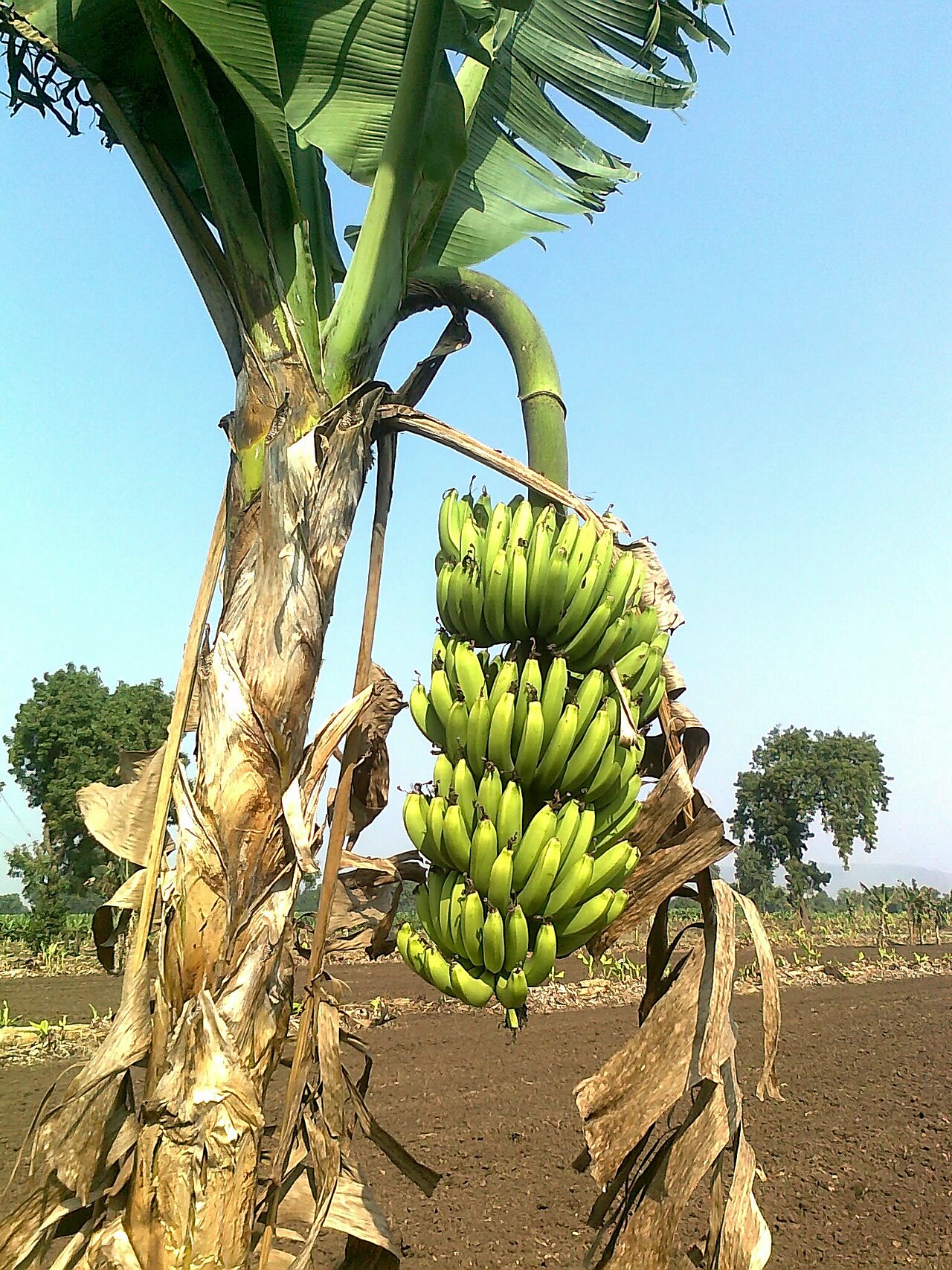
Bananas growing in Chinawal, India. Photograph: ABHIJEET
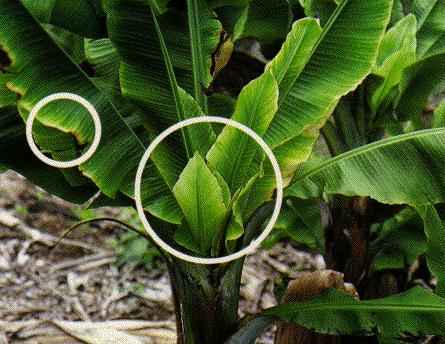
A banana plant affected by bunchy top virus, one of the most serious banana diseases worldwide. Photograph: State of Hawaii
Latest in Food & Cooking
- Why does grilled food taste smoky even on a gas grill?
- Why do daffodils come back every year without replanting?
- Why does coriander bolt so quickly in summer?
- How do trees survive freezing winters without moving?
Get one food-science explainer in your inbox every morning. Subscribe for the daily rundown.
Image Credits: Wikimedia Commons / Frankincense Diala, ABHIJEET, State of Hawaii
Related stories
Why Does Bread Go Stale Faster in the Refrigerator?
Bread goes stale faster in the fridge because starch recrystallizes fastest near 4°C. Here is the retrogradation science and the right way
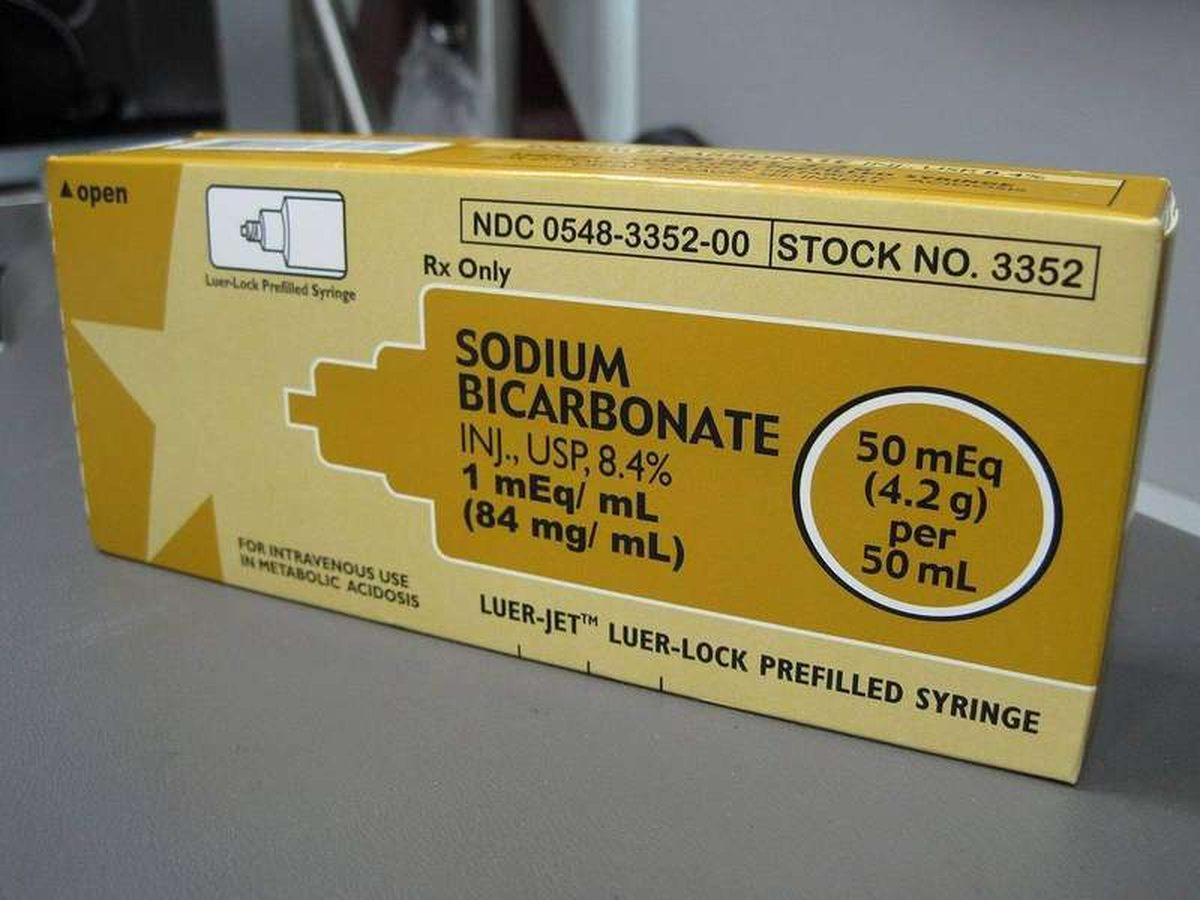
Baking soda and baking powder: what's the difference?
Baking soda is pure sodium bicarbonate; baking powder adds two dry acids for double-acting lift. Learn when to use each, plus exact
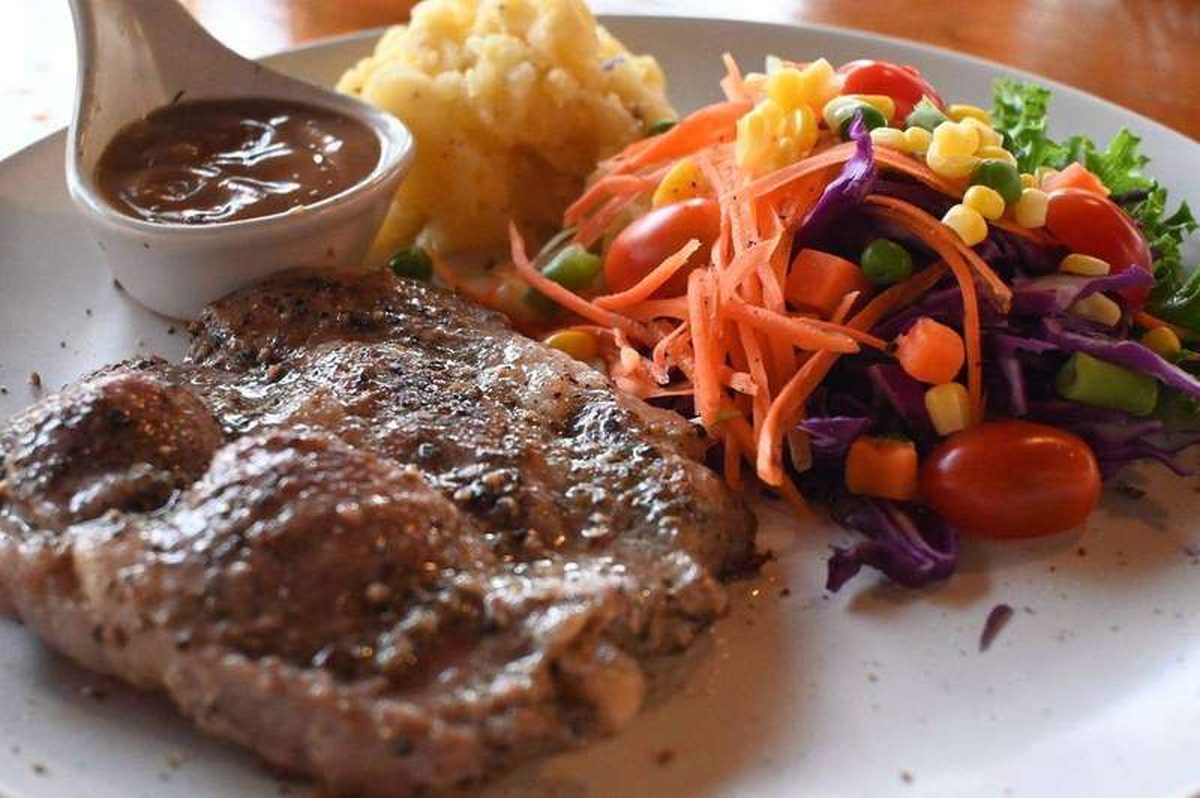
What Is the Maillard Reaction in Simple Terms?
The Maillard reaction is the browning chemistry between amino acids and sugars above 140 C that creates the crust, color, and rich flavor