
Why daffodils come back every year without replanting: bulbs explained
By Rive News / Research desk | Rive News / Published October 31, 2026 at 9:00 AM PKT
Key takeaways
- A daffodil bulb is a self-contained battery: fleshy modified leaves called scales store the carbohydrates that power spring flowering.
- After blooming, the leaves must photosynthesize for at least six weeks to recharge the bulb; removing them early causes flowerless "blind" bulbs.
- Bulbs need roughly 12 weeks of soil below 38°F to trigger the biochemical changes that build next year's flower buds.
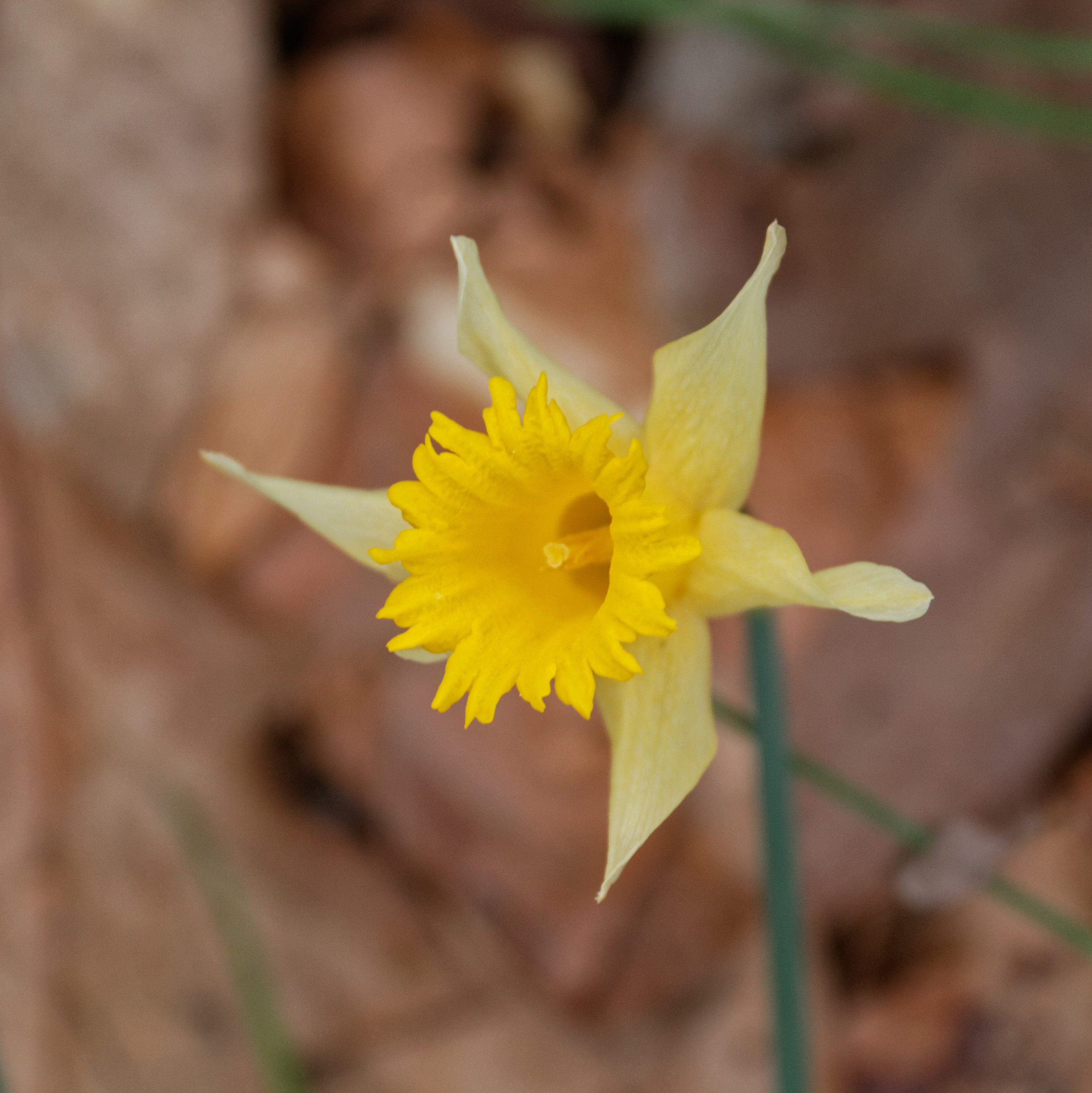
[A wild daffodil (Narcissus pseudonarcissus) in flower, photographed in France in March 2017.] Photograph: Daniel Villafruela
Image Credits: Wikimedia Commons (CC BY-SA 4.0)
A daffodil is a perennial plant that grows from a true bulb. That bulb is an underground bud wrapped in fleshy, modified leaves called scales, packed with stored carbohydrates. It is both the plant's pantry and its nursery.
It sits through the whole year underground, dormant for most of it, and each spring it pushes up leaves and flowers with no help from the gardener. The flower you see in March or April was largely assembled months earlier.
This article explains what the bulb actually contains, how the yearly energy cycle works, why winter cold matters, why the leaves must stay put after flowering, and why bulbs sometimes stop returning.
What a daffodil bulb actually contains
Cut a daffodil bulb open and you find a miniature plant already assembled inside. NC State Extension's Angela Mason Foster describes it precisely: a stem in the center, tiny flower primordia already formed, and layers of fleshy scales packed with carbohydrates and nutrients.
The scales are the storage tissue. Cornell Cooperative Extension's bulb factsheet explains that the energy daffodils need is "stored in modified leaves, called scales." A papery outer tunic keeps moisture from escaping, and a basal plate at the bottom anchors the roots.
This is why a daffodil needs no replanting. Unlike an annual grown from seed each year, the bulb carries the whole next plant and its fuel supply through dormancy in one package.
The yearly energy cycle, step by step
The cycle runs on a strict budget: spend in spring, save through early summer, rest through autumn, wake in winter.
In spring the bulb spends. Emerging leaves unfold and the stored carbohydrates fund the flower. Blooming is expensive work, and the reserves dip low while petals are out.
After flowering the plant shifts to earning. The leaves keep photosynthesizing and pump sugars back down into the scales. Cornell's guidance puts the goal plainly: most spring-flowering bulb care is aimed at helping the plant store energy in the bulb "so that it will overwinter and bloom again the following year."
Then the foliage yellows and dies back, the bulb goes dormant for summer, and roots regrow in autumn as the soil cools. The next flower's bud forms inside the bulb during this rest period, not during spring. Care for bulbs the way you would care for sweetcorn that bolts in summer heat: timing the calendar matters more than daily fussing.
Why winter cold is non-negotiable
Daffodils evolved in climates with real winters, and their chemistry expects one. David Trinklein, state horticulturist with the University of Missouri Extension, told the university's news service that bulbs need about 12 weeks of soil temperatures below 38°F to bloom.
The cold triggers vernalization: a long chill that converts starches to sugars and switches on the growth hormones that build the flower. NC State describes a similar window, 10 to 14 weeks of cool dormancy with soil between 35 and 50°F, in eastern North Carolina.
Without that chill, the machinery stalls. The flower primordium, the tiny rudimentary bud, never elongates. That is why spring-planted narcissus bulbs often sit out a year: they missed their autumn chill and must wait for the next winter to qualify for bloom.
Why the leaves must stay after flowering
The single most common mistake with daffodils is tidiness. Cutting the foliage down as soon as the flowers fade looks neat, but it starves the bulb of its recharge.
The Royal Horticultural Society, in its March 2026 guidance on daffodil blindness, says growth should normally continue for several weeks after flowering so food reserves are replenished "before the following season's flower buds are formed." Its instruction is specific: leave at least six weeks before leaves are removed or mown.
Tying the leaves into a knot is no better. The RHS warns that knotting reduces leaf function, and weakened leaves mean a weakened bulb. NC State gives the same advice in practical terms: let the foliage yellow naturally, and deadhead spent flowers so the plant does not waste resources making seeds.
A bulb deprived of its six-week recharge still comes up next spring. It just may come up flowerless, producing leaves only. Gardeners call this "blindness," and it is the number-one reason people assume a bulb has died.
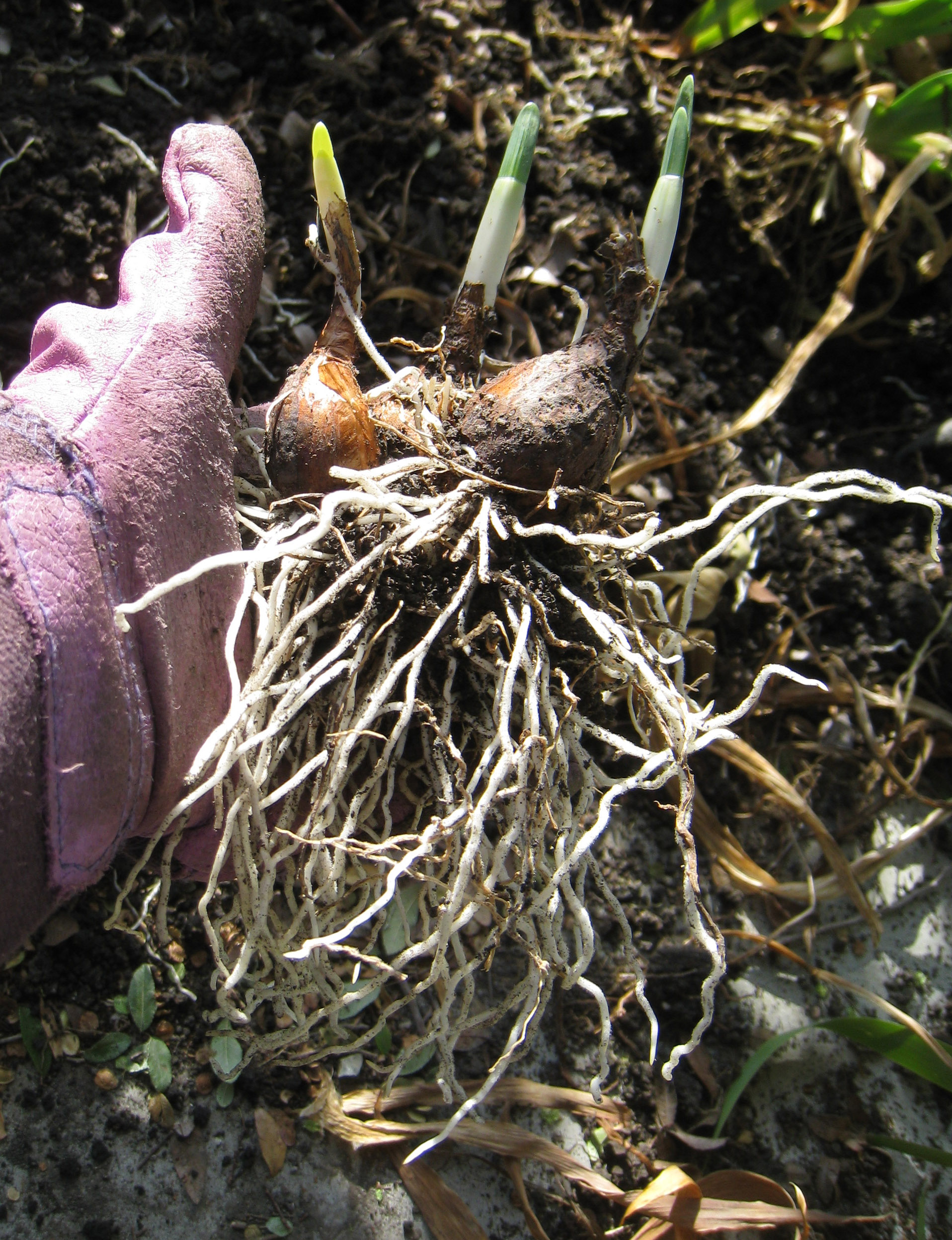
[Daffodil bulbs lifted from the soil and divided in Santa Clara, California, in October 2009.] Photograph: Dvortygirl
Image Credits: Wikimedia Commons
Why they sometimes stop coming back
Daffodils naturalize easily. Missouri Extension notes that of the major Dutch bulbs, "daffodils naturalize most easily in Missouri, while others sometimes have difficulty with the hot weather." NC State reports the same pattern across eastern North Carolina: they return year after year with minimal fuss.
When returns fade, one of four things is usually happening. The first is early foliage removal, which causes the blindness described above. The second is overcrowding. Cornell notes that after several years, daffodils form clumps of multiple bulbs, and as they become overcrowded the flowers get smaller and stems shorten.
The third is too little cold. Bulbs planted in warm climates without adequate chill bloom once on stored energy and then peter out. The fourth is poor drainage, which rots bulbs in wet summer soil.
Overcrowding is fixable. NC State recommends dividing and replanting about every three to five years to maintain vigor. Wait until the foliage has died back in summer, lift the clumps, separate the offsets, and replant at two to three times the bulb's depth with a 5 to 7.5 cm gap between bulbs, per the RHS. Cornell's own planting rule for daffodils: tops about 5 inches below the surface.
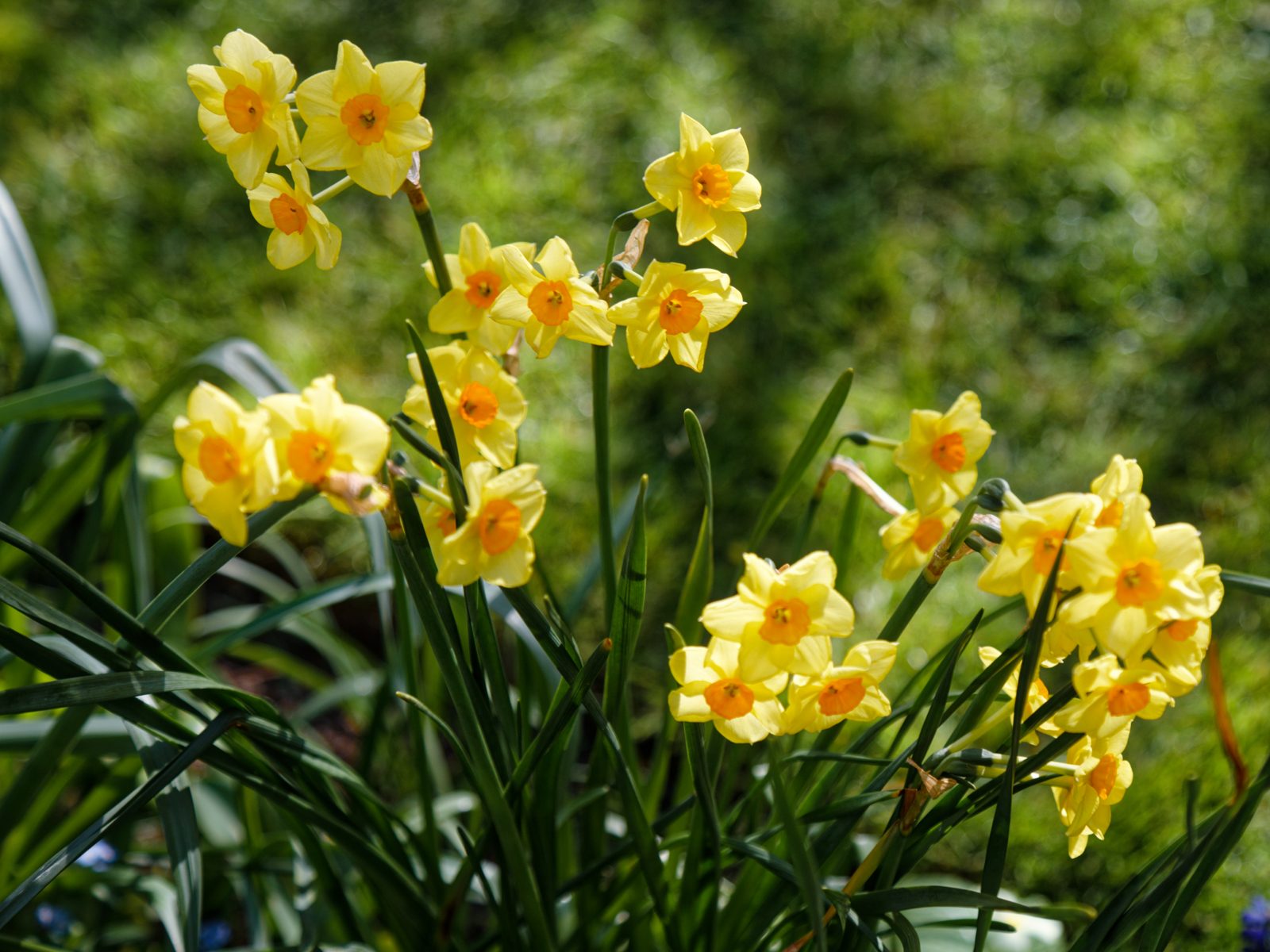
[Yellow narcissus daffodils blooming at an open garden day in Kencot, England, in April 2026.] Photograph: Acabashi
Image Credits: Wikimedia Commons (CC BY-SA 4.0)
What the science says, in one quote
Trinklein summed up the whole cycle in his Missouri Extension interview: "A bulb plant will draw on its reserves for the flower the following spring. Unless the weather is conducive for the plant to put a lot of energy reserves back into the bulb after it flowers, flowering will decrease each and every year."
Every spring display is a receipt for the previous year's savings.
Frequently asked questions
Do I need to dig up daffodil bulbs each year?
No. They are perennials designed to stay in the ground. Cornell's factsheet states that if cared for properly, "they'll come back year after year from a single fall planting." Lift and divide them only when clumps get crowded, roughly every three to five years.
Can I cut the leaves after the flowers die?
Not right away. Leave the foliage for at least six weeks after flowering, per the RHS, and let it yellow naturally. Removing it early short-circuits the recharge and can cause flowerless "blind" bulbs the following spring.
Why did my daffodils come up with leaves but no flowers?
That is daffodil blindness. The most common causes are foliage removed too soon, overcrowding, or too little winter chill. If the leaves were cut early last year, the bulb simply did not bank enough energy to build a flower.
Will daffodils spread on their own?
Yes, slowly. They naturalize by forming offsets that grow into clumps of multiple bulbs. In good conditions a single planting colonizes a bed or lawn over several years with no replanting.
The bottom line
Daffodils return because the bulb is a complete survival kit: stored fuel, a pre-built flower bud, and a clock set by winter cold. The gardener's job is mostly restraint. Plant them about 5 inches deep in autumn, leave the foliage alone for six weeks after bloom, and divide crowded clumps every few years. Do that, and one fall planting pays out every spring.
Tags: daffodils, bulbs, perennials
The Rive News research desk compiles explainers from public sources, including university extension services and horticultural institutions.
Related
- Knowing when sweetcorn is ready to pick, harvest timing follows the same calendar logic as bulb care.
- Coriander bolts quickly in summer, another plant whose behavior is driven by day length and temperature.
- Why tomatoes split after heavy rain, how weather events physically damage garden crops.
- Why orchid roots grow out of the pot, a different plant, a different storage strategy.
Get one short explainer like this in your inbox every day, subscribe to the Rive News newsletter.
Rive News standards: facts are attributed to named public sources; corrections are welcome and published promptly.
Related stories
What Is Companion Planting and Does It Work?
Marigolds work as a nematode cover crop, but the basil flavor claim failed repeated tests. An honest evidence review of what companion
Determinate vs. indeterminate tomatoes: growth, pruning, and harvest differences
Determinate tomatoes grow to a set size and ripen all at once, while indeterminate types vine all season. That one difference shapes
How to improve clay soil for gardening
Gypsum will not fix ordinary clay soil, say extension experts. What actually works: 2 to 3 inches of compost, mulch, better drainage,