
Why does grilled food taste smoky on a gas grill
By Rive News / Research desk | Rive News / Published October 31, 2026 at 9:00 AM PKT
Key takeaways
- The smokiness on a gas grill comes from dripping fat and juices, not from the gas flame itself.
- Smoke carries molecules like syringol and guaiacol that food absorbs through its fat and water.
- High heat plus the Maillard reaction adds the savory crust that makes the flavor complete.
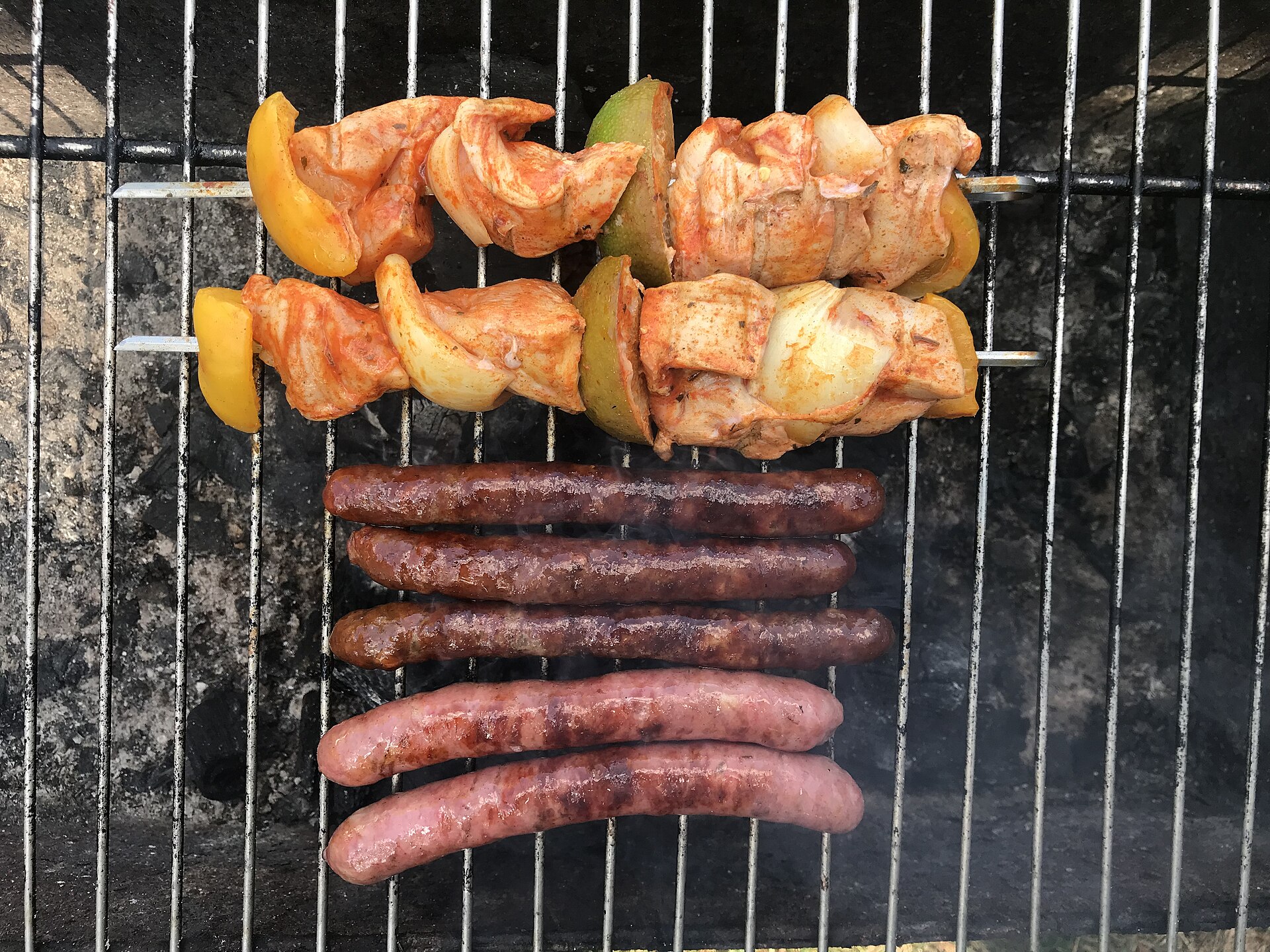
[Sausages and skewers cooking over a barbecue grill.] Photograph: Benoît Prieur
Image Credits: Wikimedia Commons
Wikimedia Commons
A gas grill burns clean. Propane and natural gas produce mostly carbon dioxide and water vapor, with none of the fragrant smoke that wood or charcoal throws off.
Yet a burger from a gas grill still tastes unmistakably grilled and smoky. The flavor is real, and its source is not the fuel.
This article explains why grilled food tastes smoky even on a gas grill, including where the smoke comes from, what smoke is made of, why food absorbs it so well, the role of the Maillard reaction, and how to dial the smokiness up or down.
The smoke comes from the food, not the fuel
Here is the central fact, stated plainly by Kristine Nolin, an associate professor of chemistry at the University of Richmond, writing for The Conversation: "Even on a gas grill, melting fats will drip onto the heat source and produce smoke. As smoke swirls around the barbecue, the food will absorb its flavors."
Meat is full of fat and water. As it cooks, the fat renders and melts, and juices drip down onto the burner covers, the flavorizer bars, or the hot metal below.
At grill temperatures those drips do not just sizzle. They vaporize and partially burn, throwing off a plume of smoke that rises, swirls around the closed lid, and washes back over the food.
This is why fattier cuts taste smokier than lean ones on the same grill. More dripping fat means more smoke generated. It is also why a burger shrinks as it cooks: the same rendering fat that leaves the patty becomes the smoke that flavors it.
The closed lid matters enormously. An open gas grill lets the smoke escape into the air.
With the lid down, the smoke recirculates and the food sits in it for the whole cook. If your gas-grilled food never tastes smoky, the lid is the first thing to check.
What smoke actually is
Smoke looks simple and is chemically crowded. As Nolin explains, smoke is made up of gases, water vapor, and small solid particles from the fuel. When wood burns, molecules called lignans break down into smaller organic molecules, including syringol and guaiacol, which are mainly responsible for the quintessential smoky flavor.
On a gas grill the fuel is the dripped fat rather than wood, so the smoke chemistry leans toward vaporized and combusted fat compounds rather than wood-smoke phenols. That is why gas-grill smokiness tastes like grilled meat rather than a campfire. The smoke still carries hundreds of flavor-active molecules, and it can also carry hundreds of possible carcinogens depending on what is burning, so heavy charring is worth keeping in check.
Drips do more than make smoke. When fat hits the hot surface it can flare, and the brief, intense heat of a flare-up chars the food's surface.
Those blackened spots taste bitter and acrid, which is a different flavor from smoke. The same principle explains why minced garlic turns bitter in a hot pan: tiny bits of food burn long before the main dish is done.
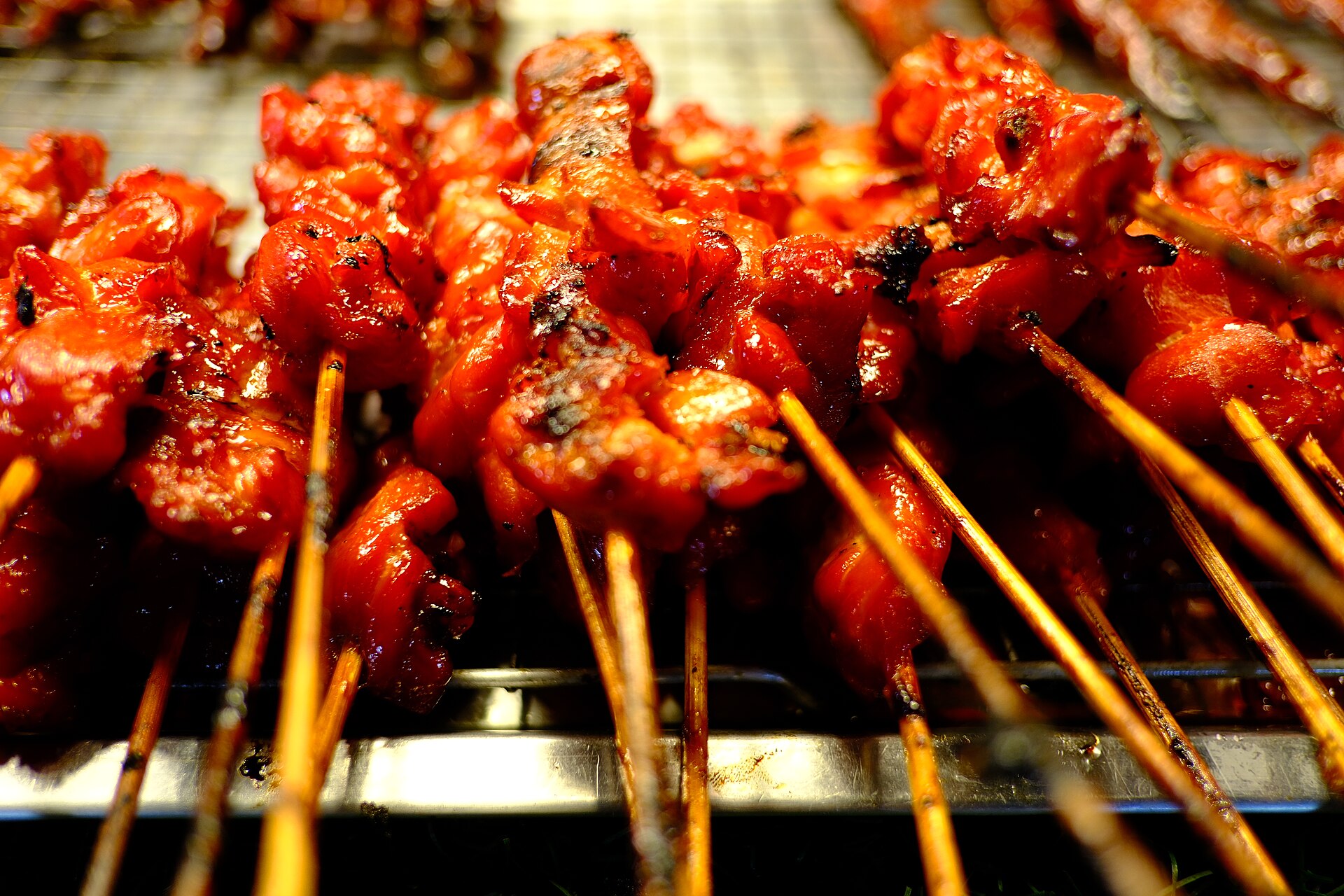
[Glazed charred skewers of grilled meat sizzling on the grill.] Photograph: PattayaPatrol
Image Credits: Wikimedia Commons
Why food grabs smoke so well
Food is unusually good at absorbing smoky flavors because it contains both fats and water, and each binds to different types of molecules. Nolin lays out the chemistry: fats are non-polar, meaning they have a weak electric charge, and they easily grab other non-polar molecules. Water is polar, with areas of positive and negative charge like a magnet, and it binds well to polar molecules.
Smoky flavor compounds come in both varieties, so a food with both fat and moisture catches a wider spectrum of them. A dry, lean chicken breast takes on less smoke than a well-marbled steak for exactly this reason. Brined or marinated meats, with extra surface moisture, pick up more.
One practical trick follows directly from the chemistry. Nolin suggests periodically spraying the food with water during barbecuing to make it smokier. The added moisture gives polar smoke compounds more to bind to, and the evaporating water keeps the surface active for absorption.
This fat-and-water absorption is not unique to smoke. It is why warm milk tastes sweeter than cold milk: temperature and composition change which flavor molecules reach your senses and how strongly they bind.
The Maillard reaction does the rest
Smoke is only half of grilled flavor. The other half is browning.
When meat cooks at high heat, the first thing that happens is that water near the surface boils off. Once the surface is dry, proteins and sugars undergo the Maillard reaction, a cascade that produces a complex mixture of molecules tasting savory or meaty, with deepened scents and flavors.
The Maillard reaction and the flavors it produces are influenced by temperature, acidity, and the ingredients in any sauces, rubs, or marinades. This is why a sugary barbecue sauce chars faster and tastes different from a salt-and-pepper rub: different starting molecules, different end flavors.
Vegetables get their own version. Grilling lets their water evaporate or drip away instead of getting trapped the way it does in a pan, which keeps them from going soggy and promotes caramelization. Those reactions turn carbohydrates and sugars into smaller compounds like maltol, which tastes toasty, and furan, which tastes nutty, meaty, and caramel-like.
Together, smoke plus Maillard browning is what your brain files under "grilled flavor." Gas provides the heat. The food provides everything else.
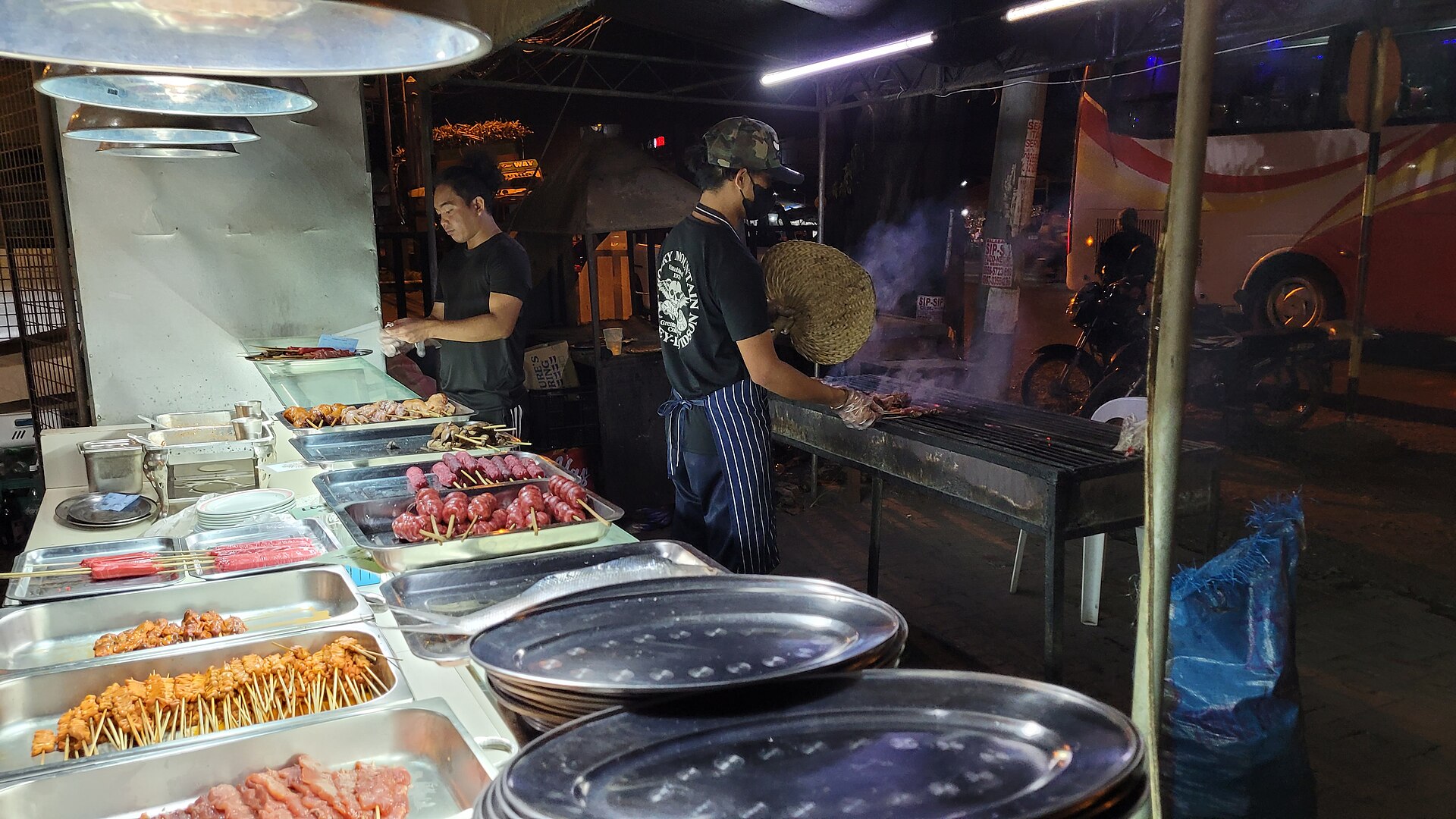
[Barbecue skewers grilling at a Filipino barbecue restaurant.] Photograph: Obsidian Soul
Image Credits: Wikimedia Commons
How to get more or less smokiness
To boost smoke on a gas grill, cook fattier cuts, keep the lid closed, and let the drips do their work. A light spritz of water on the food helps smoke compounds bind. Wood chips in a smoker box add genuine wood-smoke phenols for those who want the charcoal-grill profile.
To reduce it, trim excess fat, cook leaner cuts, grill with the lid open, and wipe the flavorizer bars clean so old grease does not keep smoking. Cleaning matters more than most grillers think. Rancid grease smoke tastes stale and bitter, nothing like fresh drippings.
Watch the flare-ups either way. A little char adds complexity.
A lot adds bitterness and the unwanted compounds that come with burning fat. Move food to a cooler zone when flames appear.
For contrast, consider how flavor builds without any heat at all. Flat sparkling water tastes sour because of dissolved chemistry, not cooking.
Coffee blooms when water hits fresh grounds because trapped gases escape. Flavor is always chemistry. Grilling just runs it hot and fast.
Does a gas grill produce less smoke flavor than charcoal?
Yes, but not zero. Charcoal and wood add their own smoke phenols like syringol and guaiacol on top of the fat-drip smoke. Gas grills get only the fat-drip smoke, which is why the flavor is milder and meatier rather than campfire-like.
Why does food taste smokier with the lid closed?
The lid traps the smoke and recirculates it around the food for the whole cook. With the lid open, most smoke escapes into the air before the food can absorb it.
Are the black grill marks the smoky flavor?
Partly. Grill marks are Maillard browning and caramelization, which taste savory.
True smoky flavor comes from absorbed smoke compounds. Both contribute to what you perceive as grilled taste.
Is the smoke from a gas grill harmful?
Smoke from burning drippings can contain carcinogenic compounds, and Nolin notes smoke can contain hundreds of possible carcinogens depending on the fuel. Occasional grilling is a normal part of cooking, but avoid heavy charring and clean grease buildup regularly.
Can I add real wood smoke flavor to a gas grill?
Yes. A smoker box or foil pouch of soaked wood chips placed over the burner generates genuine wood smoke inside the closed grill, adding the phenols that gas alone cannot produce.
The bottom line
Grilled food tastes smoky on a gas grill because the smoke was never about the gas. It comes from your food: melting fat and juices drip onto the hot metal, vaporize into smoke, and swirl back up under the closed lid, where the food's fat and water absorb the flavor compounds. The Maillard reaction adds the savory crust, and together they read as unmistakably grilled.
Clean fuel, dirty drips, closed lid. That is the whole recipe.
Tags: gas grill, smoky flavor, grilling chemistry, Maillard reaction, barbecue
Rive News's research desk covers the science behind everyday cooking.
Related
- Why burgers shrink as they cook
- Why minced garlic burns bitter in a hot pan
- Why warm milk tastes sweeter than cold
- Why flat sparkling water tastes sour
Subscribe to the Rive News newsletter for one clear explainer every morning.
Rive News publishes research-backed explainers. Corrections: reply to any article and we will review it.
Related stories
Why Does Bread Go Stale Faster in the Refrigerator?
Bread goes stale faster in the fridge because starch recrystallizes fastest near 4°C. Here is the retrogradation science and the right way
Baking soda and baking powder: what's the difference?
Baking soda is pure sodium bicarbonate; baking powder adds two dry acids for double-acting lift. Learn when to use each, plus exact
What Is the Maillard Reaction in Simple Terms?
The Maillard reaction is the browning chemistry between amino acids and sugars above 140 C that creates the crust, color, and rich flavor