
Why Does Melted Cheese Stretch but Crumble When Cold?
Key takeaways
- Cheese is a casein protein network trapping fat and water.
- Heat loosens the network so strands slide and stretch instead of snapping.
- Cold locks fat solid and the network rigid, so cheese crumbles.

Melted cheese in a fondue dish. Heat loosens the casein protein network, letting it stretch instead of snap. Photograph: Wikimedia Commons contributor
Image Credits: Wikimedia Commons / contributor
The same block of mozzarella pulls into long elastic ribbons when hot and snaps into dry crumbs when cold. The transformation is not magic; it is materials science. Cheese is an emulsion of dairy fat and water held together by a network of milk proteins called casein, and temperature decides whether that network behaves like rubber or like glass.
This article takes a closer look at why melted cheese stretches but cold cheese crumbles, including how heat loosens the casein network, why some cheeses stretch and others refuse, and what acidity and aging do to the melt.
What cheese is made of at the molecular level
Milk proteins, mainly casein, are the skeleton of every cheese. During cheese making, casein micelles clump into a three-dimensional mesh that traps droplets of fat and water. The network is held together by weak bonds, including bridges of calcium phosphate that lock casein molecules to one another.
When cold, this structure is rigid. Dairy fat stays solid, water sits trapped in place, and the casein strands are stiffly bound.
Pull on a cold slice and the brittle network fractures along its weakest bonds, which is why cold cheese crumbles and snaps. Fresh, high-acid cheeses like feta and paneer are the extreme case: their casein molecules attract each other directly and bind tightly, so they barely melt at all.
How heat turns the network stretchy
Melting plays out in stages as temperature rises, as food scientist Prateek Sharma of Utah State University told Scientific American. Near room temperature, the cheese's fats begin to melt and seep, which is why a block left on the counter beads with sweat.
Around the temperature of hot tap water, proteins start losing water, shrinking and softening. By about 160 degrees Fahrenheit (71 degrees Celsius), the process is complete and everything is molten.
Crucially, melted cheese does not behave like melted ice or butter. Those become true liquids that flow and drip.
Mozzarella oozes and stretches because its casein network stays flexible enough to move but coherent enough to hang together. Heat breaks just enough of the weak bonds that protein strands can slide past one another, while water and liquid fat lubricate the sliding, as Neatorama's summary of Serious Eats' cheese chemistry explains. The strands elongate into an open network instead of breaking apart, and that elongation is the stretch you see on a pizza slice.
Why some cheeses stretch and others will not
A satisfying melt needs a Goldilocks level of bonding, in Sharma's framing. Too much calcium locking the casein together and the cheese will not melt; too little and it melts too fast and turns runny.
Cheese makers tune this balance with acidity, said John Lucey, a food scientist at the University of Wisconsin-Madison and director of the Wisconsin Center for Dairy Research. In cheese made at near-neutral pH, calcium bonds hold casein stiffly.
Adding acid dissolves some of those bonds, making the system more fluid. But too much acid lets charged regions of casein grab each other directly, locking the network tight enough to prevent stretch entirely.
Mozzarella gets extra help from its making process. In pasta filata, the Italian "spun paste" method, hot curd is stretched and kneaded so casein molecules align into long parallel fibers.
Those aligned fibers are the physical basis of the famous cheese pull. Cheddar and mozzarella rank among the best cheeses for cheese pulls, while high-acid or heavily aged cheeses crumble, according to research summarized on Wikipedia's cheese pull article, which notes a RecordSetter-verified 41.5-inch (105 cm) pull achieved in 2016.

Cheese fondue, where melted cheese, wine, and gentle heat keep the protein network fluid enough to coat every bite. Photograph: Wikimedia Commons contributor
Image Credits: Wikimedia Commons / contributor
What aging does to the stretch
Time changes the network after the cheese leaves the dairy. Enzymes from residual rennet and natural milk enzymes slowly snip casein strands, a process called proteolysis. In the first weeks of refrigerated storage, mild proteolysis actually improves mozzarella by softening the matrix and boosting meltability.
Push it too far and the network fragments beyond repair. The cheese loses its stretch and releases free oil when heated instead of flowing.
That is why mozzarella made for pizza has an optimal window of about two to four weeks of refrigerated aging, according to dairy science educators at the Agriculture Institute. An old block of low-moisture mozzarella melts greasier and pulls shorter than a fresh one, and Parmesan, aged for months, crumbles because its rigid, fragmented network breaks into pieces instead of stretching.
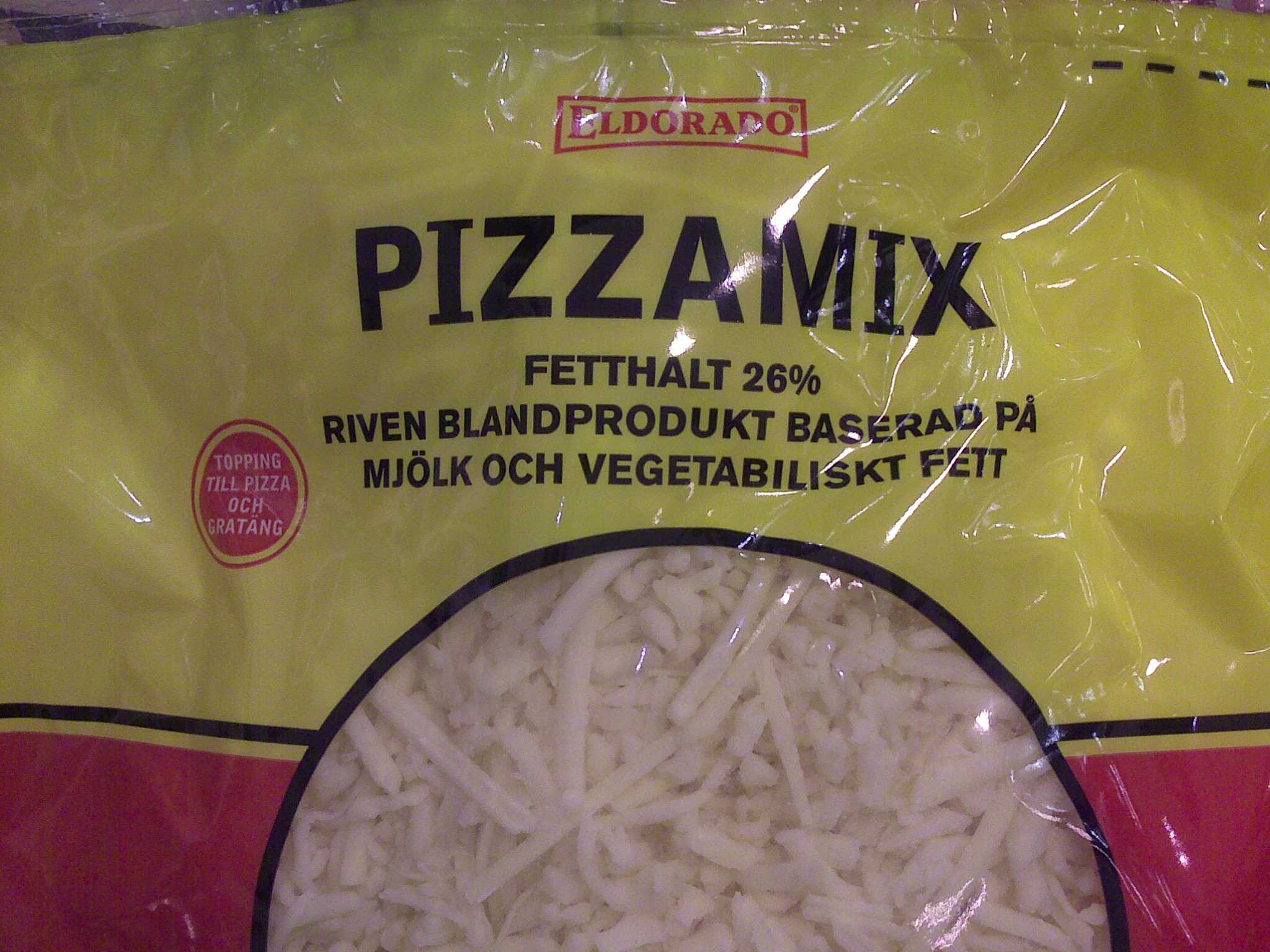
Shredded pizza cheese. Shredding increases surface area so heat reaches the casein network fast and evenly. Photograph: jonsson / Wikimedia Commons
Image Credits: Wikimedia Commons / jonsson
Frequently asked questions
Why does mozzarella stretch more than cheddar?
Mozzarella's pasta filata process aligns casein into parallel fibers built for stretching, and its acidity sits in the sweet spot. Cheddar stretches well too but its network is less aligned, so it flows more than it pulls.
Why does cheese get greasy when overheated?
Excessive heat breaks the emulsion: the protein network collapses and squeezes out liquid fat instead of holding it. Gentle, gradual heating keeps the network intact and the melt smooth.
Why do feta and paneer never melt?
Both are high-acid cheeses where casein molecules bind directly to each other instead of through flexible calcium bridges. Heat cannot loosen those direct bonds, so the cheese holds its shape.
Why does cheese "sweat" when left out?
Around 90 degrees Fahrenheit (32 degrees Celsius), dairy fat inside the cheese liquefies and seeps through the casein network to the surface. The beads are melted fat, not water, and they are the first visible stage of the melting process described above.
Does freezing change how cheese melts?
Freezing can damage the protein network and squeeze out moisture, so thawed cheese often melts less smoothly and releases more oil. It is usable for cooking but rarely stretches like fresh.
The bottom line
Cold cheese crumbles because its casein network is locked rigid around solid fat, so any pull fractures brittle bonds. Heat melts the fat, loosens just enough bonds, and lets protein strands slide past each other on a film of water and oil, which is the stretch. Acidity, aging, and the maker's hand set where each cheese lands on that spectrum, from mozzarella's elastic pull to Parmesan's dignified crumble.
Latest in Food & Cooking
- Why grilled food tastes smoky even on a gas grill
- Why your car has a rev limiter, and what cooking borrows from the idea
- Why doors stick more in summer than in winter
- Why climbers tape their fingers before hard routes
Subscribe to the Rive News newsletter for one science-backed explainer like this every morning.
Related stories
Why Does Bread Go Stale Faster in the Refrigerator?
Bread goes stale faster in the fridge because starch recrystallizes fastest near 4°C. Here is the retrogradation science and the right way

Baking soda and baking powder: what's the difference?
Baking soda is pure sodium bicarbonate; baking powder adds two dry acids for double-acting lift. Learn when to use each, plus exact

What Is the Maillard Reaction in Simple Terms?
The Maillard reaction is the browning chemistry between amino acids and sugars above 140 C that creates the crust, color, and rich flavor