
Why Does Toast Taste Different From Bread, Exactly?
Key takeaways
- Dry heat drives water from bread's surface, letting it exceed boiling point.
- The Maillard reaction then builds hundreds of new flavor compounds.
- Toast also tastes sweeter because heat breaks starches into simpler sugars.
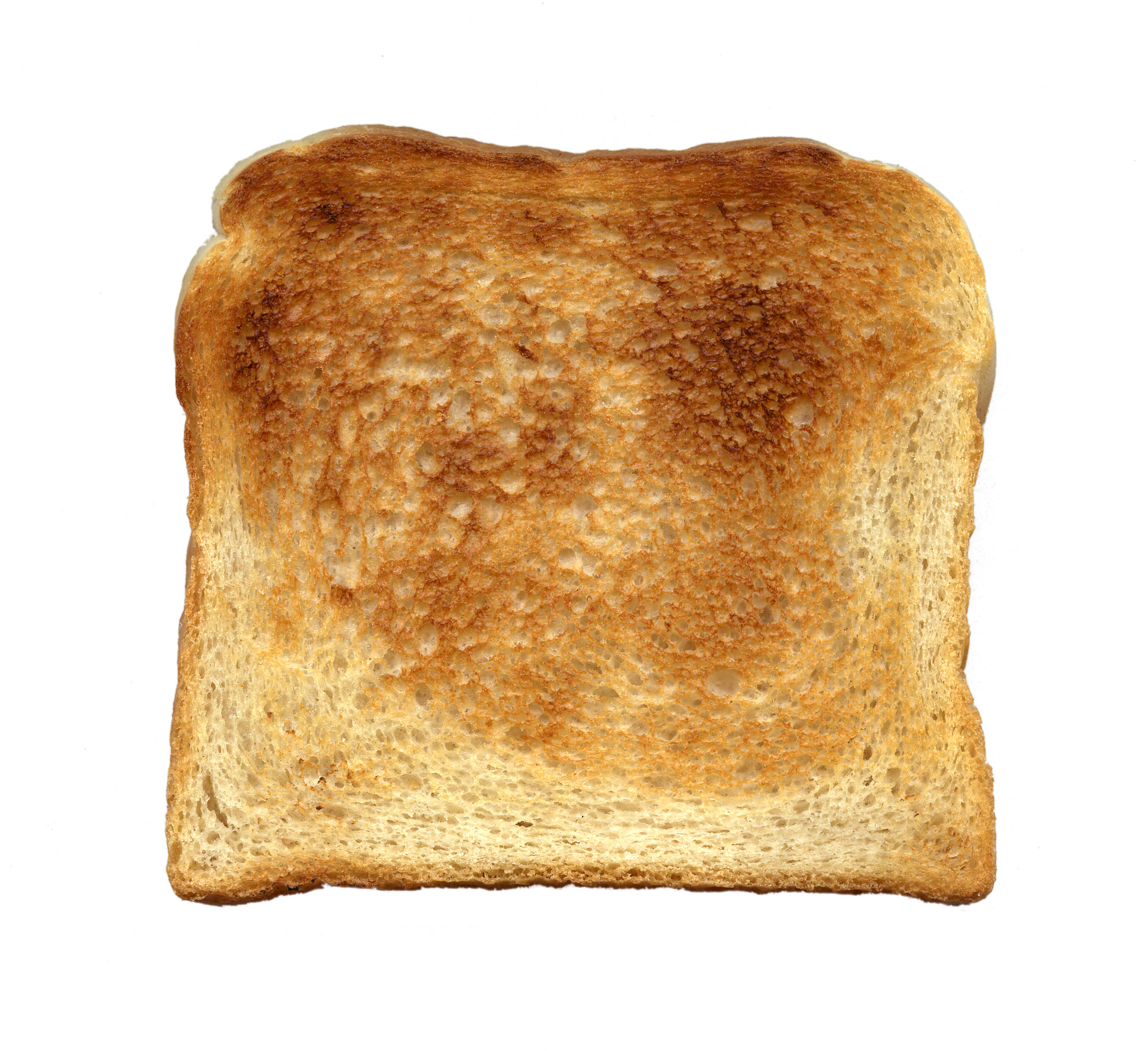
Toasted bread. The brown color and new flavor come from the Maillard reaction between amino acids and sugars. Photograph: Wikimedia Commons contributor
Image Credits: Wikimedia Commons / contributor
Toast is not just hot bread. The same slice, chemically transformed by a few minutes of dry heat, gains a brown crust, a crisp bite, and a flavor plain bread never had. Two processes drive the change: water leaving the bread, and a cascade of chemical reactions called the Maillard reaction.
This article takes a closer look at why toast tastes different from bread, including how moisture loss sets the stage, what the Maillard reaction builds from simple ingredients, and why toast ends up crunchier, sweeter, and more aromatic.
First the water has to go
Fresh bread is roughly 35 to 40 percent water, and water is the enemy of browning. As long as the surface stays wet, its temperature cannot rise past 100 degrees Celsius, because added heat goes into boiling water away instead of heating the bread.
A toaster solves this with dry, radiant heat. Surface water evaporates first, and once the surface dries, its temperature can climb well above boiling.
That is the trigger for everything that follows. This is also why soggy, steamy bread never browns properly and why a second, gentler toasting can improve texture: the first pass drives off bulk water, the second finishes the browning evenly, as TeachChemistry's classroom experiment on double-toasted bread demonstrates.
The same drying explains the crunch. Crispness is mostly the absence of water in a rigid starch structure. Toasting also partially reverses staling: the retrogradation that makes day-old bread firm unwinds between about 60 and 80 degrees Celsius, freeing water to re-bond with starch, which is why toasting revives stale bread instead of just drying it further.
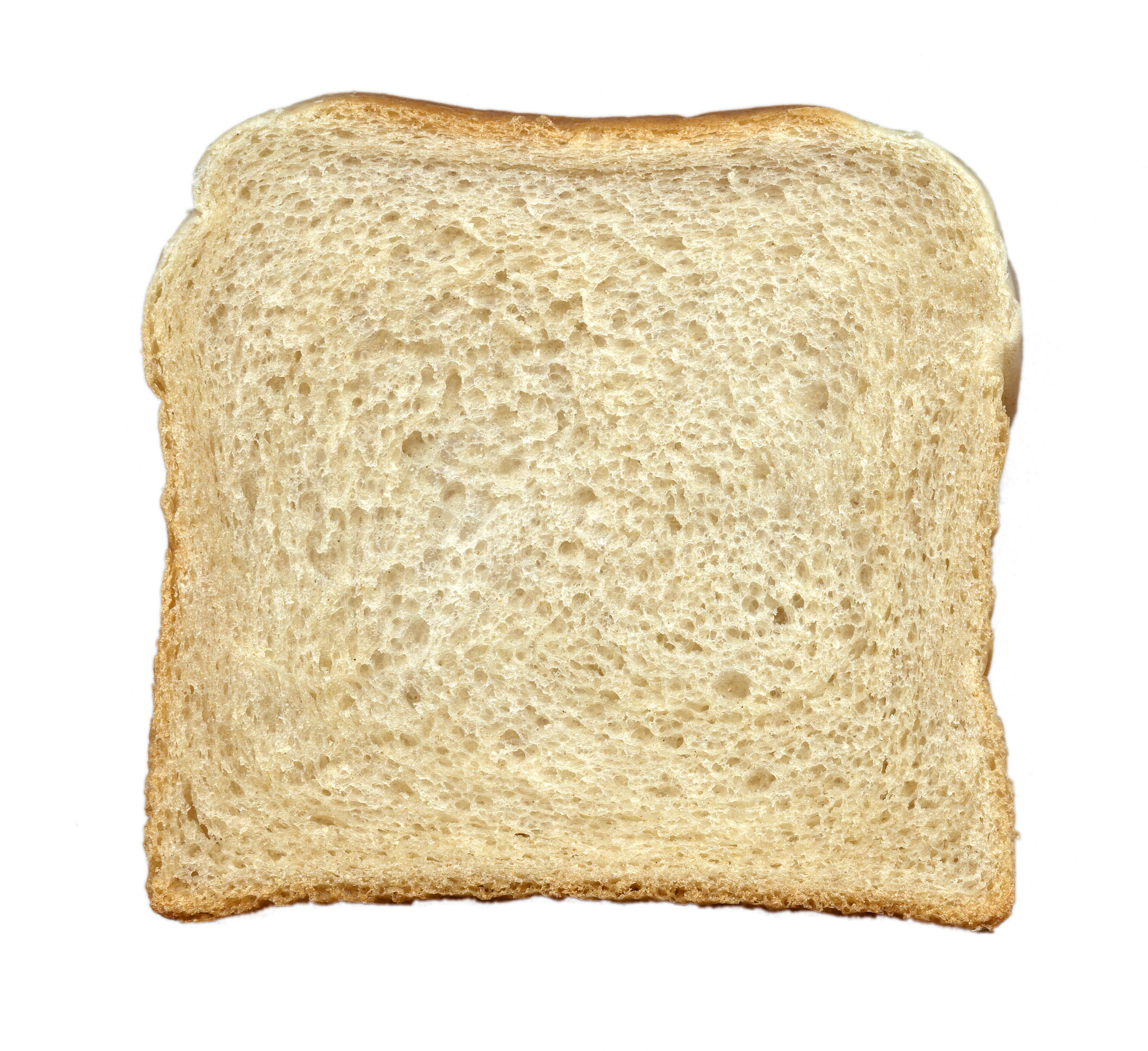
The same slice of bread before toasting. Compare with the toasted version above: color, texture, and flavor all change in minutes. Photograph: Wikimedia Commons contributor
Image Credits: Wikimedia Commons / contributor
The Maillard reaction builds flavor from scratch
Once the surface passes about 140 degrees Celsius, the Maillard reaction begins. Named for French chemist Louis-Camille Maillard, who described it in 1912, it is a reaction between amino acids (from proteins like gluten) and reducing sugars (like glucose) under heat. Bread supplies both: flour provides starch and gluten, and yeast activity leaves behind simple sugars.
The reaction runs through 20 to 30 steps that food scientists are still mapping, but the outline is clear. Sugars and amino acids combine, rearrange into intermediate compounds, then break down into hundreds of new molecules. These include melanoidins, which give toast its brown color, and families of aromatic compounds such as furanones, which Science Oxygen notes contribute a caramel-like flavor.
Dryness is essential because the reaction accelerates dramatically between roughly 140 and 230 degrees Celsius (285 to 445 degrees Fahrenheit), temperatures only reachable once surface water is gone. Higher pH speeds it further, which is why a little baking soda deepens browning in some recipes. The result is not one new taste but an orchestra: nutty, caramel, roasted, and savory notes that plain bread, which never got hot enough on its cut surfaces, simply does not contain.
Why toast is crunchier, sweeter, and easier to spread on
Texture and flavor change together. Heat alters the starch network: long starch chains break into shorter fragments, some of them simple sugars, which is why toast tastes perceptibly sweeter than the bread it came from even with no toppings.
The firm, dry surface also changes how toast behaves on the plate. It supports butter and spreads without tearing, and warmth helps fats melt into the crumb. Push the reaction too far, though, and browning becomes charring: the Maillard reaction is an oxidation process, and fully carbonized toast is technically burned bread.
Toasting even changes digestibility. Breaking down some carbohydrates before eating gives digestion a head start, which is one reason toast has a reputation as gentle food for unsettled stomachs.
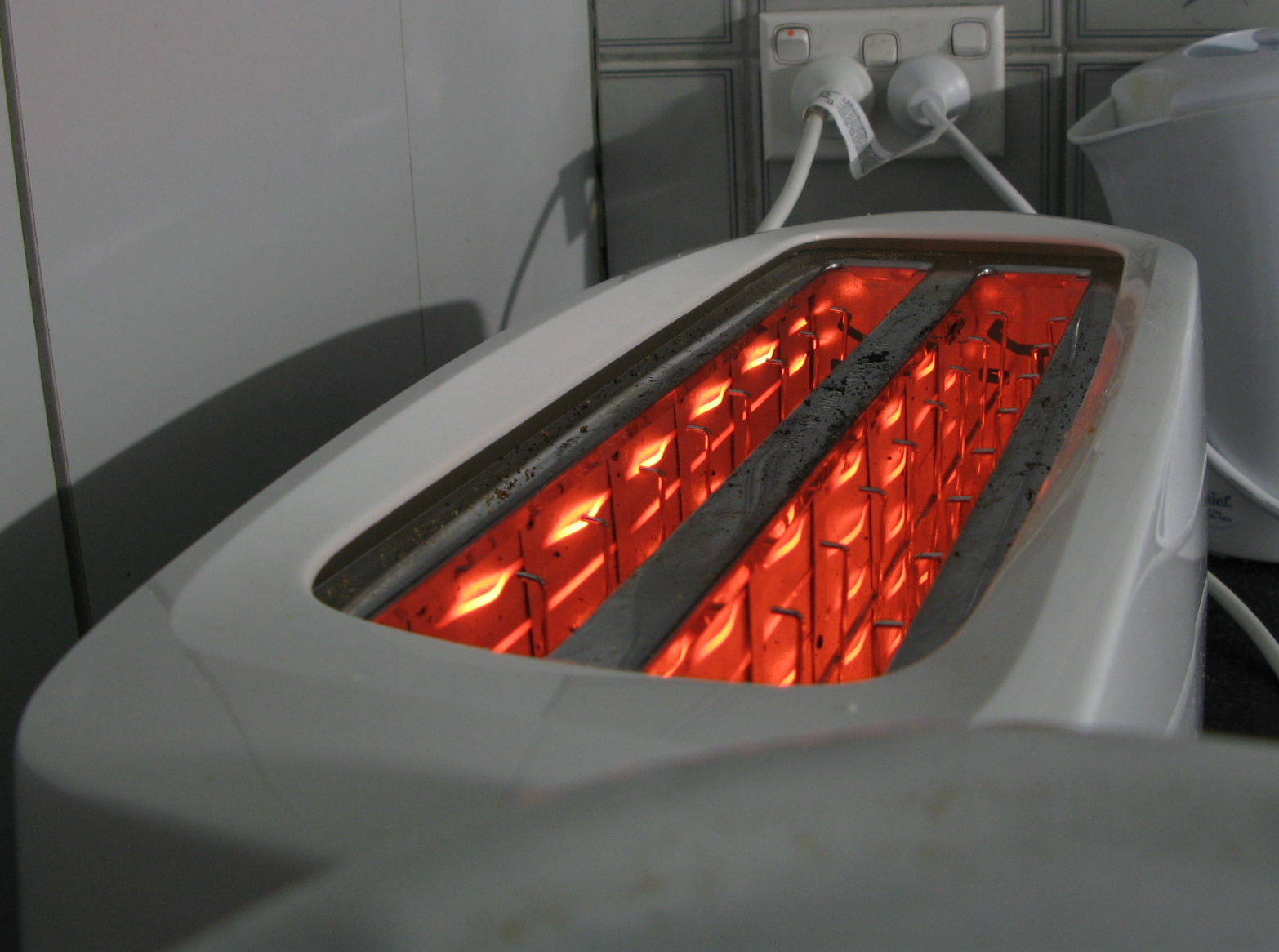
The glowing nichrome filaments of a toaster supply the dry, radiant heat that drives off water and ignites the Maillard reaction. Photograph: Wikimedia Commons contributor
Image Credits: Wikimedia Commons / contributor
The crust-crumb divide: toasting makes a new crust
Here is a detail most explanations skip. A slice of bread already has a crust on two sides, but the cut faces are former crumb: soft interior that was never exposed to oven heat. Toasting gives those cut faces their first real browning.
Sliced bread also has a large surface-to-volume ratio, which means heat penetrates fast and the window between golden and burnt is narrow. That geometry is why toast demands attention while a whole loaf forgives. The baker browned the outside once in the oven; your toaster finishes the job on the inside faces, which is why a slice of toast carries two generations of Maillard flavor in one bite.
This also explains why thick slices toast differently from thin ones. A thick slice keeps a soft, steamy center while its faces crisp, giving the contrast of crunchy outside and tender inside.
A thin slice dries through and turns uniformly crisp. Neither is wrong; they are different ratios of the same two reactions.
Frequently asked questions
Is toasting bread a chemical change?
Yes. Water evaporation is physical, but the Maillard reaction permanently creates new molecules, new color, and new flavor. You cannot un-toast a slice.
Why does toast taste better than bread?
It combines three upgrades at once: hundreds of new aromatic compounds from the Maillard reaction, a crisp-then-soft texture contrast, and extra sweetness from broken-down starches.
Why does bread shrink in the toaster?
Heat drives out moisture and the gluten-starch structure contracts as water leaves. The effect depends on the bread's moisture content, its structure, and how much heat the toaster applies.
Is burnt toast bad for you?
Deeply charred toast contains more acrylamide, a compound that forms in starchy foods browned at high heat. Food safety agencies advise toasting to a light golden color rather than dark brown.
The bottom line
Toast tastes different from bread because heat rewrites its chemistry. Drying lets the surface exceed boiling point, the Maillard reaction converts amino acids and sugars into hundreds of flavor compounds and brown pigments, and starch breakdown adds sweetness and crunch.
Same slice, new food. That golden color is not decoration; it is the visible sign of flavor being manufactured in real time.
Latest in Food & Cooking
- Why grilled food tastes smoky even on a gas grill
- Why your car has a rev limiter, and what cooking borrows from the idea
- Why doors stick more in summer than in winter
- Why climbers tape their fingers before hard routes
Subscribe to the Rive News newsletter for one science-backed explainer like this every morning.
Related stories
Why Does Bread Go Stale Faster in the Refrigerator?
Bread goes stale faster in the fridge because starch recrystallizes fastest near 4°C. Here is the retrogradation science and the right way
Baking soda and baking powder: what's the difference?
Baking soda is pure sodium bicarbonate; baking powder adds two dry acids for double-acting lift. Learn when to use each, plus exact
What Is the Maillard Reaction in Simple Terms?
The Maillard reaction is the browning chemistry between amino acids and sugars above 140 C that creates the crust, color, and rich flavor