
Compost heat without a heater: how microbes warm a pile
By Rive News / Research desk | Rive News / Published October 27, 2026 at 9:00 AM PKT
Key takeaways
- A compost pile heats itself because microbes release heat as they break down organic material for energy.
- Piles pass through a moderate mesophilic stage, then a hot thermophilic stage between about 113°F and 160°F.
- Heat of 131°F held for three days destroys many pathogens, according to US EPA composting rules cited by university extension services.
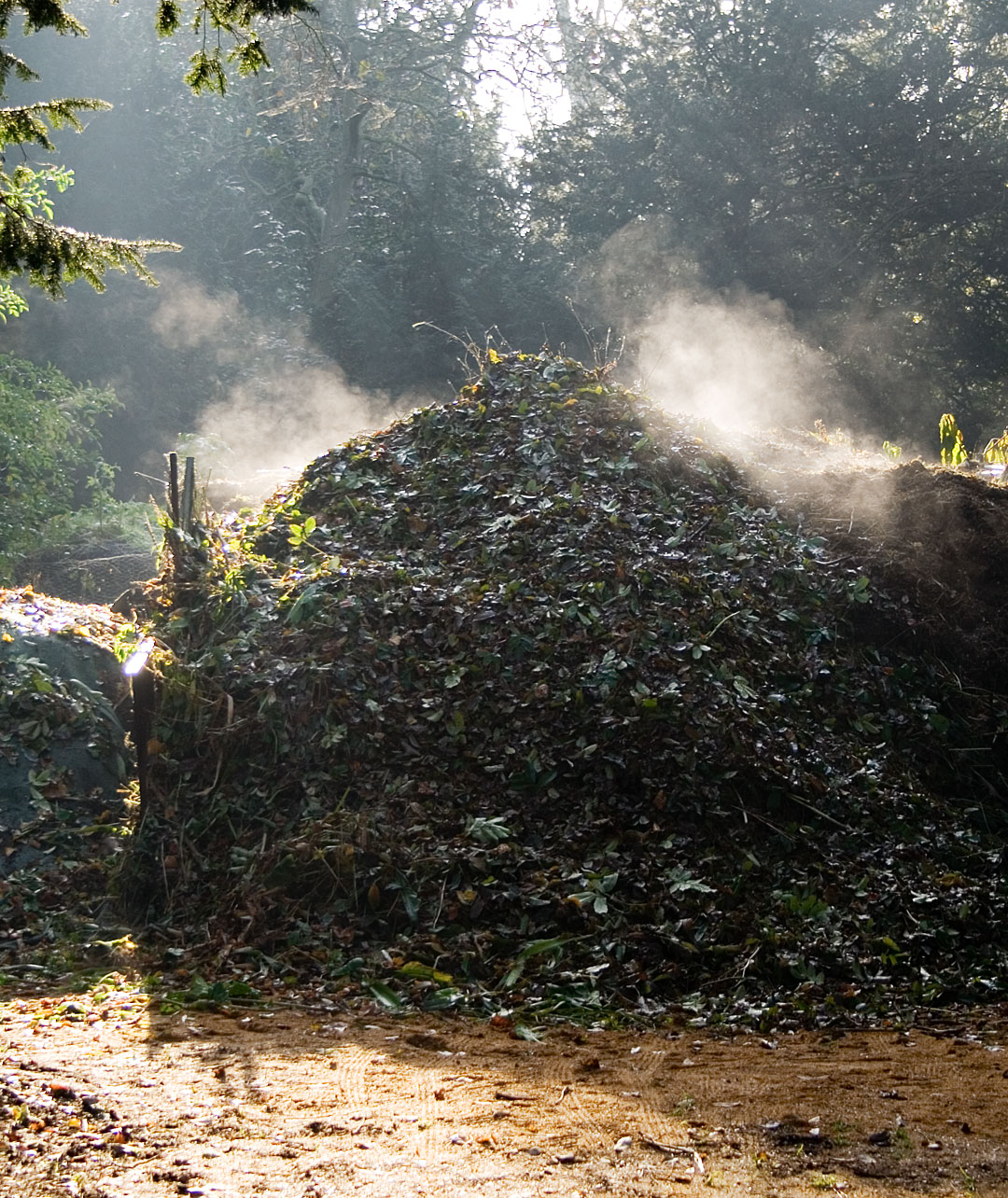
A compost heap in a garden, with decomposing material at its core. Photograph: Andrew Dunn
Image Credits: Wikimedia Commons
A compost pile has no heating element, no flame, and no plug. The warmth inside it comes from living things too small to see.
Bacteria and fungi break down food scraps, leaves, and garden waste for energy. As they feed and multiply, they release heat as a byproduct, and a well-insulated pile traps enough of that heat to feel hot to the touch.
This article explains how compost heats up without a heater, including the microbes behind the warmth, the temperature stages a pile passes through, what a pile needs to stay hot, and why some piles never warm up.
What actually makes the heat
The heat is a byproduct of metabolism. When microbes consume sugars, starches, and proteins, they convert chemical energy stored in those materials into energy they can use, and some of that energy escapes as heat.
One microbe alone produces almost nothing measurable. A pile holds billions of them, and their combined output adds up fast when food, water, and air are all available.
Insulation does the rest. The outer layers of a pile shield the core from wind and cold air, so heat builds in the middle rather than escaping as quickly as it forms.
The temperature stages a pile passes through
Fresh material starts at air temperature. Mesophilic microbes, which thrive between about 68°F and 113°F (20°C to 45°C), attack the easiest food first: sugars and starches.
Their feeding raises the core temperature within a few days. Once the pile passes roughly 113°F, the mesophiles slow down and heat-loving thermophilic microbes take over.
Thermophiles work between about 113°F and 160°F (45°C to 71°C). They break down tougher material such as proteins, fats, and cellulose, and this stage can last days or months depending on the pile.
When easy food runs out, the pile cools. Mesophiles return, fungi and larger decomposers move in, and the material cures into dark, crumbly compost.
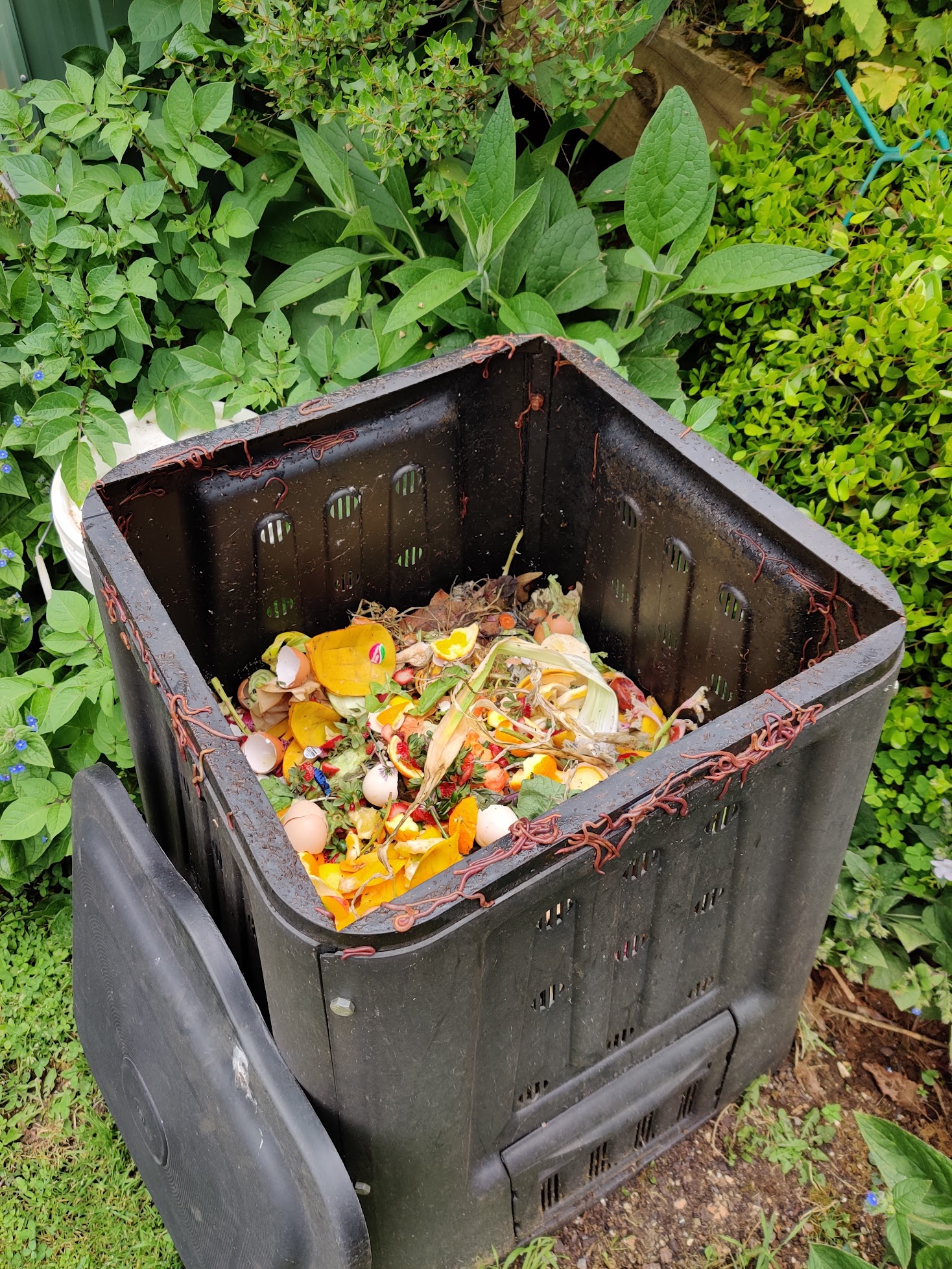
A compost bin filled with dark, decomposing material. Photograph: Niwrat
Image Credits: Wikimedia Commons
Why the heat matters
Heat is not just a curiosity. It changes what the finished compost can safely be used for, because high temperatures destroy many pathogens and weed seeds.
The University of Nebraska-Lincoln Extension notes that US Environmental Protection Agency rules for composting municipal waste require temperatures of 131°F or above for at least three days to destroy pathogens. Weed seeds need still more heat: about 145°F within the pile, according to the same Extension guidance.
A pile that never gets hot can still produce usable compost. It is simply more likely to carry viable weed seeds into garden beds.
Heat also speeds the work. A hot, well-managed pile can finish in roughly 6 to 8 weeks, according to Cornell Cooperative Extension, while a cold pile may take until the following year.
What a pile needs to heat up
Four conditions decide whether a pile heats up or sits cold.
- Size: about 1 cubic yard, roughly 3 feet by 3 feet by 3 feet, so the core is insulated by its own outer layers.
- Food balance: a carbon-to-nitrogen ratio near 25:1 to 30:1, mixing carbon-rich browns with nitrogen-rich greens.
- Moisture: roughly 50% to 60%, damp like a wrung-out sponge rather than wet or dry.
- Oxygen: air channels kept open by bulky material and regular turning.
Size matters because a small pile loses heat faster than microbes can make it. Cornell Cooperative Extension recommends a pile around 3 feet by 3 feet for hot composting.
Food balance matters too. Microbes need carbon for energy and nitrogen to build new cells, and composting guides put the ideal carbon-to-nitrogen ratio near 25:1 to 30:1.
Moisture keeps microbes active but must not drown them. Guides describe the target as damp like a wrung-out sponge, roughly 50% to 60% moisture.
Oxygen is the final requirement. Turning the pile or building it with bulky material keeps air channels open. Without oxygen the pile turns anaerobic, works slowly, and starts to smell.
Why some piles stay cold
A pile built mostly from dry leaves or wood chips may lack nitrogen. Without enough nitrogen, microbes cannot multiply fast enough to generate real heat.
A pile that is too small, too dry, or too wet has the same problem from a different direction. Dry material starves microbes of water, while soggy material blocks airflow.
Cold weather slows the process but does not stop it outright. The University of Florida IFAS Extension notes that a pile may not reach high temperatures in some setups, and adds that compost still happens at all temperature levels.
If a pile stays cold, the fix is usually to add nitrogen-rich greens, water it to sponge dampness, and turn it. Fresh material added to a finished pile can restart heating, so timing additions matters.
Frequently asked questions
How hot can a compost pile get?
A hot pile commonly reaches 120°F to 150°F (49°C to 66°C). Above about 160°F (71°C), heat starts killing the very microbes doing the work, so turning the pile to cool it is the right move.
How do I know if my pile is heating up?
Push a hand or a long compost thermometer into the center. Steam on a cool morning and warmth in the core are both signs of active decomposition.
Does a compost pile need sun to heat up?
No. Microbial metabolism supplies the heat, not sunlight. Sun can dry a pile out, so shade or cover is often better than full sun.
Can I compost in winter?
Yes, though the process slows. A larger pile holds heat better, and insulating the outside with straw or leaves helps it keep working.
The bottom line
A compost pile warms itself the way a crowd warms a room: countless small bodies doing work give off heat, and insulation keeps it in. Give microbes food, water, and air in a pile big enough to hold the warmth, and the thermometer will do the rest.
Start with a 3-foot pile, a mix of browns and greens, and a weekly turn, then check the center temperature after a few days.
Tags: composting, soil health, microbes
Rive News is a research desk covering everyday science, home, health, and money topics in plain language.
Related
- How to Compost Without a Bin: 4 Beginner Methods
- Mulch vs. Compost: What Is the Difference and When to Use Each
- How to Start a Compost Bin Without Smell
- Topsoil and Compost for Raised Beds: What Is the Difference
Subscribe for one plain-language explainer each morning.
Rive News publishes research-desk explainers; corrections are noted on the article page.
Related stories
What Is Companion Planting and Does It Work?
Marigolds work as a nematode cover crop, but the basil flavor claim failed repeated tests. An honest evidence review of what companion
Determinate vs. indeterminate tomatoes: growth, pruning, and harvest differences
Determinate tomatoes grow to a set size and ripen all at once, while indeterminate types vine all season. That one difference shapes
How to improve clay soil for gardening
Gypsum will not fix ordinary clay soil, say extension experts. What actually works: 2 to 3 inches of compost, mulch, better drainage,