
How to Grow Strawberries From a Hanging Basket
Key takeaways
- Pick a day-neutral or everbearing variety for baskets, since June-bearing types fruit poorly in their first year.
- Use a basket at least 12 inches wide and 8 to 10 inches deep, with free-draining potting mix and the crown above the soil.
- Give the basket 6 to 8 hours of sun, water when the top of the soil dries, and feed about once a month.
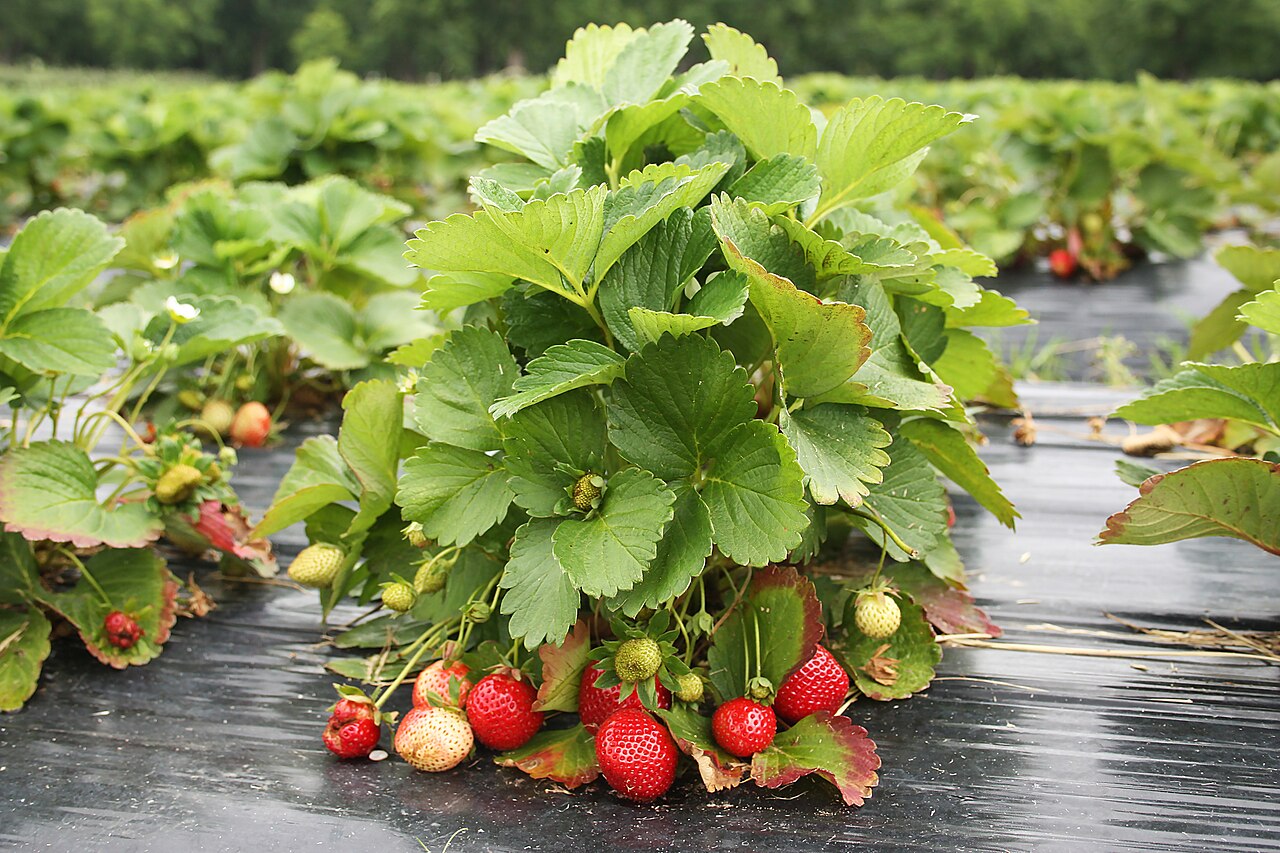
A hanging basket is one of the simplest ways to grow strawberries. The fruit hangs in the air instead of sitting on damp soil, which keeps it cleaner and harder for slugs to reach. The basket needs no garden bed, so a balcony, porch, or sunny wall is enough space.
The red berries and trailing green leaves look good too.
Success comes down to four choices: the variety, the basket, the soil, and the daily care. Get those right and a basket can fruit all summer. This article explains how to grow strawberries from a hanging basket, including variety choice, planting, watering, feeding, pests, harvest, and overwintering.
Pick the right variety first
Variety choice matters more in a basket than in a garden bed. June-bearing strawberries are a poor fit for baskets grown as annuals. They bloom and fruit early, and growers must pinch off the first year's blooms to build the root system.
If the plants fruit in the first June, the berries come out small and inferior, according to Gardening Know How. They also produce many runners, which waste the plant's energy in a small container.
Day-neutral varieties are the best choice for most baskets. They bloom and fruit through the whole season instead of in one flush. They also produce few runners.
Good day-neutral varieties for baskets include Albion, Seascape, Cabrillo, Mara des Bois, and Monterey. In hot summers, day-neutral types pause fruiting when temperatures pass 90 degrees F (32 C), then start again when the weather cools in fall.
Everbearing varieties are a solid second choice. They fruit twice per season rather than continuously, so total yield is lower than day-neutral types. They also produce few runners.
Varieties to try include Ozark Beauty, Quinault, Fort Laramie, Ogallala, and Pink Panda, which has pink flowers.
Alpine strawberries suit baskets in partial shade. These compact plants produce small, fragrant, very sweet berries from spring through fall. They tolerate less sun than other types, which makes them useful for balconies that never get full sun.
Mignonette, Rugen Improved, and Yellow Wonder are good basket varieties. Yellow Wonder produces yellow berries.
Buy plants as live nursery plants or dormant bare-root plants. Live plants are easier for beginners because the crown and roots are already established. Bare-root plants cost less and ship well.
Choose the basket and soil
Basket size sets the ceiling on your harvest. Gardening Know How recommends a basket at least 12 inches (30 cm) wide and 8 to 10 inches (20 to 25 cm) deep. A 12 to 14 inch (30 to 36 cm) wide basket holds four nursery plants.
Crowding more plants into the same basket shrinks the berries.
Drainage matters as much as size. The basket must have holes in the base so water flows out freely. A basket with no drainage drowns the roots and invites crown rot.
Hanging hardware must hold the full weight of wet soil and fruit, so use a sturdy hook and check it before the season starts.
Soil must drain fast while holding some moisture. A good commercial potting mix works well. Gardening Know How suggests a homemade mix of two parts compost, two parts coco coir or another peat alternative, and one part perlite or vermiculite.
Garden soil is too heavy for baskets and compacts quickly. Keep the mix light and airy, the way seedlings that stretch toward light need open, well-drained soil to grow sturdy stems.
Fill the basket with mix up to about half an inch below the rim. That gap leaves room for watering without overflow. Water the mix before planting so it settles, then top it up if it sinks.
A dry mix that repels water is a common cause of early wilting.
Plant at the right depth
Plant in early spring, once the risk of hard frost has passed. Set each plant at the same height it grew in its nursery pot. The crown, where roots meet stem, should sit just above the soil surface.
Plants set too deeply can develop crown rot, which kills the plant from the base.
Space the plants evenly around the basket. Four plants in a 12 to 14 inch basket gives each one room to spread. Push the roots gently into the mix and firm the soil around them.
Water thoroughly right after planting so the roots make contact with the mix.
Keep the basket in shade for a few days while the plants settle, then move it to its permanent sunny spot. White Flower Farm advises this gradual move for basket strawberries. A sudden jump from a shaded nursery to full sun can wilt fresh transplants.
Once the plants look settled, with upright leaves and no drooping by midday, they are ready for full sun.
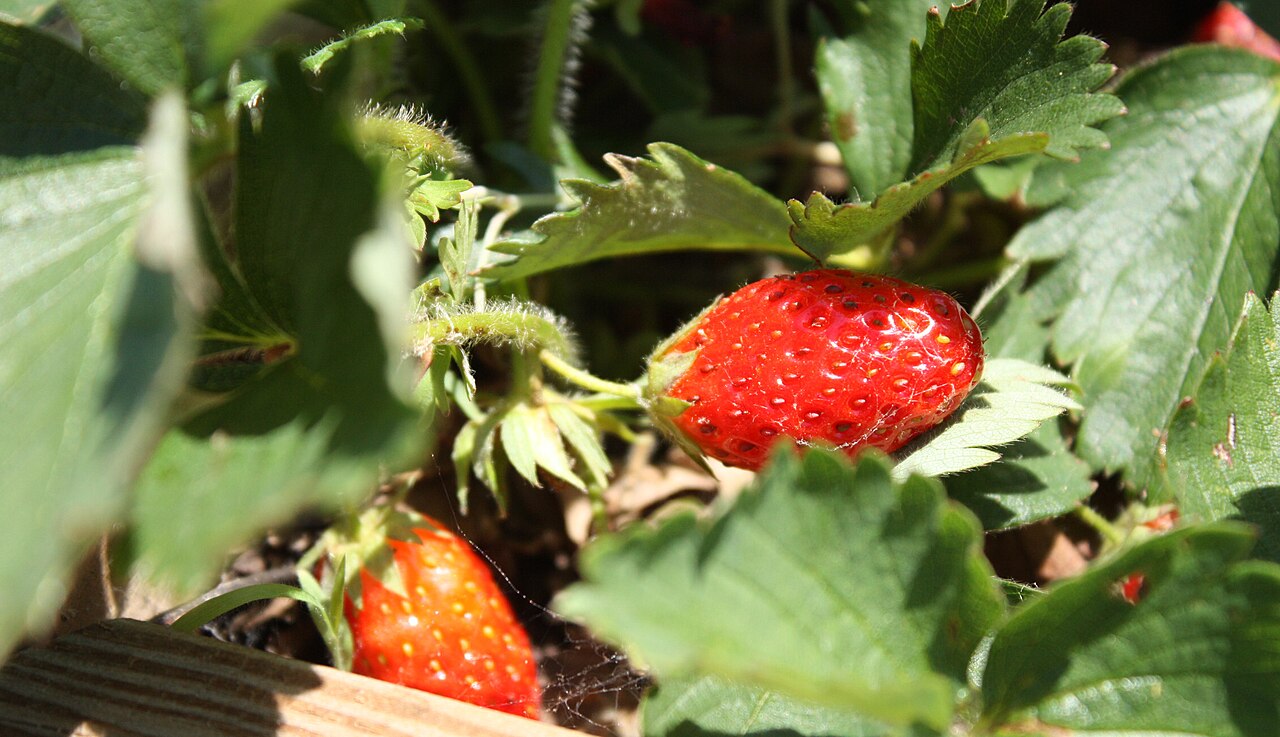
Place the basket near spring flowers that attract bees if you can. Bees pollinate strawberry flowers, and good pollination means well-shaped fruit. Poorly pollinated berries come out misshapen, even when the plant is healthy.
Sun, water, and feeding
Hanging baskets need more water than garden beds. The small volume of soil dries fast, and wind speeds up the drying. Gardening Know How advises checking baskets daily because shallow roots dry out quickly.
In warm weather, a basket may need water twice a day.
Water when the top of the soil feels dry. Soak the mix until water runs from the base, then let it drain. Try not to wet the fruit, since wet berries rot on the vine.
Morning watering is best, because leaves dry during the day. Mulch the soil surface to hold moisture, but keep mulch off the crowns, where it can trap dampness and cause rot.
Sun needs are clear: 6 to 8 hours of direct sun a day for most varieties. Alpine types manage with partial shade. Dammann's Garden Center gives the same 6 to 8 hour figure.
A basket that gets only two or three hours of sun will grow leaves but few berries. If your only spot is shady, grow alpine varieties and accept a smaller crop.
Strawberries are heavy feeders, and a basket holds little nutrition. If the potting mix has no fertilizer, add a balanced fertilizer such as 16-16-16 or 20-20-20 after planting. Gardening Know How advises feeding two to three times during the season, or about once a month until blooming.
Granular fertilizer releases nutrients slowly, while liquid fertilizer acts faster and needs more frequent use. Follow the packet rates. Overfeeding burns roots and pushes leaf growth at the expense of fruit.
Remove runners as they appear. Runners are long stems that grow new plants. In a basket, they steal energy from fruiting.
Snip them off at the base with clean scissors. The same discipline applies to herbs like mint, which can take over a garden if its runners are left unchecked.
Pests, diseases, and harvest
Hanging baskets dodge many ground problems. Slugs, soil-borne diseases, and most crawling pests struggle to reach a basket. Birds are the main thief.
Cover the plants with netting while berries ripen if birds find your basket. Check that the netting does not tangle the fruit stems.
Disease still appears. Crown rot, leaf spot, and powdery mildew are the common troubles in basket strawberries. Remove any diseased leaves or fruit at once to stop spread.
Good airflow between plants helps. Avoid overhead watering, and keep mulch off the crowns. If a whole plant looks limp and brown at the base, remove it so the disease does not reach its neighbors.
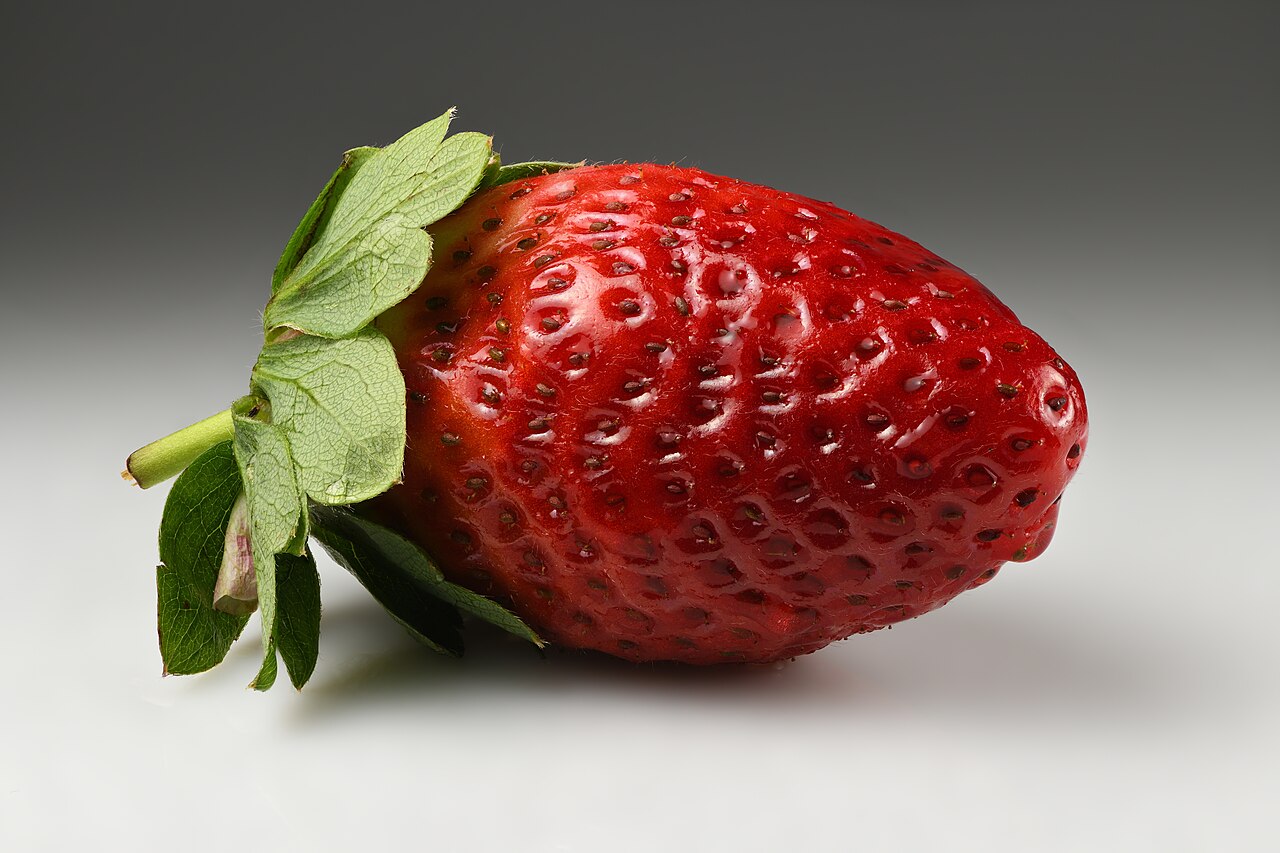
Pick berries when they are fully red. Leave the stem and cap attached to help the fruit last longer. Check the basket daily in peak season, since one overripe berry left hanging can attract mold and fruit flies.
Harvest gently. Pinch the stem above the berry rather than pulling the fruit itself. Pulling can damage the plant and bruise the berry.
Ripe strawberries bruise easily, so pick into a shallow container instead of a deep bucket.
Overwintering and repotting
Basket strawberries can live more than one season with care. Gardening Know How notes that container plants may not survive winter unless protected. Move the basket to a sheltered spot when hard frost threatens.
Bring containers indoors if frost is forecast in late spring or early fall. Freezing temperatures can injure or kill the plants.
In cold climates, White Flower Farm advises moving the basket inside in fall and keeping it at 30 to 45 degrees F. Check the plants each week and water just enough to keep them alive. A garage or unheated shed that stays above freezing works well.
Repot each spring with fresh soil. Old mix compacts and runs out of nutrients. Lift the plants, trim dead roots, and replant at the same crown depth.
Gardening Know How says basket strawberries can fruit for about three years before it is time to buy new plants. Plan a fresh batch in year three for the best harvest.
Frequently asked questions
How many strawberry plants fit in one hanging basket?
About four nursery plants fit a 12 to 14 inch (30 to 36 cm) wide basket. D.T.
Brown Seeds gives a similar range of three to five plants for a standard basket. More plants crowd each other and shrink the berries.
Why are my basket strawberries small?
Common causes are crowding, too little sun, or runners draining energy. Thin the plants to four per basket, move the basket to 6 to 8 hours of sun, and snip runners as they appear. Old plants past year three also produce smaller fruit.
Do strawberries in hanging baskets need pollination?
Yes. Bees pollinate strawberry flowers. Place the basket near flowering plants to attract them.
Poorly pollinated berries come out misshapen. Hand pollination with a soft brush can help on a sheltered balcony with few bees.
Can I grow strawberries in a hanging basket indoors?
A very sunny windowsill can work for alpine types, but most varieties need 6 to 8 hours of direct sun. Indoor plants also get fewer pollinators. A balcony or porch usually beats a windowsill for yield.
The bottom line
A hanging basket gives strawberries clean air, good drainage, and fruit that stays off the ground. Pick a day-neutral or everbearing variety, use a basket at least 12 inches wide, plant with the crown above the soil, and water whenever the top of the mix dries. Feed monthly, snip runners, and pick berries when fully red.
With that routine, a single basket can fruit all summer and come back for a second and third year.
Tags: gardening, strawberries, containers, fruit
Latest in Gardening
- How to fix seedlings that go leggy
- How to water plants correctly while on holiday
- Topsoil versus compost for raised beds
Subscribe for one practical gardening idea each week.
Related stories

What Is Companion Planting and Does It Work?
Marigolds work as a nematode cover crop, but the basil flavor claim failed repeated tests. An honest evidence review of what companion

Determinate vs. indeterminate tomatoes: growth, pruning, and harvest differences
Determinate tomatoes grow to a set size and ripen all at once, while indeterminate types vine all season. That one difference shapes

How to improve clay soil for gardening
Gypsum will not fix ordinary clay soil, say extension experts. What actually works: 2 to 3 inches of compost, mulch, better drainage,