
Why your indoor herbs die even when you water them
By Rive News / Research desk | Rive News / Published October 27, 2026 at 9:00 AM PKT
Key takeaways
- Indoor herbs usually die from too little light plus soil that stays wet, not from being ignored.
- A light-starved herb uses far less water, so a normal watering routine quietly drowns its roots.
- Fix light first, then drainage, then the watering habit, in that order.
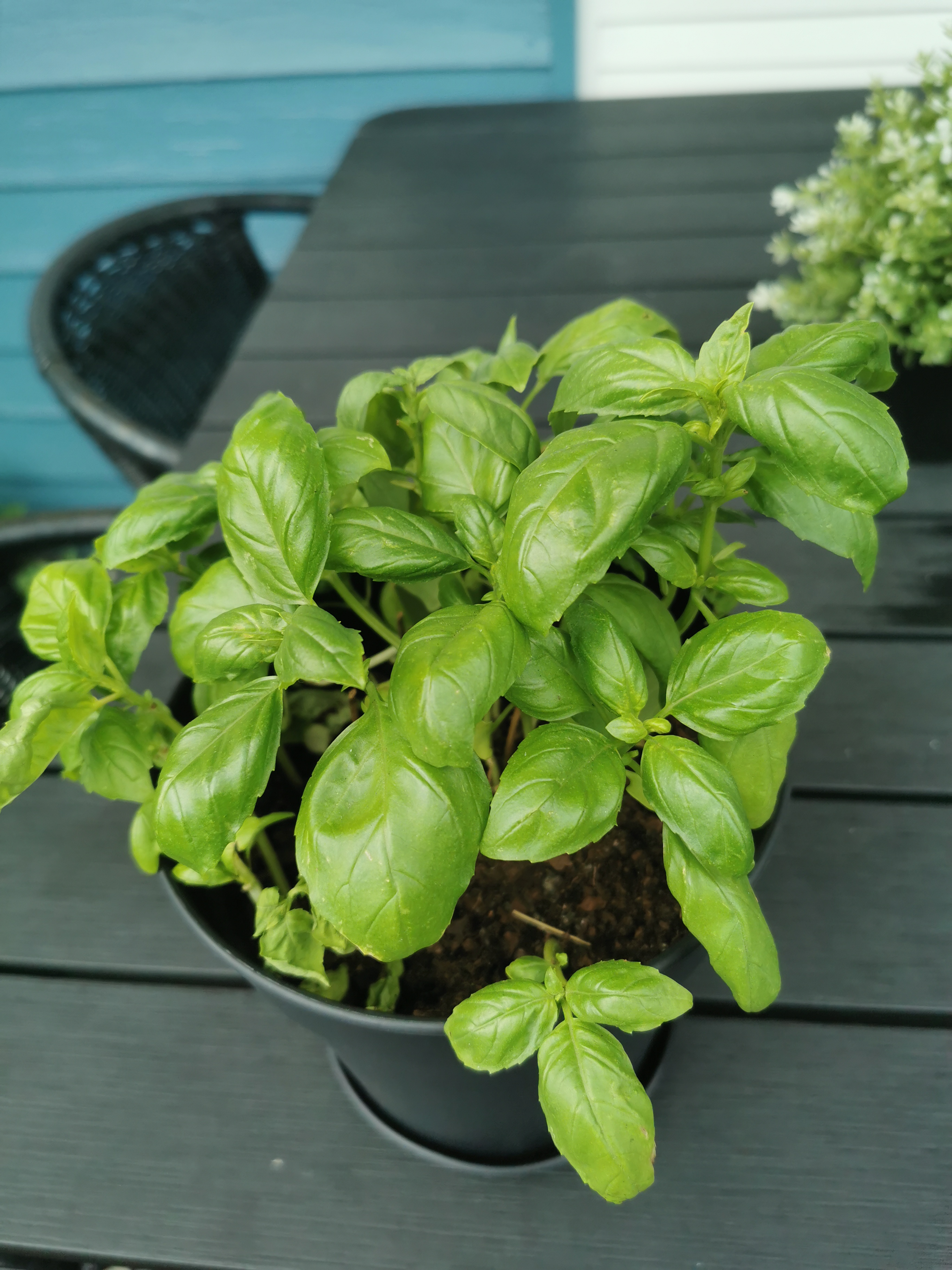
A basil plant in a pot on a bright sill, with room for air around its leaves. Photograph: Wikimedia Commons contributor
Image Credits: Wikimedia Commons
Indoor herbs are plants that evolved outdoors in full sun, now asked to live on a kitchen sill. Basil, rosemary, thyme, and parsley all need strong light, moving air, and soil that dries between waterings. A home gives them less of all three, and the gap shows up as yellow leaves, limp stems, and plants that collapse within weeks.
This article explains why indoor herbs die even with regular water, including the light shortage, the overwatering trap, pot and soil problems, temperature stress, and how to reset a struggling plant.
What dying usually looks like indoors
A dying indoor herb rarely dries out. More often it goes soft. Leaves turn yellow from the bottom up, stems go limp, and the base darkens.
The soil may still feel damp days after watering, and the pot feels heavy when lifted.
That pattern points to roots in trouble, not thirst. Roots need oxygen as well as water. When soil stays saturated, air pockets fill with water, roots suffocate, and rot-causing fungi move in.
Once roots are gone, leaves get nothing even though the pot is full of water, which is why an overwatered plant wilts like a dry one.
The University of Maryland Extension describes the mechanism plainly, stating that indoor potted plants waterlogged for long periods create the perfect environment for root rot, a disease that kills roots and stops them taking up water and nutrients. That quote, reported by The Economic Times, is the single most useful diagnosis for a struggling windowsill herb.
Light is the hidden shortage
Light is the factor most indoor growers underestimate. A kitchen that feels bright to human eyes can be dim for a basil plant. The Garden Magazine notes that most herbs need around eight hours of direct light each day when grown indoors, while a north-facing sill in winter may deliver only one or two hours of weak, filtered light.
When light is short, everything else goes wrong. Photosynthesis slows, so the plant uses far less water. The Laidback Gardener explains that a light-starved plant carries out much less photosynthesis and therefore uses much less water, leaving surplus water to stagnate and suffocate the lower roots.
Watering on a fixed schedule then becomes a slow drowning.
Weak light also changes the plant's shape. Stems stretch toward the window, leaves grow smaller and sparser, and flavour fades because light drives the essential oils that give herbs their aroma. A leggy, pale herb is telling you about light before it tells you anything about water.
The fix is to move herbs to the sunniest spot available, ideally a south-facing window, and rotate pots every few days so growth stays even. If no window gives several hours of direct sun, a simple grow light closes the gap better than any fertiliser.
Water: why more is not better
Overwatering is probably the biggest herb killer indoors, and it is easy to see why. A drooping plant looks thirsty, so the natural response is to water it. If the roots are already drowning, that extra water finishes them off.
The rule that works is the finger test, not the calendar. Press a finger about an inch or two into the soil. If it feels dry at that depth, water.
If it still feels damp, wait. Lifting the pot helps too: a freshly watered pot is noticeably heavy, and a dry one is light.
Different herbs want different rhythms, and grouping them together causes trouble. Leafy herbs such as basil, cilantro, and parsley like soil that stays lightly moist but never drenched. Mediterranean herbs such as rosemary, thyme, oregano, and sage prefer soil that dries out between waterings.
The Garden Magazine warns that putting both types in the same standard potting mix compromises at least one of them.
Two habits make overwatering worse. One is leaving pots sitting in saucers full of water, which keeps the bottom of the root zone saturated. Empty the saucer an hour or so after watering.
The other is watering from a softener, since softened water carries sodium that builds up in soil over months. Plain tap water left standing overnight, or rainwater, avoids that problem.
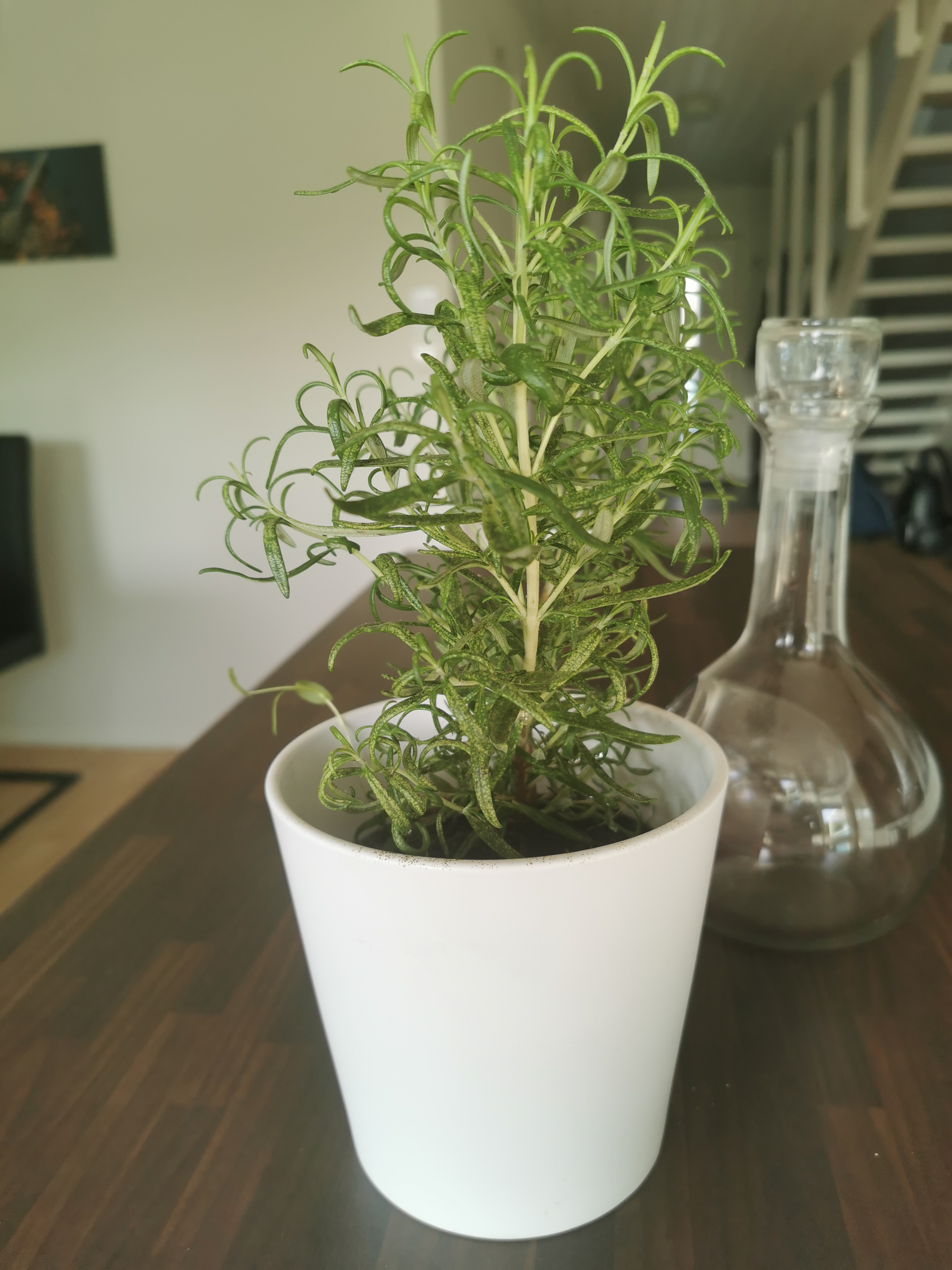
Rosemary in a pot, a Mediterranean herb that needs sharp drainage and dry spells between waterings. Photograph: Wikimedia Commons contributor
Image Credits: Wikimedia Commons
Pots, soil, and drainage
The pot matters as much as the watering can. A container without drainage holes is a slow death trap for herbs, because water has nowhere to go after watering. Decorative cache-pots are fine only if the plant stays in its plastic grower pot inside them, with the outer pot emptied after watering.
Terracotta helps because it is porous and lets moisture escape through the walls, so soil dries faster. Oversized pots hurt for the opposite reason: a small root system in a big pot sits in wet soil it cannot drink fast enough. Herbs do better slightly snug.
Soil choice follows the same logic. A dense, peat-heavy mix holds too much moisture for most herbs. Mixing regular potting soil with perlite or coarse sand improves drainage, and Mediterranean herbs benefit most from that sharper mix.
The old tip of putting gravel in the bottom of a hole-less pot does not work: it raises the saturated zone rather than removing it, and the plant still drowns, just more slowly.
Temperature and air
Herbs dislike sudden temperature swings. A spot against a cold windowpane in winter, or directly above a heating vent, stresses plants fast. Basil is especially tender: one indoor-gardening guide puts its cold limit at about 10 degrees Celsius (50 degrees Fahrenheit), below which cold draughts can shock it overnight.
Dry, hot air from central heating pulls moisture from leaves, while stagnant air invites mould and pests. A little airflow helps, but herbs should stay out of direct draughts. Keep pots off cold sills on frosty nights and away from radiators, and the plant avoids two common stressors at once.
Season matters too. Growth slows in winter, so water needs drop with it. A summer watering rhythm applied in January is one of the quietest ways to kill an indoor herb.
How to revive and reset a struggling herb
Start with diagnosis, not treatment. Smell the soil: a sour or rotten-egg smell means rot is already advanced. Check the roots if you can: healthy roots are pale and firm, while rotted ones are dark and mushy.
Trim away the mushy parts with clean scissors.
Then reset the setup. Repot into a container with drainage holes, using fresh, free-draining mix. Move the plant to the brightest spot you have, or add a grow light.
Water only when the top inch or two feels dry, and empty the saucer after each watering.
Recovery takes weeks, not days. New growth from the centre is the sign the plant has turned a corner, while old yellow leaves rarely recover. If the whole root system is mush and the stem is soft at the base, the honest move is to start fresh with a new plant and the corrected setup, rather than nursing a dead one.
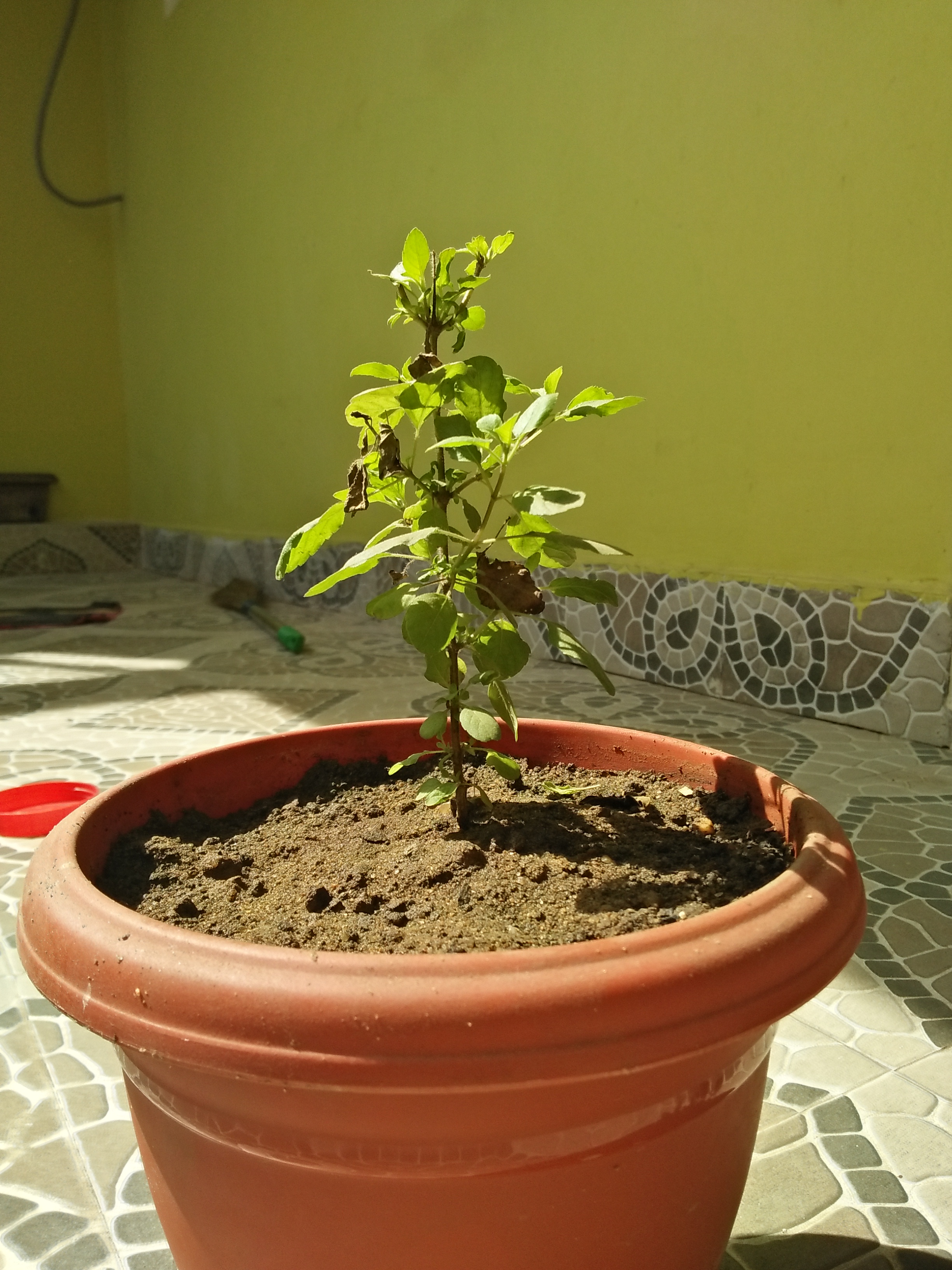
Basil plants in containers, which need strong light and soil that drains freely. Photograph: Wikimedia Commons contributor
Image Credits: Wikimedia Commons
FAQ
Why does my basil wilt even though the soil is wet?
Wet soil with a wilting plant usually means the roots have rotted and can no longer take up water. Check drainage, let the soil dry, and inspect the roots for dark, mushy sections before watering again.
How many hours of light do indoor herbs really need?
Most culinary herbs need several hours of direct sun a day, with around eight hours cited as a good indoor target. Mint, chives, and parsley tolerate less light than basil or rosemary, which makes them better starter herbs for darker kitchens.
Should I water herbs every day?
No. Water by soil moisture, not by schedule. Leafy herbs like lightly moist soil, while rosemary and thyme want the soil to dry between waterings.
Daily watering in a dim room is the fastest route to root rot.
Are terracotta pots actually better for herbs?
For most herbs, yes. Terracotta is porous, so it lets soil dry faster and forgives occasional overwatering. Plastic pots hold moisture longer and suit only herbs that like steady dampness, and only with drainage holes.
The bottom line
Indoor herbs die with water because water is rarely the missing ingredient. Light is. A dim room slows the plant, the slowed plant drinks less, and routine watering fills the gap with stagnant water that rots the roots.
Fix the light, give the plant drainage and free-draining soil, and water by touch instead of by habit. That order, light first and water second, is what keeps a windowsill herb alive past the first month.
Tags: indoor herbs, herb gardening, watering, houseplants
The Rive News research desk writes plain-English explainers from public sources, with every key claim traceable to a named source.
Related
- How to Grow Herbs on a Kitchen Windowsill
- How to Tell Overwatering vs Underwatering in Plants
- Why Do Herbs Die on Windowsills Yet Thrive Outside?
- How to Keep Herbs Fresh for Weeks in the Fridge
Subscribe for one practical gardening explainer each week.
Rive News standards: no invented sources, no fake first-hand experience, corrections noted on the article.
Related stories
What Is Companion Planting and Does It Work?
Marigolds work as a nematode cover crop, but the basil flavor claim failed repeated tests. An honest evidence review of what companion
Determinate vs. indeterminate tomatoes: growth, pruning, and harvest differences
Determinate tomatoes grow to a set size and ripen all at once, while indeterminate types vine all season. That one difference shapes
How to improve clay soil for gardening
Gypsum will not fix ordinary clay soil, say extension experts. What actually works: 2 to 3 inches of compost, mulch, better drainage,