
Why Do Hydrangeas Change Color? Soil pH and Aluminum Explain It
Key takeaways
- Hydrangea color is controlled by aluminum, not directly by pH: absorbed aluminum turns the blue pigment on, and no aluminum leaves blooms pink.
- Soil pH acts as the faucet: below pH 5.5 aluminum dissolves and is available to roots, while above pH 7.0 it locks up.
- Only bigleaf (Hydrangea macrophylla) and mountain (H. serrata) hydrangeas can change color; white varieties never will.
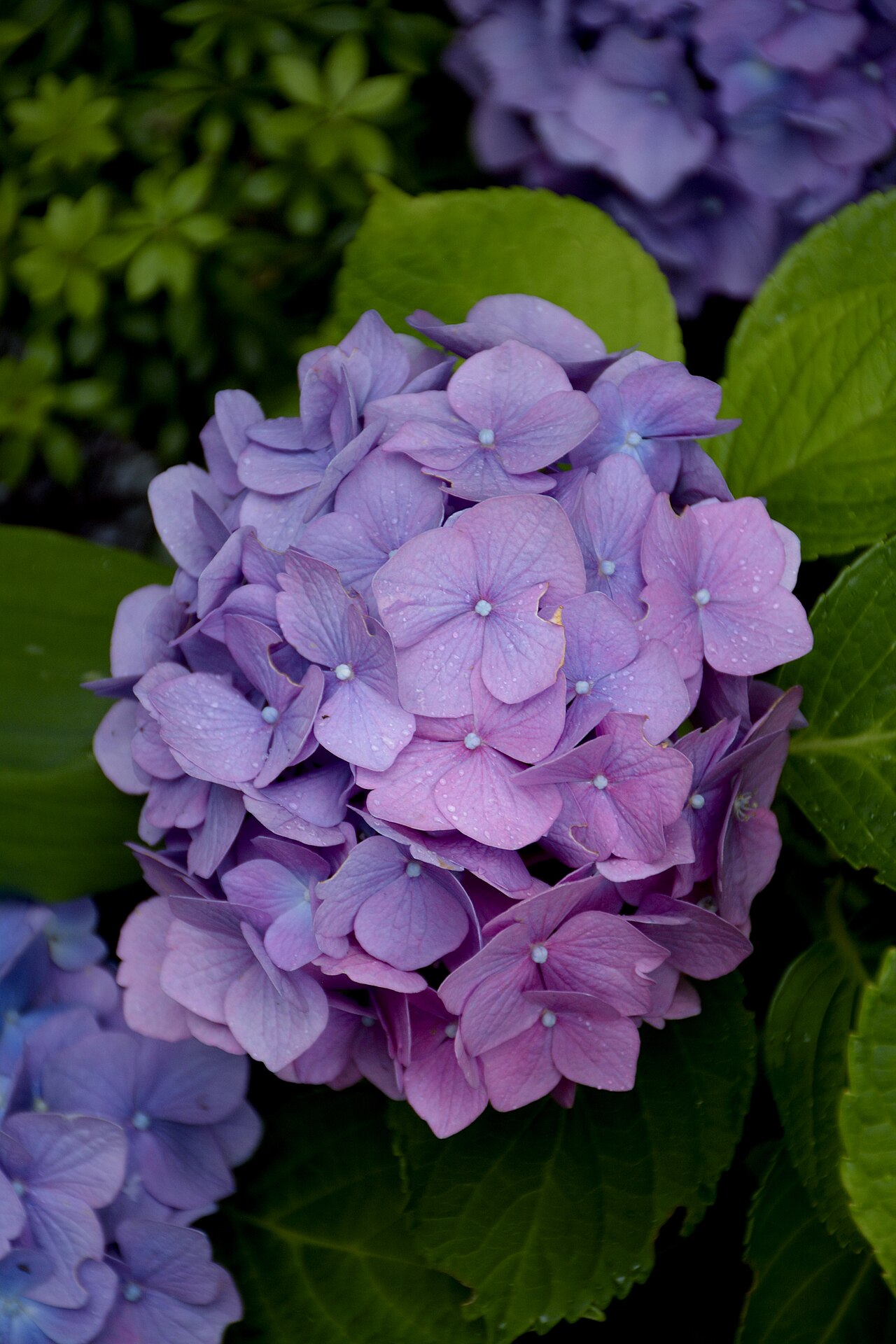
One shrub can carry blue, purple, and pink blooms at once when soil chemistry varies across the root zone. Photograph: Rizka
Hydrangeas change color because their flower pigment reacts with aluminum from the soil. In acidic soil, aluminum dissolves into the soil water, the roots absorb it, and it binds to a pigment called delphinidin in the flowers, turning them blue. In alkaline soil, aluminum stays locked in insoluble compounds the roots cannot reach, so the same pigment shows its natural pink color.
This makes the hydrangea a living chemistry readout of the ground beneath it. A gardener who plants pink hydrangeas and later sees blue blooms has not bought the wrong plant. The plant is reporting that the local soil is acidic enough to hand it aluminum.
This article explains the aluminum mechanism in plain language, shows why soil pH is only the middleman, lists which hydrangea species can actually change color, and covers how gardeners steer blooms toward blue or pink.
The aluminum mechanism: how flowers actually turn blue
The color of a bigleaf hydrangea bloom comes down to one pigment and one metal ion. The pigment is delphinidin-3-glucoside, a member of the anthocyanin family, the same family of compounds that turns autumn leaves red and gives blueberries their color. On its own, this pigment looks reddish.
When it forms a chemical complex with aluminum ions, it turns blue.
University of Georgia Cooperative Extension describes the rule simply: color variation in hydrangeas comes from the presence or absence of aluminum compounds in the flowers. If aluminum is present, the color is blue. If it is present only in small quantities, the color varies between pink and blue.
If aluminum is absent, the flowers are pink.
The uptake route starts in the roots. Hydrangea roots release citric acid, and in acidic soils aluminum reacts with that acid to form aluminum citrate, which the roots can absorb. The aluminum travels up into the flower tissues, where Science World explains it forms a bridge between the myrtillin pigment (another name for the delphinidin pigment) and other pigments, producing the blue color.
Aluminum is actually abundant in most soils, but abundance does not equal availability. Its chemical availability is governed almost entirely by pH. In alkaline soils, aluminum combines with hydroxide ions to form aluminum hydroxide, a solid that the hydrangea cannot absorb.
So the flower color answers a single question: how much aluminum could the roots reach?
Why soil pH is the real control knob
Gardeners often say pH determines hydrangea color, but as horticulturist Michael Dirr explains in his book Hydrangeas for American Gardens, the color is not set by pH itself but by the amount of aluminum the plant can access, which pH controls. Think of soil pH as a faucet and aluminum as the water. The faucet does not change the water, it decides whether any flows.
The numbers come from the UGA Extension report. When soil is acidic at pH 5.5 or lower, aluminum becomes more available to the roots and the result is blue flowers. When soil is alkaline at pH 7.0 or higher, aluminum availability drops and flowers are typically pink.
Between those bands sit purple blooms or shrubs carrying mixed blue and pink flowers at once.
There is also an internal checkpoint. Research on the flower cells themselves shows the blue aluminum-pigment complex needs the cell's internal vacuole to sit near pH 4.0 to stay stable, a detail the plant manages on its own. Soil management cannot change that internal step; it only controls the aluminum supply arriving at the roots.
Phosphorus adds a twist worth knowing. High soil phosphorus can bind aluminum before the roots get it, which is why gardeners trying for blue are advised to keep phosphorus low while maintaining moderate nitrogen and high potassium, according to Garden Design.
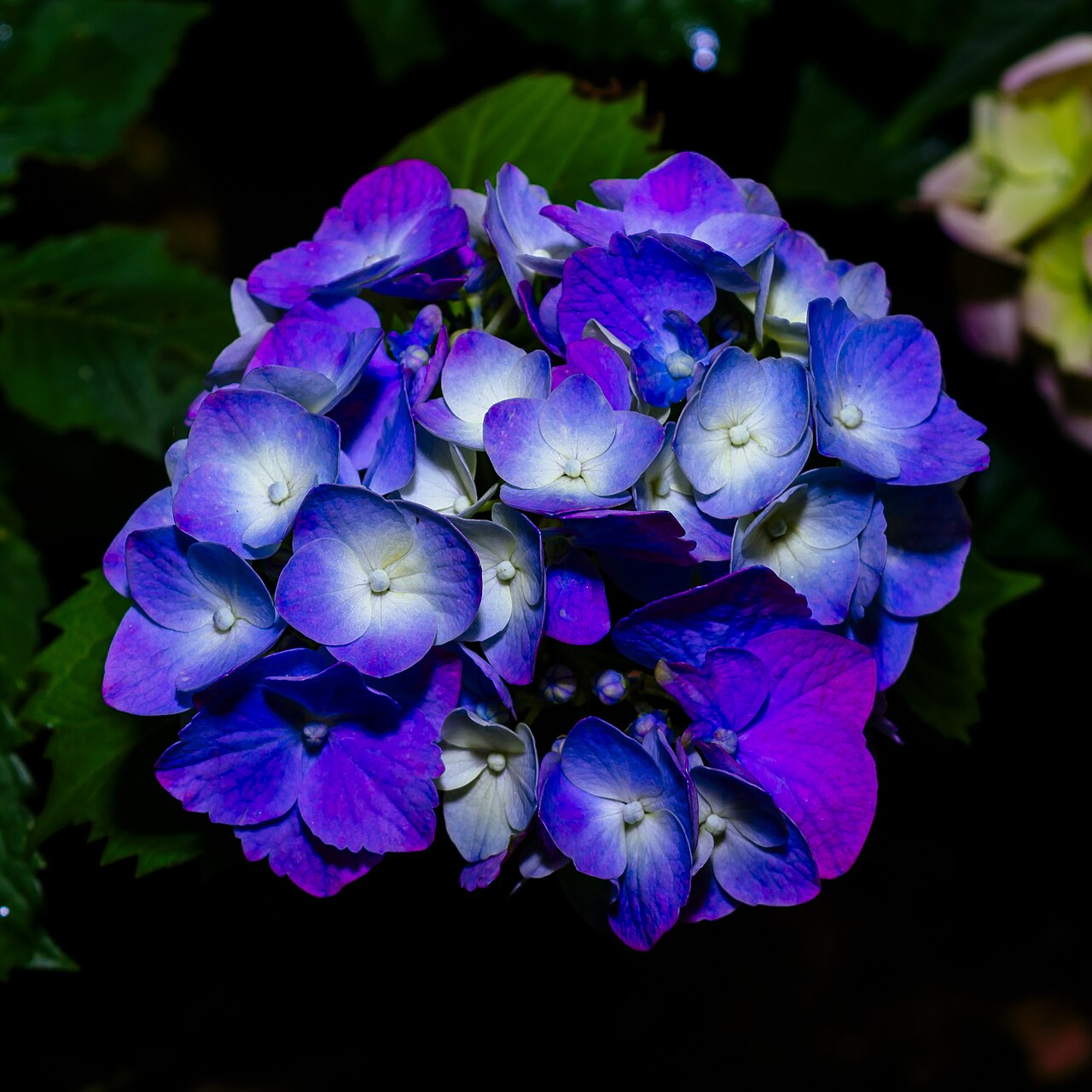
The blue color of a bigleaf hydrangea bloom comes from an aluminum-pigment complex inside the flower tissue. Photograph: Subhrajyoti07
Which hydrangeas can change color (and which never will)
Not every hydrangea plays this game. Only two species have the biochemical machinery to respond to soil aluminum: Hydrangea macrophylla, the bigleaf or mophead type with its rounded flower clusters, and its close relative Hydrangea serrata, the mountain hydrangea. These produce the delphinidin pigment and can form the blue complex.
Other species stay whatever color genetics gave them no matter what you do to the soil. Panicle hydrangeas (H. paniculata, the ones sold as Limelight and similar) keep their white, cream, or greenish-white blooms.
Smooth hydrangeas like Annabelle (H. arborescens) stay white too. As Science World notes, white hydrangeas simply have no pigment to work with, so there is nothing for aluminum to recolor.
This distinction matters before anyone amends soil. Gardeners who buy a panicle hydrangea and dose the soil with aluminum sulfate to chase blue blooms are running a chemistry experiment on a plant that lacks the pigment for the reaction. The species has to carry the delphinidin machinery first.
How gardeners steer blooms toward blue or pink
Timing is the part most advice skips. Flower buds for next year's blooms begin forming in late July through September in most temperate zones. Aluminum uptake during that window decides the colors.
Amendments applied in spring act on buds that are already locked in, so experienced growers amend in autumn and again in early spring, and they warn it can take a couple of years to see the full effect.
To push blue: acidify the soil and supply aluminum. Garden Design advises adding aluminum sulfate to the soil while keeping pH below 6.5, with low phosphorus, moderate nitrogen, and high potassium. Common acidifiers include elemental sulfur and acidic organic mulches.
To push pink: raise the pH and withhold aluminum. That means adding garden lime to lift the soil toward neutral or alkaline, plus high nitrogen and low phosphorus. Above pH 7.5, most macrophylla blooms settle into pink.
One caution for container gardeners: peat-based potting mixes can be low in aluminum even when acidic. In pots, the limiting factor is often aluminum supply itself, not pH, so blue results may need a direct aluminum source.
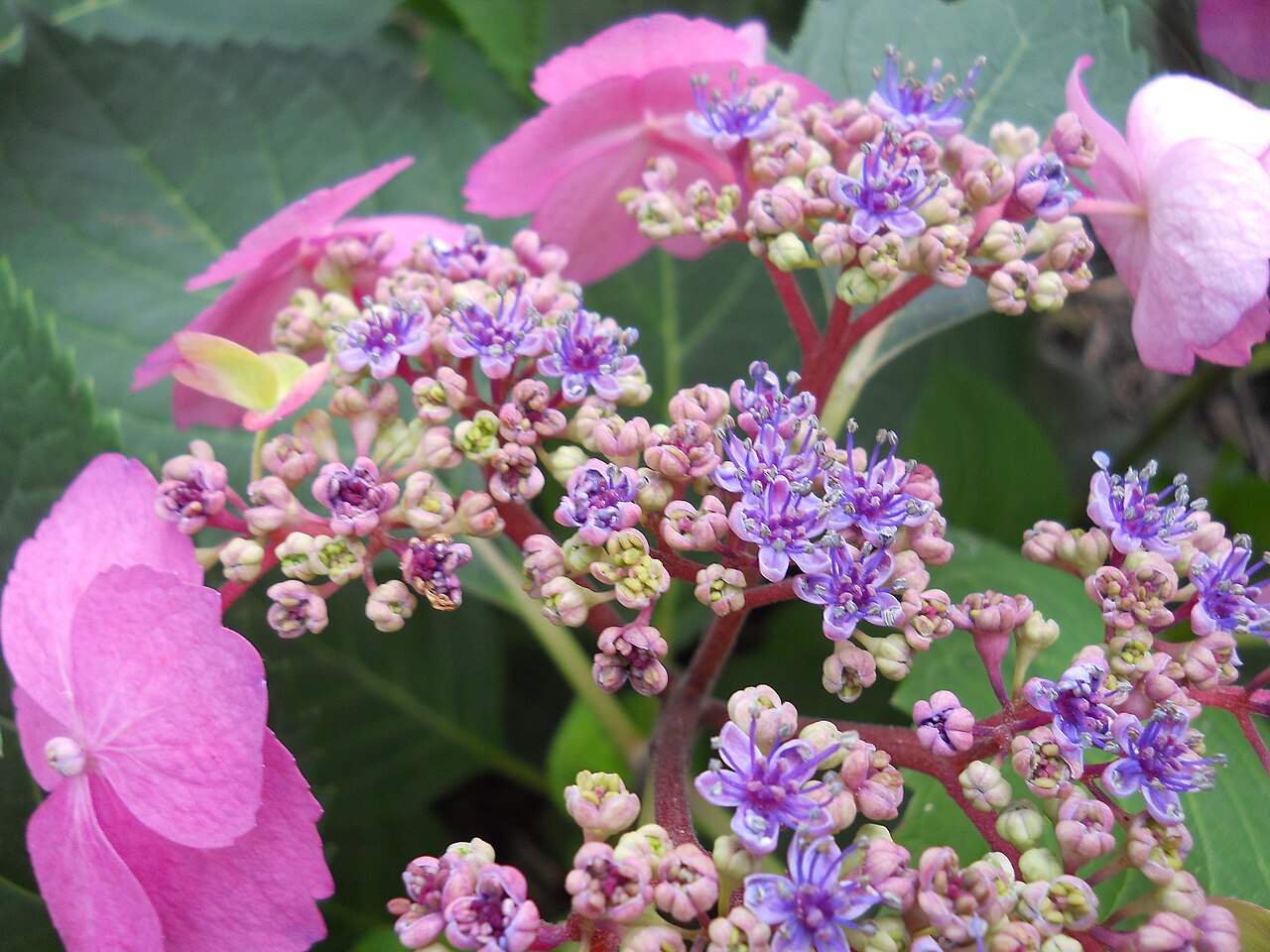
In alkaline soil, aluminum stays locked up and the same pigment expresses as pink. Photograph: Iryna Buchnieva
Frequently asked questions
Why did my pink hydrangeas turn blue on their own?
The soil was probably acidic all along. Many regions, including much of the southeastern United States, have naturally acidic soils, so newly planted pink hydrangeas drift blue within a season or two as roots take up local aluminum. A soil test confirms the pH before you fight it.
Can a single bush have blue and pink flowers?
Yes, and it happens often. Soil pH can vary across a shrub's root zone, and aluminum uptake can differ between branches, so one plant can carry blue, purple, and pink blooms simultaneously.
Do coffee grounds or vinegar reliably turn hydrangeas blue?
They nudge pH down, but both are weak and imprecise tools. Vinegar's acetic acid neutralizes alkaline compounds only briefly, and coffee grounds are only mildly acidic. For a reliable blue, aluminum sulfate or elemental sulfur with a measured soil pH target works better.
How long do soil amendments take to change bloom color?
Expect one to two full growing seasons. Amendments act on developing buds, not on flowers already formed, so a change made this autumn shows in next year's blooms, and the full effect may take two years.
The bottom line
Hydrangeas change color because of aluminum, full stop. Soil pH is the faucet that decides whether aluminum dissolves and reaches the roots, and the delphinidin pigment in the flowers turns blue when it meets that aluminum. Below pH 5.5 expect blue, above pH 7.0 expect pink, and remember that only bigleaf and mountain hydrangeas can make the switch.
Test the soil first, amend with the right product for the direction you want, and give the buds a season to catch up.
Latest in Gardening
- Why potatoes turn green, and what solanine does
- How reviving stale bread actually works
- How to clean grout that turned black
- Why bread dough needs to rise twice
Get one practical gardening science explainer in your inbox each week. Subscribe for the weekly garden lab letter.
Image Credits: Wikimedia Commons / Rizka, Subhrajyoti07, Iryna Buchnieva
Related stories
What Is Companion Planting and Does It Work?
Marigolds work as a nematode cover crop, but the basil flavor claim failed repeated tests. An honest evidence review of what companion
Determinate vs. indeterminate tomatoes: growth, pruning, and harvest differences
Determinate tomatoes grow to a set size and ripen all at once, while indeterminate types vine all season. That one difference shapes
How to improve clay soil for gardening
Gypsum will not fix ordinary clay soil, say extension experts. What actually works: 2 to 3 inches of compost, mulch, better drainage,