
How to keep pigeons off balcony plants without harming them
By Rive News / Research desk | Rive News / Published October 26, 2026 at 9:00 AM PKT
Key takeaways
- Pigeons come to balconies for flat perches, shelter and food, so removing those three attractions matters more than any single gadget.
- Netting across the open side of a balcony is the most reliable barrier, provided it is taut and checked so birds cannot get trapped.
- Shiny tape and perch removal work best as supporting layers, not as replacements for a physical barrier on a heavily visited balcony.
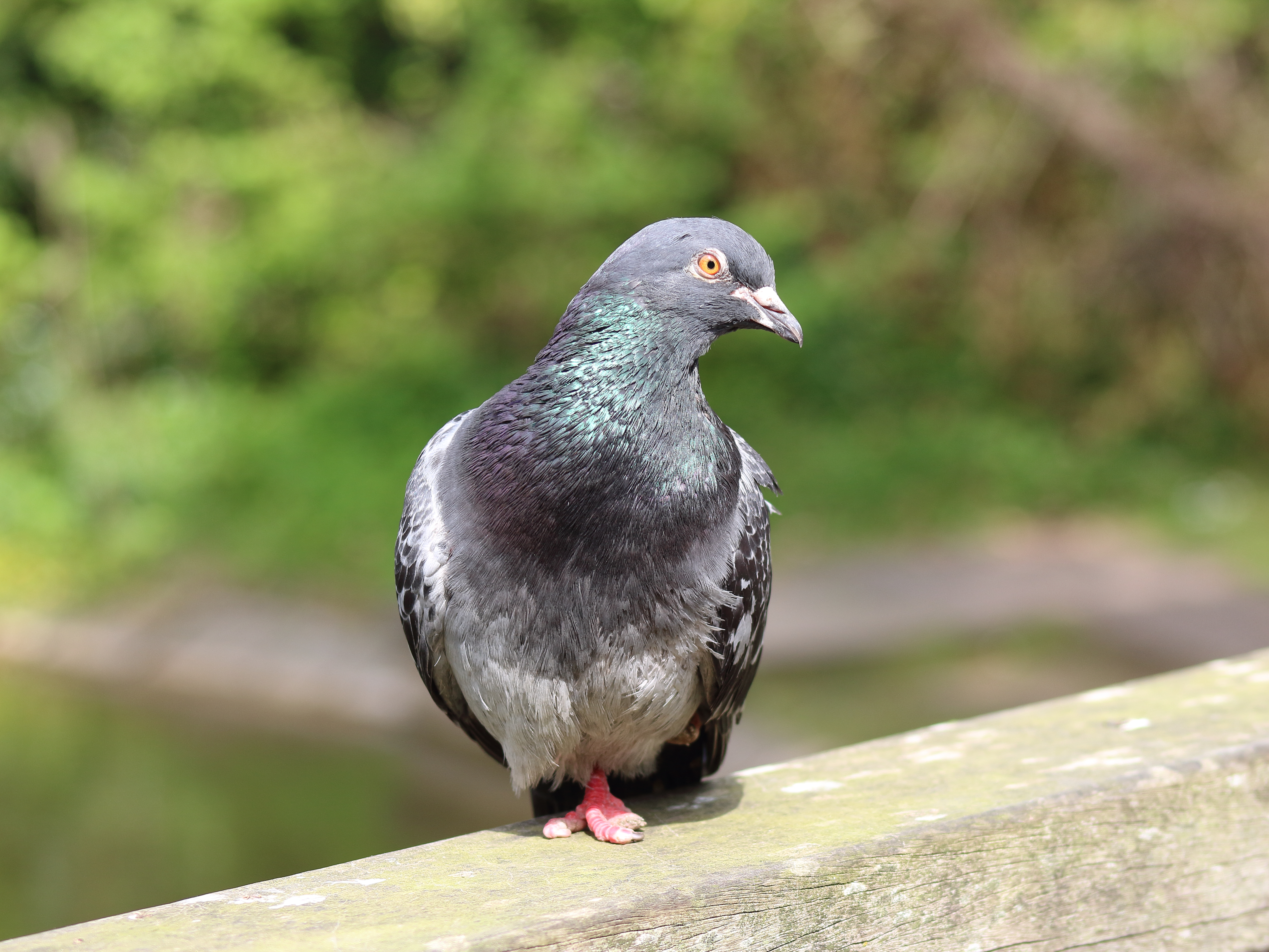
[A pigeon perched outdoors, the kind of bird that treats a flat balcony rail as a resting place.] Photograph: the subject
Image Credits: Wikimedia Commons
Pigeons on a balcony are a plant problem before they are a noise problem. They peck at seedlings, snap tender stems, dig in loose compost and leave droppings on leaves and pots. A few visits can set back a whole container of young plants.
This article explains how to keep pigeons off balcony plants, including why pigeons choose balconies, how netting works, how to remove perches, and how shiny tape and other visual deterrents fit in.
Why pigeons choose your balcony
Pigeons look for the same three things wherever they settle. They want a flat surface to land on, a sheltered corner to rest in, and food within easy reach. A balcony often offers all three at once.
Rails, ledges, air conditioning units and the tops of planters give pigeons the flat perches they prefer. Corners shielded from wind give them resting spots. Seed trays, fallen seed from a bird feeder and even crumbs left after eating outside give them a reason to return.
The Royal Society for the Prevention of Cruelty to Animals (RSPCA) notes that pigeons prefer to roost and nest in elevated spots such as balconies, windowsills, chimneys and rooftops. That preference explains why a high balcony can attract birds even when the street below looks busy.
Pigeons also remember food sources well. Anticimex, a pest management company, advises covering trash cans, cleaning up food spills and avoiding feeding pigeons, because birds that find food once tend to come back. The same logic applies to a balcony: a single forgotten seed tray can teach a pigeon that your pots are worth visiting.
Start by taking away the attractions
Before buying any deterrent, walk the balcony the way a pigeon would see it. Look for flat landing spots, sheltered corners and anything edible. Removing those attractions costs nothing and makes every other method work better.
Sweep up fallen seed, crumbs and compost spills. Empty saucers that hold standing water, since pigeons drink from them and wet compost draws them to dig. If you feed smaller birds, switch to a feeder pigeons cannot easily use, such as a caged feeder or one with small perches, and stop ground feeding.
Move plants away from the spots pigeons use most. Pots tucked into a sheltered corner read as cover to a nesting bird.
Pots set in the open, with clear space around them, are less inviting. Keep the balcony tidy, since piles of stored items create the sheltered nooks pigeons nest in.
Check the plants themselves. Dense foliage and trailing stems give birds cover and nesting material.
Thinning a plant slightly, or choosing lower-growing varieties for the most exposed pots, reduces that cover without harming the plant. ## Netting: the barrier that does the heavy work
Netting is the most dependable way to keep pigeons away from plants. A mesh fixed across the open side of a balcony, or over a group of pots, physically blocks birds from reaching the plants.
Visual and sound deterrents can fail once birds get used to them. A barrier does not rely on the bird being scared.
The RSPCA describes netting as a safe and humane way to stop pigeons nesting or roosting when it is properly installed, and it warns that poorly built or unmaintained netting can trap birds. That warning sets the standard for doing the job well.
Fit the net so it is taut, with no sagging pockets where a bird could land and push through. Fix the edges fully to the ceiling, walls and railing so there are no gaps at the corners. One guide to balcony bird control recommends gaps smaller than 1 inch to block entry, a useful check when you are choosing mesh size for pigeons.
Use a wider mesh if you want smaller birds to pass through while keeping pigeons out. Anticimex points out that wide-meshed netting lets house sparrows through while blocking larger birds such as pigeons. That choice suits gardeners who enjoy small visitors but not pigeon damage.
Inspect the net regularly. Wind loosens fixings, and a sagging section can trap a bird or let one through. Repair tears at once.
A net that is checked once a month stays a humane barrier. A net that is fitted and forgotten can become a hazard.
Remove the perches pigeons land on
Pigeons need a flat surface to land. Take that surface away and many birds simply move on. This is where perch removal earns its place in the plan.
Bird spikes are the best known perch tool. They are strips of blunt pins that make a rail or ledge awkward to stand on. The RSPCA describes anti-perching devices such as spikes and spines as one of the most humane deterrents when installed safely, since they prevent landing without injuring the bird.
Fit spikes along the full length of every rail, ledge and air conditioning unit top the birds use. Bird Busters, a bird control supplier, warns that one uncovered ledge is often enough for pigeons to stay, so partial coverage wastes the effort. Cover every flat surface in the area, not just the most obvious one.
Wires stretched a short distance above a rail also deny a landing. The bird cannot settle because the wire sits where its feet would go. Wires suit long straight rails and need tensioning so they do not sag.
Perch removal protects the plants indirectly. Pigeons that cannot land near the pots cannot peck seedlings or dig in compost at leisure. Combined with netting over the plants themselves, it leaves birds with neither a perch nor access.
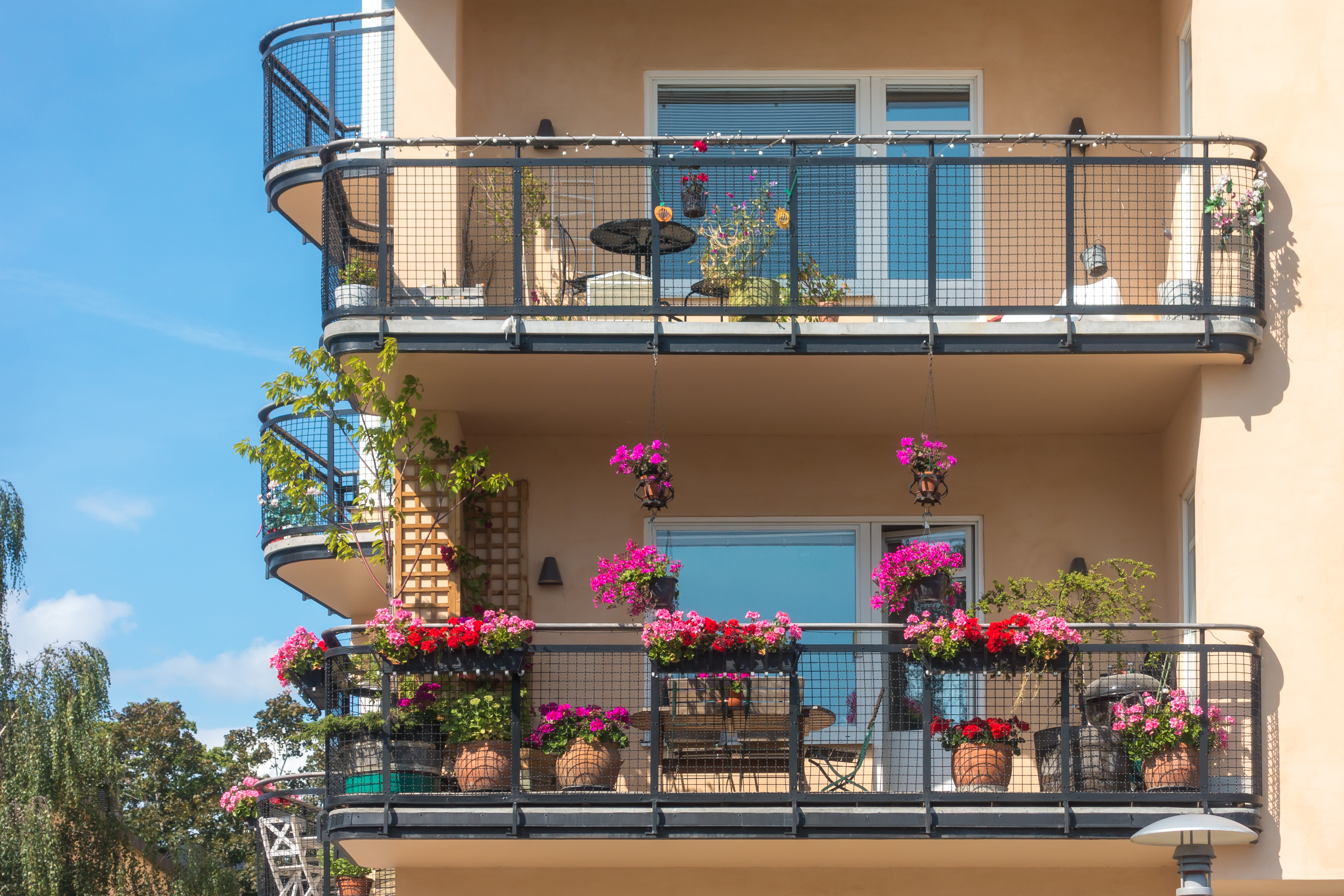
[Potted plants along a balcony railing, the kind of container display pigeons target for perching and digging.] Photograph: the subject
Image Credits: Wikimedia Commons
Shiny tape and visual deterrents
Shiny tape is the method most gardeners try first, and it is also the method most often used badly. Done right, it is a useful supporting layer. Used alone on a busy balcony, it usually disappoints.
Reflective tape, old CDs and similar shiny objects flash in sunlight and move in the breeze. Pigeons are startled by sudden movement and flashes of light, so a strip hung where it can swing freely can push birds to land elsewhere.
The key detail is movement. Tape pressed flat against a surface, or folded into a tight bundle, loses the flashing effect that makes it work.
Hang several strips rather than one, and place them at the spots pigeons actually use. If birds gather on one railing section, concentrate strips there instead of spreading them thinly across the whole balcony. Leave the strips loose enough to move in a light breeze.
Move the deterrents regularly. Pigeons learn that a still object is not a threat, and a decoy owl left in one place for weeks becomes garden furniture to them. Bird control guides repeat the same advice for decoys and tape alike: change the position every few days so birds do not get used to them.
Pair shiny tape with a barrier or perch removal. Tape buys time and pushes casual visitors away.
Netting and spikes handle the determined birds that tape alone will not stop. Gardeners who combine the two report far fewer repeat visits than those who rely on shine alone.
What to do about a nest that is already there
Finding a nest changes the job. Wild birds and their active nests are protected by law in many countries, including under the Wildlife and Countryside Act 1981 in England, Scotland and Wales, which the RSPCA cites for pigeons and other wild birds. Destroying a nest in use or removing eggs is an offence under that law except under licence.
If a nest holds eggs or chicks, leave it alone until the young have flown, then remove the nest material and seal the spot with netting or spikes before the pair returns. If a nest is empty, remove it and clean the area, wearing gloves and a face mask if droppings are heavy.
Check local rules before acting, since protections and licences differ by country and region. When in doubt, contact a local wildlife authority or a licensed pest controller rather than removing a nest yourself.
A layered plan for a balcony garden
No single method carries the whole job on a balcony pigeons visit daily. A layered plan does, because each layer covers the weakness of the others.
Start with hygiene: remove food, water and shelter. Add perch removal on rails and ledges so birds have nowhere easy to land.
Fit netting over the plants or across the balcony opening so even a bird that lands cannot reach the pots. Use shiny tape at the busiest landing spots as a visible extra push.
Pigeons are persistent, but they are also practical. A balcony that offers no perch, no food and no access to plants stops being worth the effort. Most birds move to an easier spot within days of the full set of changes, and the plants get their growing season back.
Frequently asked questions
Does netting hurt pigeons?
Netting fitted tautly with no gaps and checked regularly does not hurt pigeons, according to the RSPCA. Problems come from loose or damaged netting that can trap birds, which is why regular inspection matters.
Will shiny tape alone keep pigeons away?
Shiny tape can deter casual visitors, but pigeons get used to still objects over time. It works best when moved regularly and combined with netting or perch removal.
Why do pigeons keep coming back to the same balcony?
Pigeons return to places that offer flat perches, shelter and food. If any one of those remains, the balcony stays attractive even after other deterrents go up.
Is it legal to remove a pigeon nest?
Rules differ by country. In England, Scotland and Wales, wild birds, their eggs and their nests in use are protected under the Wildlife and Countryside Act 1981. Leave active nests alone and check local rules first.
The bottom line
Pigeons damage balcony plants because balconies give them perches, shelter and food in one place. Take those away, block access with taut netting, remove landing spots with spikes or slopes, and use shiny tape as a moving extra layer.
Check the setup regularly and adjust it to the spots birds still use. That combination protects plants without harming the birds.
Tags: pigeons, balcony gardening, pest control, container plants
Rive News is a research desk that writes plain-language explainers from public sources, with no individual byline and no invented expertise.
Related
- How to grow tomatoes in pots on a balcony
- How to keep slugs off vegetables without chemicals
- How to keep squirrels out of garden beds
- How to get rid of aphids without chemicals
Subscribe to the Rive News newsletter for one practical explainer each week.
Rive News publishes explainers from public sources; corrections are noted on the article page.
Related stories
What Is Companion Planting and Does It Work?
Marigolds work as a nematode cover crop, but the basil flavor claim failed repeated tests. An honest evidence review of what companion
Determinate vs. indeterminate tomatoes: growth, pruning, and harvest differences
Determinate tomatoes grow to a set size and ripen all at once, while indeterminate types vine all season. That one difference shapes
How to improve clay soil for gardening
Gypsum will not fix ordinary clay soil, say extension experts. What actually works: 2 to 3 inches of compost, mulch, better drainage,