
How Do You Know When Garlic Is Ready to Harvest?
Key takeaways
- Harvest garlic when the bottom three leaves turn brown while the top leaves are still green.
- Each green leaf is a protective wrapper, so waiting until all leaves brown ruins storage quality.
- Dig one test bulb first, and cure the harvest in a dry, shaded, ventilated spot for two to four weeks.
Garlic hides its harvest date underground. The bulbs give no visible signal on their own, and digging too early or too late both cost the gardener. Too early means small bulbs that never reach full size.
Too late means wrappers that split and cloves that separate, which will not store well.
The reliable signal is above ground. Garlic leaves tell the story, and the rule is simple: watch the leaves from the bottom up. When the lowest leaves turn brown while the top leaves stay green, the crop is ready.
This article explains how to read garlic leaves, including the test-bulb check that confirms the decision, the difference between hardneck and softneck types, and how to harvest and cure the crop for long storage.
Why the leaves are the clock
Each garlic leaf connects to a wrapper layer around the bulb. As the plant matures, lower leaves die back first. Each leaf that browns is one fewer potential wrapper protecting the bulb.
Away to Garden puts the point sharply: waiting until all the leaves go brown will produce overripe bulbs whose cloves start to separate from one another, and the resulting loose heads will not store as long. Harvesting too soon can also cut storage life short and limit bulbs reaching full size. The window between those two mistakes is where good garlic lives.
Most fully grown garlic plants have 7 to 9 leaves. The Old Farmer's Almanac Garden Planner gives a clear rule: when the three lowest leaves turn yellow and tan, but the three highest leaves are still green, it is garlic harvesting time. Another Almanac guideline says that when about 30 percent of the total foliage shows withering or brown tips, the plants have cut back nutrients and moisture to the leaves.
The University of Connecticut Extension gives a similar rule with a deadline attached. When the bottom three leaves are brown and senesced, the gardener has about a two-week window to complete the harvest. After those two weeks, the bulbs will not cure or store properly, because the outer skin will disintegrate.
That two-week window is the key planning fact. Garlic harvest is not a single day, but it is not open-ended either. Once the bottom three leaves brown, the clock is running.
The scape signal for hardneck garlic
Hardneck garlic sends an extra signal before harvest. It produces a scape, a curly flower stalk that rises from the center of the plant. Gardeners usually cut scapes when they curl, which sends the plant's energy back into the bulb instead of the flower.
The Almanac's timing rule starts from that cut. Counting from the date when most scapes are cut, bulbs will be ready to dig about 20 days later, give or take a few days for weather.
Softneck garlic does not produce a scape. It shows the same leaf dieback, so the leaf rule carries the whole decision. Softneck varieties are common in milder climates and often store longer than hardneck types.
The test-bulb check
When the leaves say the time is near, dig one test bulb before committing to the whole bed. This is the step that turns a guess into a decision.
Loosen the soil around one plant with a garden fork, working carefully to avoid cutting or bruising the bulb. Lift the plant gently and brush off the loose soil. Then inspect the bulb.
UConn Extension describes two checks. First, cut the head lengthwise. If the cloves inside are not differentiated, the crop is not ready and needs more time in the ground.
If the cloves are separated within the wrapper, the rest of the crop is ready. Second, look at clove shape. Each clove should be tightly wrapped within the head and have developed from round to wedge-shaped.
In hardneck varieties, cloves may begin to pull away from the stalk when fully developed.
The Almanac adds a firmness test. A mature bulb should feel firm with well-formed cloves and papery skin. An immature bulb feels soft, with loosely packed cloves.
The test bulb is still usable, so nothing is wasted by checking.
If the test bulb is underdeveloped, wait a few days and check another plant. If it is ready, harvest the bed within the two-week window. Do not wait for every plant to look identical.
Plants in one bed mature at slightly different rates, and the leaf rule applied across the bed is a better guide than any single plant.
How to dig garlic without damage
Harvest on a sunny, dry day if possible. UConn Extension recommends harvesting in the morning, before 11 AM, to avoid sun scalding the bulbs. Wet soil makes digging messier and curing harder, so a dry spell is the ideal window.
Do not pull garlic straight out by the leaves. Pulling can damage the stem plate and bruise the bulb.
Instead, loosen the soil around the bulbs with a garden fork or shovel, taking care not to puncture them. Lift the bulbs gently, keeping stems and roots attached for curing.
Freshly harvested garlic is surprisingly tender. Bruised or cut bulbs will not store as well as undamaged ones, so handle each plant gently. Shake or wipe off loose dirt, but do not wash the bulbs before curing unless absolutely necessary.
Washing adds moisture that curing is meant to remove.
Set damaged bulbs aside for immediate kitchen use. A nicked bulb is still good garlic. It just will not keep for months, so it should be eaten first.
Sorting at harvest time saves the disappointment of finding a rotted bulb in the stored batch weeks later. The same gentle handling matters with other root crops, including potatoes that need hilling as they grow to stay covered and undamaged underground.
Curing garlic for storage
Curing is the drying process that turns fresh garlic into keeping garlic. It takes two to four weeks, depending on humidity, airflow, and bulb size. Away to Garden reports a range of three to eight weeks for full curing before tops are cut off and roots trimmed, which reflects how much curing time varies with climate.
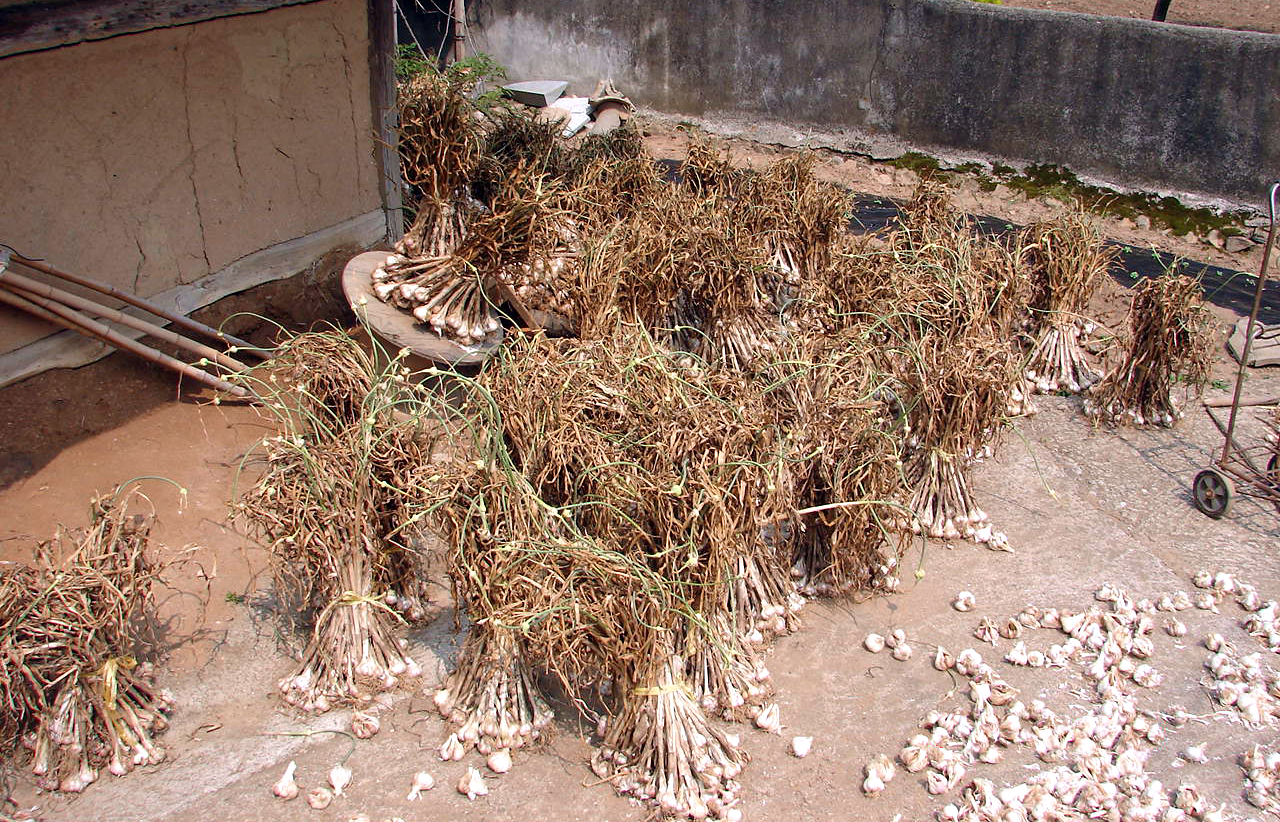
The setup is simple. Place freshly harvested bulbs in a dry, shaded, well-ventilated location. Good airflow is essential.
Garlic can be laid in a single layer on screens or racks, bundled loosely, or hung in small bunches. Avoid strong direct sunlight during curing, because excessive heat can damage the bulbs.
Do not cut the stems or roots before curing. The plant continues to draw moisture out through the stem, and the wrappers dry down tight around the bulb. The Almanac notes that by harvesting garlic while it is still half green and allowing three weeks for curing, the bulbs dry nice and tight, with plenty of papery outer scales.
Curing is finished when the outer skins are dry and papery and the necks are thoroughly dry. At that point, trim the roots, cut the stems to about an inch above the bulb for softneck, or braid softneck stems if preferred. Hardneck stems are stiff and do not braid, so they are usually cut short.
Store cured garlic in a cool, dry place with air circulation. A mesh bag, a basket, or a paper bag with holes all work. Avoid plastic bags and damp cellars, which trap moisture and invite mold.
Well-cured garlic stored in good conditions keeps for months. Check the batch every few weeks and use any soft or sprouting bulbs first.
Mistakes that cost the harvest
The biggest mistake is waiting for every leaf to brown. That produces bulbs with splitting wrappers and separating cloves. The garlic may look large, but it will not store.
Harvesting when the bottom three leaves brown and the top stays green avoids this entirely.
The second mistake is harvesting far too early. Small, soft bulbs with undifferentiated cloves never reach full size or full storage life. The test bulb exists to prevent this error.
When in doubt, dig one plant and look inside before digging the rest. The same early-action habit matters with apple trees that fruit heavily only every other year when thinning comes too late.
The third mistake is skipping curing. Garlic put straight into a closed container while still damp will mold. Curing feels slow, but it is what makes the harvest last.
Frequently asked questions
How many brown leaves mean garlic is ready?
When the bottom three leaves have turned brown while the upper leaves are still green, the garlic is ready. Most plants have 7 to 9 leaves, so this means roughly the lower third has died back. After that point, harvest within about two weeks.
Can I harvest garlic after all the leaves turn brown?
It is not recommended. Each brown leaf is a lost wrapper layer. Bulbs left until all leaves brown tend to split, with cloves separating underground, and they will not cure or store properly.
Should I stop watering garlic before harvest?
Yes. Stop supplemental watering as the plant finishes producing new leaves and starts drying down. The Almanac advises one last deep watering after scape cutting, then no more supplemental water.
Dry conditions at harvest make curing easier.
How long does garlic take to cure?
Curing usually takes two to four weeks in a dry, shaded, ventilated spot. In humid climates it can take longer. Garlic is ready for storage when outer skins are papery and necks are fully dry.
What is the difference between hardneck and softneck garlic at harvest?
Hardneck garlic produces a scape and is harvested about 20 days after scape cutting, using the leaf rule. Softneck garlic produces no scape, stores longer, and is judged by leaf dieback alone. Both need curing before storage.
The bottom line
Garlic tells the gardener when it is ready, through its leaves. When the bottom three leaves turn brown and the top leaves stay green, dig a test bulb, confirm the cloves are defined and wedge-shaped, and harvest within two weeks. Cure the bulbs dry, shaded, and ventilated, then store them cool with airflow.
That sequence turns a hidden crop into garlic that keeps for months, and it rewards the same patience that pays off when zucchini plants make flowers but no fruit early in the season and simply need a little more time.
Topics: garlic, harvest, curing, vegetable garden, bulbs
Latest in Gardening
- Why Do Peppers Fail to Ripen Before Frost Hits?
- Why Do Zucchini Plants Make Flowers but No Fruit?
- Why Do Apple Trees Fruit Heavily Only Every Other Year?
- Why Do Potatoes Need Hilling as They Grow?
Subscribe for weekly garden guides and seasonal growing tips from the Rive News research desk.
Related stories

What Is Companion Planting and Does It Work?
Marigolds work as a nematode cover crop, but the basil flavor claim failed repeated tests. An honest evidence review of what companion

Determinate vs. indeterminate tomatoes: growth, pruning, and harvest differences
Determinate tomatoes grow to a set size and ripen all at once, while indeterminate types vine all season. That one difference shapes

How to improve clay soil for gardening
Gypsum will not fix ordinary clay soil, say extension experts. What actually works: 2 to 3 inches of compost, mulch, better drainage,