
Why Are Marigolds Planted With Vegetables? Benefits and Limits
Key takeaways
- Marigolds can trap root-knot nematodes, but only when grown as a dense cover crop, not as a thin border beside vegetables.
- Their roots release compounds that harm nematodes, and their flowers attract pollinators and predatory insects.
- For real nematode control, plant marigolds alone in the bed, then till them in before the next vegetable crop.
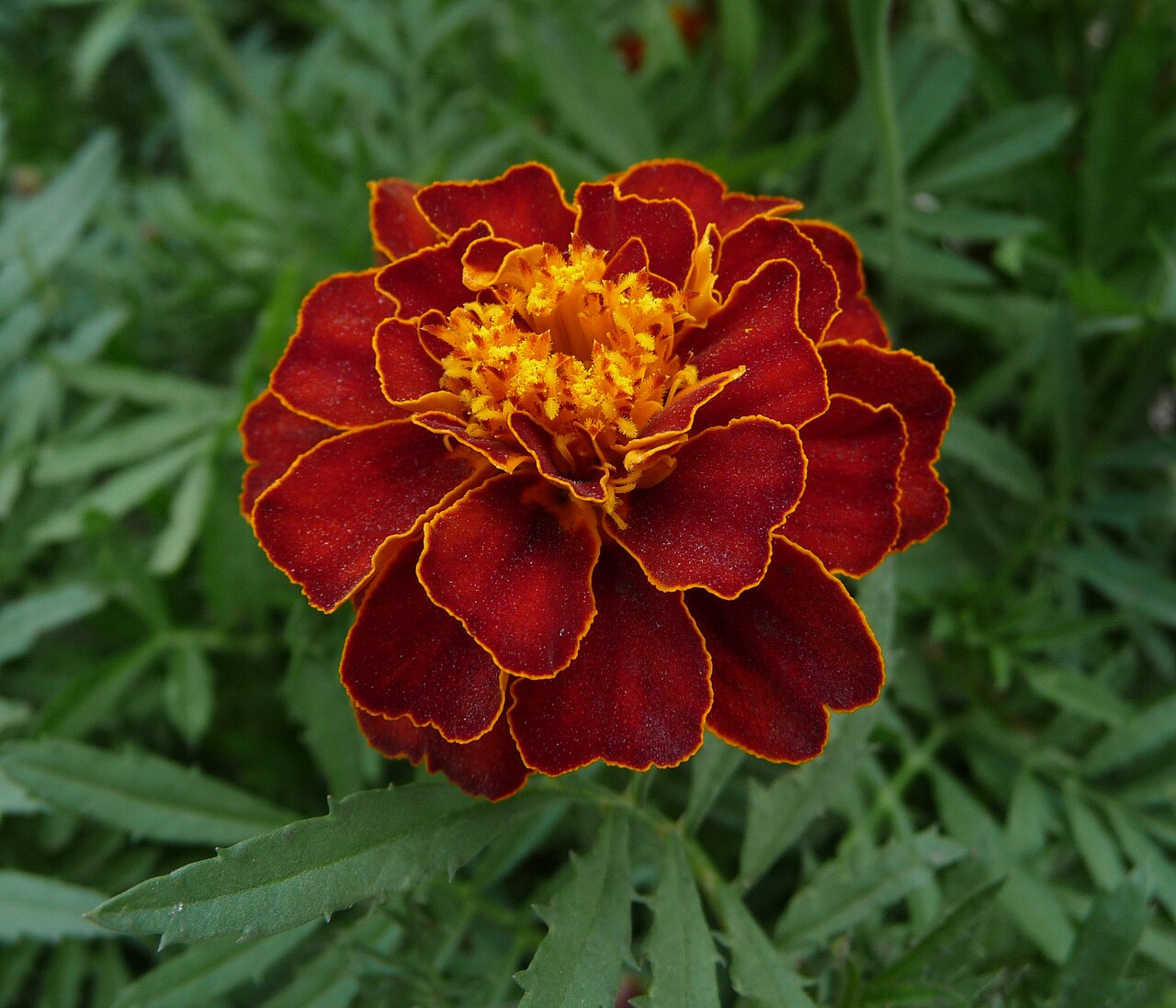
Marigolds are the bright orange and yellow flowers that show up in vegetable gardens year after year. Gardeners plant them beside tomatoes, peppers, and beans with a clear hope. The flowers are meant to protect the vegetables from pests hiding in the soil.
That hope rests on real science. Marigold roots produce compounds that harm some plant-parasitic nematodes, the microscopic roundworms that feed on roots. But the way most gardeners use marigolds does not match how the science works.
A scattered border of marigolds beside a tomato bed looks cheerful, and it does attract useful insects, yet it rarely stops nematodes from reaching the vegetables.
This article explains why marigolds are planted with vegetables, including how the nematode trap works, why side-by-side planting usually falls short, what does work instead, and how to use marigolds for above-ground pest help.
What marigolds do underground
The main underground target is the root-knot nematode. These tiny worms enter vegetable roots, feed there, and cause swollen knots called galls. A badly infested plant grows poorly, wilts in heat, and yields little fruit.
The southern root-knot nematode is a major home garden pest in warm regions, according to the LSU AgCenter.
Marigolds fight back in two ways. First, their living roots release natural compounds that are toxic to nematodes. One of the best studied is alpha-terthienyl, a compound that Sciencing identifies as a key part of the marigold root defense.
Second, marigolds act as a trap crop. Nematodes enter marigold roots the way they enter tomato roots, but they fail to set up a feeding site inside the marigold. The nematodes die without reproducing, so the population in the soil falls over time.
Garden Myths describes this trap mechanism as the more plausible explanation for marigold effects. The scent of the flowers plays no part in it. The popular idea that marigold fragrance repels nematodes is a myth, because nematodes live in the soil and respond to roots, not to flower scent.
The LSU AgCenter reports that French marigolds, known as Tagetes patula, are more effective than African types, known as Tagetes erecta, against the southern root-knot nematode. Signet marigolds are the exception that appears less effective.
Why planting marigolds beside vegetables usually falls short
Here is the part most garden advice skips. When a susceptible vegetable grows right next to a marigold, nematodes do not need to pass through the marigold to find a host. They can move through the soil and infect the vegetable roots directly.
The marigolds and the tomatoes share the bed, but the nematodes still find the tomatoes.
Garden Myths states the result of scientific testing plainly. Marigolds planted alongside susceptible crops do not control nematodes in the crops. The garden may look pretty, and it may smell nice, but the side-by-side practice does not prevent nematodes from invading the vegetables.
The LSU AgCenter reaches the same finding. Planting marigolds as companion plants next to crops that are susceptible to root-knot nematode does not seem to work, even though slight advantages may exist. The nematodes still find and infest the roots of the susceptible vegetable plants.
University of Florida extension guidance points the same way. Reviews of marigold cover-crop research note that interplanting marigolds beside susceptible vegetables generally produces unreliable or absent effects on nematode populations in the vegetable roots. Pot experiments sometimes show suppression, but a pot with a one-to-one ratio of marigolds to vegetables is not the same as a garden row with a few marigolds tucked at the ends.
Density, soil volume, and the presence of a susceptible host all change the outcome.
This does not mean marigolds are useless. It means the popular method is wrong. The protection comes from how marigolds are grown, not from simply having them nearby.
What does work: marigolds as a cover crop
The cover-crop method
Extension services recommend a different approach. Grow marigolds as a dense cover crop in the bed or row where nematodes are a problem, with no susceptible vegetables present at the same time. Then remove or till in the marigolds before planting the next vegetable crop.
The LSU AgCenter describes a practical rotation. Early summer crops such as tomatoes, snap beans, cucumbers, squash, onions, and garlic often finish production by June or July. Gardeners can then plant marigolds in their place.
The marigolds grow through the rest of the season and reduce nematode numbers before the next crop goes in.
Density matters. Research summarized by the University of Florida suggests planting marigolds densely, with spacing under 7 inches between plants, to limit weeds and keep root coverage tight. Weeds matter because nematodes can reproduce on weed roots, which cancels out the marigold effect.
A weedy marigold bed is far less useful than a clean, dense one.
Timing matters too. The nematicidal compound alpha-terthienyl is released by active, living marigold roots. It breaks down when exposed to near-ultraviolet light outside the soil, so there is no benefit in spreading marigold extracts or dried plant parts on the soil surface.
The plants must grow in place, alive, for a full season.
The effect also fades. The LSU AgCenter cautions gardeners not to expect marigold control to last beyond one crop or one season. Nematode populations build back up once susceptible crops return.
Marigolds are a tool for knocking numbers down, not a one-time cure.
Mississippi State University Extension adds another useful detail. In one study, biochemicals produced by African and French marigolds killed nematodes that feed on plant roots, but only after the spent plants had been tilled into the soil. Tilling the finished marigolds in puts the root material and its compounds directly into the soil where nematodes live.
Above-ground benefits: pollinators, predators, and pests
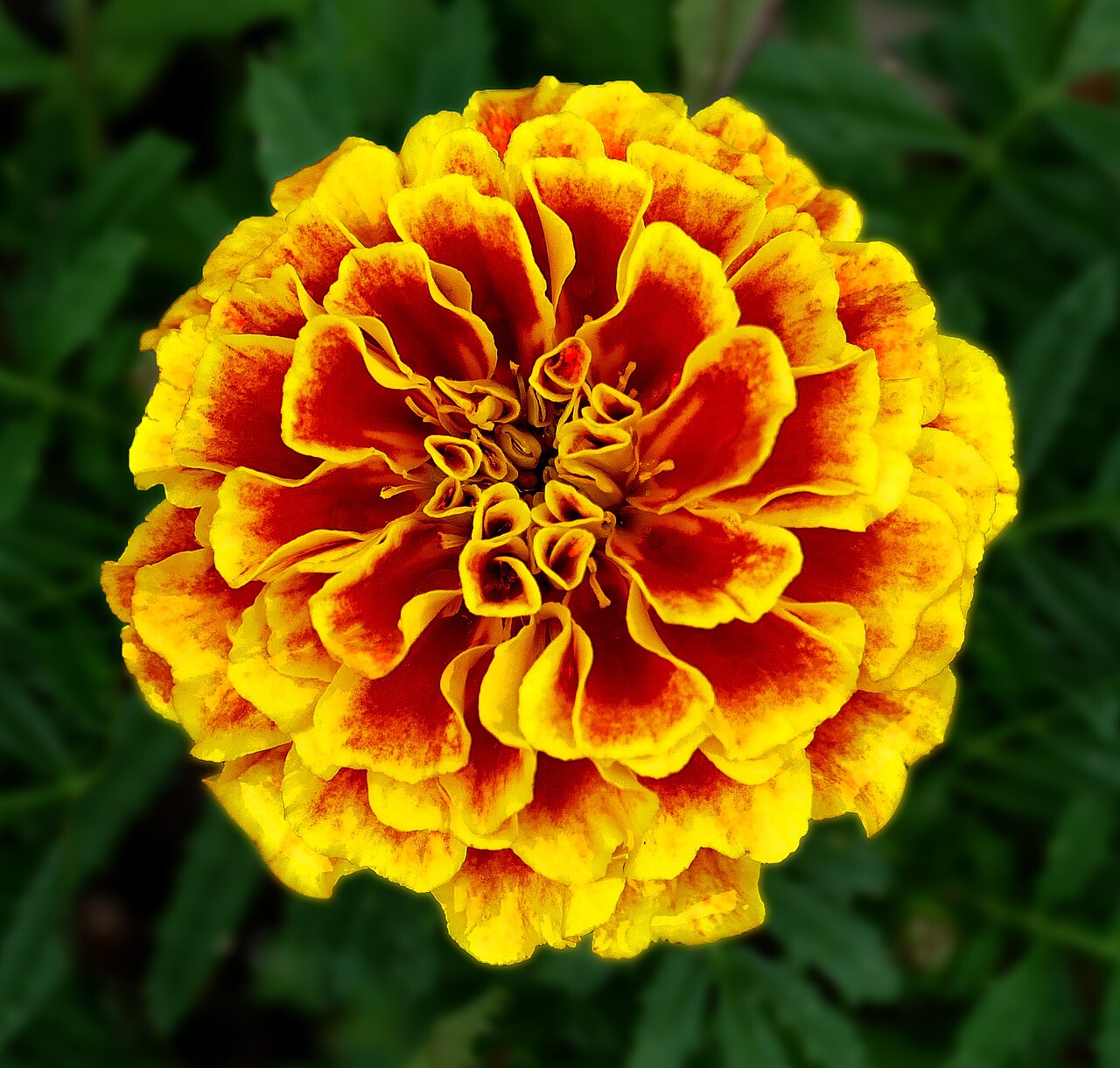
Marigolds earn their place in the garden even where nematodes are not the problem. Their open, bright flowers attract pollinators, including bees and butterflies. They also attract predatory insects that feed on garden pests, such as lady beetles, hoverflies, and parasitic wasps.
A bed with marigolds tends to support more of the insects that keep pest numbers in check.
Some companion combinations have direct study support. Mississippi State University Extension notes that one study found basil and marigolds together reduced thrips in greenhouse-grown and field-grown tomatoes. Another study found that marigold, nasturtium, and onion helped reduce populations of cabbage looper and imported cabbageworm in cabbage.
These are modest, specific findings, not proof that marigolds protect everything. They show that mixing flower and herb species among vegetables can shift pest pressure in useful ways.
How to use marigolds in a vegetable garden
Start by deciding what problem you are solving. If nematodes have damaged your tomatoes or peppers in past seasons, treat marigolds as a rotation crop, not a border. If you want pollinators and general diversity, a border works fine.
For nematode control, pick a bed with a known problem. After the summer vegetables finish, clear the bed and plant French marigolds densely, with plants less than 7 inches apart. Keep the bed weeded and watered through the season.
At the end of the season, till the spent plants into the soil. Wait before planting susceptible vegetables, and expect to repeat the process in later years.
For pollinators and above-ground pests, plant marigolds along bed edges and between rows. Choose varieties that stay compact so they do not shade low vegetables. Deadhead spent blooms through the season to keep flowers coming.
The flowers will keep drawing bees and beneficial insects as long as they bloom.
For general soil health, marigolds fit into a rotation the way any cover crop does. Their roots add organic matter, and their growth breaks up the monotony of a single vegetable repeated in one spot.
One caution applies to every use. Marigolds cannot erase a severe nematode infestation on their own. University of Florida research notes that marigolds may suppress nematode numbers but might not reduce severe infestations enough for the next cash crop to succeed.
If a bed has heavy damage, test the soil or ask a local extension office about nematode counts before relying on marigolds alone.
How to choose and grow marigolds
If you mulch around vegetables, fallen leaves make a cheap mulch that pairs well with marigold borders. Keep mulch a few inches away from stems so it does not trap moisture against the plants.
Common mistakes to avoid
The most common mistake is planting three marigolds at the end of a tomato row and expecting nematode control. The density is far too low, and the susceptible host is right there. If nematodes are the target, commit to a full bed of marigolds for a season.
A third mistake is ignoring weeds in a marigold cover crop. Nematodes reproduce on many weed roots, so a weedy marigold bed can undo the whole effort. Weed the bed through the season, just as you would a vegetable bed.
A fourth mistake is confusing marigold types. True marigolds belong to the genus Tagetes. Calendula, sometimes called pot marigold, is a different plant with different properties.
If you buy seed for nematode control, check the label for Tagetes patula or Tagetes erecta, not Calendula.
Frequently asked questions
Which marigold type is best for nematodes?
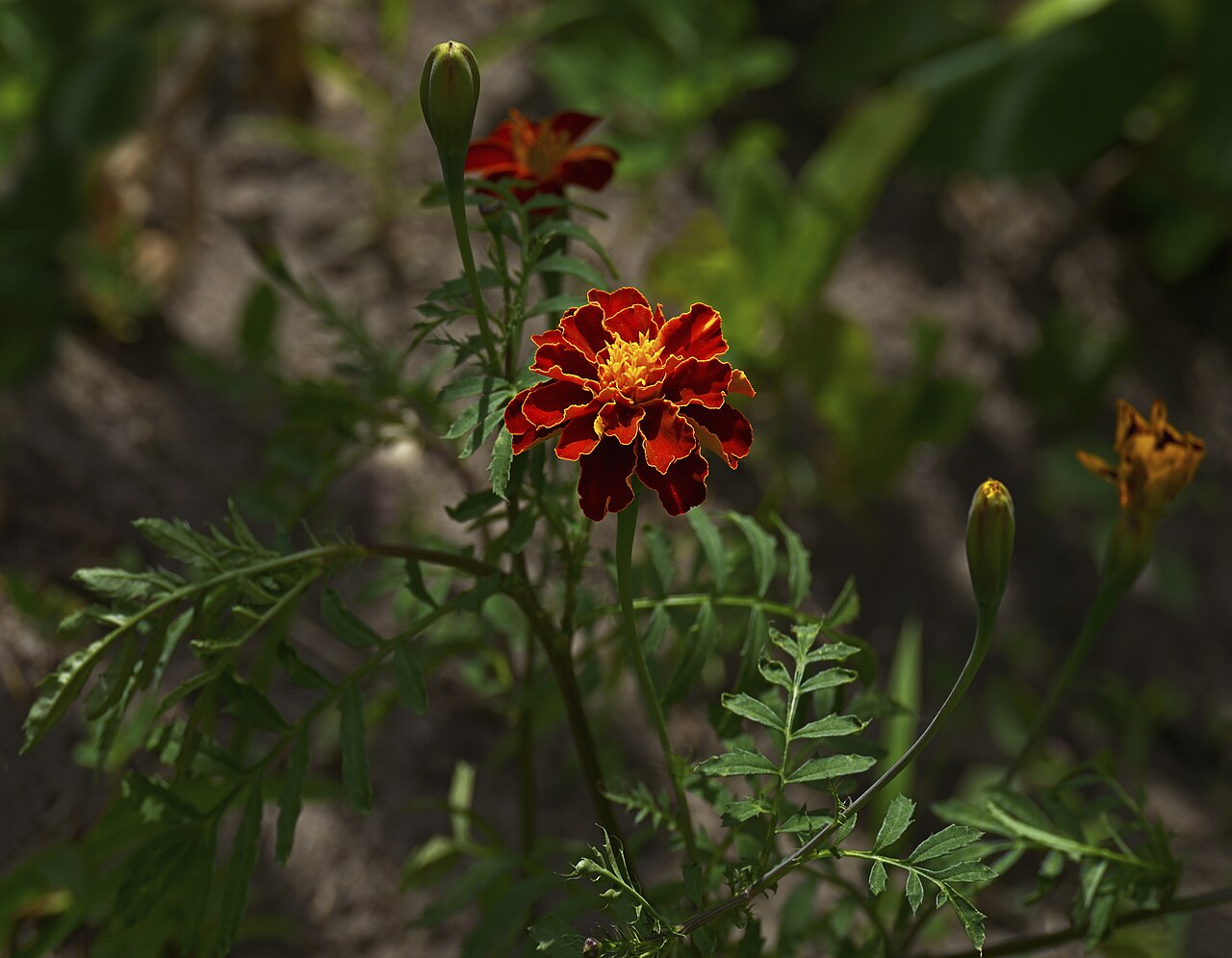
French marigolds, or Tagetes patula, show the strongest effect against the southern root-knot nematode in LSU AgCenter guidance. African marigolds, or Tagetes erecta, also show activity but are generally less effective. Signet types appear less effective.
Can I plant marigolds with tomatoes?
Yes, and the combination looks good and attracts pollinators. Just do not count on a marigold border to protect tomatoes from nematodes. For nematode control, grow marigolds alone in the bed for a season, then plant tomatoes the following season.
How long do marigolds need to grow to reduce nematodes?
They need a full growing season in place, with living roots in the soil. The effect lasts about one crop or one season, according to the LSU AgCenter, so repeat the rotation as needed.
The bottom line
Marigolds are planted with vegetables for good reasons, but the popular version of the story is half wrong. Their roots trap and kill root-knot nematodes, and their flowers attract pollinators and helpful predators. A thin border beside tomatoes, however, does not protect those tomatoes from nematodes.
Use marigolds the way the evidence supports. Grow them as a dense cover crop in problem beds, till them in at season end, and repeat the rotation. Plant borders too, for pollinators and color, and treat them as a bonus rather than a shield.
Tags: marigolds, companion planting, vegetable garden, nematodes
Latest in Gardening
- Why Do Zucchini Plants Make Flowers but No Fruit?
- Why Do Potatoes Need Hilling as They Grow?
- How Do You Know When Garlic Is Ready to Harvest?
- Why Do Fallen Leaves Make Good Mulch, but Not All Leaves?
Subscribe to the Rive News newsletter for one practical gardening guide each week.
Related stories

What Is Companion Planting and Does It Work?
Marigolds work as a nematode cover crop, but the basil flavor claim failed repeated tests. An honest evidence review of what companion

Determinate vs. indeterminate tomatoes: growth, pruning, and harvest differences
Determinate tomatoes grow to a set size and ripen all at once, while indeterminate types vine all season. That one difference shapes

How to improve clay soil for gardening
Gypsum will not fix ordinary clay soil, say extension experts. What actually works: 2 to 3 inches of compost, mulch, better drainage,