
Why pumpkins grow so big, from garden giants to records
By Rive News / Research desk | Rive News / Published October 29, 2026 at 9:00 AM PKT
Key takeaways
- Pumpkins have no genetic stop signal for fruit size, so with enough water, food, and time, they keep growing.
- Giant pumpkins expand through a long cell-division phase, then two months of cell expansion, fed by extra phloem tissue carrying sugars.
- Decades of selective breeding for weight, led by the Atlantic Giant, plus one-fruit-per-vine growing, took records from under 1,000 pounds in 1995 to over 3,000 pounds.
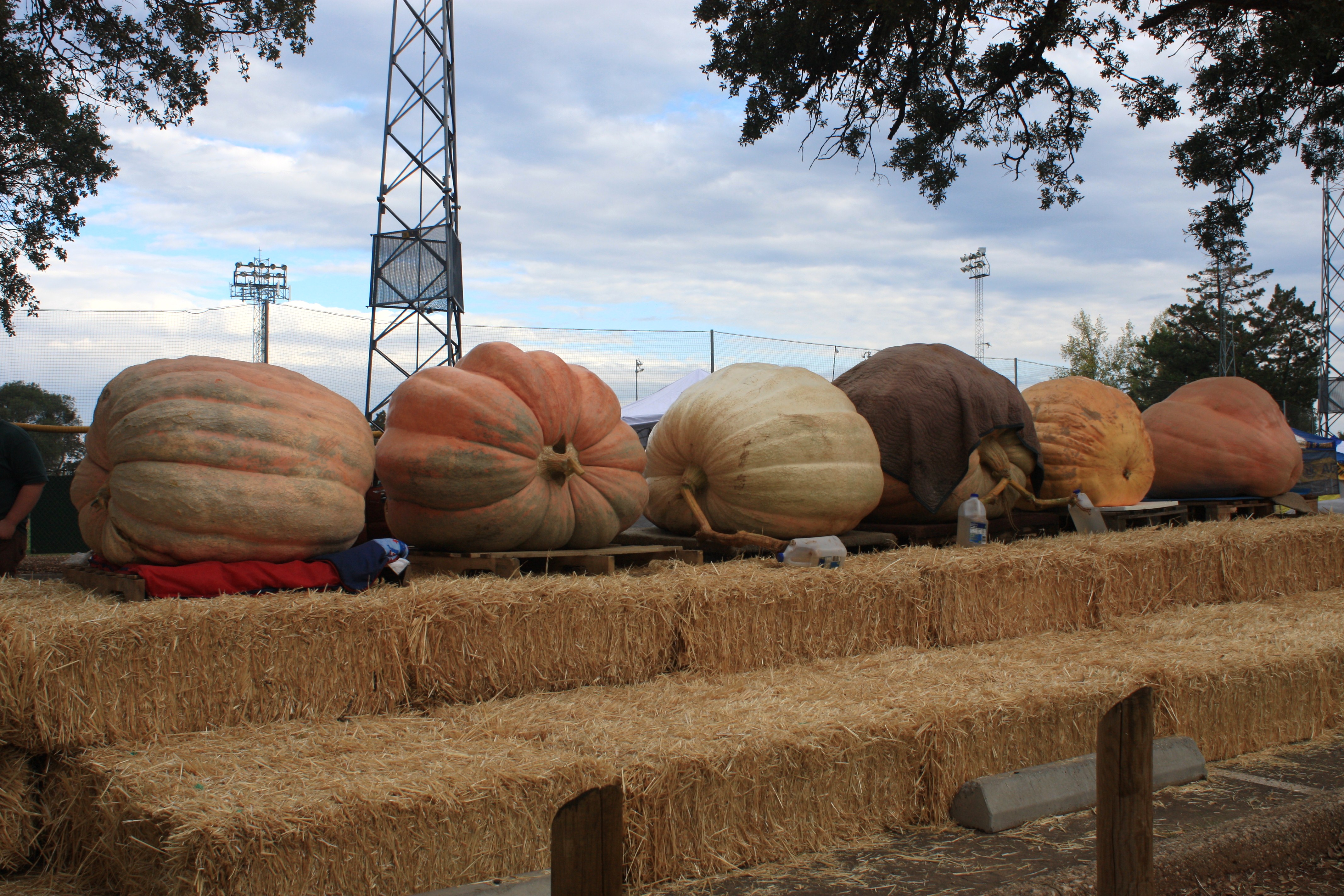
[Giant pumpkins lined up at a weigh-off festival.] Photograph: Nick Ares
Image Credits: Wikimedia Commons
A pumpkin seed weighs a fraction of an ounce. A few months later, the fruit it produces can weigh more than a small car. No other common garden fruit scales up by that much, and the reason is a combination of botany, breeding, and obsessive growers.
This article explains why pumpkins grow so big, including the missing stop signal, the cell biology of expansion, the breeding story behind giant varieties, what champion growers actually do, and how big a pumpkin can get.
A fruit with no built-in stop signal
Most fruits have a genetically set size range. An apple tree produces apples within a familiar band, and no amount of water pushes one to the size of a melon. Pumpkins are different.
They are an indeterminate species, meaning their genetic code carries no signal telling the fruit how large to grow or when to stop. With the right conditions, growth continues until the season ends, the plant is harvested, or the fruit's own weight defeats it.
Giant pumpkins also lack the genes that stop fruit growth, according to the Giant pumpkin reference summary, which allows continuous expansion. Their cells grow larger than regular pumpkins' cells, and the fruit is composed of more water, up to 94 percent. A giant pumpkin is, to a large extent, a very large bag of water held together by plant tissue.
That water content explains both the speed and the fragility of giants. A champion fruit can expand by up to 50 pounds (23 kilograms) a day. At that rate, the skin and flesh are under constant strain, and pumpkins that crack under their own weight are disqualified from competition.
Growers often raise several pumpkins and keep only the most promising, because a cracked fruit ends a season's campaign.
Botanically, pumpkins are berries, a fact that surprises most people because of their size. The berry family includes tiny fruits such as blueberries, which shows that the category says nothing about size limits. What sets pumpkins apart is not their family but their growth programme.
Cell division, cell expansion, and sugar supply
Pumpkin growth happens in two phases, and both run longer than in related plants. The BBC Learning Hub, drawing on plant scientist Dr Emma Davies, explains that pumpkins grow rapidly during a prolonged cell-division phase that lasts much longer than in gourd relatives such as cucumbers. After division, the cells expand for up to two months, producing larger cells than other fruits manage.
Think of it as building more bricks, then inflating each brick. Most fruits do both phases briefly. Pumpkins do the first phase for longer, creating far more cells, and then spend up to two months swelling those cells with water and stored compounds.
More cells plus bigger cells equals a much bigger fruit.
Feeding that growth takes a serious supply system. Pumpkins have higher levels of phloem, the specialised tissue that transports sugars from leaves to where growth happens. More phloem means more sugar delivered to the fruit per day, which supports faster expansion.
The leaves are the factory, the phloem is the delivery network, and the fruit is a warehouse with no closing time.
Size eventually creates its own problem. Once pumpkins grow very large, they tend to stop being round and flatten under their own weight, sometimes forming an arch shape underneath for extra support as they pancake outward. Prize growers have not solved the flat base; it is a structural consequence of a soft, water-filled fruit getting heavier than its shape can support.
Some pumpkins even collapse under their own weight, and moving one is a significant challenge because of its fragility.
Breeding giants: the Atlantic Giant story
Genetics alone does not explain a 3,000-pound pumpkin. Ordinary pumpkins grown well reach tens of pounds, not thousands. The leap comes from selective breeding over decades, centred on a variety called the Atlantic Giant.
Scientific American's "The Quest for the Giant Pumpkin" describes the process as classic artificial selection. Growers bred for size, and the giants that resulted are no longer pure pumpkins. They are products of crossbreeding with heavy squash relatives, because competition is judged by weight, not by size alone, and denser flesh weighs more.
A smaller, denser fruit can beat a larger, lighter one on the scale, so breeders crossed in squash genetics for density.
The result looks less and less like a supermarket pumpkin. Warren, the book author interviewed by Scientific American, says the giants resemble deflated Thanksgiving Day parade floats: huge, gnarled lumps, often different colours, sometimes with a cantaloupe-like netting across the surface, sagging under gravity as they grow because they are still somewhat malleable. Competitive growers care little about looks.
As Warren puts it, they want the fruit to get as heavy as it can for the weigh-off.
Pedigree tracking mirrors horse racing. Growers record the parentage of champion seeds down several generations, and Maine grower Sarah Whitty told NPR in October 2026 that extreme growers control pollination completely, keeping bees away from flowers so they know the exact genetics of each fruit down to its great-great-great-grandfathers. Seeds from a champion fruit are prized precisely because they carry that documented lineage.
The record curve shows the breeding payoff. Giant pumpkins grew from sub-1,000-pound records in 1995 toward 3,000 pounds today. Italy's Stefano Cutrupi grew a 2,702-pound pumpkin that held the record in its time.
Minnesota grower Travis Gienger then grew a 2,749-pound fruit that won the 2023 World Championship Pumpkin Weigh-Off in California, beating the previous record by 47 pounds and earning $30,000. In October 2026, NPR reported Rhode Island gardener Ron Wallace weighing a 3,156-pound pumpkin, described as the world's first 3,000-pound pumpkin and his third time holding the Guinness World Record for heaviest pumpkin.
What champion growers actually do
Breeding sets the ceiling, but growing technique decides whether a plant reaches it. Champion growers prune so that only one fruit grows per vine, concentrating the plant's entire sugar output into a single pumpkin. They maximise soil quality, often using professional soil laboratory analysis to tune nutrition, and they control pests carefully, since a damaged plant cannot feed a giant fruit.
Water is the dominant input. NPR reported that Wallace gave his record plant dozens of gallons of water a day in a greenhouse. That volume makes sense for a fruit that is up to 94 percent water and gaining tens of pounds daily; the water has to come from somewhere, and the grower supplies it.
Timing matters too. Giant pumpkins need a long season: usually 130 to 140 days from seeding to harvest, compared with 90 to 120 days for non-giant pumpkins. Growers start seeds indoors in April to control early conditions, move plants outside in early May under protective cover, and hand-pollinate flowers rather than leaving it to bees.
Gienger's account follows that pattern: seeds started indoors in April, plants moved out in May, flowers pollinated by hand, and about 100 days of fruit growth.
Geography helps at the margins. Pumpkins grown at high latitudes tend to be larger, because they get longer daylight hours and cooler but shorter summers, and northern growers extend the season with cloches or other coverings. The advantage is real but secondary; genetics and care dominate, which is why record holders come from varied climates.
After the weigh-off, most giants are not eaten. They are not particularly tasty and may be inedible, and their size makes them impractical as food. Whitty told NPR that many prize-winning plants go on display at festivals, some are hollowed out for pumpkin regatta boat races, some are dropped from a crane 170 feet up for a pumpkin drop event, and eventually most end up composted for next year's harvest or donated to zoos and farms, where animals eat them.
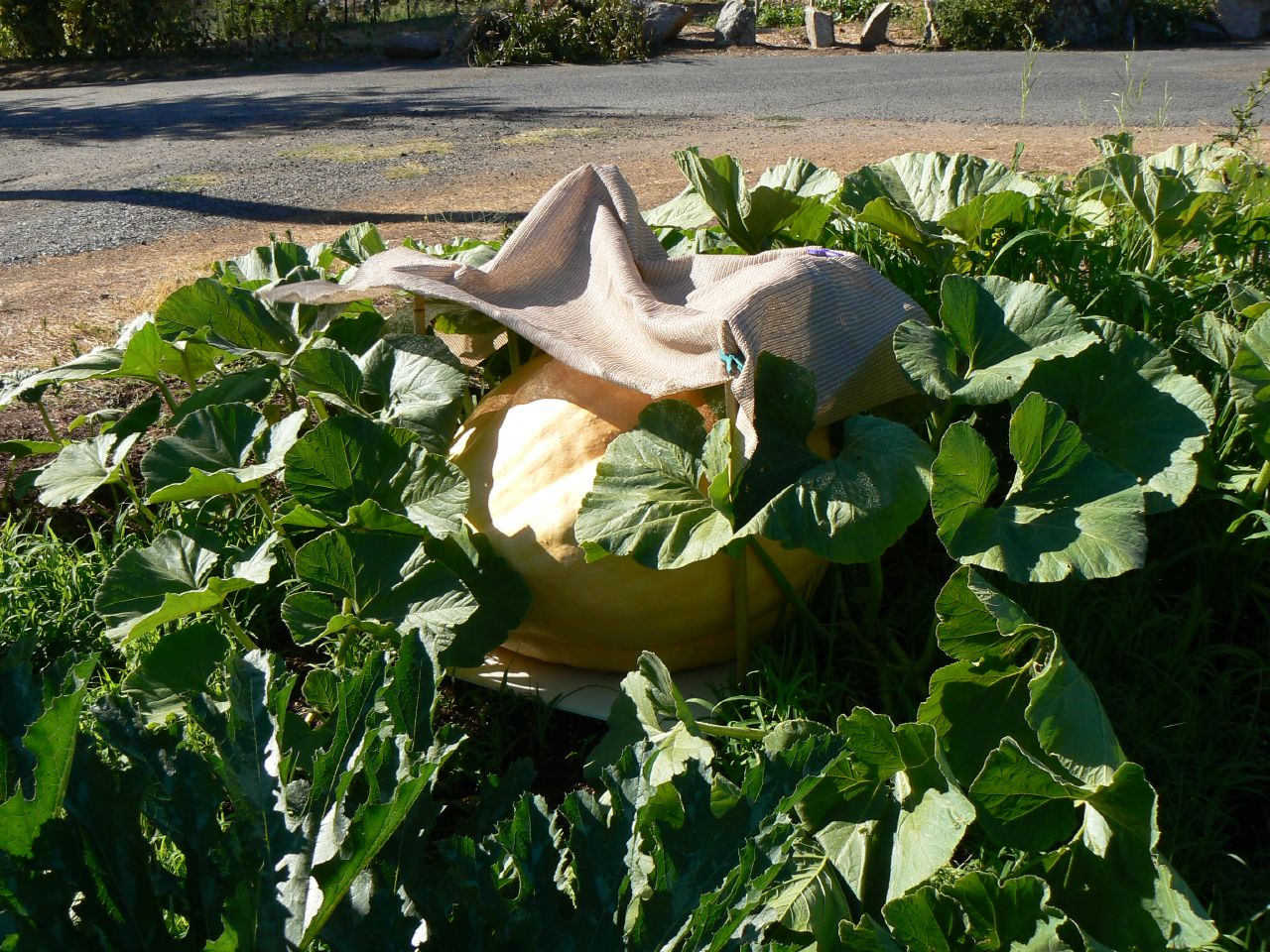
[A single giant pumpkin on display.] Photograph: Nick Ares
Image Credits: Wikimedia Commons
Frequently asked questions
Are giant pumpkins edible?
Technically they can be eaten, but they are not good eating. Reference summaries note that giants are not particularly tasty and may be inedible, and their watery, stringy flesh compares poorly with culinary varieties. Most end up as animal feed or compost.
How much water does a giant pumpkin need?
A great deal. NPR reported dozens of gallons a day for a record plant in a greenhouse. A fruit that gains tens of pounds daily and is up to 94 percent water needs a constant, heavy supply.
Why do giant pumpkins go flat on the bottom?
Gravity. A soft, water-filled fruit that heavy cannot hold a round shape, so it sags and pancakes outward, sometimes forming an arch underneath for support. Growers have not found a way around this.
How long does a giant pumpkin take to grow?
Usually 130 to 140 days from seeding to harvest, versus 90 to 120 days for ordinary pumpkins. Growers start seeds indoors in April and harvest in autumn.
The bottom line
Pumpkins grow so big because nothing in their genetics tells them to stop, their cells divide longer and swell larger than their relatives', and extra phloem tissue delivers the sugar to feed that growth. Breeders then spent decades pushing those traits further, crossing giants with dense squash and tracking pedigrees like racehorses, until records climbed from under 1,000 pounds in 1995 past 3,000 pounds. Champion growers complete the picture with one fruit per vine, heavy water, long seasons, and hand pollination.
The result is a fruit that is mostly water, barely edible, and heavier than a small car: a botanical accident, refined by people into a sport.
---
Rive News's research desk covers practical gardening, home, and how-things-work explainers, drawing on university extension services and published research.
Related
- Why Do Apple Trees Fruit Heavily Only Every Other Year?
- Why cucumbers taste bitter sometimes and how to prevent it
- Why Do Zucchini Plants Make Flowers but No Fruit?
- Why Do Plants Lean Toward the Window? Phototropism Explained
Subscribe to Rive News for one practical explainer in your inbox each morning.
Rive News publishes research-desk explainers from public sources. Corrections: contact the desk and cite the article and the fact in question.
Related stories
What Is Companion Planting and Does It Work?
Marigolds work as a nematode cover crop, but the basil flavor claim failed repeated tests. An honest evidence review of what companion
Determinate vs. indeterminate tomatoes: growth, pruning, and harvest differences
Determinate tomatoes grow to a set size and ripen all at once, while indeterminate types vine all season. That one difference shapes
How to improve clay soil for gardening
Gypsum will not fix ordinary clay soil, say extension experts. What actually works: 2 to 3 inches of compost, mulch, better drainage,