
How to stop slugs eating your plants at night
By Rive News / Research desk | Rive News / Published October 25, 2026 at 9:00 AM PKT
Key takeaways
- Slugs feed at night because darkness and damp air protect their soft bodies from drying out.
- A torchlit patrol one hour after dark, plus beer traps and copper barriers, cuts damage faster than any single product.
- Iron phosphate pellets stop slugs feeding within hours and break down into soil nutrients, while metaldehyde pellets carry serious wildlife risks.
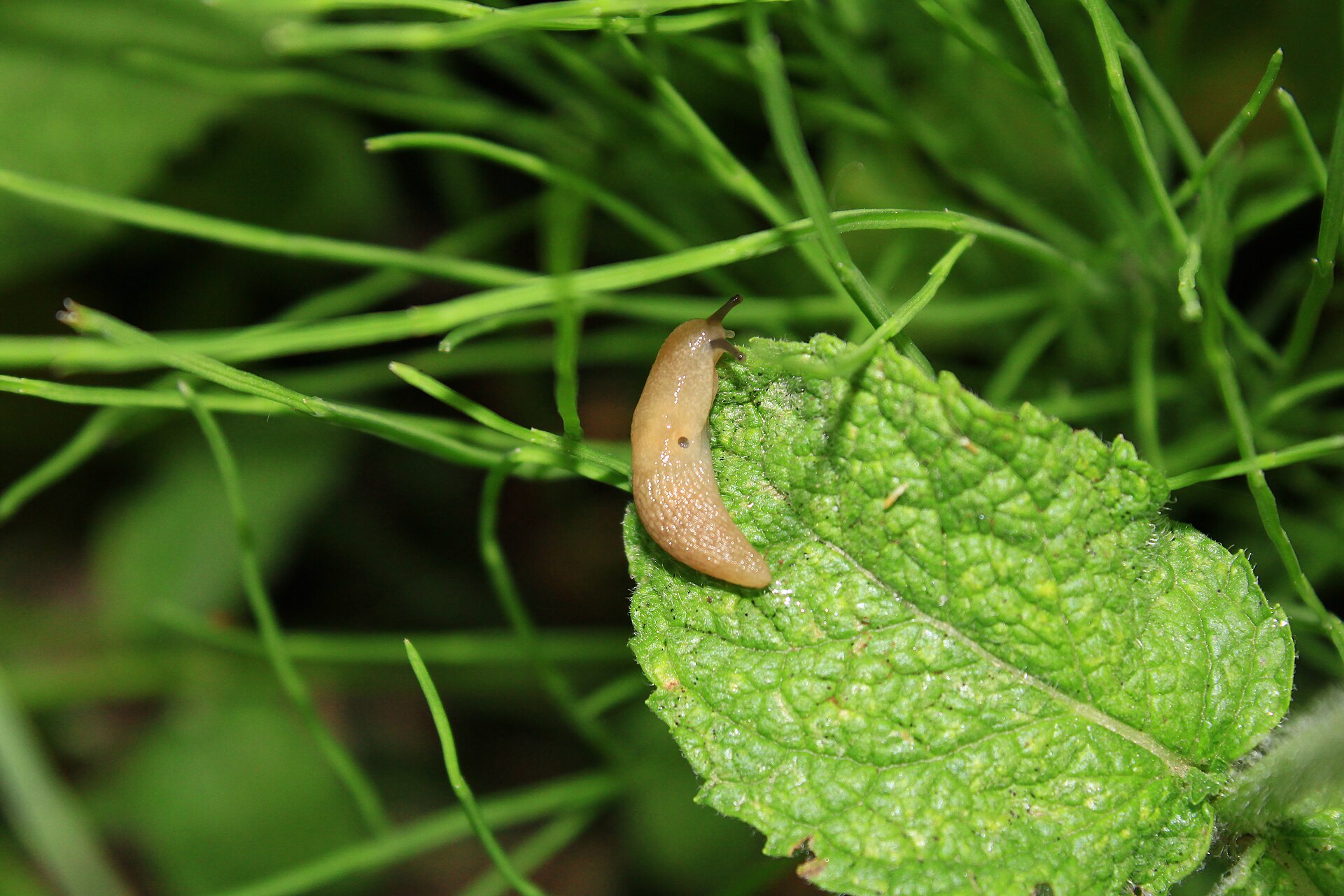
[A slug on a leaf, the kind of garden visitor that feeds after dark.] Photograph: the garden slug
Image Credits: Wikimedia Commons
Slugs are soft-bodied molluscs without shells, and they do most of their damage while gardeners are asleep. Their bodies lose water fast in sun and wind, so they hide by day under boards, pots, mulch and dense leaves, then emerge after dark to feed. The result is familiar: ragged holes in lettuce, stripped hostas, and seedlings that vanish overnight.
Slug damage looks different from insect damage. Slugs rasp irregular holes in leaves and leave silvery slime trails on foliage and soil.
Seedlings, lettuce, strawberries, hostas, delphiniums and brassicas sit high on the list of plants commonly attacked, according to Oak Leaf Gardening. Once you can read those signs, you can act at the hour slugs are actually out.
This article explains why slugs feed at night, how to run a night patrol, how to set beer traps, where copper barriers help, how pellets differ, and how to change the garden so slugs have fewer places to hide.
Why slugs feed at night
A slug moves on a layer of mucus, and that mucus needs moisture. Dry air and sunshine strip water from its body, so daylight hours are dangerous for it. Night brings cooler air, dew and damp soil, which is why the damage appears by morning even when the garden looked clean at dusk.
Watering habits feed into this cycle. Watering late in the evening leaves the soil surface wet just as slugs emerge.
Watering in the morning lets the surface dry before nightfall, which makes the garden less inviting after dark. Drip irrigation helps for the same reason, since it wets the roots rather than the whole surface.
Slugs also need daytime shelter. Piles of debris, thick ground cover, upturned pots and damp compost heaps all give them a damp refuge. Clearing those hiding places near vulnerable plants does not remove every slug, but it forces the survivors to travel further in the open, where birds, frogs and hedgehogs can find them.
Start with a night patrol
The single most effective first step is also the cheapest. Go out with a torch about one hour after dark, when slugs are fully active and moving slowly across plants and soil.
Check the undersides of leaves, the rims of pots and the damp edges of beds. Drop what you find into a bucket of soapy water.
Three nights in a row of steady patrolling can cut a local slug population sharply, because you are removing the breeding adults that are feeding right now. It will not end the problem on its own, since new slugs arrive from neighbouring ground and eggs hatch in the soil. Treat the patrol as the opening move, not the whole plan.
Patrols also teach you where the problem sits. If most slugs gather under one board or around one bed, that spot needs a barrier or a trap.
If they spread across the whole garden, the wider changes in the last section matter more. Keep a simple note of what you find each night so you can see whether numbers are falling.
Beer traps that actually catch slugs
Beer traps work because slugs are drawn to the yeast in fermenting liquid. To set one, sink a shallow container such as a yogurt pot into the soil so its rim sits level with the surface. Fill it with beer, or with a sweet yeasty mixture such as thin bread dough mixed with water, and leave it out overnight.
Slugs crawl in for the drink and drown because they cannot climb the smooth inner wall. Place traps near the plants that take the worst damage, not scattered at random across the garden. One trap per vulnerable bed is a sensible start, with extra traps around hostas and lettuce.
Empty and refill traps regularly, since stale traps stop attracting and fill with dead slugs. Check them each morning during a bad outbreak and at least every two days otherwise. Beer traps catch slugs only, so they work best beside a patrol rather than instead of one, and they will not protect a bed on their own.
Grapefruit halves left cut side down on the soil overnight act as a simpler shelter trap. Slugs gather inside the damp rind, and you can collect them in the morning. This method suits small beds and containers where a beer trap feels like overkill.
Copper tape and other barriers
Copper tape around a pot rim or a raised bed edge gives slugs a mild electric shock when they cross it, and most turn back. The tape must form an unbroken ring with no gaps, since a single gap becomes a doorway. Keep leaves and stems from bridging over the tape, because a slug that crosses on a leaf never touches the copper.
Copper rings pushed slightly into the soil around individual plants work on the same principle. They cost more than tape, so reserve them for prize plants such as a favourite hosta or a new delphinium. Wipe the copper clean now and then, since dirt and oxidation dull the effect.
Dry, rough surfaces make a weaker second line. Crushed eggshells, coarse grit and sharp sand all feel unpleasant under a slug, but heavy rain washes them flat and they need frequent topping up.
Diatomaceous earth, a powder made from fossilised algae, scratches a slug's soft underside and dries it out, yet it also stops working once wet and must be reapplied after every rain. Use these as extras around a bed, not as the main defence.
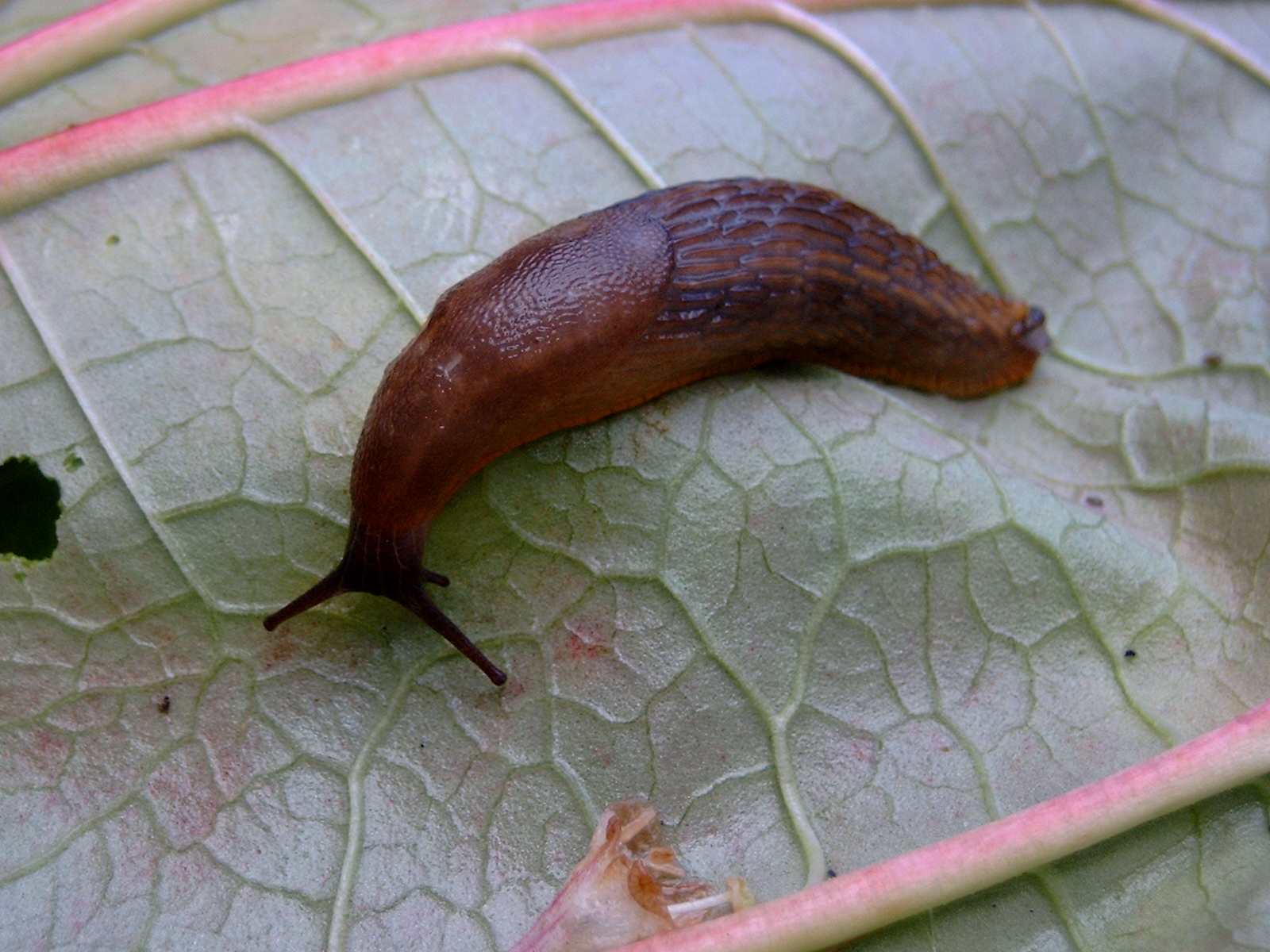
[A red slug on a rhubarb leaf, one of the species that feeds on garden plants.] Photograph: the red slug
Image Credits: Wikimedia Commons
Pellets: iron phosphate beats metaldehyde
Pellets come in two very different kinds, and the difference matters for wildlife. Iron phosphate pellets, sold under names such as Ferramol, are approved for organic growing.
When a slug eats one, the iron phosphate disrupts its digestion, so it stops feeding and dies within three to six days, according to Garden Organic. Uneaten pellets break down into iron and phosphate that plants can use.
A two-year Royal Horticultural Society trial reported by Garden Organic found that organic iron phosphate pellets performed almost as well as metaldehyde pellets across daffodils, hostas, lettuces and beans. On hostas they performed better than the synthetic rival. That finding matters because it removes the main excuse for reaching for the harsher product.
Metaldehyde pellets kill faster, but they poison more than slugs. Dogs, hedgehogs and birds that eat poisoned slugs can be harmed, and old stocks still sit in garden sheds even where sales are now restricted.
The Royal Horticultural Society encourages gardeners to tolerate some slug damage and to protect hedgehogs, which are nocturnal slug eaters in their own right. If you use any pellets, scatter them sparingly near vulnerable plants, follow the label exactly, and never heap them in piles.
Change the garden so slugs have fewer hiding places
Long-term control comes from making the garden less slug-friendly. Clear weeds and ground cover from around seedlings, since dense cover gives slugs a damp daytime base. Lift boards, bricks and empty pots near beds, or accept that each one needs checking on patrol nights.
Mulch needs care. Thick organic mulch holds the warm, damp conditions slugs love, and trial results reported by Garden Organic found mulches in general performed badly as slug deterrents. Keep mulch thin near stems, and leave a clean ring of bare soil around young plants so slugs must cross open ground to reach them.
Invite predators in. Birds, frogs, toads, ground beetles and hedgehogs all eat slugs.
A small pond, a log pile and a gap in a fence for hedgehogs to pass through all help, and they cost nothing to maintain. Nematodes, microscopic worms that parasitise slugs in the soil, offer another biological option, and they work best against young slugs when applied exactly as the product directs.
Finally, time your planting. Seedlings are far more vulnerable than sturdy transplants, so sowing vulnerable crops a little later, or growing them on until they are larger before planting out, gives slugs a tougher target. A plant that survives its first two weeks in the ground usually survives the season.
Frequently asked questions
Do beer traps attract more slugs into the garden?
Beer traps attract slugs that are already nearby, and they catch a share of them each night. They do not summon slugs from far away in numbers that outweigh the catch, but they also do not protect plants on their own. Pair traps with patrols and barriers around the beds that matter most.
Is copper tape safe for pets and wildlife?
Copper tape gives slugs a mild shock and does not poison anything that touches it. It is safe around pets, birds and hedgehogs when used as a barrier. Its weakness is practical, not chemical: gaps, dirt and leaf bridges let slugs past, so check the ring often.
Why do slugs keep coming back after I clear them?
Slugs live in soil, compost and neighbouring gardens, and their eggs hatch over weeks. Clearing one night's adults never empties the area for good. Steady patrols plus barriers and fewer hiding places keep numbers low, while a single big effort followed by nothing lets the population rebuild.
Should I use salt on slugs?
Salt kills slugs by drying them out, but it also damages soil and plant roots where it lands. It is a poor garden method even though it works on a single slug. Soapy water for collected slugs, or iron phosphate pellets used sparingly, does the job without salting the bed.
The bottom line
Stopping slugs at night means meeting them at their own hour. Patrol with a torch, set beer traps beside the plants they hit hardest, ring pots and beds with unbroken copper, and choose iron phosphate pellets over metaldehyde when pellets are needed.
Then shrink their hiding places, water in the morning, and let birds, frogs and hedgehogs do their share. No single method ends slugs for good, but the sequence together keeps damage low without poisoning the rest of the garden.
Tags: slugs, garden pests, night gardening
Rive News is a research desk that writes plain-language explainers from public sources, with no individual author persona behind the byline.
Related
- How to Keep Slugs Off Vegetables Without Chemicals
- How to Get Rid of Aphids Without Chemicals
- How to Compost Without a Bin: 4 Beginner Methods
- How to Grow Tomatoes in Pots on a Balcony
Subscribe to Rive News for one practical explainer each morning.
Rive News follows a standards footer: facts are checked against named public sources, and corrections are published when a source is shown to be wrong.
Related stories
What Is Companion Planting and Does It Work?
Marigolds work as a nematode cover crop, but the basil flavor claim failed repeated tests. An honest evidence review of what companion
Determinate vs. indeterminate tomatoes: growth, pruning, and harvest differences
Determinate tomatoes grow to a set size and ripen all at once, while indeterminate types vine all season. That one difference shapes
How to improve clay soil for gardening
Gypsum will not fix ordinary clay soil, say extension experts. What actually works: 2 to 3 inches of compost, mulch, better drainage,